Sunscreen on an Open Interlake Ride
An open Interlake ride can leave you with hours of sun exposure even when the air feels cool and a breeze makes the day seem comfortable. The glare off pale gravel, water, and open fields adds up, especially on a long loop near Lake Winnipeg. This guide explains how to plan sunscreen, clothing, and reapplication around a real Manitoba ATV or UTV riding day.
Why sun protection matters on an open Interlake ride
Wind and cool air can hide how much sun you are getting
A breezy ride around the Interlake may feel less intense than a hot day in a backyard, but the breeze can make it harder to notice that your skin is heating up. You may be focused on dust, trail conditions, and the rider ahead, not the sun on your neck or the backs of your hands. By the time you stop at a trailhead or lakeside pullout, the exposed areas may already feel tender.
Sun exposure is not limited to the hottest part of the afternoon. A long morning ride can involve steady exposure, and cloud cover does not necessarily mean you can skip protection. If your route includes open farm country, wide gravel roads where riding is permitted, or stretches with little tree cover, plan as though you will be outside for much of the day.
The Interlake has a mix of wooded trails, open stretches, and lakeside areas. Conditions can shift within one ride: shade under trees, then bright open sky, then glare from a sandy or pale surface. For regional ideas and route-planning context, see Manitoba Interlake Riding Areas and check the local rules for the specific route you intend to use.
Riders and passengers can have different exposure
The operator may be covered by a helmet, gloves, and riding gear, while a passenger has bare forearms or a low neckline. Or the reverse may be true: a passenger has long sleeves but keeps a hand outside the vehicle to hold a phone or adjust a strap. A UTV roof can shade part of the cabin, but it does not reliably protect every exposed area throughout the day. Sunlight can reach skin from the sides, front, or reflected surfaces.
Before leaving, have everyone check the same common-to-miss areas: ears, nose, lips, the back of the neck, the part in hair, wrists, and the tops of hands. If your helmet leaves part of your face or neck exposed, those areas deserve attention. Sunglasses help with bright conditions, but they do not replace sunscreen or protective clothing.
A simple habit is to do a quick “gear and skin” check before loading the machines. Ask each rider to confirm that exposed skin is covered or protected, then keep sunscreen easy to reach rather than buried under tools and recovery gear. It is much easier to remember when it is part of the same routine as checking water, helmets, and registration papers.
Build sun protection into your ride plan
Choose clothing for coverage as well as comfort
Long sleeves and lightweight long pants can reduce the amount of skin exposed during a ride. They are especially useful when the route alternates between open sections and shade, because you do not have to stop to reapply sunscreen to every arm or leg. Choose clothing that works with your riding gear and weather; a heavy layer that makes you overheat is not a good solution.
A neck gaiter, buff, or similar face-and-neck covering can help shield the lower face and neck from sun and dust. Gloves protect the backs of the hands, an area riders often forget when applying sunscreen. If you wear a helmet with an open face area, consider how the sun reaches your cheeks, nose, and ears when you are seated in the riding position.
Coverage is also helpful for passengers. A passenger may move around more, take breaks outside the machine, or sit where the roof does not provide much shade. Keep spare light layers in the vehicle so a rider can cover up if the day turns brighter or the planned ride runs longer than expected.
Apply sunscreen before the first ride, not at the first stop
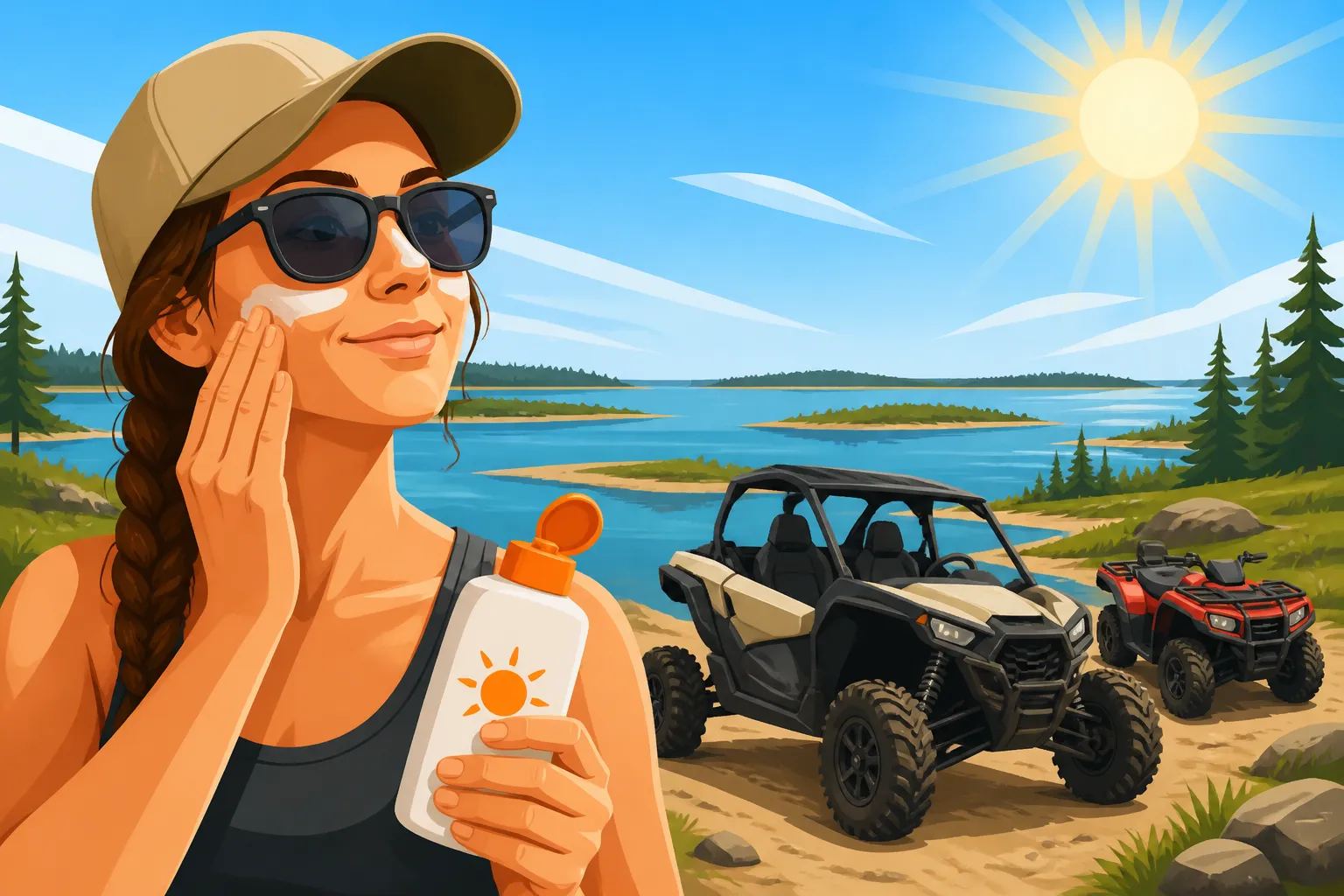
For exposed skin, choose a broad-spectrum sunscreen with SPF 30 or higher and follow the product label. Apply it before you head out, allowing time for it to settle according to the directions. Do not wait until you reach the trailhead: once helmets, gloves, and dusty gear are on, covering skin evenly becomes awkward.
Use enough to cover the skin that will remain exposed. Common missed spots include the hairline, ears, the backs of hands, the tops of feet if footwear leaves them exposed, and the back of the neck below a helmet or collar. Lip protection matters too; use a lip product with sun protection if you will be outside for hours.
Sunscreen is only one layer of a plan. Shade breaks, protective clothing, sunglasses, and a brim or helmet visor where appropriate can all help. When you are planning an open route, a mapping tool such as onX Offroad can be one part of understanding where the ride may pass through open or wooded terrain. Treat any app as a planning aid, not confirmation that a route is open or legally usable; check local permissions and current trail information separately.
Prepare for repeat application
Sunscreen wears off. Sweat, dust, wiping your face, handling gear, and taking a dip or splash can all make coverage less reliable. Follow the product label for reapplication, and plan to reapply at regular intervals during a long day rather than assuming the morning application will last until you return to the truck.
Keep sunscreen in a place where it is easy to reach during a break. A small, sealed pouch in the UTV cab or riding pack is more practical than a bottle packed beneath tools and spare parts. In hot weather, avoid leaving products in a spot where they may be exposed to excessive heat; follow the storage directions on the packaging.
If you use a spray sunscreen, do not count on a quick pass in a dusty parking area to provide even coverage. Apply it carefully as directed, and take wind into account so the product does not blow away before it reaches the skin. A lotion or stick may be easier for a precise application around the face and ears.
| Part of the ride | Sun-protection action | Why it helps |
|---|---|---|
| Before loading | Apply sunscreen to exposed skin and check ears, neck, hands, and face | Application is easier before gloves and helmets are on |
| At the trailhead | Confirm everyone has covered clothing, sunglasses, and accessible sunscreen | Riders and passengers may have different exposed areas |
| During breaks | Reapply according to the product label and after heavy sweating or water exposure | Coverage can wear off during a long ride |
| At a lakeside or open stop | Add a layer or find shade while eating and resting | Breaks can extend exposure beyond riding time |
| Before driving home | Check for missed spots and cover skin if it remains exposed | The ride home and loading time still count as outdoor time |
For more general preparation before you head out, Manitoba Trail Conditions Before You Haul is a useful reminder to check the route and conditions before committing to a long day. You can also use Manitoba Trail Apps and Maps as a starting point for navigation planning, while confirming access and closures with the relevant local source.
Match your sunscreen routine to the route and the day
Open fields, gravel, and water call for extra attention
A route with little tree cover can mean repeated exposure even if you spend only part of the day in direct sun. Pale gravel, sand, and water can also make conditions feel brighter. The practical response is not to guess how much exposure a particular surface reflects; it is to cover vulnerable skin, wear eye protection, and make reapplication part of the ride schedule.
Near Lake Winnipeg, a stop by the water can feel like a break from the ride, but it may still be a sunny, exposed place to eat or check the map. The same goes for an open staging area, farm approach, or broad trail crossing. Choose a shaded rest spot when one is available and appropriate, and do not assume a short stop is too brief to matter if several short stops add up over the day.
Route planning can help you set expectations. Check whether the ride includes long open sections, where a natural break might be possible, and whether your group can pause safely without blocking the trail. If you use onX Offroad or another mapping resource to review a route, pair it with local trail information and permission checks. A map may help you anticipate terrain, but it cannot replace confirming that the route is open to your machine.
Weather changes should change your plan
A cloudy start can turn into a bright afternoon, while a hot forecast can feel manageable in the shade and wind. Bring sunscreen and protective layers even if conditions look mild at the trailhead. If the forecast or actual conditions change, adjust your break schedule and clothing rather than relying on the morning plan.
A useful planning habit is to look at the whole day, including loading, unloading, riding, lunch, and the return trip. A two-hour ride can turn into a much longer outdoor day when a group stops to help with a stuck machine or waits out a shower. For month-by-month seasonal considerations, see Manitoba Riding Season Month by Month. If a summer shower is possible, Rain Gear for a Summer Squall in the Interlake can help you think through clothing that remains practical when conditions shift.
Fire restrictions, trail closures, and local access rules can also change where you ride or how long you are out. Check the information that applies to your chosen area before leaving. A beautiful route is not worth pushing into a closure or trespassing to stay on schedule.
Make the break routine realistic for a group
Groups often lose time because each rider assumes someone else is keeping track of the next stop. Agree on a basic break rhythm before setting out. At each stop, riders can drink water, check on passengers, look for gear that has shifted, and reapply sunscreen. If someone has bare skin or has been wiping sweat from their face, make sure they have a chance to reapply.
Avoid letting the fastest rider set the pace for everyone else. A child, a passenger, or someone new to off-road riding may need more frequent breaks. The group should stop in a safe place, keep machines clear of the travel path, and make sure everyone can hear instructions before moving again. Trail courtesy matters, too; Manitoba Trail Etiquette Locals Expect offers helpful context for sharing riding areas respectfully.
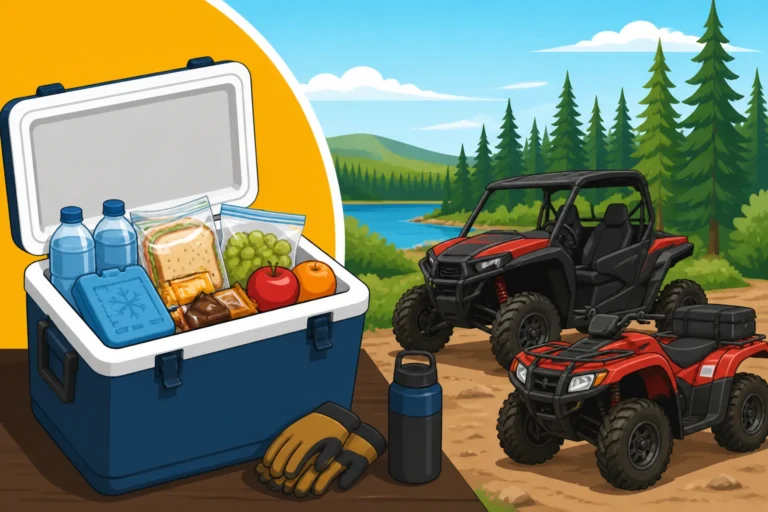
If lunch is part of the plan, pack it so the group can eat without standing in full sun for a long stretch. A cooler can keep food and drinks accessible during a break; Packing a Cooler for a Long Bush Day is a related planning read. Make sure food stops are in appropriate locations and do not leave litter behind.
A practical sunscreen checklist for ATV and UTV riders
Before you leave home
Start by checking the ride area, the expected weather, and the likely time outdoors. Use current local information to confirm that the route is open and suitable for your machine. If you are exploring a new area, Manitoba Trail Conditions Before You Haul can help frame the checks to make before towing out.
Pack sunscreen that is labelled broad-spectrum and SPF 30 or higher, then keep it reachable. Include lip protection, sunglasses, gloves, and light layers that cover arms and neck without making riding uncomfortable. If you are riding with children or guests, ask them to bring the clothing and protection they will actually wear; spare equipment does little good if it stays in a bag.
Do a quick check of the vehicle as well. A roof or windshield may provide some shade in a UTV, but do not rely on it as complete protection. In an ATV, a helmet visor and riding clothes can cover some areas while leaving others exposed. Ask each person to identify their own likely sun-exposed spots based on their gear and seating position.
During the ride
Use planned stops to check how everyone is doing. Reapply sunscreen as directed on the label, especially after heavy sweating or water exposure. Drink water, seek shade where practical, and add a layer if the sun is stronger than expected. If a rider looks flushed, uncomfortable, or unusually tired, stop and take the concern seriously rather than pressing on to finish the loop.
Keep your navigation decisions separate from sun-protection decisions. A route that appears shorter on a screen may have fewer shaded breaks, while a longer route may offer safer places to stop. If you consult onX Offroad while planning, use it as one reference among local trail information and access rules; do not treat route visibility in an app as permission to ride there.
Respect the terrain and people who share it. Avoid sensitive areas and do not cut across private property or closed land to find shade. Manitoba Sensitive Areas to Avoid is relevant when thinking about where not to stop or ride. If wildlife appears, give it space and keep the group together; Manitoba Wildlife on the Trail offers additional riding context.
After the ride
Check for redness or irritation once helmets and gear come off. If skin is painful, blistered, or accompanied by symptoms such as feeling faint or unwell, take a break from the sun and seek appropriate medical advice. Do not treat a painful burn as a normal souvenir of the ride.
Wash dusty clothing and gear according to their care instructions, and replace sunscreen when it is past its labelled use period or has been stored improperly. Make a note of what worked: perhaps the group needed an earlier stop, a different sunscreen container, or more coverage around the neck. Small adjustments make the next open Interlake ride more comfortable.
Finally, consider the route itself when reviewing the day. Was there enough shade? Did the group stop in suitable places? Did anyone run short of water or sunscreen? A short debrief can improve planning for the next trip without turning a fun ride into a complicated expedition. For riders who regularly travel through open terrain, keeping a small sunscreen pouch with the usual trail supplies makes protection easier to remember.
Disclaimer
This article is for general informational purposes only and does not constitute professional advice. Laws, prices and regulations vary by location and change over time. Consult a qualified professional for guidance on your specific situation.