Manitoba Trails With Sand
Sand can turn an easy-looking Manitoba ride into a tiring day of wheelspin, heat and trailering detours. The trick is finding routes where sandy sections are part of an established ride, then checking access and conditions before you unload. This guide covers where to look, what the terrain feels like, and how to prepare your ATV or UTV for Manitoba sand.
Where to look for sandy ATV and UTV trails in Manitoba
Manitoba’s sandy riding is not always packaged as a single, clearly marked “sand trail.” Sand may show up in forest corridors, on club-managed routes, or in open areas connected to a longer ride. That makes local trail maps and condition checks especially important: a sandy spot you have heard about may be private land, a closed route, or a short feature rather than a place to ride freely.
Sandilands and the Eastman riding area
The Sandilands area is a natural place to start researching sand-focused riding in southeastern Manitoba. Its forest and sandy ground can create a different experience from a firm, packed trail: machines may dig in, steering can feel less precise, and a route that looks straightforward on a map can take more energy than expected.
Use local club information to confirm which routes are open and where riders are allowed to travel. The [Manitoba Eastman Riding Areas] guide can help you orient yourself to the region, while [Manitoba Woodridge Club Trails] is a useful next read when you are looking for club-area context. Do not assume that all forest tracks, fire guards or sandy clearings are designated for recreational riding.
Before making the drive, compare a current trail map with local notices and ask the relevant club or land manager about access. An app such as onX Offroad can help you review mapped terrain and plan a route, but a line displayed on a map is not permission to ride there. Treat digital mapping as one planning tool, not as the final authority on access.
Sandy stretches on club routes
Some sandy riding is part of a larger club trail rather than a standalone destination. The Agassiz Club Trail, for example, is associated with sandy features and sand pits, but riders should check the trail’s current route and access information before heading out. The [Manitoba Agassiz Club Trail] guide offers more detail about that riding area, and [Sand Pits Along the Agassiz Club Trail] focuses on the sandy features themselves.
A sand pit or open sandy section can look inviting, particularly when it is close to a trailhead. Still, open ground is not automatically open riding ground. Stay on authorized routes, follow signs, and avoid making new tracks around a difficult patch. Going around a marked trail can damage vegetation, widen the route and create access problems for everyone who uses it.
If a specific sandy feature is your main goal, ask whether it is on the permitted route and whether there are any seasonal restrictions. Local clubs often know which sections have changed after weather, maintenance or land-access discussions. That small check can prevent a long drive ending with a closed gate or a route that does not match what you expected.
What a sandy trail map can and cannot tell you
A map can help you plan distance, identify trailheads and spot possible connections, but it cannot reliably tell you how deep or loose the sand will be on the day you ride. A route that appears short may take much longer when it includes repeated soft stretches, tight turns or a group with different machine sizes and experience levels.
Use [Manitoba ATV Trail Map Downloads] to start your route research, then verify the information with the club or land manager responsible for the area. You can also use onX Offroad to compare mapped tracks and keep your group oriented, especially where several roads or trails appear close together. Save important information before leaving town rather than relying on cell service throughout the ride.
| What to check | Why it matters on sandy terrain |
|---|---|
| Trail authorization | A visible track is not necessarily a legal or designated riding route |
| Recent trail conditions | Loose sand, washouts or maintenance can change how difficult a section feels |
| Route length and exits | Turning around may be tiring or difficult if the group gets bogged down |
| Fuel and water planning | Slow riding and repeated recovery attempts can extend the day |
| Group ability and machine setup | A route manageable for one rider may be a slog for a mixed group |
What riding in Manitoba sand feels like
Sand changes how a machine moves. The surface shifts beneath the tires, so a quad or side-by-side may drift or lose momentum even when the rider is using sensible throttle. That is not a sign that you need to charge harder. Sudden acceleration can dig the tires deeper, while abrupt turns can make a machine feel unsettled.
Loose sand and soft patches
Loose, dry sand often asks for smooth, steady control. Look ahead, choose a line early and avoid sharp steering inputs. If the front end starts to wander, a relaxed grip and gradual correction are usually more manageable than fighting the bars. On a side-by-side, passengers should be told to stay seated and avoid leaning suddenly as the vehicle moves through ruts or turns.
Soft patches can be difficult to judge from the seat. A stretch that looks firm may give way once several machines have passed over it, while a visibly churned section may have a firmer line along one edge. Keep enough space between riders to see the terrain and avoid riding directly into another machine’s dust. If visibility drops, slow down and let the dust settle rather than following closely.
Sand also puts a premium on momentum, but momentum does not mean reckless speed. Carry a controlled, even pace that suits your visibility, the trail width and the people riding with you. If you are unsure whether a section is passable, stop somewhere safe to assess it rather than making a blind, high-speed approach.
Ruts, corners and group riding
Ruts can pull a machine off its intended line, especially where riders have repeatedly spun their tires. Approach them with room to adjust and avoid cutting across the trail edge to create a new path. If the rut is too deep or narrow for your machine, turn around only where there is room and where doing so will not damage the surrounding ground.
On corners, slow down before entering rather than braking hard in the middle of a loose turn. Keep your spacing generous: the rider in front may stop suddenly, lose traction or need help. A group that travels at the pace of its least experienced rider will generally have an easier time staying together and avoiding unnecessary recoveries.
Be considerate of other trail users. Dust can affect visibility and comfort for riders behind you, while a loud or fast approach may startle people sharing the route. The guidance in [Manitoba Trail Etiquette Locals Expect] is worth reviewing before a group ride, particularly if your planned route includes narrow or shared-use sections.
Sand compared with muskeg and wet ground
Sand and muskeg can both bog down a machine, but they behave differently. Sand shifts under the tires and can make a machine lose momentum; wet muskeg may conceal soft ground, standing water or a fragile surface that is easily damaged. Do not treat a sandy route as permission to cross nearby wetlands or marshy areas.
If a trail becomes wet or visibly damaged, resist the temptation to widen it by riding around the problem. That can turn one difficult spot into several damaged lines. For a closer look at the different risks, see [Manitoba Muskeg and Machines]. After heavy rain, conditions may also change quickly, so [Manitoba Riding After Heavy Rain] can help you think through whether to postpone a trip.
Preparing your machine and group for a sandy ride
A little preparation makes a noticeable difference when a route includes repeated soft sections. The aim is not to turn every ATV or UTV into a specialized sand machine. It is to make sure your equipment is in working order, your group has basic recovery options, and everyone understands how you will respond if a rider gets stuck.
Check the machine before leaving
Inspect tires for damage and confirm that their pressure is within the manufacturer’s recommended range for your machine and load. There is no single pressure setting that suits every tire, ATV, UTV or riding condition. If you are considering changes, follow the machine and tire manufacturers’ guidance rather than copying a setting from another rider.
Check the air filter, cooling system, belt or drivetrain components, brakes and lights. Sand and dust can find their way into places you would rather keep clean, so pay attention to the air intake and follow the maintenance instructions for dusty conditions. A clogged filter or overheating machine can turn a planned day ride into an early return to the trailer.
Carry basic recovery equipment that you know how to use, such as a suitable tow strap and gloves. A winch can be helpful, but only when it is rated and installed appropriately and you understand safe attachment points. Never wrap a strap around a person or use an improvised anchor that could fail under load. A stuck machine is frustrating; a rushed recovery can make it dangerous.
Plan the route around people, not just machines
Before you leave, agree on a lead rider, a sweep rider and a regrouping plan. Share the route with everyone, including any planned turnaround points. If a member of the group is new to sand, build the ride around a manageable section rather than making a long, remote route the first test.
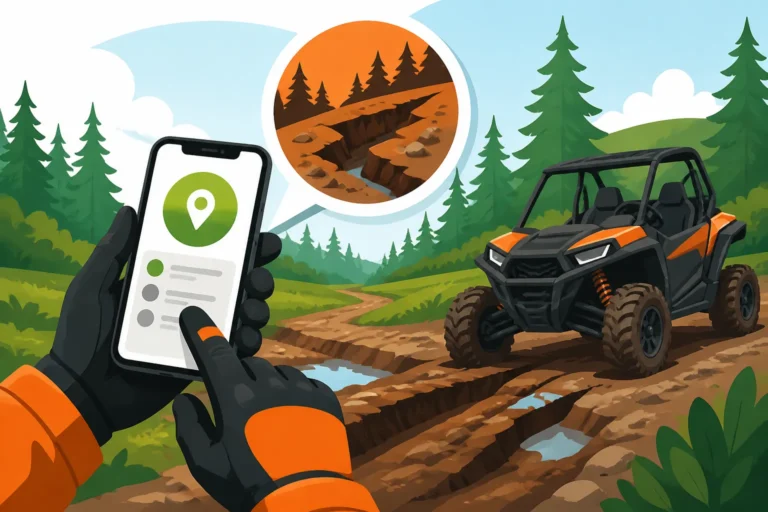
A map app can help keep the group oriented, but download or save route information before losing service. onX Offroad may be useful for reviewing mapped routes and keeping track of your position, while local club information remains essential for confirming access and current trail status. If the app and a posted sign disagree, do not treat the app as permission to continue.
Pack water, a first-aid kit, a charged phone and weather-appropriate clothing. Tell someone who is not riding where you plan to go and when you expect to return. In areas with limited service, a paper map or another communication plan can be valuable. The [Manitoba Trail Conditions Before You Haul] guide can help you build a pre-trip check into your planning routine.
Keep the ride legal and low-impact
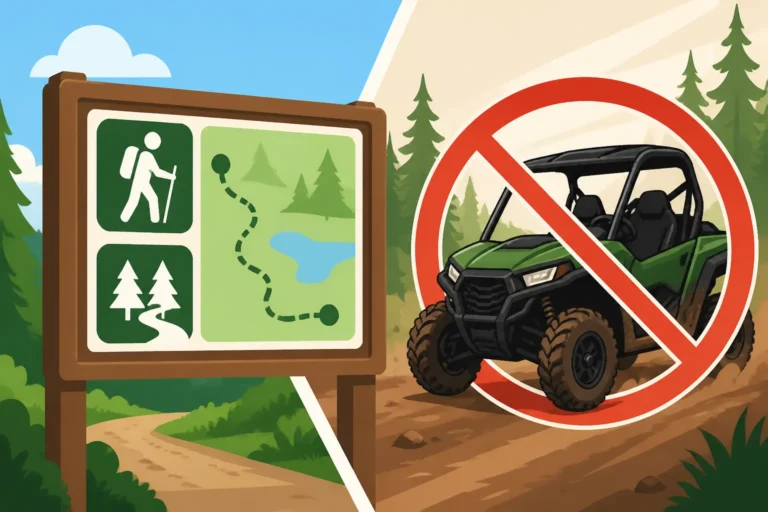
Stay on authorized routes and follow posted closures. Manitoba riding access can involve club trails, Crown land, private land and other managed areas, each with different access expectations. A trailhead nearby does not mean every track in the surrounding forest is open to ATVs or UTVs. When you are unsure, stop and confirm rather than relying on tire tracks left by someone else.
Protect the trail by avoiding unnecessary wheelspin, staying out of sensitive ground and packing out what you bring in. If a route is too soft or damaged to cross without creating a deeper rut, turn back where it is safe and report the condition to the responsible club or land manager. A few minutes of restraint can prevent much more extensive trail damage.
Seasonal restrictions matter, too. Fire danger and area closures can affect where you may travel, even if a route was open on your last visit. Check [Manitoba Wildfire Season Rules for Riders] before setting out during dry conditions, and follow any closure signs or official notices you encounter.
Planning a sand-focused ride without surprises
A satisfying sand ride is less about finding the loosest ground and more about matching a route to your machine, experience and available time. A short, authorized sandy section can be a better day out than an ambitious route that leaves a mixed group tired and far from its vehicles.
Use a simple pre-trip sequence
- Choose a riding area and identify the club or land manager responsible for the route.
- Confirm that the route is open and that your intended section is authorized for your machine type.
- Review the map, locate possible exits and agree on a turnaround point.
- Check weather, fire restrictions and recent trail-condition notices.
- Inspect your machine and pack water, basic recovery gear and communication essentials.
- Set a pace that lets every rider keep a safe distance and remain in control.
This routine may feel like extra work when you are eager to get riding, but it is much easier than sorting out access or equipment problems after you have unloaded. It also helps set expectations. If the route is rougher, dustier or softer than expected, the group can adjust without anyone feeling pressured to push through.
Have a fallback when conditions change
Sand can be harder work than expected, and conditions may differ between the trailhead and the route itself. If a machine starts to overheat, a rider is uncomfortable or the trail has deteriorated, shorten the ride. A mapped loop is a planning aid, not a promise that the whole route must be completed.
If your planned sand route is unavailable, do not improvise by riding unmarked tracks or crossing land without permission. Choose another confirmed route or make the trip a scouting visit instead. The [Manitoba ATV Trails: Club Ground and Crown Land] guide can help explain why access status matters when a route crosses different types of land.
A successful ride does not need to involve a dramatic recovery or the deepest sand you can find. It can be a well-planned loop, a few manageable sandy sections and a group that gets home with its machines and the trail in good shape.
Disclaimer
This article is for general informational purposes only and does not constitute professional advice. Laws, prices and regulations vary by location and change over time. Consult a qualified professional for guidance on your specific situation.