Mossberry Trail Shares Ground With Horses and Hikers
Mossberry Trail offers a chance to ride through the Duck Mountain area, but it is not an ATV-only corridor. Horses and hikers may use the same ground, so a ride that feels straightforward on an empty stretch can change quickly around a bend. This guide explains how to share the trail safely, plan your trip, and avoid treating a map as permission to ride.
What to expect on Mossberry Trail
A shared trail calls for a different pace
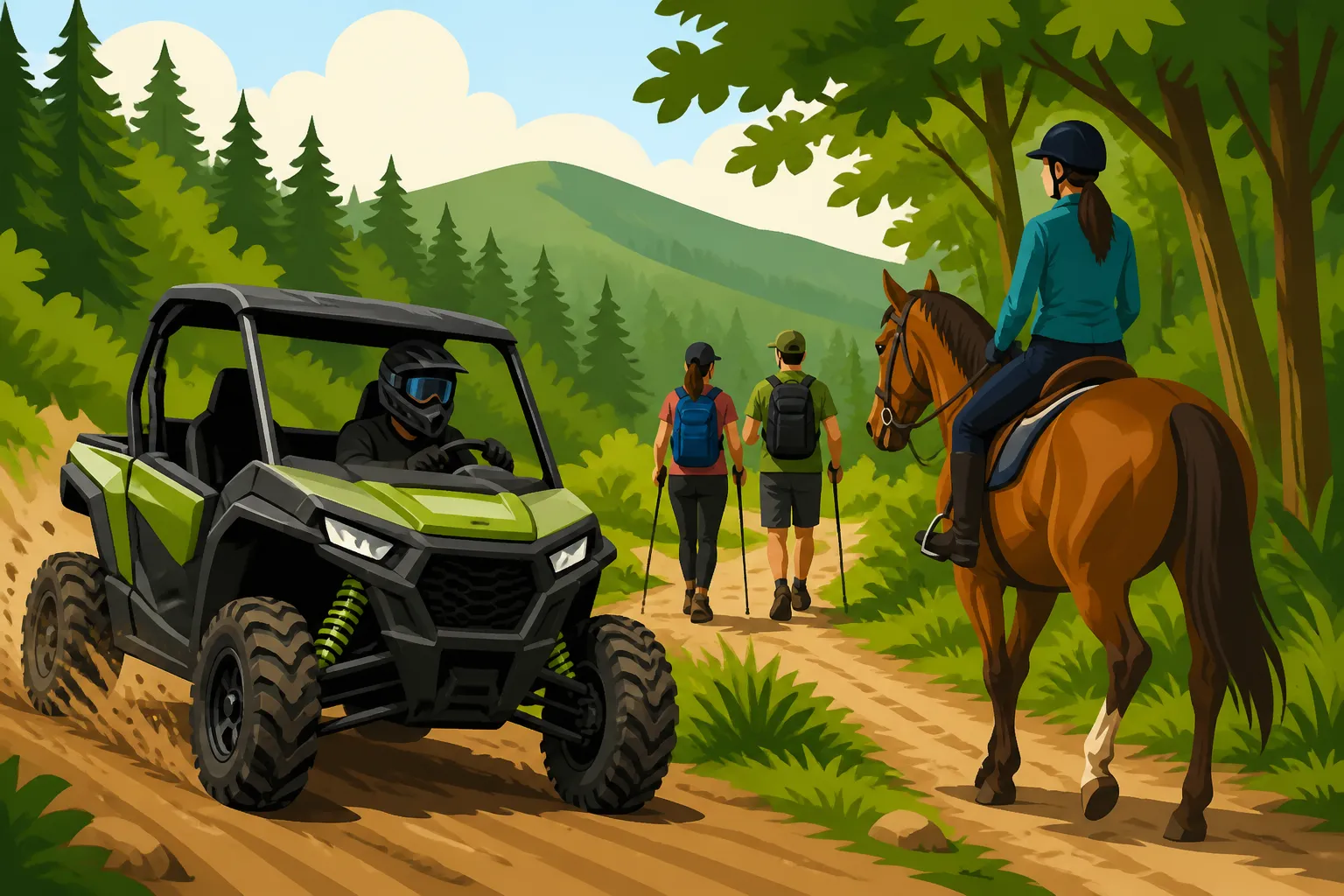
On a trail shared by motorized riders, hikers, and horseback riders, the important thing is to expect company even when you have not seen anyone for a while. A hiker may be just beyond a blind corner, or a horse and rider may be moving quietly through trees. Dust, vegetation, and changes in terrain can also limit how soon you notice other trail users.
That is why a steady, controlled pace is more useful than trying to cover ground quickly. Ease off before bends, narrow sections, and places where the trail dips or rises out of view. Leave yourself room to stop without sliding into the person or animal ahead. If the trail surface is loose or soft, abrupt braking can make your machine harder to control and can throw dust at people behind you.
A shared-use trail also rewards patience. You may need to wait while a group of hikers passes, or pause while a horse is guided through a tight section. That pause is part of a good ride, not a delay to push through. For broader route and destination context, see [Duck Mountain's Mossberry Trail in Manitoba] and [Mossberry Trail's 30 Kilometres in Manitoba].
The trail is more than a line on a map
A mapped route can help you understand where you are, but it cannot tell you what the trail looks like at every moment. Conditions may change after rain, wind, seasonal use, or maintenance work. A route that appears wide on a screen may narrow between trees or become less visible where vegetation grows close to the track.
Treat a map as one planning tool, not proof that every nearby track is open to your machine. This applies whether you use a paper map, a club map, an official park resource, or a phone app such as onX Offroad. Check the source and date of the information, then confirm access rules and closures through the relevant park or trail authority before unloading.
It is also worth distinguishing a designated route from a tempting side track. A cut-through, old road, or open-looking patch may not be part of the approved riding route. Staying on the marked trail helps protect sensitive ground and reduces the chance of accidentally entering a restricted area. [Manitoba Parks Allow Machines on Designated Routes Only] explains why this distinction matters across provincial parks.
How to share the trail with horses and hikers
Meeting a horse safely
A horse may react to an engine, sudden movement, or a machine appearing unexpectedly around a corner. When you see a horse ahead, slow down well before reaching it and give the rider time to assess the situation. If there is enough room, stop off the main line without blocking the trail, and follow the horse rider’s directions.
Keep your machine quiet and still while the horse passes. Avoid revving, accelerating, or trying to squeeze by without a clear invitation. The rider may prefer to turn the horse toward a wider spot, or may ask you to wait while they move past. A calm pause gives the horse a chance to take in the situation and helps the rider stay in control.
Do not assume that every horse is comfortable around motorized machines, even if it seems calm at first. A horse can startle suddenly, and a narrow trail gives both the animal and rider little space to recover. When in doubt, stop at a respectful distance and communicate in a calm voice. Once the horse has passed, wait until the rider is safely clear before moving again.
Passing hikers without adding stress
Hikers are often easier to see than horses, but they may still be surprised by a machine, especially on a winding or wooded section. Reduce speed early, give a brief and courteous signal if appropriate, and make sure the people ahead know you are there before you approach closely. Do not assume they can hear you through wind, conversation, or other trail noise.
When passing is safe, leave as much room as the trail allows and keep your speed low. Avoid throwing dust or gravel toward people, and do not pass on a blind bend or where the trail edge is unstable. If the path is too narrow for a comfortable pass, stop and wait for a wider spot rather than making hikers step into brush or soft ground.
Groups may need a little time to gather their children, dogs, or equipment before moving aside. Give them that time without crowding them. A friendly greeting can make the encounter feel predictable rather than abrupt. For more practical guidance, [Mossberry Trail Shares Ground With Horses and Hikers] is a useful companion topic, while [Manitoba Trail Etiquette Locals Expect] covers the habits that make shared riding corridors more pleasant.
| Trail encounter | A considerate response | What to avoid |
|---|---|---|
| Horse and rider ahead | Slow early, stop at a safe distance, and follow the rider’s direction | Revving, rushing past, or approaching from behind at speed |
| Hikers on a narrow section | Reduce speed, give them room, and wait if there is no safe passing space | Forcing people into brush or passing around a blind bend |
| Group approaching from the opposite direction | Stop where you are visible and allow the group to pass | Blocking the trail or edging forward while they move by |
| Unclear trail or side track | Pause and confirm the route before continuing | Treating an open-looking track as an authorized route |
Prepare before you haul to the trail
Confirm access, closures, and local conditions
Before setting out, confirm that the route you intend to ride is open to your type of machine and that there are no temporary closures or restrictions. A trail can be affected by weather, maintenance, fire conditions, or other local decisions. Do not rely on an old screenshot, a friend’s recollection, or a single app layer as your only check.
Use the most relevant official or local information available to confirm the route. If you are unsure whether a connector or spur is included, ask the park office or the organization responsible for the trail rather than guessing once you arrive. [Manitoba Trail Conditions Before You Haul] and [Manitoba Park Trail Conditions Pages] are useful starting points for building that check into your trip planning.
A route displayed in onX Offroad can help with orientation, but it should be treated as supplementary information. Compare it with current park guidance and posted signs. Download or carry the information you will need before leaving reliable service, and do not assume a phone will keep working once you are in the bush. [Manitoba Trail Apps and Maps] offers more context on using mapping tools alongside local information.
Pack for a ride that may take longer than expected
A shared trail can slow your progress because of other users, rough ground, or stops to check your route. Plan your fuel, water, food, clothing, and return time around a slower pace than you might use on a private property loop. Let someone know where you plan to ride and when you expect to be back, especially if your trip includes remote sections.
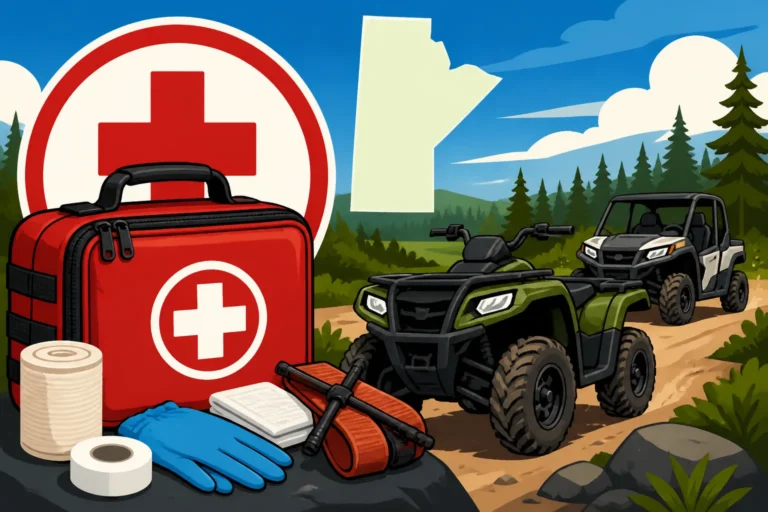
Bring a basic first-aid kit, a charged phone, and a backup way to navigate if your phone battery runs down or coverage disappears. A paper map can be helpful when electronics are unreliable. Pack clothing for changing conditions rather than assuming the weather at the trailhead will hold for the whole ride. For practical ideas, see [First Aid on a Long Manitoba Loop], [Carrying a Paper Map in the Manitoba Bush], and [Packing for a Cold Manitoba Morning].
Check your machine before leaving home. Look over tires, brakes, lights, steering, and any protective equipment you rely on. Secure loose cargo so it cannot shift when the trail gets uneven. If you are riding with others, agree on a pace and a simple regrouping plan before starting. That reduces the pressure to speed up if someone falls behind or needs to stop.
Ride responsibly on a shared route
Keep the group predictable
A group ride can feel safer, but a long line of machines can surprise hikers or horses and make it difficult for people to find a safe place to pass. Keep a sensible gap between machines, maintain a pace that allows each rider to stop safely, and avoid bunching up around other trail users. A rider at the front should slow down when visibility or trail width changes, not only when someone is already close.
Agree on how your group will handle encounters before you reach them. For example, decide that the lead rider will stop well back from a horse, signal the rest of the group to wait, and move only after the horse rider gives the all-clear. That avoids one rider stopping while others continue toward the animal.
If someone in the group is new to the route or less experienced, make sure they know the plan and can keep up without feeling pushed. A shared trail is not a place to turn a relaxed outing into a race. [Manitoba Group Ride Planning] and [Manitoba Group Size on a Club Trail] can help you think through group logistics before you arrive.
Protect the surface and the people around you
Soft ground, wet sections, and trail edges can be easily damaged by repeated or careless riding. Stay on the established route rather than widening it to get around a puddle or another user. If conditions look fragile, avoid spinning tires or creating a new bypass. Those short-term choices can leave damage that lasts after the trail dries.
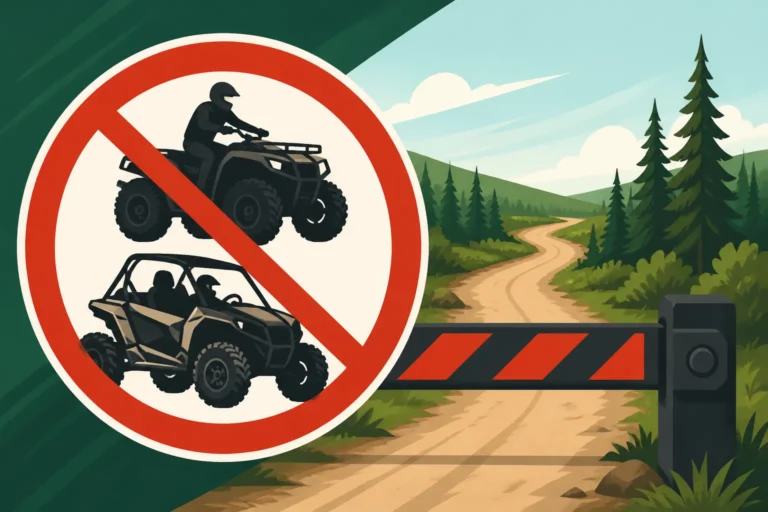
Respect signs and barriers, even when the route beyond them appears passable. A closure may reflect conditions or access concerns that are not obvious from the trailhead. Do not ride around a gate or use a nearby shoulder as an unofficial detour. If a route seems blocked unexpectedly, stop and check whether there is an approved alternate route rather than improvising.
Noise and dust matter, too. Throttle gently near cottages, trailheads, and other people, and avoid unnecessary revving while stopped. Keep your machine in good working order and follow applicable equipment rules. [Manitoba Sensitive Areas to Avoid] and [Manitoba Riding Etiquette on a Manitoba Club Trail] offer more guidance on reducing impacts and being a welcome guest on shared ground.
Make the ride enjoyable for everyone
Plan a flexible day
A better Mossberry Trail outing often starts with a plan that leaves room for delays. If you have a fixed return time, choose a shorter ride or set a turnaround point before you start. That way, a slow pass around a horse or an unexpected stop does not create pressure to ride faster later.
Build in time for breaks and for checking signs or navigation. On a shared trail, pausing in a safe place can prevent a small uncertainty from becoming a wrong turn. Keep the trail clear when you stop: move your machine out of the travel line where it is safe to do so, and make sure your group is not blocking access for hikers or other riders.
If your plans include camping or fishing, confirm that the route and destination are suitable for your machine and that access is allowed. A campsite visible on a map does not automatically mean every nearby route is open to motorized travel. For trip ideas and route context, explore [Three Remote Lakeside Campsites] and [A Multi-Day Mossberry Ride With Fishing Stops], then verify the details that apply to your planned visit.
Leave the next visitor with a good impression
The last impression matters as much as the first. Pack out everything you bring, including food wrappers, broken straps, and any repair materials. Avoid leaving trash at a trailhead or campsite, and do not disturb wildlife or vegetation for a photo or shortcut. If you notice damage or a hazard, report it to the appropriate park or trail contact rather than trying to create an unapproved bypass.
A shared trail works best when everyone feels they have room to use it. Riders can help make that possible by slowing down, yielding thoughtfully, and treating horses and hikers as expected trail partners rather than obstacles. Those choices also make the ride less stressful for your own group, particularly when visibility is poor or the route is busy.
Before you leave the area, check that your machine and trailer are secure and that you have not left equipment behind. If you enjoyed the route, learn about local trail organizations and volunteer efforts. Trail users who respect the corridor, follow access rules, and report problems help keep shared riding opportunities in good shape for the next visit.
Disclaimer
This article is for general informational purposes only and does not constitute professional advice. Laws, prices and regulations vary by location and change over time. Consult a qualified professional for guidance on your specific situation.