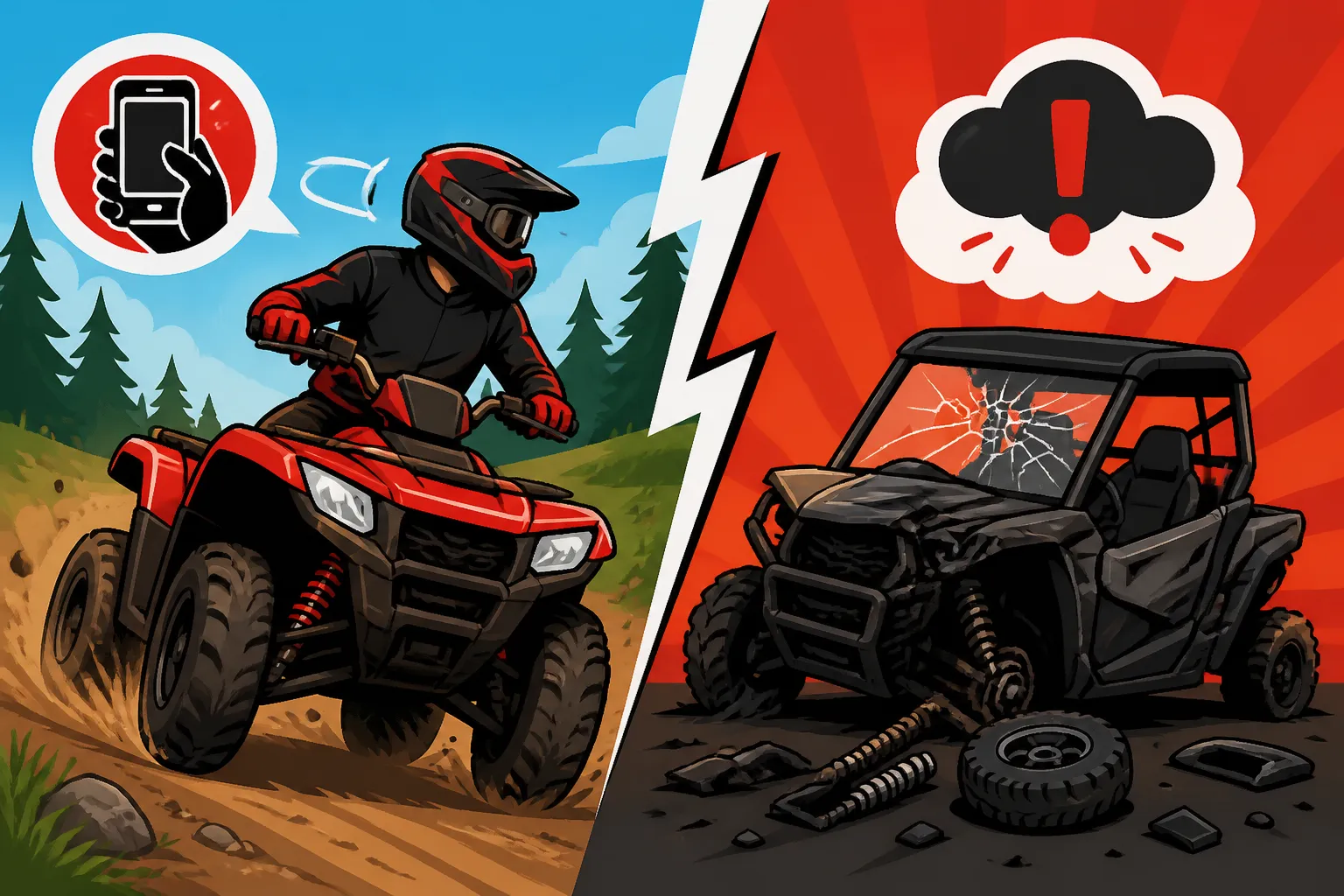
Why Careless Operation Can Cost You $5,000
It's incredibly frustrating when a fun day out on your ATV or UTV suddenly turns into a serious legal issue, especially when you feel like you weren't intentionally trying to cause harm. Many riders underestimate the weight of charges like "careless operation," thinking it's just a slap on the wrist. But in Manitoba, this charge can lead to some truly staggering financial penalties and other headaches. This guide is here to shed light on what careless operation actually means for off-road enthusiasts in our province and how it can potentially cost you up to $5,000, and often much more.
What Exactly is "Careless Operation" on a Manitoba Trail or Road?
When you hear "careless operation," your mind might jump straight to extreme stunts or intentionally dangerous maneuvers. And while those certainly fall under the umbrella, the legal definition in Manitoba is far broader and often catches riders off guard with its nuances. It's not just about what you intended to do, but about the standard of care you exercised (or failed to exercise) while operating your machine.
More Than Just Reckless Driving: The Nuance of Careless
In Manitoba, careless operation isn't solely reserved for the most egregious acts of recklessness. It essentially refers to operating an off-road vehicle (ORV) without due care and attention, or without reasonable consideration for other persons or property. Think of it this way: the law expects you to operate your machine as a prudent and responsible rider would under similar circumstances. This means constantly assessing the environment, your machine's capabilities, your own skill level, and the potential impact of your actions on others and the land itself. A momentary lapse in judgment, an oversight, or simply not thinking through the potential consequences of your actions can be enough to warrant a careless operation charge. It's less about malicious intent and more about a failure to meet a reasonable standard of conduct. This broader interpretation means that even actions that seem minor or harmless to you could be seen differently by law enforcement, especially if they create a risk or inconvenience to others.
Common Scenarios That Can Lead to a Careless Charge
So, what does this look like in the real world? Imagine you're riding a familiar trail, perhaps one of the many fantastic routes maintained by local clubs. You might know every bump and turn, but if you're riding at a speed that's too high for conditions – maybe the trail is muddier than usual, or visibility is reduced due to dust – and you nearly collide with another rider or pedestrian, that's a prime example. It's not about how fast you can go, but how fast you should go given the circumstances. Another common scenario involves riding in areas where ORVs are restricted, even if you just "didn't see the sign." For instance, taking a shortcut through a farmer's field without permission, riding too close to dwellings after dark, or ignoring posted [Manitoba Bans Riding on Roadways] could easily lead to a careless charge. Even seemingly benign actions like excessive noise near cabins, or performing "doughnuts" in a gravel pit if it disturbs others or damages property, can be seen as operating without due care. An officer might witness a near-miss, observe you failing to yield right-of-way, or see you performing maneuvers that put yourself or others at risk, even if no actual accident occurred. The key is the potential for harm or disturbance, not just the actual harm. Always remember to consider [Manitoba Trail Etiquette Locals Expect] and the impact of your actions on others sharing the outdoor space.
The Steep Cost of Carelessness: Beyond the Initial Fine
When you're handed a ticket for careless operation, the number printed on it is often just the beginning of your financial woes. The true cost can snowball quickly, encompassing much more than just the immediate penalty. It’s a stark reminder that responsible riding isn't just about safety, but about protecting your wallet too.
Understanding the Financial Hit: Up to $5,000 and More
The general penalty for an offense under Manitoba's Off-Road Vehicles Act, which includes careless operation, can reach a substantial amount. While specific figures can change, the legislation provides for a maximum penalty that can be quite significant, often cited up to $5,000 for individuals, and even higher for corporations. This isn't just a flat rate; the courts have discretion to impose a fine that reflects the severity of the offense, any damages caused, and any previous infractions. For instance, if your careless operation leads to property damage or requires emergency services, you could find yourself liable for those costs on top of the fine. Imagine hitting a fence line while cutting a corner, or requiring a tow truck out of a precarious situation you put yourself in. These additional expenses stack up rapidly. Furthermore, there are often court costs and administrative fees that are added to any fine, which can easily add hundreds of dollars to the total. If you decide to dispute the charge, you might incur legal defense expenses to hire a lawyer, which can be thousands of dollars on their own, whether you win or lose. It's a heavy burden that can quickly eclipse the initial perceived "ticket price."
Here's a simplified look at how the costs can accumulate:
| Cost Category | Description | Potential Impact |
|---|---|---|
| Direct Fine | Statutory penalty for the careless operation offense itself. | Up to several thousand dollars |
| Court Costs | Fees associated with processing the case through the legal system. | Hundreds of dollars |
| Administrative Fees | Surcharges or additional fees applied by the province or municipality. | Dozens to hundreds of dollars |
| Property Damage | Costs to repair or replace property damaged (e.g., fences, signs, landscaping). | Highly variable, can be thousands |
| Emergency Services | Charges for police, ambulance, fire, or search and rescue if activated due to the incident. | Highly variable, can be thousands |
| Legal Counsel | Fees for a lawyer to represent you in court if you dispute the charge. | Thousands of dollars |
| Insurance Impact | Increased premiums in subsequent years due to the offense (see next section). | Hundreds to thousands over time |
| Machine Repairs | Cost to fix your own machine if damaged during the careless operation. | Highly variable, can be thousands |
Hidden Consequences: Insurance, Licence, and Reputation
Beyond the immediate financial hit, a careless operation charge can have lasting repercussions that might not be immediately obvious. One of the most significant hidden costs is the impact on your insurance rates. While [Manitoba Insurance Included With Registration] offers basic third-party liability, any additional coverage you carry for your ORV (like collision, comprehensive, or extended liability) could see a substantial increase in premiums after a conviction. Insurance companies view such charges as an indicator of higher risk, and that translates directly to higher payments for you over several years. This can add hundreds, if not thousands, of dollars to your cost of ownership over time.
Then there's the potential impact on your driver's licence. While ORV offenses are generally handled under the Off-Road Vehicles Act and not the Highway Traffic Act, there can be crossover. For example, if your careless operation involved crossing a provincial highway where a driver's licence is required, or if the incident was severe enough to be deemed reckless endangerment, it could potentially affect your regular driving record, leading to demerit points or even a suspension of your driver's licence. This is particularly concerning for those who rely on their driver's licence for work or daily life.
Finally, don't underestimate the blow to your reputation within the riding community. ORV clubs and associations actively promote safe and responsible riding. A conviction for careless operation could lead to your membership being revoked or suspended from a local club, limiting your access to maintained trails and organized rides. It can also damage your standing among fellow riders, especially if your actions put others at risk or caused damage. Nobody wants to be known as "that guy" who ruins it for everyone else. These consequences, while not always monetary, can significantly diminish your enjoyment and participation in the sport you love.
How to Avoid a Careless Operation Charge and Ride Responsibly
The good news is that avoiding a careless operation charge is entirely within your control. It comes down to a combination of knowledge, common sense, and respect for the rules and fellow outdoor enthusiasts. By adopting a mindset of responsible stewardship, you can enjoy the thrill of ORV riding without the stress of legal issues.
Know the Rules: Education is Your Best Defence
One of the easiest ways to fall afoul of the law is simply not knowing what the law expects of you. In Manitoba, ORV regulations are quite specific and cover everything from registration to where and how you can ride. Your absolute best defense against a careless operation charge is to thoroughly educate yourself. Start by familiarizing yourself with the provincial Off-Road Vehicles Act. This document outlines the fundamental operating rules, age restrictions, and equipment requirements. Don't stop there, though! Local bylaws, created by [Manitoba Municipal By-Law Powers], can vary significantly from one community to another. A town might have specific restrictions on noise, hours of operation, or even designated routes within their boundaries that differ from provincial guidelines. Always check with the local municipality or the local government district office before riding in a new area.
Furthermore, if you're riding on club trails or in provincial parks, there will be specific rules governing those areas. Many clubs, like those within the Eastman ATV Association, have maps and guides that highlight permitted routes and any special conditions. Provincial parks, for instance, generally limit ORV use to designated trails only. Regularly review resources from government websites, ORV associations, and local tourism bodies. Ignorance of the law is rarely an excuse that holds up in court, so invest the time upfront. Knowing the rules about [Manitoba Rules for Crossing a Highway] or even [Manitoba Rules for Riding Crown Land] can save you a lot of grief.
Ride Defensively and Respectfully
Beyond knowing the written rules, responsible riding is deeply rooted in common sense and courtesy. Always ride defensively, assuming that other trail users, wildlife, or unexpected obstacles could appear at any moment. This means maintaining an appropriate speed for the conditions – factoring in visibility, terrain, and traffic – and keeping your machine under control at all times. If you're encountering tight turns, blind crests, or crowded areas, slow down considerably. Be vigilant for other riders, hikers, cyclists, and even horseback riders who might be sharing the trails. Yield the right-of-way when appropriate and always pass with caution, giving ample space.
Respect for the environment is paramount. Stick to marked trails and avoid riding in sensitive areas, wetlands, or private property unless you have explicit permission. [Manitoba Trespass Law for Riders] is very clear on this. Minimize your impact on the natural surroundings and never disturb wildlife. Keep noise levels reasonable, especially when passing near cabins, campgrounds, or residential areas. Remember that not everyone shares your enthusiasm for ORVs, and being considerate helps maintain positive relationships within the broader community. Accessories from brands like SuperATV, such as a sturdy winch, are designed for recovery and utility, not for enabling reckless behaviour that gets you stuck in the first place. Use your equipment wisely and with foresight, not as a green light for pushing limits beyond what's safe or legal.
Equip Your Machine for Safety, Not Just Thrills
The way you equip and maintain your machine plays a crucial role in preventing careless operation incidents. A poorly maintained ORV is an accident waiting to happen. Regularly check your brakes, tires, lights, and steering components. Ensure your machine is in good working order before every ride. This proactive approach ensures that your machine responds predictably, allowing you to maintain control in various situations.
Beyond basic maintenance, consider investing in accessories that genuinely enhance safety and control, rather than just raw performance. For example, quality tires designed for the terrain you ride most often can significantly improve traction and stability. Skid plates protect vital undercarriage components from damage, which can prevent unexpected breakdowns or control issues. Bright LED light bars, like those offered by SuperATV, improve visibility during early morning or late evening rides, helping you spot obstacles or other trail users more easily. This isn't about making your machine invincible, but about giving yourself the best possible tools to react safely to unforeseen circumstances. Always wear appropriate personal protective equipment, including a properly fitted helmet that meets accepted standards, as outlined in [Manitoba Helmet Law and Its Exemptions]. By preparing yourself and your machine thoroughly, you not only make your rides more enjoyable but also significantly reduce the risk of facing a costly careless operation charge.
Disclaimer
This article is for general informational purposes only and does not constitute professional advice. Laws, prices and regulations vary by location and change over time. Consult a qualified professional for guidance on your specific situation.