Passengers Only as Designed
It can be incredibly frustrating when you just want to share the adventure of Manitoba's incredible outdoors with a friend or family member, only to realize that the rules around carrying passengers on your ATV or UTV aren't as straightforward as you might think. Many riders assume if there's space, or if they can add a seat, it's fair game. However, in Manitoba, there's a crucial regulation that often trips people up: "Passengers Only as Designed." This guide is here to untangle what that really means for your off-road machine and your riding plans, ensuring you stay safe and on the right side of the law.
Understanding the Core Rule: "Passengers Only as Designed"
When you’re out enjoying the trails or even just working on your property, the temptation to bring an extra person along on your off-road vehicle can be strong. But in Manitoba, the law is quite clear: your ATV or UTV can only carry as many passengers as it was designed for by the manufacturer. This isn't just a suggestion; it's a fundamental safety and legal principle that impacts every ride. It’s about more than just finding a spot for someone to sit; it’s about the vehicle’s inherent stability, handling, and safety features.
What "As Designed" Really Means for ATVs
For All-Terrain Vehicles (ATVs), the "as designed" rule typically boils down to a fundamental distinction: is your machine a single-rider model or a two-up (tandem) model? A single-rider ATV, no matter how large or stable it feels, is engineered for one person only. This means the balance, suspension, power, and braking systems are all calibrated for a single operator. If it doesn't have a designated, extended seat, separate footrests for a passenger, and handholds, it's a single-rider machine. Trying to squeeze a passenger on behind you, even for a short distance, fundamentally changes how the ATV performs and significantly increases the risk of an accident. We've all seen riders double up, often out of convenience or simply not knowing better, but the reality is that it puts both people in a precarious position, far from the manufacturer's intended design.
Two-up ATVs, on the other hand, are specifically built to accommodate a passenger. They feature a longer seat, often slightly raised for the passenger, along with dedicated passenger footrests and handholds. These design elements are not just cosmetic; they are critical for maintaining balance and safety with a second person on board. The frame, suspension, and often the engine tuning are adjusted to handle the additional weight and different weight distribution. It's a significant difference from trying to make a single-rider machine do double duty. Always check your owner's manual or the decals on your ATV to confirm its intended passenger capacity.
UTVs and Their Designated Seating
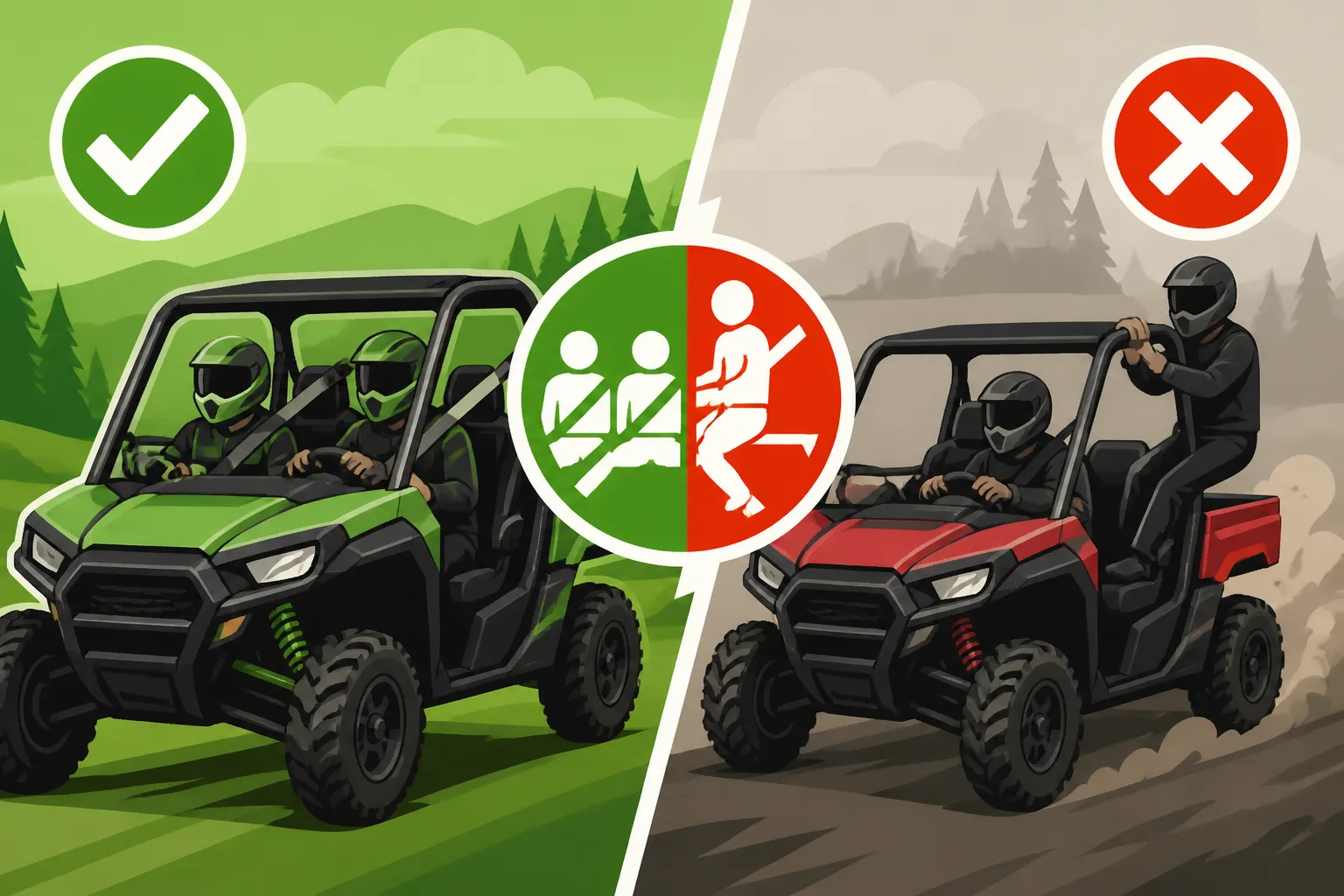
Side-by-Sides (UTVs) generally offer more obvious passenger capacity, often resembling small off-road cars with bench or bucket seats, seatbelts, and a roll-over protective structure (ROPS). For UTVs, "as designed" means adhering to the number of seating positions equipped with seatbelts from the factory. If your UTV has two bucket seats and two seatbelts, it's designed for two occupants. If it has a bench seat with three distinct seating areas and three seatbelts, then three occupants are permissible.
The key here is designated seating with appropriate safety restraints. Just like with ATVs, you can’t simply add a milk crate or a temporary cushion to the back of a UTV and consider it a safe or legal passenger spot. UTV manufacturers go to great lengths to engineer these vehicles for stability and occupant protection within their stated capacities. The roll cage, the seatbelt geometry, and even the placement of grab handles are all part of a cohesive safety system designed for a specific number of passengers. Ignoring these design specifications can compromise the entire system in the event of an unexpected bump, sudden stop, or rollover, which nobody wants to experience out on the trails.
Why This Rule Matters: Safety and Liability
This rule isn't just about technicalities; it's rooted in very real concerns for rider safety and the potential for serious legal and financial consequences. Many of us have a casual attitude towards off-roading, especially when we're familiar with our machines and the terrain. However, carrying an undesignated passenger fundamentally alters the risk profile of your ride, turning a relatively safe excursion into a potentially dangerous one. Understanding the "why" behind this rule can help you make safer choices and avoid costly mistakes.
The Dangers of Undesignated Passengers
When you add an extra person to an ATV or UTV that wasn't designed for it, you immediately introduce several significant dangers. On an ATV, the most critical issue is stability. ATVs are designed to be ridden actively, with the operator shifting their weight to maintain balance and steer. A passenger, especially one without designated footrests and handholds, can't effectively participate in this active riding style. They become dead weight, often shifting unpredictably and making it incredibly difficult for the operator to control the machine, particularly on uneven terrain, during turns, or when climbing hills. Overloading also strains the suspension, brakes, and engine, reducing their effectiveness and increasing the risk of mechanical failure. Imagine trying to make a sharp turn on a muddy trail, only to have your passenger lurch unexpectedly, throwing off your balance—that's a recipe for disaster.
For UTVs, while they are inherently more stable, overloading beyond their designated seating capacity can still lead to problems. It changes the vehicle's centre of gravity, making it more prone to tipping, especially on side hills or during evasive maneuvers. Braking distances can increase, and acceleration can be sluggish, making it harder to react to sudden obstacles. Furthermore, undesignated passengers in a UTV would typically be without seatbelts or the protection of the ROPS, exposing them to severe injury in a collision or rollover. These aren't just theoretical risks; they are real-world scenarios that can lead to life-altering injuries for everyone involved.
The Legal and Insurance Ramifications
Beyond the immediate safety concerns, failing to adhere to the "Passengers Only as Designed" rule carries substantial legal and insurance risks in Manitoba. If you are stopped by law enforcement, you could face tickets and fines for operating your off-road vehicle outside of its legal design parameters. Officers are trained to look for these types of violations as part of their routine checks, particularly in popular riding areas. It's not uncommon for riders to receive citations for having an extra person on a single-rider quad.
Even more significantly, violating this rule can have devastating consequences for your insurance coverage. While [Manitoba Insurance Included With Registration] provides basic third-party liability coverage, this coverage is contingent on you operating your machine legally and safely. If an accident occurs while you are carrying an undesignated passenger, your insurance provider could deny your claim. This means you could be personally liable for any damages to property, injuries sustained by your passenger, or injuries to anyone else involved in the accident. This financial burden could be immense, potentially wiping out savings or leading to long-term debt. It’s a harsh reality that many riders don’t consider until it’s too late. The small convenience of bringing an extra person along is simply not worth the massive financial and legal risk.
Identifying Designated Passenger Seating
Knowing the rule is one thing, but actually applying it to your machine requires a bit of detective work. Manufacturers design vehicles with specific purposes and capacities in mind, and that information is readily available if you know where to look. It’s about being proactive and responsible, rather than just guessing or assuming.
Checking Your Machine's Manufacturer Specifications
The absolute best place to confirm your ATV or UTV's passenger capacity is its owner's manual. This often-overlooked document contains a wealth of critical information about your machine's design, operation, and safety limitations. The manual will clearly state whether your ATV is a single-rider or two-up model, and for UTVs, it will specify the number of designated seating positions. If you don't have the physical manual, most manufacturers provide digital versions on their websites, easily accessible with your machine's make, model, and year.
Beyond the manual, look for decals or stickers on your machine itself. Manufacturers are required to place safety warnings and specifications on their vehicles. These decals often indicate seating capacity, maximum weight limits, and other crucial details. While aftermarket companies like SuperATV offer fantastic accessories for customizing and enhancing your machine, installing a new seat, storage box, or cargo rack does not automatically change your machine's original manufacturer-designed passenger certification in the eyes of Manitoba law. The "as designed" rule refers to the vehicle's factory engineering, not what modifications you might have added later.
The Importance of Proper Footrests and Handholds
For an ATV to be considered "designed" for a passenger, it must have dedicated, secure footrests for the passenger, positioned appropriately to keep their feet safely away from moving parts and to allow them to maintain balance. These aren't just little pegs; they are typically sturdy, integrated components of the machine's frame. Likewise, there must be strong, easily accessible handholds for the passenger to grip. These are usually bars or handles securely bolted to the frame or the rear rack, providing stability during acceleration, braking, and over rough terrain. Without these essential features, a passenger has no reliable way to secure themselves, making them highly vulnerable to being thrown from the machine.
For UTVs, the equivalent is secure seating with seatbelts and often grab handles. A passenger in a UTV should have a clearly defined seat, not just be crammed into a cargo area or perched on the edge of a bench. The presence of a seatbelt is a key indicator of a designated seating position. If there's no seatbelt, it's not a designated passenger spot, regardless of how much space seems to be available. These features are not optional extras; they are integral to the safe transportation of passengers as intended by the vehicle's design.
Common Misconceptions and Practical Advice
The "Passengers Only as Designed" rule can feel restrictive, especially when you see other riders bending or breaking it. It's easy to fall into common traps of thinking that exceptions apply to your situation. Let's tackle some of these misconceptions and offer practical advice to ensure your rides are both enjoyable and compliant with Manitoba's regulations. Knowing the nuances can save you a lot of grief.
"Just for a Short Ride" or "On My Own Property"
One of the most common justifications riders use for carrying an undesignated passenger is, "Oh, it's just for a short ride down the road," or "We're only on my own land, so the rules don't apply." This is a dangerous misconception. In Manitoba, the Off-Road Vehicles Act generally applies wherever you operate your machine. While there are some specific [Manitoba Registration Exemptions Explained] for riding solely on your own land (like not needing registration), the operating rules, including passenger limitations, still apply for safety reasons. An accident on your own property with an undesignated passenger could still lead to serious injuries and potential liability issues, even if you avoid a ticket.
Think about it this way: the laws are designed to protect people from harm, regardless of how far or where they are riding. A short ride on a gravel road can still involve unexpected bumps, sudden stops, or even other vehicles. Even on private land, terrain can be unpredictable, and the consequences of an overloaded or improperly handled machine can be just as severe. The law emphasizes that [Registration Applies Everywhere, Not Just on a Trail] for a reason—safety is paramount across all riding environments. It’s better to err on the side of caution and ensure that every passenger, no matter the distance or location, is riding in a designated and safe manner.
Equipping Your Designated Passenger Safely
Even if your machine is legitimately designed for a passenger, your responsibility doesn't end there. Equipping your passenger safely is just as crucial as having the correct seating. In Manitoba, just like operators, all passengers must wear an approved helmet. There are very specific [Manitoba Helmet Law and Its Exemptions] to consider. A properly fitted, DOT-approved helmet is non-negotiable for their safety. Beyond helmets, passengers should wear appropriate riding gear, including eye protection, gloves, long pants, a long-sleeved shirt or jacket, and sturdy over-the-ankle boots. This protective gear helps guard against branches, debris, minor spills, and provides crucial impact protection in a more serious incident.
Ensuring your passenger understands their role is also vital. They need to know to hold on tight to the designated handholds, keep their feet on the footrests, and not make sudden movements that could throw off the machine's balance. A quick pre-ride briefing can make a huge difference, especially if they are new to riding as a passenger on an ORV. Good communication and proper gear are your best friends in ensuring a safe and enjoyable ride for everyone involved.
When in Doubt, Check with an Autopac Agent
Navigating the specifics of off-road vehicle regulations can sometimes feel like trying to understand a new language. If you're ever unsure about your machine's passenger capacity, or any other aspect of Manitoba's ORV laws, the best course of action is to seek official clarification. Your local Autopac agent is an excellent resource for these kinds of questions. [Manitoba Autopac Agents and ORV Registration] are well-versed in the provincial regulations and can provide accurate information tailored to your specific situation. They can look up your machine's details, explain the intricacies of the "as designed" rule, and help you ensure you're compliant.
Don't rely on hearsay or what "everyone else does." The rules are there for a reason, and understanding them is your responsibility as an operator. A quick call or visit to an Autopac agent can prevent a potential fine, an accident, or an insurance headache down the road. It's always better to be informed and safe than to regret not asking later.
Here's a quick overview of typical passenger capacities for different types of off-road vehicles as they are commonly designed by manufacturers:
| Machine Type | Typical "As Designed" Passenger Capacity | Key Identifying Features | Legal/Safety Implications of Overloading |
|---|---|---|---|
| Single-Rider ATV | 1 (Operator only) | Short, single-person seat; no dedicated passenger footrests or handholds; no rear backrest. | Significantly reduces stability, impairs steering and braking, high risk of passenger being ejected. |
| Two-Up (Tandem) ATV | 2 (Operator + 1 passenger) | Long, extended seat (often raised for passenger); dedicated passenger footrests and handholds. | Compromises vehicle balance if more than 2, strains suspension, not designed for additional load points. |
| Two-Seat UTV | 2 (Operator + 1 passenger) | Two bucket seats with seatbelts; roll cage protection; passenger grab handle. | Overloading can compromise roll cage integrity, strain seatbelts, alter handling and braking. |
| Three-Seat UTV | 3 (Operator + 2 passengers) | Bench seat with 3 distinct seating areas and 3 seatbelts; ROPS. | Exceeding 3 compromises individual safety restraints, affects vehicle stability and control. |
| Four-Seat UTV | 4 (Operator + 3 passengers) | Two rows of bucket or bench seating with 4 seatbelts; full ROPS. | Undermines designed safety features, significantly impacts handling, braking, and potential liability. |
This table is a general guide; always consult your specific owner's manual for definitive information on your particular machine. The "as designed" rule is fundamental, and adhering to it is a cornerstone of safe and legal off-road operation in Manitoba.
Disclaimer
This article is for general informational purposes only and does not constitute professional advice. Laws, prices and regulations vary by location and change over time. Consult a qualified professional for guidance on your specific situation.