Where a Learner Licence Lets a 15-Year-Old Ride
It can be incredibly confusing and frustrating for parents and young riders in Manitoba to figure out exactly where a 15-year-old with a learner's licence is legally allowed to ride an off-road vehicle. With so many rules about age, supervision, and different types of terrain, it often feels like you need a law degree just to plan a simple outing. This guide is here to cut through that confusion, clearly outlining the legal riding zones for a 15-year-old holding a learner's permit and offering practical advice for safe and responsible enjoyment.
Navigating Manitoba's Age Rules for Young ORV Operators
Manitoba’s Off-Road Vehicles Act has specific provisions tailored to different age groups, recognizing that experience and maturity play a huge role in safe operation. It's not a one-size-fits-all approach, and that's often where the confusion begins. As a parent or guardian, you want your young rider to have fun and develop their skills, but you also need to ensure they're staying within the bounds of the law for their safety and to avoid penalties.
The Learner Stage: What It Means for ORV Operation
When a 15-year-old obtains a Class 6 Learner Stage (Motorcycle Learner) licence, it marks a significant step towards independent driving, but it comes with distinct limitations, especially when applied to off-road vehicles. This isn't just about car driving; it's about the general understanding of operating a motorized vehicle. For an ORV, this learner's permit doesn't suddenly grant them full freedom. Instead, it places them in a specific category that requires strict adherence to supervision rules and designated riding areas. The intent behind these rules is to allow young riders to gain experience in a controlled environment before being exposed to the complexities and dangers of more open or public riding spaces. Think of it as earning your stripes, one supervised ride at a time. The province wants to foster responsible riders, and that starts with careful, guided learning.
Why Age and Licence Matter So Much
The legal age and licence requirements aren't arbitrary hurdles; they're foundational to rider safety and public responsibility. For ORVs, the rules are designed to protect not just the young rider, but also other trail users and private property. At 15, while a rider might feel perfectly capable, the law understands that judgment and risk assessment skills are still developing. A learner's permit signifies that formal training and experience are still required. This is why you'll see a clear progression in Manitoba's ORV age requirements, from [Manitoba Riders Under 14 Need Supervision] to [Manitoba Riders 14 and Over in Ditches] and eventually to [Manitoba Riders 16 With a Full Licence]. Each step adds more responsibility and fewer restrictions, mirroring the development of the rider's capabilities. Understanding this progression helps parents appreciate why a 15-year-old with a learner's permit has particular limitations compared to an older, fully licensed rider.
Approved Riding Zones for a 15-Year-Old with a Learner's Permit
So, with those important distinctions in mind, where can a 15-year-old with a learner's permit actually ride? The short answer often leaves young riders feeling a bit disappointed, but the rationale is always safety and controlled skill development. The focus is primarily on private land and specific designated trails, always with a critical caveat: supervision.
Private Land: The Safest Bet for Practice
When it comes to providing a safe, controlled environment for a 15-year-old learner to gain experience, private land is by far the most straightforward and least restricted option. If you own acreage, a farm, or have explicit permission to ride on a friend's or family member's private property, this is your primary domain. On private land, the provincial ORV Act's operating rules regarding ditches, roadways, and crossings don't apply in the same way they do on public land. This allows for a fantastic opportunity to practice basic skills, learn machine control, and understand how the ORV handles different types of terrain without the added pressure of public rules and traffic. It's the perfect place to master starting, stopping, turning, and navigating minor obstacles. Just remember that the owner's consent is always paramount, and even on private land, common sense safety rules, like wearing a helmet and riding within the machine's capabilities, should always be followed. [Manitoba Private Land Permission] is a must.
Designated Trails with Proper Supervision
While private land is ideal for practice, many young riders dream of exploring Manitoba's vast trail network. A 15-year-old with a learner's permit can ride on designated ORV trails, but critically, they must be under the direct supervision of an adult who holds a valid driver's licence. These designated trails include club trails maintained by organizations like the Eastman ATV Association or the Westman ATV Association, as well as specific multi-use trails on Crown Land. It’s important to research specific trail rules before heading out, as some areas may have additional restrictions. For example, some provincial parks might have designated routes, but only allow machines on those specific routes, with other areas completely off-limits. Checking [Manitoba Trail Conditions Before You Haul] is always a good idea, as is verifying specific park or club rules. While riding on these trails, the supervising adult must be actively present and responsible for the learner's actions, ensuring they are riding safely and adhering to all trail etiquette.
Understanding the "Supervision" Requirement
The concept of "supervision" isn't just about having an adult somewhere in the vicinity. For a 15-year-old with a learner's permit riding an ORV, supervision means the adult must be a fully licensed driver (not another learner) and must be actively monitoring the young rider. While the law doesn't explicitly state the exact distance, the spirit of the rule implies the supervisor must be close enough to intervene quickly if needed, to offer immediate instruction, and to ensure safety. This typically means riding alongside them, or at least within direct sight and earshot. It's about mentorship and guidance, not just passive oversight. It's also important that the supervising adult understands the ORV Act themselves, including rules around safety gear, speed limits, and environmental protection. Remember that [Parents Sign for Owners Aged 16 to 18], so at 15, parental involvement is even more direct.
Important Restrictions and What's Off-Limits
It's just as important to understand where a 15-year-old with a learner's permit cannot ride, as knowing the allowed areas. These restrictions are in place for safety, and ignoring them can lead to serious consequences, including fines and potential injury. Many of these rules are designed to keep ORVs separate from regular vehicle traffic, which is a key principle of the ORV Act.
Roadways, Ditches, and Highway Crossings: A Strict No-Go
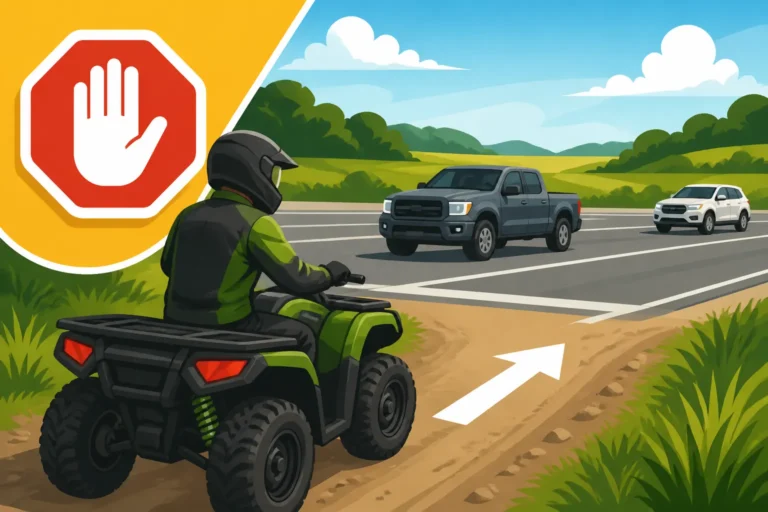
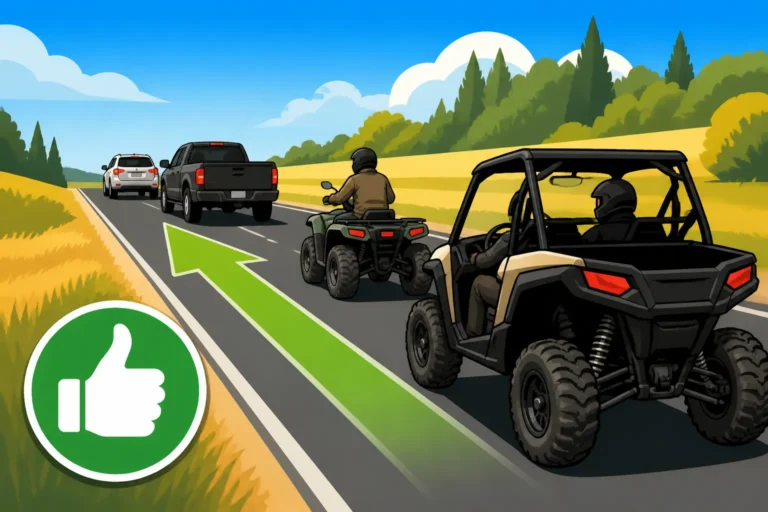
This is perhaps the most significant restriction for a 15-year-old with a learner's permit: they are generally not allowed to operate an ORV on public roadways, in ditches adjacent to roadways, or to cross controlled highways. While older, fully licensed riders have some exceptions for ditch riding and highway crossings under very specific conditions (like [Manitoba Ditch Riding Rules] or [Manitoba Crossing Rules at 5 Metres and 3 Kilometres]), these do not apply to a 15-year-old with a learner's permit. The rationale here is clear: these are environments where ORVs interact with conventional traffic, which requires a higher level of judgment, experience, and understanding of road rules than a learner is deemed to possess. Attempting to ride in these areas not only puts the young rider at extreme risk but also exposes the supervising adult to legal repercussions. Stick to private land and designated trails under supervision.
The Role of Municipal By-Laws and Local Rules
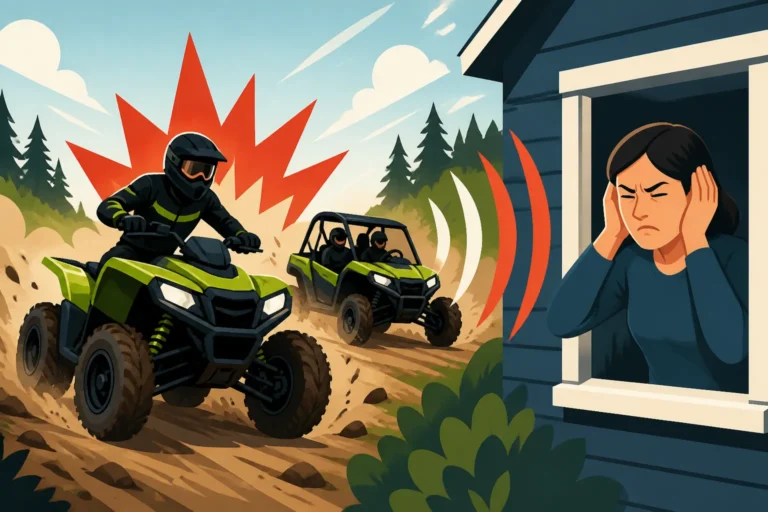
Adding another layer of complexity, municipalities in Manitoba have the power to create their own by-laws regarding ORV operation within their boundaries. While the provincial Act sets the baseline, a local municipality, Local Government District, or even a Northern Community Council might have stricter rules. For example, a town might completely prohibit ORVs within its limits, even on designated routes that might otherwise be permissible elsewhere. This means that even if a provincial trail runs through or near a community, a young rider with a learner's permit (and their supervisor) must be aware of and abide by any local by-laws. Before embarking on a ride that might take you near or through a community, it's always wise to check with the local authorities. Many communities, especially in northern Manitoba, have different rules due to their unique circumstances, as highlighted in [Manitoba Remote Community Exemption] or [Manitoba Northern Community Councils]. Always confirm local rules to avoid an unexpected ticket or incident.
Setting Up for a Safe and Enjoyable Riding Experience
Even within the approved riding zones, safety should always be the top priority. Equipping the young rider and their machine properly, and fostering a responsible riding attitude, will ensure that their learner experience is positive and effective. This is where parents can truly make a difference, going beyond just legal compliance to instil a strong sense of safety and respect for the activity.
Essential Gear and Machine Preparedness
Before any young rider, especially a learner, heads out, their machine needs to be in tip-top shape, and they need to be wearing the right gear.
For the Rider:
- Helmet: Absolutely mandatory. It must be a CSA, DOT, or Snell-approved helmet, properly fitted. There are no exemptions for young riders, even if the machine has a roll cage like some side-by-sides. [Manitoba Helmet Law and Its Exemptions] details the specific requirements.
- Eye Protection: Goggles or a helmet visor are essential to protect against dust, branches, and debris.
- Gloves: Protect hands from blisters and minor abrasions.
- Long Pants and Long-Sleeved Shirt/Jacket: Offers protection from scrapes, sun, and flying debris.
- Over-the-Ankle Boots: Provide ankle support and protection.
For the Machine:
- Maintenance: Ensure the ORV is well-maintained, with good brakes, proper tire pressure, and all lights working (especially if riding at dusk).
- Spark Arrester: A functional spark arrester is required year-round to prevent wildfires. [Manitoba Spark Arrester Requirements]
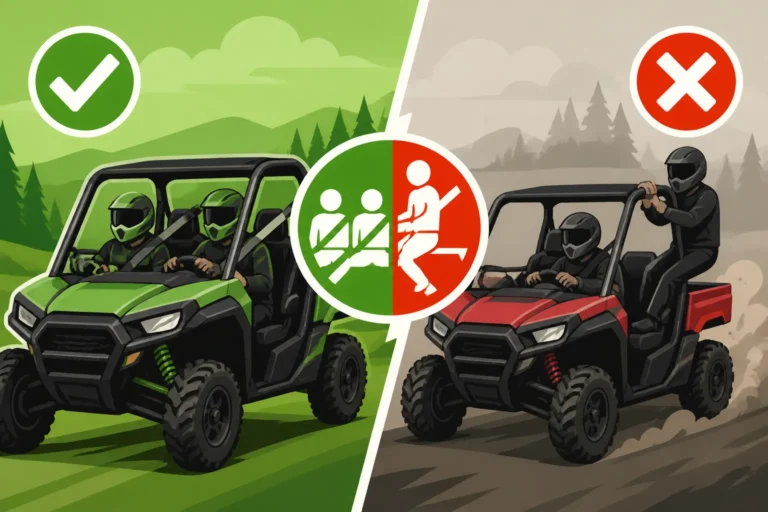
- Safety Features: For machines like side-by-sides, ensure seatbelts are used and that the number of passengers adheres to the manufacturer's design.
- Modifications: While some riders opt for aftermarket parts to enhance performance, for a learner, the focus should be on safety and control. Consider practical additions like durable skid plates to protect the undercarriage from unexpected impacts, or perhaps specific tire types from a reputable brand like SuperATV that offer better grip on varied terrain, increasing stability and confidence for a developing rider. Such modifications should enhance safety and control, not just speed.
Building Skills and Confidence Responsibly
The learner stage is all about building a solid foundation of skills and confidence. This isn't a race to full independence; it's a journey.
- Start Simple: Begin on flat, open terrain on private property before moving to more challenging areas. Practice basic manoeuvres repeatedly.
- Gradual Progression: Introduce new terrain and obstacles slowly. Don't push a young rider beyond their comfort level. A trail that's perfect for a seasoned rider might be overwhelming for a learner.
- Focused Training: Consider informal "lessons" during each ride. Focus on specific skills like braking on different surfaces, navigating small turns, or maintaining balance.
- Communication: Maintain open communication with the young rider. Ask how they're feeling, what challenges they encountered, and what they want to try next. Their feedback is crucial.
- Patience and Encouragement: Learning takes time. Celebrate small victories and provide constructive feedback without discouraging them.
- Lead by Example: As a supervising adult, demonstrate responsible riding. Adhere to speed limits, show respect for the environment, and always wear your own safety gear.
- Formal Training (Optional but Recommended): While not mandatory in Manitoba, voluntary ORV safety courses can significantly enhance a young rider's skills and knowledge. These courses cover everything from basic operation to emergency procedures and environmental awareness, providing structured learning that complements supervised riding. Check out [Manitoba Safety Course Providers] for options. This structured learning can really help a young rider build foundational skills and confidence, which is invaluable.
By focusing on these elements, parents and young riders can ensure that the learner stage is a safe, educational, and ultimately very enjoyable period, setting the stage for a lifetime of responsible off-road adventures.
| Legal Riding Areas for a 15-Year-Old (Learner Permit) | Conditions & Requirements | What's Off-Limits |
|---|---|---|
| Private Land (Owned/Permitted) | Explicit landowner consent, Adult supervision | Public roadways, ditches, highway crossings |
| Designated ORV Trails (Club Trails, Crown Land) | Adult supervision, Check specific trail/park rules | Public roadways, ditches, highway crossings, undesignated areas |
Disclaimer
This article is for general informational purposes only and does not constitute professional advice. Laws, prices and regulations vary by location and change over time. Consult a qualified professional for guidance on your specific situation.