More Than Two Wheels Required
It's a common frustration for many riders in Manitoba: you've got your off-road machine, you're ready for an adventure, and you just need to get from one trail section to another, perhaps across a road or down a ditch. But what seems like a simple traverse can quickly become a legal headache, especially if you're not entirely clear on a fundamental rule. This guide will clarify a crucial aspect of Manitoba's Off-Road Vehicles Act: the requirement for "more than two wheels" for certain types of road access, and what that means for your riding plans.
The Core Rule: Why More Than Two Than Two Wheels Matters for Manitoba ORVs
When we talk about off-road vehicles (ORVs) in Manitoba, many people picture ATVs, UTVs, and even snowmobiles. But the legal definition for road access, particularly for ditch riding and highway crossings, hinges on a very specific physical characteristic: the number of wheels. It might seem like a small detail, but it has massive implications for where and how you can operate your machine outside of designated trails or private land.
Defining the "More Than Two Wheels" Standard
The Manitoba Off-Road Vehicles Act is quite clear when it discusses the conditions under which an ORV can utilize portions of public roadways, such as ditches or for crossing. For an ORV to even be considered for these limited forms of road access, it must have more than two wheels. This foundational requirement sets a clear boundary, immediately categorizing different types of off-road machines for the purpose of road interaction. Think of your classic quad or an agile side-by-side; these machines inherently meet this wheel count requirement, which is why they are often discussed in the context of [Manitoba Ditch Riding Rules] or [Manitoba Crossing Rules at 5 Metres and 3 Kilometres]. It’s the starting point, not the end, but without meeting this first hurdle, further discussion about permits or licenses is almost irrelevant for roadway access.
This rule isn't just an arbitrary number; it's rooted in the design and stability characteristics often associated with vehicles of different wheel counts. A three-wheeled ATV (though less common now) or a four-wheeled side-by-side like those enhanced with accessories from SuperATV for better performance, are generally more stable at lower speeds and on uneven terrain than a two-wheeled vehicle. This inherent stability, particularly during a sudden stop or swerve, is a key consideration when public safety on or near roadways is being evaluated. The act seeks to delineate which types of ORVs are deemed acceptably safe for these specific, limited interactions with the road network.
The Specific Exclusion for Two-Wheeled Machines
Here's where many dirt bike enthusiasts in Manitoba face a tough pill to swallow: if your off-road machine only has two wheels, it is explicitly excluded from the provisions that allow ORVs to ride in ditches or cross highways. This means that trail bikes, dirt bikes, and other similar two-wheeled off-road motorcycles, while perfectly legitimate ORVs for trail use, are not permitted to operate in the right-of-way of a provincial road or highway, or to cross them, under the specific permissions granted to "more than two-wheeled" ORVs. Imagine planning a route that requires you to hop into a ditch for a short stretch to link up two forest trails. If you're on a quad, that might be permissible under certain conditions. If you're on a dirt bike, it's a definite no-go. This distinction is often a source of confusion and frustration, as riders might assume "off-road vehicle" covers all their machines equally when it comes to ditch access.
It’s crucial to understand that this isn't about whether your dirt bike can handle the terrain; it's about the legal framework. Even if you're an experienced rider on a high-performance dirt bike, the law simply doesn't extend the same road access privileges to your machine as it does to a four-wheeled ATV. This exclusion highlights a gap in how some riders might interpret the broad term "ORV," emphasizing the need to dive into the specifics of the Off-Road Vehicles Act. For more details on what other machines are covered or excluded, you might want to read [Manitoba Classes Covered by the Act] and [Manitoba Machines the Act Excludes].
Common Misconceptions About Road Access for All Off-Roaders
One of the biggest misconceptions I hear from riders is that if a machine is registered, it automatically gets some form of road access. "I registered my dirt bike, why can't I just use the ditch?" is a question that comes up more often than you'd think. While [Manitoba ORV Registration Through MPI] is mandatory for most off-road riding, registration alone does not grant universal road access. The "more than two wheels" rule is an additional, critical filter. Many people see ATVs and UTVs travelling in ditches or crossing roads and assume their dirt bike, also an off-road vehicle, must have the same privileges. This simply isn't the case in Manitoba.
Another common misunderstanding is that rural roads are "different" and therefore the rules don't apply as strictly. While municipal by-laws can sometimes open up specific roads for ORV use, these by-laws usually pertain to four-wheeled machines and still fall under the umbrella of provincial legislation. The provincial "more than two wheels" rule is a baseline, and municipal by-laws typically don't override it to grant two-wheelers ditch or crossing access where provincial law explicitly restricts it. Always check local rules, but remember the provincial framework is the foundation. Thinking a simple country road exempts you from this rule could lead to unwanted tickets or even dangerous situations.
Impact on Your Ride: Where You Can and Cannot Go
This specific rule about wheel count fundamentally changes how you plan your routes and where you can legally operate your off-road machine in Manitoba. It's not just a technicality; it directly impacts your freedom to connect trails, access remote areas, or even just get home.
Ditch Riding: An ATV or UTV Privilege, Not a Dirt Bike Right
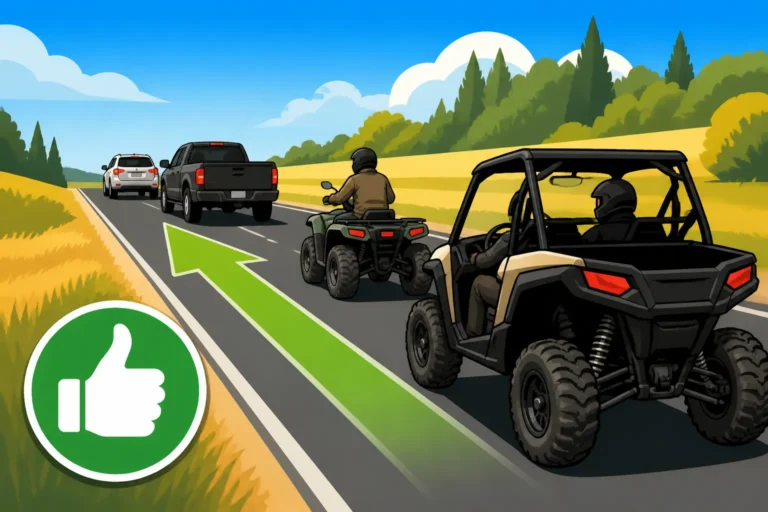
For many quad and side-by-side riders, the ability to ride in ditches is a critical component of their route planning, offering connections between trails or access to properties. The Off-Road Vehicles Act does allow registered ORVs with more than two wheels to operate in ditches under specific conditions, such as travelling on the right side of the roadway, in the same direction as traffic, and adhering to speed limits. This is a huge convenience, allowing riders to extend their range and explore more of Manitoba's vast landscape. Whether you're riding a robust utility quad or a souped-up side-by-side with a lift kit and upgraded tires from SuperATV, these machines are designed for stability and control that the province deems acceptable for ditch use.
However, if you're on a dirt bike, this privilege simply doesn't exist. You cannot legally ride in the ditch of a provincial road or highway in Manitoba, even if your machine is registered and insured, and even if you are an adult with a valid driver's licence. This can be a major hurdle for dirt bike riders who might find themselves needing to cover short distances between trails or wanting to access hunting grounds that are only reachable via a ditch alongside a main road. It forces a different kind of planning, often requiring trailering your bike over those road sections instead of riding it. [Manitoba Ditch Riding Rules] elaborates further on the specific conditions for those machines that are allowed.
Highway Crossings: A Critical Distinction
Similarly, the rule profoundly affects how you can cross public highways. For ORVs with more than two wheels, the Act outlines specific procedures for crossing a highway: you must stop, yield to traffic, cross at a right angle, and ensure a clear view of approaching traffic. These rules, detailed in [Manitoba Crossing Rules at 5 Metres and 3 Kilometres], are designed to minimize risk. For an ATV or UTV owner, knowing these rules means you can, with careful planning and execution, legally traverse a highway to reach a trail on the other side.
But again, for a two-wheeled off-road machine, these crossing provisions do not apply. A dirt bike cannot legally cross a provincial highway under the ORV Act's specific permissions. This is another major point of contention for riders who see their friends on quads making these crossings while they are forced to find alternative (and often much longer) routes, or even to load their bike onto a trailer to move it. This restriction isn't just about convenience; it's about the inherent legal boundaries placed on different machine types when interacting with higher-speed traffic environments.
Exploring Legal Riding Zones for Two-Wheelers
So, if dirt bikes can't ride in ditches or cross highways, where can they legally go in Manitoba? The good news is that Manitoba offers extensive opportunities for two-wheeled off-road riding, but they are primarily focused on designated trails, private land (with permission), and certain Crown lands where ORV use is permitted. Clubs like the Agassiz Trail system, and various forestry trails, are excellent examples of places where dirt bikes can thrive. It's all about sticking to areas explicitly designed for or legally open to off-road machines, away from provincial road allowances.
For a dirt bike enthusiast, this means doing your homework on [Manitoba ATV Trails: Club Ground and Crown Land] and ensuring your route strictly avoids any interaction with provincial road ditches or crossing points. It often requires more careful planning, possibly involving longer loops or the use of a trailer for sections that would be an easy ditch ride for a quad. While the "more than two wheels" rule feels restrictive for dirt bike riders, it funnels them towards the vast network of genuine off-road trails and areas that don't involve the complexities and dangers of road interaction.
Understanding the "Why" Behind Manitoba's Wheel Count Rule
Rules often seem arbitrary, but there's almost always a reasoned purpose behind them, especially when public safety is involved. The "more than two wheels" requirement for certain road access points in Manitoba is no exception. It’s not about singling out specific machines for no reason; it’s about a combination of safety, practicality, and the overall design of the legislative framework.
Safety Considerations and Roadway Design
At its heart, the "more than two wheels" rule is a safety measure. Two-wheeled vehicles, by their nature, have different handling characteristics than ATVs or UTVs, particularly at lower speeds, when stopping suddenly, or when encountering uneven terrain like a ditch. While an experienced dirt bike rider can handle challenging conditions, the legislative intent is to set a broader standard for all riders, regardless of individual skill. ATVs and side-by-sides, with their wider stances and four points of contact with the ground, are generally considered more stable platforms for traversing the varied and often unpredictable surfaces of a road ditch or for making a quick, controlled stop before crossing a busy highway.
The design of roadways themselves also plays a role. Ditches, while appearing like open space, are often uneven, can have hidden culverts, and are subject to varying grades. Introducing two-wheeled vehicles into this environment for regular transit, alongside faster-moving road traffic, increases the risk of accidents. The province aims to minimize this risk by limiting such interactions to machines that offer a greater degree of inherent stability and control under these specific, less-than-ideal conditions. The rule is a blanket approach to public safety, aiming to prevent incidents rather than reacting to them.
Enforcement and Clarity for Riders and Authorities
Imagine the chaos if every type of off-road vehicle had different, nuanced rules for every kind of road interaction. It would be a nightmare for riders trying to comply and for law enforcement trying to enforce. The "more than two wheels" rule provides a clear, unmistakable line in the sand. When an officer sees an off-road machine in a ditch, the first and easiest thing to verify is its wheel count. This clarity makes the law easier to understand for riders and simpler to enforce for authorities. There's less room for ambiguity, which in theory, should lead to better compliance and safer roads for everyone.
This straightforward approach avoids complex case-by-case judgments based on vehicle modifications or perceived rider skill, which would be impractical to legislate or enforce. Instead, it relies on an observable, objective characteristic. For riders, it means you don't need to guess; you know immediately if your machine meets this basic criterion for certain road access. This simple rule is part of why [Manitoba ORV Road Rules Explained] focuses so heavily on machine types.
The Broader Picture: How This Rule Fits With Other Regulations
This wheel count rule doesn't exist in a vacuum; it's a piece of a larger regulatory puzzle designed to manage ORV use responsibly across Manitoba. It works in conjunction with other regulations like [Manitoba Helmet Law and Its Exemptions], [Manitoba Age Tiers for Young Riders], and [Manitoba's Liability Coverage Requirement]. For instance, even if your machine has more than two wheels and is therefore eligible for ditch riding, you still need to ensure you meet all other operating requirements. You can't just jump into a ditch; you need to be registered, licensed (if applicable for crossing), and wearing the correct safety gear.
The rule also subtly encourages different types of off-road activities to occur in their most appropriate environments. Dirt bikes, with their agility and speed, are often best suited for dedicated trails, tracks, and open wilderness. ATVs and UTVs, with their utility and stability, can serve as effective connectors between these areas, or as work vehicles on shoulders or agricultural land, as long as they follow the [Manitoba's Agricultural Shoulder Exception] and other specific rules. This differentiation helps manage the diverse range of off-road activities while trying to maintain safety and minimize conflict with other road users.
Navigating the Rules: Tips for Manitoba Riders
Understanding the "more than two wheels" rule is just the first step. For a safe and legal riding season, whether you're on a quad, a side-by-side, or a dirt bike, you need to ensure you're fully compliant with all the relevant regulations.
Confirming Your Machine's Classification
The first and most important step for any rider is to clearly understand how their specific machine is classified under Manitoba's Off-Road Vehicles Act. Is it a two-wheeled vehicle, or does it have more than two wheels? This isn't always as simple as it sounds, especially with the wide array of specialized off-road vehicles available today. If you're unsure, consult your owner's manual or the manufacturer's specifications. For some unique or custom machines, it might even be worth contacting MPI directly or an Autopac agent for clarification. Knowing this fundamental detail dictates your legal options for ditch riding and highway crossings.
Once you know your machine's classification, you can then delve into the specific rules that apply to you. If you're on a dirt bike, accept that ditch riding and highway crossings are generally off-limits, and focus on discovering the fantastic trail networks available. If you're on a quad or UTV, you can confidently explore the rules regarding [Manitoba Ditch Riding With Traffic] and [Manitoba Crossings Need a Clear View], knowing your machine type is eligible, provided all other conditions are met.
Essential Checks for Permitted ORV Operations
Even if your ORV has more than two wheels and is theoretically allowed to use ditches or cross highways, there are many other boxes you need to tick before you hit the trail – or the ditch. These are non-negotiable for safe and legal operation:
- Registration and Insurance: Your ORV must be properly registered with MPI and have the mandatory liability coverage. This includes having your [Manitoba Registration Cards Carried at All Times] with you during your ride.
- Plate Mounting: Ensure your single Manitoba plate is correctly mounted on your machine. For quads and side-by-sides, this typically means the rear, visible and secure. Refer to [Manitoba Plate Mounting by Machine Type] for specifics.
- Operator Age and Licensing: The age requirements are strict, especially for young riders. If you're crossing a highway, you'll need a valid driver's licence. Check [Manitoba ATV Age Requirements] for the full details.
- Helmet and Safety Gear: Helmets are mandatory in almost all situations for operators and passengers. Ensure it meets accepted standards. [Manitoba Helmet Law and Its Exemptions] covers what you need to know.
- Machine Equipment: Your ORV needs to be in good working order, with proper lighting (if riding after dark), a spark arrester, and any other required safety equipment.
- Local By-Laws: Always check for specific [Manitoba Municipal By-Law Powers] in the area you plan to ride. Municipalities can have additional restrictions or, occasionally, open certain local roads.
It’s about being responsible and ensuring you’re not just meeting the minimum, but prioritizing safety for yourself and others.
When in Doubt: Consult an Autopac Agent
The world of ORV regulations can be complex, with many nuances and specific conditions. If you ever find yourself scratching your head about a particular rule, a specific trail, or whether your unique machine qualifies for something, your best resource is an MPI Autopac agent. These agents are well-versed in the Off-Road Vehicles Act and can provide accurate, up-to-date information tailored to your situation. Don't rely on hearsay or forum discussions; a quick call or visit can save you a lot of grief. They can clarify registration requirements, insurance options, and the specific application of rules like the "more than two wheels" requirement. They can also help with questions around [Manitoba Autopac Agents and ORV Registration] or even [Manitoba Registration Questions Riders Ask]. Taking the time to get clarification ensures you're riding legally and responsibly, enjoying Manitoba's beautiful outdoors without unnecessary stress or fines.
| Feature / Rule | Two-Wheeled ORV (e.g., Dirt Bike) | More Than Two Wheels ORV (e.g., ATV, UTV) |
|---|---|---|
| Ditch Riding | Generally NOT permitted | Generally permitted under specific conditions |
| Highway Crossing | Generally NOT permitted | Generally permitted under specific conditions |
| Registration Required | Yes (for most off-road riding) | Yes (for most off-road riding) |
| Mandatory Helmet | Yes (with limited exemptions) | Yes (with limited exemptions) |
| Driver's License for Crossing | Not applicable for crossing permissions | Yes (required for highway crossings) |
| Primary Riding Zones | Designated trails, private land, Crown land | Designated trails, private land, Crown land, ditches (conditional) |
Disclaimer
This article is for general informational purposes only and does not constitute professional advice. Laws, prices and regulations vary by location and change over time. Consult a qualified professional for guidance on your specific situation.