Manitoba Rules for a Visiting Saskatchewan Rider
Heading out from Saskatchewan to explore Manitoba's beautiful backcountry on your ATV or UTV? It's exciting to plan a trip to new riding areas, but nothing throws a wrench in a good time faster than realizing you're not compliant with local regulations. Many riders assume that if their machine is legal in Saskatchewan, it'll automatically be good to go across the border, and while some things carry over, Manitoba has its own distinct set of rules you absolutely need to understand before you hit the trails or ditches. This guide will walk you through everything a visiting Saskatchewan rider needs to know to ensure a smooth, legal, and enjoyable off-road adventure in Manitoba.
What Saskatchewan Riders Need to Know About Manitoba Registration
One of the first questions any out-of-province rider asks is, "Do I need to register my quad in Manitoba?" It's a valid concern, as registration requirements can be a confusing maze. Thankfully, there's a relatively straightforward answer for visitors.
Your Saskatchewan Registration Usually Holds Up
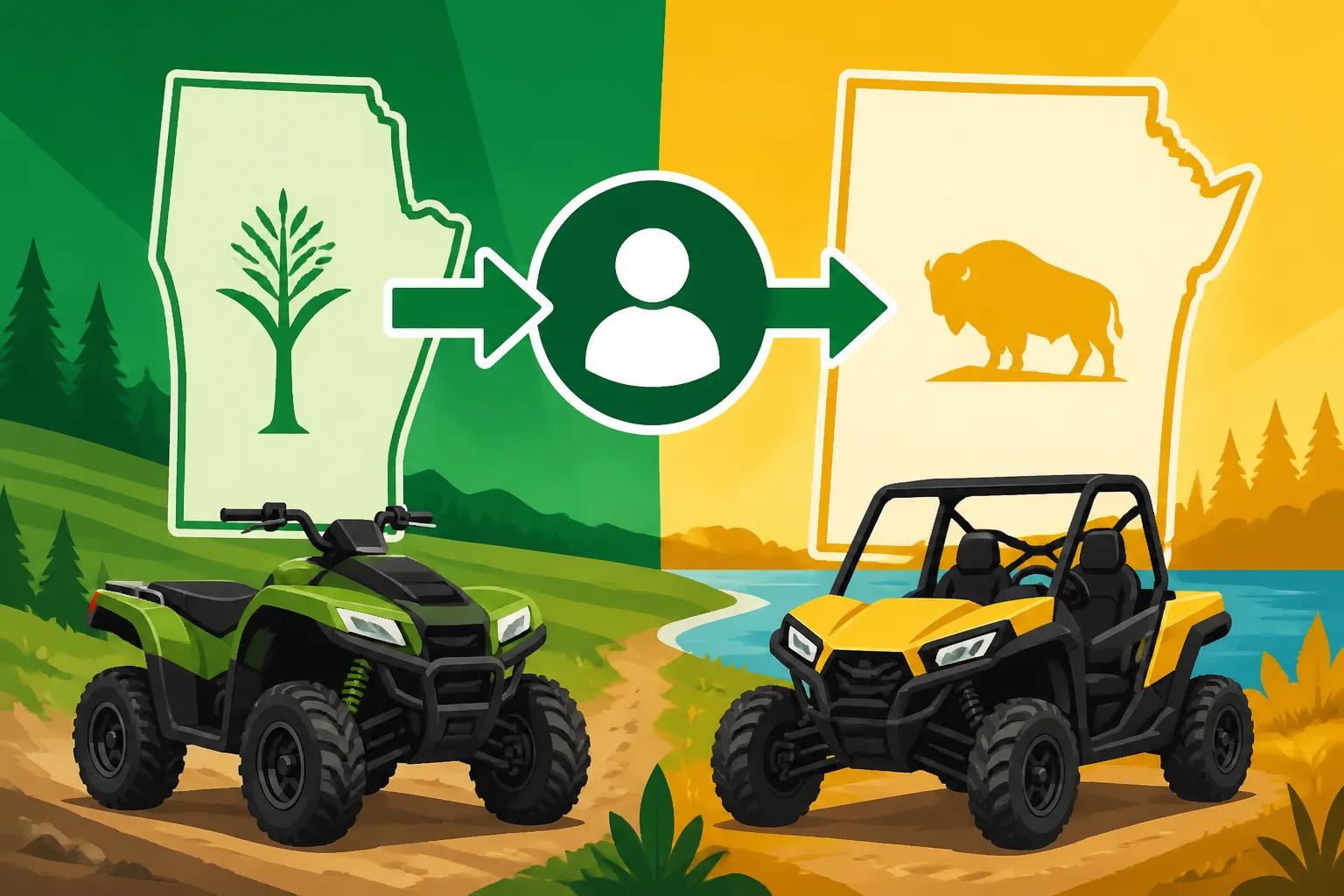
The good news is that if your ATV or UTV is properly registered and insured in Saskatchewan, you generally do not need to obtain a separate Manitoba registration to ride here. Manitoba's Off-Road Vehicles Act has provisions that recognize valid registration from other jurisdictions, provided your machine meets all the legal requirements of your home province. This means you won't need to visit an Autopac agent in Manitoba to get a new plate or fill out any additional paperwork just for registration purposes. You should always carry your current Saskatchewan registration certificate with you while riding, just as you would at home. An officer might ask to see it, and having it readily available can save you a lot of hassle.
However, this recognition comes with a critical caveat: while your registration status is reciprocal, your operating privileges are not. The moment your tires touch Manitoba soil, you are fully subject to Manitoba's operating laws, not Saskatchewan's. This distinction is crucial and often misunderstood. For instance, if Saskatchewan has a more lenient helmet law or different rules for ditch riding, those do not apply once you're in Manitoba. You must comply with all Manitoba-specific operating rules, which we'll dive into next. Think of it like driving your car: your Saskatchewan driver's license is valid in Manitoba, but you must still obey Manitoba's speed limits and traffic laws.
The Manitoba Trails Fee and Visitors
Manitoba has a unique "Trails Fee" that is collected with every ORV registration through Manitoba Public Insurance (MPI). This $25 fee goes directly into supporting trail development, maintenance, and rider education programs across the province. You might be wondering if, as a visiting Saskatchewan rider, you still have to pay this fee. The answer, in most cases, is no. Since you are not required to register your machine in Manitoba, you won't be paying the Manitoba registration fee, and therefore, you won't be charged the provincial Trails Fee. The Trails Fee is an intrinsic part of the Manitoba registration process, so if you're not going through that process, you don't owe the fee.
This is a common point of confusion, and many visiting riders worry they might be caught off guard. Rest assured, your valid Saskatchewan registration keeps you exempt from this specific Manitoba charge. However, this doesn't mean you can just ride anywhere. While you don't pay the provincial Trails Fee, you might encounter other fees or permits if you plan to ride in specific areas, such as provincial parks or certain club trails, which we'll discuss later. Always remember that [Manitoba Visitors Registered at Home] are expected to follow local operating rules, even if their home registration is recognized.
Operating Rules: What Changes When You Cross the Border
This is where Saskatchewan riders often find the most significant differences, and it's vital to understand these nuances to avoid fines or accidents. Manitoba's Off-Road Vehicles Act (ORV Act) is quite specific about where and how you can ride.
Helmet Laws and Safety Gear
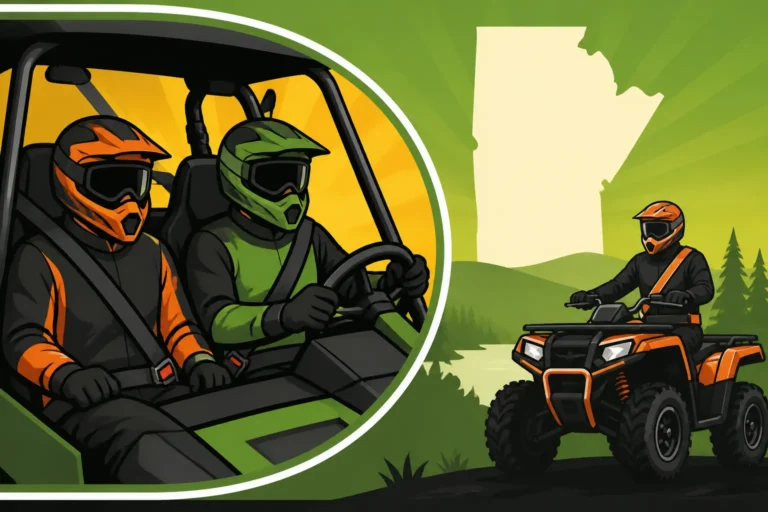
First and foremost, Manitoba has a strict helmet law that applies to nearly all ORV operators and passengers. Unless you meet very specific exemptions (like operating a machine with a factory-installed roll-over protection system (ROPS) and wearing a seatbelt, or certain agricultural/commercial exemptions), you must wear an approved helmet. This is true whether you're 16 or 60. For Saskatchewan riders, it's crucial to know that the helmet you wear must be certified by a recognized standard, such as DOT, Snell, ECE, or similar. Your helmet is a non-negotiable piece of safety equipment, and an officer will certainly be checking for compliance.
Beyond helmets, consider other safety gear. Eye protection is highly recommended, as are gloves, sturdy boots, and appropriate riding apparel. While not all of this is legally mandated, a good set of protective gear, perhaps some durable arm and leg guards, or a robust windshield from a company like SuperATV, can make a huge difference in your comfort and safety when navigating unfamiliar Manitoba terrain. The weather can change quickly, and bush riding can be unforgiving with branches and debris. Thinking about protection for yourself and your machine is just smart riding.
Road and Ditch Riding in Manitoba
Here's where Manitoba's rules can feel particularly restrictive compared to Saskatchewan. In Manitoba, ORVs are generally not permitted on public roadways, including the paved or gravel surface itself, medians, or sidewalks. The major exception, and the most common place you'll find riders, is the ditch. However, ditch riding comes with its own strict rules:
- Which Ditch? You can generally only ride in the ditch immediately to the right of the roadway in the direction of travel. Riding in the left ditch, or against the flow of traffic, is prohibited.
- Four-Wheel Drives: Only off-road vehicles with two wheels (like dirt bikes) or more than four wheels (like some amphibious machines) are allowed in ditches. Standard ATVs (four wheels) and side-by-sides (four wheels, even if they have more passengers) are generally not permitted in ditches unless the municipality has a specific by-law that opens them up for ORV use. This is a massive distinction. You'll want to check [Manitoba Ditch Riding Rules] for the specifics.
- Crossing Roadways: Crossing a roadway is allowed, but only under very strict conditions. You must come to a complete stop, yield to all traffic, and cross at a right angle to the road. You can only cross within 5 metres of an intersection or at least 3 kilometres from the nearest intersection. You must have a valid driver's licence to cross a roadway, and only one machine can cross at a time. This is not a casual affair; it requires full attention and adherence to the law.
- Shoulder Riding: Generally, riding on the shoulder of a provincial highway is not allowed, with a very narrow exception for farmers moving between fields. Don't assume you can use the shoulder just because you might have seen it done elsewhere.
It's easy to get this wrong, and the penalties can be significant. Before you even unload your machine, take the time to understand the local municipal by-laws if you're planning to ride near any town or populated area. What might be legal ditch access in rural Saskatchewan could be a ticketable offense in Manitoba.
Age Restrictions and Supervision
Manitoba has specific age restrictions for operating ORVs, and these apply to visiting riders as well.
- Under 14: Riders under 14 years old must be under the direct supervision of an adult (18+) who is riding on another ORV and remains in clear view. They are restricted to private land or designated trails and are generally prohibited from public areas like ditches.
- 14 and 15 Years Old: Riders aged 14 and 15 can operate an ORV without direct supervision, but they are still restricted to private land or designated trails. They cannot operate in ditches or cross roadways.
- 16 Years and Older: Once a rider turns 16, they can operate an ORV in ditches and cross roadways, provided they hold a valid driver's license (any class, including a learner's permit, though crossing requires a full license in most cases). They are still subject to all other operating rules.
Remember that these are the minimum provincial requirements. Some manufacturers might have lower age recommendations for specific machines, but the provincial law always takes precedence. [Manitoba ATV Age Requirements] further details these distinctions. If you're traveling with young riders, ensure you're fully aware of how their age impacts where and how they can ride in Manitoba.
Essential Equipment and Enforcement for Visiting Riders
Beyond your basic registration, there are certain equipment requirements and enforcement realities that Saskatchewan riders should be prepared for when visiting Manitoba.
Machine Requirements and Maintenance
Your ORV needs to be in good working order, and some specific equipment is legally required.
- Lights: If you're riding between half an hour before sunset and half an hour after sunrise, or at any time when visibility is limited (think heavy rain, fog, or snow), your machine must have at least one white headlamp and one red taillamp that are visible for at least 60 metres. Make sure your lights are functioning correctly. Consider upgrading your lighting with aftermarket options, perhaps from SuperATV, for better visibility and safety, especially if you plan on riding in the dense bush or after dusk.
- Spark Arresters: This is a non-negotiable item, particularly in a province with vast forested areas and a history of wildfires. Your ORV must be equipped with a muffler and a functioning spark arrester that is in good repair. This applies all year round. Officers are keen to check for these, especially during drier seasons, to prevent wildfires. A non-compliant exhaust system can lead to a significant fine.
- Brakes and Tires: Your brakes must be in good working order, capable of stopping your machine effectively. Tires should be in good condition with adequate tread. While there aren't specific tread depth laws for ORVs, poorly maintained tires are a safety hazard and could attract unwanted attention from enforcement.
- Seat Belts and Passenger Limits: For side-by-sides, if your machine came equipped with seatbelts from the factory, they must be worn by all occupants. Furthermore, you can only carry the number of passengers for which the machine was designed and equipped with seats and seatbelts. Do not carry extra passengers or allow people to ride in unsafe positions.
Ensuring your machine is well-maintained and compliant with these basic equipment requirements isn't just about avoiding a ticket; it's about ensuring your safety and the safety of others on the trails.
Encountering Enforcement
Manitoba has various enforcement agencies that patrol ORV areas, including the RCMP, local police, and Conservation Officers. They have the authority to stop you and check for compliance with the ORV Act, the Highway Traffic Act (especially concerning road crossings), and environmental regulations.
- Documents: Always carry your valid Saskatchewan driver's license, your Saskatchewan ORV registration, and proof of insurance. Keep these documents in a waterproof bag or pouch on your person or securely on your machine. [Carrying Your Registration Card on Every Ride] is not just good advice, it's a rule.
- Compliance Checks: Expect officers to check for helmets, spark arresters, lights, and valid paperwork. They may also observe your riding behaviour for signs of careless operation, impaired riding, or riding in prohibited areas.
- Penalties: Penalties for non-compliance can range from monetary fines to impoundment of your machine, depending on the severity of the offense. For example, careless operation can carry very substantial fines. Impaired riding (alcohol or cannabis) is taken extremely seriously and has consequences similar to impaired driving of a motor vehicle.
The key is to be respectful, cooperative, and knowledgeable about the rules. A brief, polite interaction with an officer is far better than a lengthy one involving tickets or impoundment.
Planning Your Ride: Trails, Parks, and Local Customs
Now that you understand the legalities, let's talk about where you can actually ride and how to make the most of your Manitoba ORV adventure.
Accessing Manitoba's Trail Systems
Manitoba boasts a variety of riding opportunities, from multi-use trails to vast tracts of Crown land.
- Club Trails: Many dedicated ORV trails in Manitoba are maintained by local ATV and UTV clubs. These clubs often work on Crown land under agreements, creating well-marked and enjoyable riding experiences. Examples include trails in the Eastman region (like the Agassiz Trail), the Westman area, and northern communities. While you, as a visitor, don't pay the provincial Trails Fee, some clubs might encourage or require a day pass or membership for access to their specific trail networks, especially if they are heavily managed. It's always a good idea to check with local clubs or trail associations for the areas you plan to visit.
- Crown Land: Manitoba has extensive Crown land that is generally open for ORV use, but with important caveats. Riders must be mindful of sensitive areas, designated wildlife management areas, ecological reserves, and areas under specific closure orders (e.g., during wildfire season). Always check land access rules and fire restrictions before heading out. [Manitoba Crown Land Riding Explained] will give you more insight.
- Provincial Parks: Riding in Manitoba's Provincial Parks is generally restricted to designated ORV routes only. Most parks are primarily for hiking, canoeing, and camping, and ORVs are often prohibited on general-use trails. For example, Duck Mountain Provincial Park is known for the Mossberry Trail, which is one of the signature ORV destinations. However, you'll need a Manitoba Provincial Park Vehicle Permit to enter any provincial park, whether you're riding an ORV or just parking your truck. These can be purchased online or at park gates.
Before you load up your rig, check the trail conditions and access rules for your intended destination. Look for online maps, local club websites, or call provincial park offices. A bit of pre-planning can prevent disappointment and ensure you're riding legally.
Local Etiquette and Safety
Beyond the rules, there's also an unspoken code of conduct that helps everyone enjoy the outdoors.
- Respect the Land: Stay on designated trails, avoid sensitive ecosystems like wetlands and riparian areas, and pack out everything you pack in. Tread lightly.
- Respect Other Users: Many trails are multi-use, shared with hikers, mountain bikers, and equestrians. Always yield to non-motorized users and pass slowly and courteously. Reduce your speed when passing dwellings or cottages to minimize noise.
- Wildlife: Manitoba is rich in wildlife. Be aware of your surroundings, especially at dawn and dusk. Give animals space, and never harass them. If you spot a bear or moose, maintain a safe distance and consider turning around if the encounter feels unsafe.
- Be Prepared: Always carry a first-aid kit, tools for basic repairs, a spare tire (for UTVs), water, and snacks. A reliable GPS device or a map and compass are essential, as cell service can be spotty in remote areas. A good winch or tow strap, perhaps a heavy-duty option from SuperATV, is always a smart addition for any serious bush rider. Let someone know your route and expected return time. The bush in Manitoba can be vast and unforgiving if you're unprepared.
- Fire Safety: Be extremely careful with campfires or any spark-producing activity. Always check the current fire restrictions before you go. [Manitoba Wildfire Season Rules for Riders] are critical to follow to protect our beautiful natural spaces.
Manitoba welcomes visiting riders, and by being informed, respectful, and prepared, you can have an incredible off-road experience. Just remember that while your Saskatchewan machine is welcome, Manitoba's rules are in charge once you cross the border!
| Aspect | Saskatchewan Approach (General) | Manitoba Approach (for Visitors) |
|---|---|---|
| Registration | Required in home province | Saskatchewan registration is recognized |
| Manitoba Trails Fee | Not applicable | Not required for out-of-province machines |
| Helmet Law | Generally required, some variations | Mandatory for almost all operators/passengers (DOT/Snell etc.) |
| Roadway Riding | Varies, some limited road/shoulder access | Generally prohibited on pavement, shoulders, medians |
| Ditch Riding | Varies, often more lenient | Only right ditch, specific machine types (no 4-wheel ATVs/SxS unless by-law) |
| Road Crossing | Varies, often less strict | Strict rules: stop, yield, right angle, specific distances, driver's licence required |
| Age 14-15 Riders | May have certain privileges | Restricted to private land/designated trails, no ditch/road crossings |
| Spark Arrester | Generally required | Mandatory and in good working order |
| Provincial Parks | Varies by park | Designated routes only, requires a Manitoba Park Vehicle Permit |
| Proof of Insurance | Required from home province | Carry proof of home province insurance |
Disclaimer
This article is for general informational purposes only and does not constitute professional advice. Laws, prices and regulations vary by location and change over time. Consult a qualified professional for guidance on your specific situation.