Manitoba Municipalities With ORV By-Laws
It's incredibly frustrating, isn't it, when you want to take your off-road vehicle (ORV) out for a ride, but you're constantly second-guessing where you're actually allowed to go? One minute you think you know the rules, and the next you hear about a local by-law that throws a wrench in your plans. This guide is here to untangle the complexities of ORV by-laws in Manitoba, helping you understand how local municipalities regulate where and how you can ride your ATV or UTV.
Understanding the Provincial Framework for ORVs
Manitoba has provincial legislation that governs the operation of off-road vehicles. This legislation, primarily the Off-Road Vehicles Act, sets a baseline for things like registration, age restrictions, and general operating rules. However, the province also understands that different areas have different needs, population densities, and concerns. That's why it grants municipalities, local government districts, and even remote community councils the power to create their own by-laws. This is where the waters can get muddy for riders.
The provincial act often defines what is generally prohibited unless otherwise permitted. For example, riding on a public roadway is generally not allowed unless specific exceptions apply or a local by-law opens it up. This means the default stance is often more restrictive, and it's up to the local authorities to decide if they want to ease those restrictions within their own borders. It’s not just about what the province says you can't do, but also about what local communities say you can do, or can't do even more strictly. Many riders wish for a unified, province-wide approach, but the reality is that local control is a big part of how things operate in Manitoba.
Provincial Rules as the Starting Point
Before any local by-law even comes into play, you have to be aware of the overarching provincial rules. Things like registering your machine through MPI, carrying your registration card, and adhering to basic safety requirements are non-negotiable, no matter where you ride. For instance, [Manitoba Requires Registration in Any Location] – this isn't something a local by-law can override. Similarly, the helmet law has provincial standards, though there are specific exemptions for certain activities like farming or in certain remote areas.
The provincial act also defines what constitutes an ORV, where plates should be mounted, and general restrictions on where you cannot ride, such as medians, sidewalks, or interchange rights-of-way. These are the broad strokes that every rider must respect. A municipality can't decide to allow you to ride on a highway median just because they feel like it; that's beyond their power. They operate within the framework the province provides, often choosing to permit certain activities that the province generally restricts, or adding further restrictions of their own.
The Power of Municipal By-Laws
The provincial Off-Road Vehicles Act specifically grants municipalities the authority to create by-laws regarding ORV operation within their jurisdictions. This means they can, for example, designate certain roads or portions of roads where ORVs can be operated, or they can impose stricter curfews than the province, or even outright ban ORVs from specific areas like parks or residential streets. This is where the nuance, and sometimes the headache, for riders truly begins.
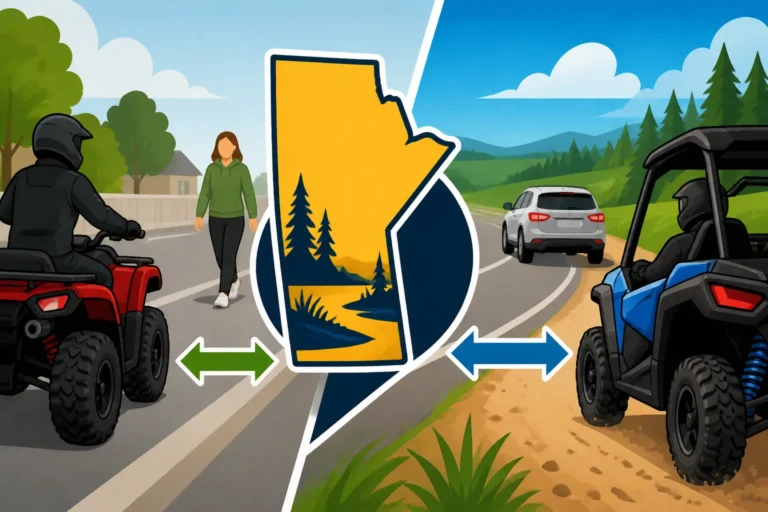
Consider a situation where you live in a rural municipality that's quite open to ORV use on municipal roads to access fields or trails. Then, you decide to ride into a neighbouring town, which might be a different municipality, only to find they have a blanket ban on ORVs on all their streets. Suddenly, your legal ride becomes illegal the moment you cross an invisible boundary. It's a classic scenario that leaves many riders feeling confused and frustrated, especially when just trying to get from point A to point B. This flexibility for local governments is why knowing about [Manitoba Municipal By-Law Powers] is so important.
Where Local Rules Come Into Play
When a municipality decides to create an ORV by-law, they usually do so for a few key reasons: public safety, noise concerns, environmental protection, or simply to manage the flow of traffic and recreational activities. What one community might see as a nuisance, another might view as a vital mode of transportation for its residents. This leads to a wide spectrum of rules, from very permissive to very restrictive.
It's common for communities with active ATV clubs or extensive trail networks nearby to have more accommodating by-laws, perhaps allowing ORVs on certain low-traffic roads or shoulders to access those trails. Conversely, densely populated areas or towns primarily focused on pedestrian tourism might implement much stricter bans. The local context is everything, and it directly shapes the specific rules you’ll encounter.
Common Areas of Municipal Regulation
Municipal by-laws typically focus on specific aspects of ORV use that impact local residents and infrastructure. Here are some of the most common areas they regulate:
- Road Access: This is perhaps the biggest one. While the province generally restricts ORVs from roadways, a by-law can open up specific municipal roads, road allowances, or shoulders for ORV traffic. This might be for accessing trails, essential services, or connecting rural properties. However, these permissions often come with conditions, such as speed limits, specific hours of operation, or requirements for additional safety equipment.
- Time of Day Restrictions: Many municipalities will have noise ordinances that extend to ORVs. You might find a by-law prohibits ORV operation between certain evening and morning hours, especially in residential areas, to ensure peace and quiet for residents. The provincial 30-metre dwelling rule also plays a part here, but a by-law can make it even stricter.
- Designated Routes/Areas: Some municipalities have recognized the popularity of ORV riding and have worked to designate specific routes or areas where ORVs are welcome. This could be parts of old railway beds, undeveloped municipal land, or specific connectors to provincial trail systems. These areas are often clearly marked.
- Prohibited Zones: Just as common are by-laws that explicitly ban ORVs from sensitive areas like parks, playgrounds, school grounds, or conservation areas that are under municipal jurisdiction. They might also ban them from sidewalks or town squares, even if the provincial act already restricts some of these areas, simply to reinforce local intent and provide clear local enforcement.
Examples of Varying By-Laws Across Manitoba
Let's look at some hypothetical, but realistic, examples of how different municipalities might approach ORV by-laws:
- Rural Municipality of Springfield: Being close to popular riding areas like the Agassiz Forest, this RM might have a more relaxed by-law. They might allow ORVs on municipal gravel roads for access to trails, requiring riders to stick to the shoulder and maintain a low speed. They might also have provisions for farmers to use ORVs on roadways to move between fields, aligning with provincial agricultural shoulder exceptions.
- Town of Niverville: As a growing community with a mix of residential and commercial areas, Niverville might have a stricter by-law. They might prohibit ORVs from all paved town streets but allow limited access on designated unpaved paths or ditches for specific purposes, like reaching the local gas station or hardware store. They would likely have strict curfews for noise control.
- Local Government District of Piney: This area, encompassing parts of the Sandilands Provincial Forest, might have by-laws that work in conjunction with forest management plans. They might permit ORVs on forest access roads and fire guards, recognizing their use for recreation, logging, and firefighting. However, they might also have seasonal restrictions during fire bans or spring thaw to protect trails. In such regions, having robust protection for your machine, perhaps a heavy-duty skid plate or A-arm guards from SuperATV, is always a good idea, given the varied terrain.
These examples highlight the need for riders to do their homework before heading out. What's legal in one place might get you a ticket just a few kilometres down the road. It's the patchwork of rules that really makes riding in Manitoba an exercise in due diligence. [Manitoba Local Government Districts and By-Laws] can provide more insight into how these administrative areas create their own rules.
Finding Your Local By-Laws
So, how do you actually find out what the rules are for a specific municipality? This is often the most challenging part for riders. There isn't a single, province-wide database that compiles every municipal ORV by-law. It requires a bit of detective work, but it's absolutely essential to avoid fines or conflicts with local residents.
Your best bet is to be proactive and informed. Don't assume. Just because you see someone else riding in a certain area doesn't mean it's legal, or that they won't eventually get caught. As the old saying goes, "ignorance of the law is no excuse." Taking the time to research before you load up your machine can save you a lot of grief.
Where to Look for By-Law Information
Here are the primary ways you can track down local ORV by-laws:
- Municipal Website: Most municipalities in Manitoba have an official website. Look for sections on "By-laws," "Public Works," "Recreation," or "Off-Road Vehicles." Sometimes they're buried under "Council Minutes" or "Policies." You might have to use the search function on their site.
- Contact the Municipal Office: If you can't find anything online, the most direct approach is to call or email the municipal office directly. Ask to speak with someone in the by-law enforcement department or the chief administrative officer (CAO). Clearly state that you're looking for information on ORV operating by-laws within their jurisdiction. Be specific about the type of machine you have (ATV, UTV, dirt bike, etc.), as rules can sometimes vary slightly.
- Local ATV Clubs: Many areas have active ATV clubs, like the Eastman ATV Association or the Westman ATV Association. These clubs are usually very knowledgeable about local rules and often work with municipalities to establish safe riding areas. They can be an invaluable resource, not just for by-law information but also for [Manitoba ATV Trails: Club Ground and Crown Land] information.
- Local Signage: Always keep an eye out for signs when you enter a community or a specific area. Some municipalities will post signs indicating where ORVs are permitted or prohibited, especially at town entrances or trailheads. While not exhaustive, these can give you a quick indicator of the local stance.
The Importance of Asking Specific Questions
When you contact a municipal office, don't just ask "Can I ride my quad here?" Be precise. Ask:
- "Are ORVs permitted on any municipal roads within your community?"
- "If so, which roads, and under what conditions (e.g., speed limits, time of day, purpose of travel)?"
- "Are there specific areas where ORVs are explicitly prohibited, such as parks or school zones?"
- "Is there a map or a copy of the by-law I can review?"
- "Are there different rules for residents versus non-residents, or for different types of ORVs like dirt bikes versus side-by-sides?" (Though generally, rules apply to all ORVs).
Getting specific answers can help you understand the nuances. Remember, the person on the phone might not know every detail off-hand, so be patient and polite. Sometimes, it might take a few calls or emails to get the full picture.
Here's a handy table outlining common municipal stances on ORV use and what they might imply:
| Municipal Stance | Description | Rider Implications |
|---|---|---|
| "Open" | The municipality has specific by-laws that permit ORV use on certain municipal roads, road allowances, or designated routes within its jurisdiction. This is often seen in rural or northern communities where ORVs are an integral part of life. | You'll likely find clearly marked routes or a published by-law outlining where you can ride. Still, adhere to all provincial rules (registration, helmet, etc.) and any local conditions (speed limits, curfews). Always confirm the specific permitted areas. |
| "Restricted" | ORV use is generally prohibited, but there are specific exceptions carved out in by-laws. This might be for accessing property, connecting to trails, or for agricultural purposes. It's a common approach in mixed-use areas or smaller towns. | You must confirm the exact nature of the restrictions and exceptions. Riding outside these narrow permissions will likely lead to a ticket. Ensure you meet all conditions, such as having a specific purpose for travel or only using designated connector routes. |
| "Closed" | The municipality has by-laws that generally prohibit ORV use on public lands, roads, and often ditches within its jurisdiction. This is typical in more urbanized areas, tourist towns, or communities with significant noise complaints or safety concerns. | Assume you cannot ride your ORV anywhere public within this municipality. You might need to trailer your machine through or around these areas. Riding on private land with owner permission is usually still allowed, but access to it on public roads would be prohibited. |
| "No By-Law" | The municipality has not created a specific ORV by-law. In this scenario, the provincial Off-Road Vehicles Act is the sole governing legislation, and its general prohibitions (e.g., against riding on public roadways) would apply. | This effectively means ORVs are not permitted on public roads or in ditches, as the provincial act would prohibit it. Do not assume "no by-law" means "anything goes." It means the default provincial restrictions are in full force. |
Navigating Different Jurisdictions
The biggest challenge for many Manitoba ORV riders is the sheer variety of rules. You might start your day in a municipality with fairly open access, but a two-hour ride could take you through two or three other jurisdictions, each with its own set of by-laws. This inconsistency can make planning longer rides difficult and frustrating.
Imagine trying to plan a multi-day trip linking several communities. You'd need to meticulously research each segment of your journey to ensure you're not inadvertently breaking a local rule. It's enough to make some riders stick to organized trails or private land just to avoid the headache. And if you're exploring the more remote areas of the province, understanding that [Manitoba Crown Land Access Rules] are separate from municipal rules is also key.
The Problem of Patchwork Regulations
The "patchwork" of municipal by-laws means that a rider must constantly be aware of their location. You might be legally riding down a gravel road in one RM, cross an invisible municipal boundary, and suddenly be on a road where ORVs are strictly prohibited. It's not always easy to tell exactly where one jurisdiction ends and another begins, especially in rural areas without clear signage. This lack of uniformity is a common complaint among riders who simply want clear, consistent guidelines.
For instance, [Manitoba Ditch Riding Rules] are provincially set, but a municipality could impose further restrictions on ditch riding within its own borders, perhaps to protect drainage infrastructure or for safety near specific developments. This local overlay on provincial rules is what creates the complexity. Equipping your machine with a GPS that clearly shows municipal boundaries, or at least having a detailed map, can be a game-changer for avoiding trouble. Even a simple phone app can help you keep track of where you are in relation to different communities.
Best Practices for Responsible Riding Across Boundaries
To navigate this complex landscape effectively, here are some best practices:
- Plan Your Route Thoroughly: Before any long ride, map out your route and identify every municipality or LGD you'll be passing through. Research the by-laws for each one. Websites like the Association of Manitoba Municipalities (AMM) can provide directories and links to municipal sites.
- Carry Your Documentation: Always have your registration card, driver's license (if you have one), and any relevant permits or permissions with you. [Carrying Your Registration Card on Every Ride] is a provincial requirement, and it shows you're a responsible operator.
- When in Doubt, Don't: If you're unsure about the legality of riding in a specific area, err on the side of caution. It's better to bypass an area or trailer your machine than to risk a fine or confiscation.
- Stay Updated: By-laws can change. What was legal last year might not be this year. If you frequently ride in certain areas, it's worth checking municipal websites periodically for updates.
- Consider Modifying for Compliance: If you know you'll be riding in areas that might open up roadways, you might consider adding accessories to make your ORV more visible and safer. Things like turn signals, upgraded headlights, or a horn can be helpful, and brands like SuperATV offer a range of products designed to enhance visibility and utility for machines, even if they're primarily for off-road use. While not all municipalities will require these on designated roads, they can significantly improve safety and help you meet any local "street-legal" type requirements.
- Engage with Local Clubs: Becoming a member of an ATV club not only gives you access to organized rides and trail information but also connects you with experienced riders who understand the local by-law landscape. They're often the first to know about changes or upcoming proposals.
Ultimately, being a responsible ORV rider in Manitoba means understanding that your riding privileges are often shaped by local decisions, in addition to provincial laws. It requires a bit of effort to stay informed, but it’s crucial for enjoying your adventures without unexpected legal trouble.
Disclaimer
This article is for general informational purposes only and does not constitute professional advice. Laws, prices and regulations vary by location and change over time. Consult a qualified professional for guidance on your specific situation.