Manitoba Rules for Riding After Dark
Riding your ATV or UTV after dark in Manitoba can be an exhilarating experience, offering a completely different perspective of the landscape, but it also comes with a unique set of challenges and, critically, specific legal requirements you absolutely cannot ignore. Many riders, especially those new to the sport or visiting from out of province, simply aren't aware of the strict rules governing night-time operation, which can lead to hefty fines or, worse, dangerous situations. This comprehensive guide will walk you through everything you need to know about operating your off-road vehicle once the sun goes down in Manitoba, ensuring you stay safe, visible, and on the right side of the law.
Illuminating Your Path: Manitoba's Lighting Requirements for Night Riding
When you're out on the trails or navigating ditches after sunset, your machine's lighting isn't just a convenience; it's a legal mandate and a fundamental safety feature. Manitoba has clear, non-negotiable rules about what kind of lighting your ATV or UTV must have, and when those lights need to be in operation. Ignoring these can put you, your passengers, and anyone else around you at serious risk, not to mention opening you up to significant penalties.
The Basic Requirements: Headlights and Taillights
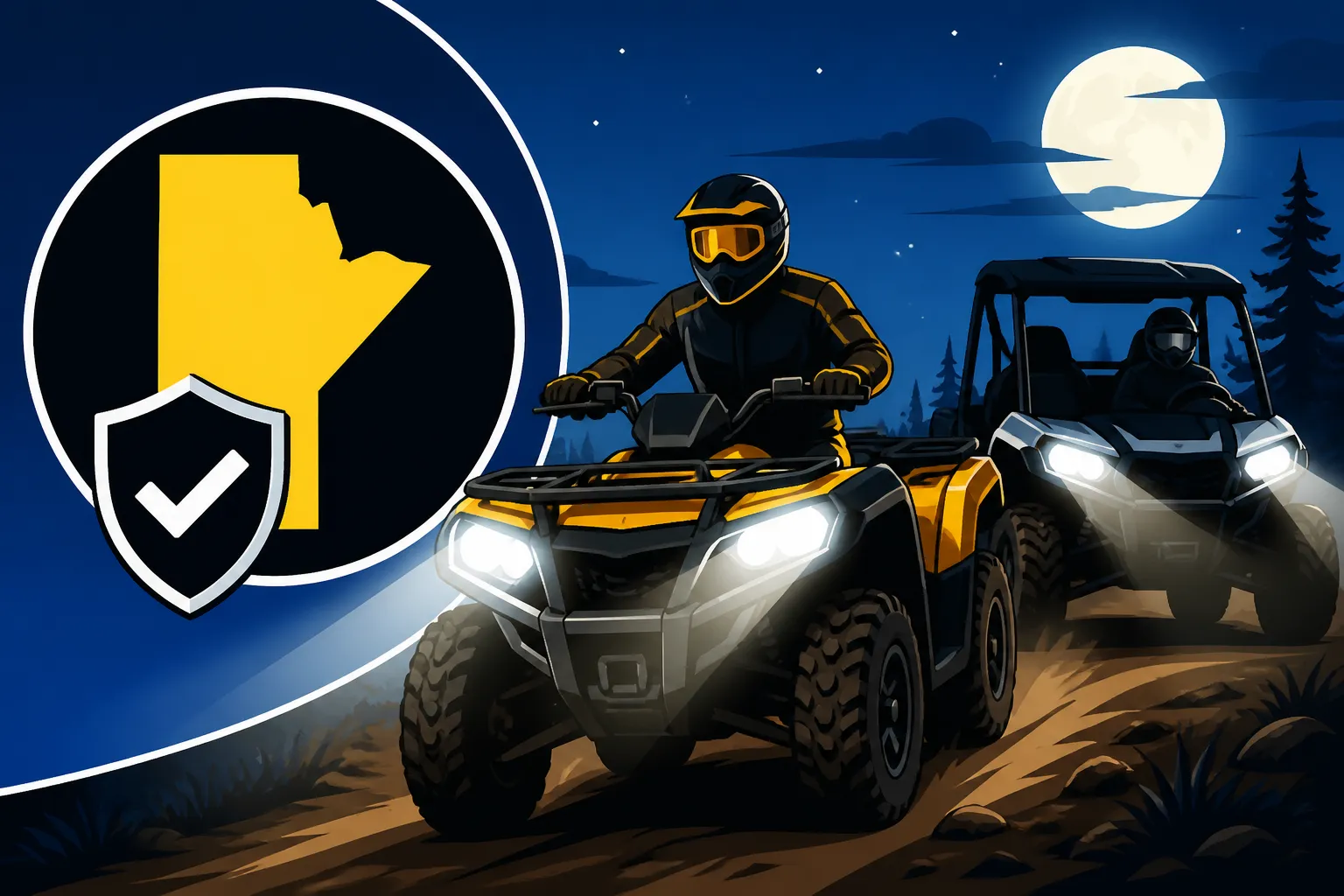
Every ATV and UTV operated in Manitoba, whether it's daytime or night-time, must be equipped with at least one headlight and at least one taillight. These aren't optional extras; they're as essential as your engine. The headlight's purpose is twofold: to illuminate your path forward, helping you spot obstacles, changes in terrain, and other hazards, and to make you visible to oncoming traffic or other riders. The taillight is equally crucial, ensuring that riders or vehicles approaching from behind can see you, preventing potential rear-end collisions. Think of it as your vehicle's signature in the dark – without it, you're practically invisible. For older machines, it’s worth checking that your original equipment lights are still functioning optimally, as bulbs can dim over time, reducing their effectiveness.
Seeing and Being Seen: The 60-Metre Visibility Rule
Beyond just having lights, those lights need to be effective. Manitoba law specifies that the headlight must be capable of illuminating objects at least 60 metres (that's about 200 feet) in front of the machine. This 60-metre rule is a critical benchmark. It's not enough for your light to simply "turn on"; it must cast a strong, clear beam that allows you to see far enough ahead to react to unexpected situations, such as a fallen log across a trail, a sudden dip, or wildlife. Similarly, your taillight must be visible from at least 60 metres to the rear. This dual requirement emphasizes the importance of both forward illumination and rearward visibility. Imagine coming over a rise on a dark trail and suddenly seeing another machine without adequate taillights – it’s a recipe for disaster. This is why many experienced riders choose to upgrade their factory lighting, particularly for more challenging night rides.
When the Lights Need to Be On: Half an Hour Before Sunset to Half an Hour After Sunrise
There's no ambiguity here: your lights aren't just for when it's pitch black. The law dictates that lights must be on from half an hour before sunset until half an hour after sunrise. This covers those twilight hours when visibility can be particularly tricky – not fully dark, but not bright enough to easily discern objects or other vehicles. Many accidents happen during these transitional periods precisely because riders either forget to turn on their lights or assume they don't need them yet. It's always better to err on the side of caution. If you're unsure, just turn them on. This rule also applies during periods of reduced visibility at any time of day, such as heavy fog, rain, or snow, where visibility is less than 60 metres. It’s a good habit to simply always turn your lights on when you start your machine, regardless of the time of day, as this ensures compliance and maximises your visibility.
Navigating the Darkness: Operating Rules for ATVs and UTVs After Dark
Beyond the general lighting requirements, there are specific operating rules that come into play when riding after dark, particularly concerning where and how you can ride. Manitoba’s regulations are designed to minimize risks for ORV operators and other road users, especially when visibility is compromised. Understanding these nuances is key to safe and legal night riding.
Ditch Riding and Road Crossings at Night
Ditch riding is a common activity for many Manitoban ORV enthusiasts, but it's important to remember that it's subject to strict conditions, especially after dark. The general rule is that [Manitoba Bans Riding on Roadways], meaning you're typically confined to the ditch adjacent to the highway. However, when it comes to night riding, the stakes are higher. Your visibility to motorists on the roadway, even with proper ORV lights, is reduced, and their ability to see you is also diminished. This increases the risk of accidents, particularly if you need to make a road crossing. [Manitoba Crossing Rules at 5 Metres and 3 Kilometres] still apply, requiring you to come to a complete stop, yield to all traffic, and cross safely. But at night, this requires even more caution and a greater reliance on your machine's headlights to illuminate the crossing area and ensure you have a clear view.
It's also worth noting that municipalities have the power to enact by-laws that might further restrict or even prohibit ditch riding and road crossings within their jurisdictions after dark. Always check with the local authorities or municipal office for specific rules in the area you plan to ride. Never assume that because it's allowed in one rural municipality, it's allowed in all.
Provincial Parks and Designated Trails After Dark
Riding after dark in provincial parks or on designated trails introduces another layer of regulation. While many dedicated ORV trails are designed for day use, some may permit night riding. However, this is rarely a given and should never be assumed. Provincial parks, for example, often have specific hours of operation, and riding outside these hours, especially after dark, might be prohibited. Even if the trail itself is technically open, issues like noise complaints from nearby campgrounds or residential areas can lead to restrictions. Always consult the specific park regulations or the trail-owning club's rules before planning a night ride. For instance, while a trail might be open during the day, riding it after dark could be considered a violation of park rules or local by-laws. The [Manitoba Parks Allow Machines on Designated Routes Only] policy is paramount, and this often comes with time-of-day restrictions. Getting caught in a park or on a trail outside of permitted hours can lead to fines, and potentially even your machine being impounded.
Private Land and Community Riding Considerations
When it comes to riding on private land after dark, the primary rule is always landowner permission. This isn't just about trespass; it's about mutual respect and safety. Even with permission, consider the impact of your night riding on neighbours. Noise travels further at night, and bright lights can be intrusive. Be a good neighbour and consider limiting noisy operations during late hours, or choose routes that are away from dwellings. The [Manitoba's 30-Metre Dwelling Rule] about operating an ORV within 30 metres of a dwelling generally applies from midnight to 7 a.m. This rule is particularly relevant for night riders, aiming to prevent disturbance to residents.
For "remote communities" that are specifically exempted from some registration rules, night riding might feel less regulated, but basic safety and courtesy still apply. While these areas may have different operational norms, the foundational requirements for proper lighting and responsible operation remain. [Manitoba Machines Used Only in a Remote Community] might have some registration exemptions, but they don't get a pass on safe night operation or respecting others.
Beyond the Minimum: Enhancing Your Night Riding Safety
Meeting the legal minimum for lighting is essential, but for serious night riders, it’s often just the starting point. The unique challenges of riding in the dark – reduced depth perception, hidden obstacles, and increased fatigue – warrant going above and beyond to maximize safety and visibility. Investing in enhancements can dramatically improve your experience and reduce risks.
Auxiliary Lighting and Visibility Aids
Beyond your stock headlights and taillights, there's a world of auxiliary lighting designed to transform your night riding experience. LED light bars, for instance, offer incredible illumination, casting a wide and far-reaching beam that far exceeds the 60-metre legal minimum. Companies like SuperATV offer a huge range of these, from small spot beams for specific tasks to massive light bars that turn night into day. These can be mounted in various locations on your machine, providing additional forward lighting, side lighting, or even reverse lights. Just be mindful of aiming them responsibly; blasting an oncoming rider with a high-powered light bar is not only discourteous but dangerous.
Another excellent addition is illuminated whip flags or accent lighting. While not strictly for illumination, these significantly increase your machine's visibility to others, especially when riding in groups or through dusty conditions. LED whips are particularly effective, making your presence known from a distance, which is invaluable on shared trails or in areas where you might encounter other vehicles. Reflective tape applied to your machine can also catch ambient light, making you more noticeable.
| Lighting Type | Purpose | Legal Requirement | Recommended for Night Riding |
|---|---|---|---|
| Headlight | Forward illumination | Yes (60m visibility) | Essential |
| Taillight | Rear visibility | Yes (60m visibility) | Essential |
| Brake Light | Indicate braking | Often combined with taillight | Essential |
| Auxiliary Light Bar | Enhanced forward illumination | No | Highly Recommended |
| Spot/Flood Lights | Targeted illumination | No | Recommended (task-specific) |
| LED Whip Flag | Increased 360-degree visibility | No | Highly Recommended |
| Reflective Tape | Passive visibility enhancement | No | Recommended |
Rider Visibility: Reflective Gear and Communication
It's not just your machine that needs to be seen; you, as the operator, are a critical part of the equation. Investing in high-visibility riding gear, especially with reflective elements, is a smart move for any night rider. Helmets, jackets, and gloves with reflective stripes or panels will catch the light from other vehicles or your own machine's auxiliary lights, making your silhouette more discernible. Even something as simple as a reflective vest worn over your riding jacket can make a significant difference. Remember, [Manitoba Helmet Law and Its Exemptions] still apply at night, and ensuring your helmet is visible is part of that safety equation.
Effective communication, particularly in a group, is also paramount after dark. Hand signals are harder to see, and verbal commands can be lost in engine noise. Consider using helmet-mounted intercom systems or two-way radios to stay in constant contact with your fellow riders. This allows for clear warnings about hazards, changes in speed, or necessary stops, preventing confusion and potential accidents in low light.
Pre-Ride Checks and Route Planning for Night Operations
Night riding demands an even more meticulous pre-ride inspection than a daytime excursion. Before you even think about heading out after dark, do a thorough check of all your lighting: headlights, taillights, brake lights, and any auxiliary lighting. Ensure all bulbs are working, lenses are clean, and wiring is secure. Carry spare bulbs if your machine uses them, or a small repair kit for LED connections. Check your battery's charge, as additional lighting can place a heavier load on your electrical system. A dead battery in the middle of a dark trail is not a fun scenario.
Route planning is equally crucial. Stick to familiar trails or well-marked routes if you're new to night riding. What looks like a gentle bump in daylight can become a dangerous obstacle in the dark due to reduced depth perception. Avoid highly technical terrain or areas with known hazards that might be difficult to navigate visually. Always let someone know your planned route and estimated return time, even more so for night rides. Pack extra warm clothing, as temperatures drop significantly after sunset, and bring emergency supplies like a first-aid kit, a charged cell phone (though cell service can be spotty in the Manitoba bush), and possibly a GPS device or [Manitoba ATV Trail Map Downloads].
The Consequences of Dark Riding Missteps
Ignoring Manitoba's rules for riding after dark isn't just about theoretical risks; it comes with tangible, often severe, consequences. From fines and penalties to increased liability, operating your ORV improperly once the sun goes down can quickly turn a fun outing into a costly and regrettable experience. Understanding these potential repercussions is crucial for every rider.
Fines and Penalties for Lighting Violations
Manitoba enforcement officers, whether RCMP, conservation officers, or local by-law officers, are well-versed in ORV regulations and regularly patrol areas popular with riders. Getting caught riding after dark without the required lighting (headlights, taillights visible from 60 metres, or operating them at the prescribed times) can result in significant fines. These aren't just minor tickets; they can put a serious dent in your wallet. The exact amount can vary depending on the specific infraction and whether it's a first offense, but you can expect it to be a deterrent.
Beyond the immediate fine, repeated offenses could lead to more severe penalties, such as impoundment of your machine or even court appearances. These violations are taken seriously because inadequate lighting directly contributes to unsafe operating conditions, posing a risk not just to the operator but to other trail users and the public. An officer performing [Manitoba Equipment Checks by Officers] will certainly be looking for proper lighting when it's dark.
Increased Risks and Liability Concerns
Perhaps even more concerning than fines are the increased risks and liability issues associated with improper night riding. Riding without adequate lighting drastically increases your chances of being involved in an accident. You might hit an unseen obstacle, run into another machine, or be involved in a collision with a motor vehicle if you're operating near a roadway. The lack of proper lighting could be considered negligent operation, which can have profound legal implications if an accident occurs.
If you're involved in an accident and it's found that your lighting was not compliant with the law, your insurance coverage could be jeopardized. [Manitoba Insurance Included With Registration] provides basic third-party liability, but if you've violated the terms of operation, your insurer might deny coverage for damages or injuries. This could leave you personally responsible for substantial medical bills, property damage, and legal fees. Furthermore, if you lend your machine to someone who then has an accident at night without proper lighting, you, as the owner, could also face liability. The prudent approach is always to ensure your machine is fully compliant and equipped for the conditions, especially when venturing out after dark. Safety should always be your top priority, not just to avoid tickets, but to protect yourself and those around you.
Disclaimer
This article is for general informational purposes only and does not constitute professional advice. Laws, prices and regulations vary by location and change over time. Consult a qualified professional for guidance on your specific situation.