Manitoba Crossings Need a Driver’s Licence
It’s a scenario every Manitoba ORV enthusiast faces: you’re out enjoying a fantastic ride on a trail or within an allowed ditch, and suddenly, a provincial road or highway stands between you and the next stretch of adventure. The temptation is to simply zip across, especially if traffic looks clear. But the rules for crossing these public thoroughfares are surprisingly strict, and a common oversight many riders make is assuming their age or machine type exempts them from needing a valid driver's licence. This guide is here to untangle the complexities, ensure you understand why Manitoba Crossings Need a Driver's Licence, and help you navigate these necessary transitions legally and safely, protecting both you and your off-road machine.
The Basics of Road Crossings for ORVs in Manitoba
Navigating Manitoba's vast landscapes on your ATV or UTV is an incredible experience, but it inevitably brings you to the edges of provincial roads and highways. These aren't just arbitrary lines on a map; they represent a significant legal boundary for off-road vehicles. While the province has made strides in creating opportunities for ORV use, especially in ditches, the rules change dramatically when you intend to cross a paved or gravel road that's part of the public road network. It's crucial to understand these distinctions to avoid fines, ensure your safety, and keep enjoying your machine responsibly.
Why Crossings Are Different from Ditch Riding
Think of ditch riding and road crossings as two completely separate acts, each with its own set of regulations. [Manitoba Ditch Riding Rules] allow for ORV use in designated ditches, often running parallel to roadways. This is about operating your machine alongside traffic, in a separate right-of-way. The speeds are often restricted, and specific conditions apply, like riding only in the ditch to your right and maintaining a safe distance from dwellings.
Crossing, however, is about temporarily entering the roadway itself to get from one side to the other. You're moving perpendicular to the flow of traffic, which introduces a whole new level of risk and legal scrutiny. When you're in the ditch, you're primarily interacting with other ORV riders and the immediate environment. When you cross, you're directly interacting with cars, trucks, and other road users who might not be expecting an off-road vehicle to suddenly appear in their path. The stakes are higher, and the rules reflect that added danger. You can't just treat a crossing as an extension of ditch riding; it's a specific maneuver with unique requirements.
The Driver's Licence Mandate for All Operators
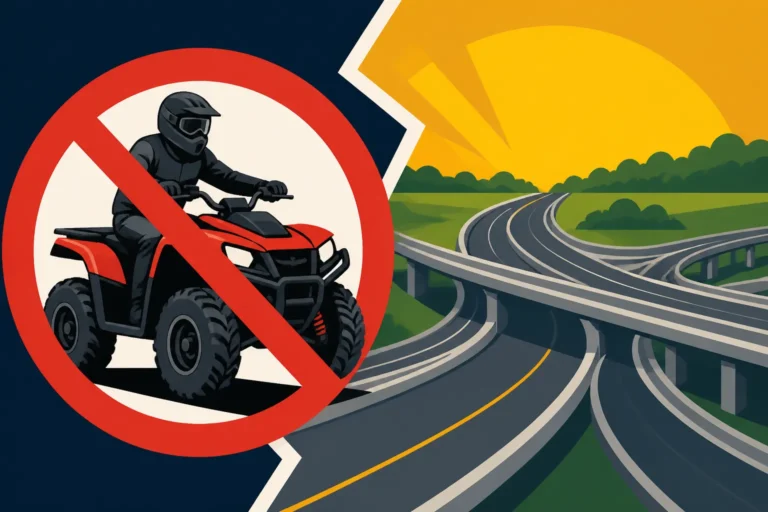
This is perhaps the most critical rule, and it's one that catches many riders off guard: every single person operating an off-road vehicle across a provincial road or highway in Manitoba must possess a valid driver's licence. This isn't just for primary highways; it applies to any public road where you might encounter standard road traffic. This means if you're a young rider who’s technically allowed to operate an ORV off-road under certain conditions (like parental supervision), you are absolutely not permitted to cross a public road unless you hold a driver's licence.
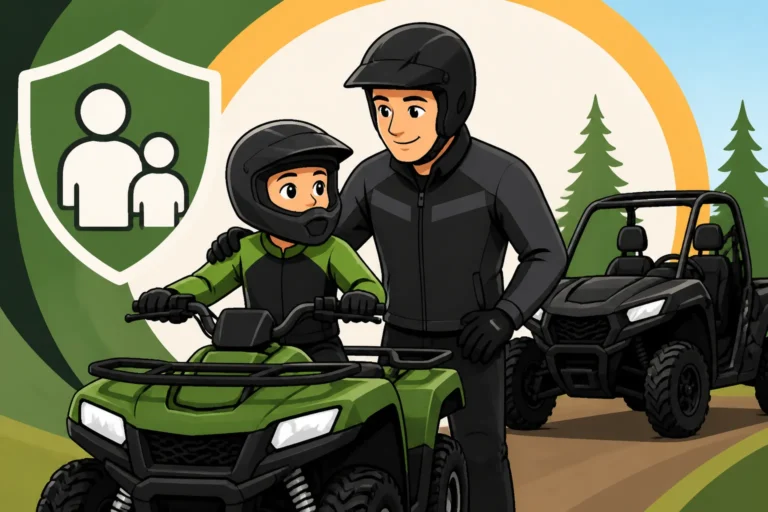
Imagine a keen 14-year-old rider, perfectly capable of handling their quad on a trail or in an approved ditch, but they don't have a Class 5 driver's licence yet. They reach a paved road and need to get to the other side where the trail continues. Even if they're supervised by a licensed adult riding alongside them, that 14-year-old cannot legally operate their machine across that road. The adult would need to cross on their own machine, and the younger rider would be stuck. This rule underscores the province's commitment to road safety, ensuring that anyone temporarily sharing the roadway has demonstrated a basic understanding of traffic laws and safe driving practices. This is a fundamental part of [Manitoba Rules for Crossing a Highway].
Types of Roadways Subject to Crossing Rules
The regulations regarding ORV crossings apply broadly to any public roadway managed by the province or a municipality where you would typically encounter vehicle traffic. This includes:
- Provincial Trunk Highways (PTHs): These are your major arteries, like PTH 1 (Trans-Canada Highway) or PTH 6. Crossing these is often discouraged due to high traffic volumes and speed limits, but if absolutely necessary and legal, the crossing rules apply strictly.
- Provincial Roads (PRs): These are often the paved or gravel roads connecting smaller communities or providing access within rural areas. While they might seem less busy than a PTH, they are still public roadways, and the same driver's licence requirement and crossing protocols apply.
- Municipal Roads and Streets: In some instances, municipalities may have by-laws that permit ORV use or crossings on specific local roads. However, even if a local by-law permits the crossing, the provincial requirement for a driver's licence still stands. You can't assume a local permission overrides the provincial licence rule.
What about private farm roads or logging trails that happen to cross a property line? If these aren't publicly maintained or accessible roadways, the provincial crossing rules for public roads typically wouldn't apply in the same way. However, if that private road connects to a public road, and you need to use the public road to continue, then the rules kick in. It’s always best to err on the side of caution and treat any maintained road as requiring full compliance, especially if you're unsure of its classification.
Understanding the "Driver's Licence" Requirement
When the law states you need a "driver's licence" to cross a public roadway with an ORV, it's not just a casual suggestion; it's a hard and fast rule. This single requirement is designed to ensure a minimum level of road sense and legal accountability for anyone temporarily entering traffic. It means that the operator of the off-road vehicle must possess the legal authority to operate a motor vehicle on a public road, even if their ORV itself isn't considered a regular road vehicle.
What Constitutes a Valid Driver's Licence
In Manitoba, a valid driver's licence generally refers to any class of licence issued by Manitoba Public Insurance (MPI) that permits the holder to operate a motor vehicle on public roads. This includes:
- Class 5 (Full Stage): This is your standard passenger vehicle licence, which most adult riders possess. If you have this, you're good to go for crossing.
- Class 5 (Intermediate Stage): For new drivers who have completed the learner stage. These licences come with certain restrictions, like passenger limits or curfews, but they are generally considered valid for the purpose of ORV crossings, provided the operator adheres to their specific licence restrictions.
- Class 5 (Learner Stage): This is where it gets a bit tricky but is still generally accepted with supervision. If you hold a Class 5L (Learner's Permit), you can perform an ORV crossing, but you must be accompanied by a fully licensed driver (Class 5F or higher) who meets the supervision requirements (e.g., in a chase vehicle, or riding their own ORV directly supervising). The purpose of the learner stage is to gain experience, and crossing a road is part of that. However, the supervisor must ensure the learner fully understands and executes the crossing rules.
- Higher Classes (1-4): Licences for commercial vehicles, buses, or taxis are also perfectly valid for ORV crossings, as they demonstrate a higher level of driving proficiency.
What doesn't count? A simple ATV safety course certificate, a recreational permit, or proof of ORV registration alone. While these are important for safe and legal ORV operation in other contexts, they do not replace a driver's licence when it comes to crossing public roads. Remember, the law is focused on your ability to interact safely with road traffic, which is why a road-driving licence is paramount. This directly answers the question: [Do You Need a Licence for an ATV in Manitoba?] for road crossings.
Age and Licence Progression for Manitoba Riders
Manitoba has a tiered age system for ORV operation, which sometimes creates confusion around the licence requirement for crossings. Let's clarify:
- Under 14 years old: Riders under 14 can operate an ORV in designated areas under direct adult supervision. However, since they cannot obtain any class of driver's licence, they are absolutely prohibited from operating an ORV across a public roadway. Period. This means if your 12-year-old is a great rider, they still cannot cross a road. You, as the licensed adult, would need to figure out an alternative, perhaps transporting the machine across or finding a route that avoids road crossings entirely.
- 14 to 15.5 years old: At this age, a rider can operate an ORV without direct supervision in some areas, but they still cannot obtain a driver's licence. Therefore, they are also prohibited from operating an ORV across a public roadway.
- 15.5 years old (Learner's Permit Eligible): A rider can apply for a Class 5L (Learner's Permit) at 15.5. Once they possess this permit, and only then, can they legally perform an ORV crossing, provided they are under the direct supervision of a fully licensed driver who meets the provincial requirements for supervising a learner driver.
- 16 years old (Full Licence Eligible): At 16, after passing the necessary tests, a rider can obtain a Class 5F (Full Stage) licence. With this, they can perform ORV crossings independently, adhering to all crossing rules. This is covered in the broader [Manitoba Rider Age Requirements].
It’s easy to get frustrated if you have a capable young rider who is stuck because of a road. However, these rules are in place for their safety and the safety of others. Public roads are not playgrounds, and the ability to understand traffic flow, react to unexpected situations, and follow road signs comes with experience and formal training, which a driver's licence attests to.
Consequences of Crossing Without a Licence
Ignoring the driver's licence requirement for ORV crossings can lead to serious consequences. Enforcement officers, including RCMP, local police, and Conservation Officers, are well-versed in these regulations. If you are caught operating an ORV across a public road without a valid driver's licence, you could face:
- Fines: Significant monetary penalties are common. These aren't just minor tickets; they can put a real dent in your wallet.
- Machine Impoundment: Your off-road vehicle could be seized and impounded, meaning you'll have to pay impound fees on top of any fines to get it back. This is an immediate and costly inconvenience.
- Demerits and Licence Suspension: If you have a driver's licence, violations related to operating a motor vehicle (even an ORV crossing a road) can result in demerit points being applied to your driving record, potentially leading to licence suspension.
- Insurance Issues: In the event of an accident during an unlicensed crossing, your insurance coverage could be null and void. This means you would be personally liable for any damages or injuries, which could be financially devastating.
- Legal Charges: In more severe cases, especially if an accident occurs, you could face more serious legal charges, potentially leading to court appearances and a criminal record.
It's simply not worth the risk. Always ensure that the operator crossing the road has the proper licence. This rule isn't meant to be an obstacle to your fun; it's a safety measure that every responsible rider should respect.
Specific Rules for Safe and Legal Crossings
Beyond simply holding a driver's licence, there are explicit procedures and distance requirements that riders must follow when making an ORV crossing. These rules are designed to minimize the risk of collision with road traffic and ensure that the crossing is executed as quickly and safely as possible. Think of it like a highly controlled, momentary interaction with the regular flow of traffic. Adhering to these steps is just as crucial as having your licence.
Stopping, Yielding, and Clearing the View
Before you even think about putting a tire on the pavement, you need to perform a series of critical safety checks. This isn't just a suggestion; it's a legal requirement.
- Stop Completely: You must bring your ORV to a complete stop before entering the roadway. This means coming to a full halt, not just a slow roll. This pause allows you to fully assess the situation.
- Yield to All Traffic: The ORV operator is responsible for yielding the right-of-way to all oncoming traffic, regardless of how far away they appear. You must not proceed until it is absolutely safe to do so, with no vehicles posing an immediate threat. This means waiting patiently for a clear break in traffic. Don't assume drivers will see you or slow down for you; their expectation is that the roadway is clear of crossing ORVs.
- Ensure a Clear View: You must have a clear, unobstructed view of the roadway in both directions before you proceed. This might mean crawling forward slightly if your initial stop is behind some bushes or a small hill. If your view is obstructed by other vehicles (like a semi-truck stopped in a turn lane), you must wait until your view is clear. This crucial step is why the law specifically states [Manitoba Crossings Need a Clear View]. If you cannot see, you cannot safely cross.
Imagine you're approaching a crossing on a winding trail. You come to the edge of the paved road. Instead of just peering through the trees and making a snap decision, you must pull up to the very edge, stop your machine, and look both ways multiple times. Check your mirrors if your UTV has them (and SuperATV offers great aftermarket options for enhanced rear visibility). Wait for a gap that is not just "big enough," but genuinely safe and clear.
Crossing Distances: 5 Metres and 3 Kilometres
Manitoba's ORV Act specifies important distance requirements for crossings, designed to prevent interference with intersections and to space out crossing points on longer stretches of road.
- 5 Metres from an Intersection: You cannot cross a roadway within 5 metres of an intersection. This rule is in place to prevent ORVs from interfering with turning vehicles, traffic lights, or stop signs. Intersections are high-traffic, high-complexity areas, and adding an ORV crossing into that mix creates unnecessary danger. This means you might need to ride a short distance parallel to the road (in the ditch, if permitted) to find a legal crossing point further away from the intersection.
- 3 Kilometres from the Nearest Crossing: This rule is often misunderstood. It states that an ORV crossing must be at least 3 kilometres from the nearest "highway intersection or other highway crossing by a motor vehicle." In practice, this means you can't just pick any spot; you're often looking for designated or obvious crossing points. This rule aims to prevent a proliferation of ORV crossing points along a highway, concentrating them where they are most anticipated or safest. This is a key part of [Manitoba Crossing Rules at 5 Metres and 3 Kilometres].
These distance rules apply to both paved and gravel provincial roads. If you're on a trail and it naturally leads to a crossing within these prohibited distances, you'll need to reroute. It’s an inconvenience, yes, but it’s for safety.
One Machine at a Time and Direct Angles
When you finally decide it's safe to proceed, the manner in which you execute the crossing is also legally defined.
- One Machine at a Time: If you're riding with a group, each ORV must cross individually. You cannot cross two or more machines abreast or in quick succession without sufficient spacing. The reason is simple: if one machine encounters an issue or if a vehicle suddenly appears, it's safer for that incident to involve only one ORV rather than a whole group. This is explicitly stated as [Manitoba Crossings One Machine at a Time].
- Direct Angle, Perpendicular to the Roadway: The crossing must be made as directly and perpendicularly to the roadway as possible. This means going straight across, not at an angle that would prolong your time on the pavement or imply you're attempting to travel along the road. The goal is to minimize your exposure to traffic. Accelerate purposefully across the road once it's clear, but do not exceed the posted speed limit for ORVs on a roadway (though for a quick crossing, speed will be less of a factor than getting across efficiently).
- No Stopping on the Roadway: Once you start the crossing, you must continue until you've completely cleared the roadway. You cannot stop midway, nor can you make any turns or detours while on the pavement. Your objective is to enter, cross, and exit cleanly.
Following these specific steps – stopping, yielding, ensuring a clear view, adhering to distance rules, and executing the crossing individually and directly – will keep you compliant with the law and significantly enhance your safety. Ignoring any of these steps could result in a ticket or, worse, a serious accident.
Here's a quick summary table of what's required for a safe and legal ORV crossing in Manitoba:
| Requirement | Description | Why it's Important |
|---|---|---|
| Driver's Licence | Operator must hold a valid Class 1-6 licence (Learner's with supervision). | Ensures basic road traffic knowledge and accountability. |
| Complete Stop | ORV must come to a full stop before entering the roadway. | Allows for thorough assessment of traffic conditions. |
| Yield Right-of-Way | Must yield to all traffic on the roadway. | Prevents collisions with faster-moving vehicles. |
| Clear View | Operator must have an unobstructed view in both directions. | Essential for identifying approaching hazards. |
| 5m from Intersection | Crossing must be at least 5 metres from any intersection. | Avoids conflict with turning traffic and complex road situations. |
| 3km from Other Crossing | Crossing should be at least 3 kilometres from other designated crossings/intersections. | Minimizes unexpected crossing points, concentrating them where anticipated. |
| One Machine at a Time | Each ORV in a group must cross independently. | Reduces risk of multiple machines being involved in an incident. |
| Direct Angle | Crossing must be perpendicular to the roadway, not at an angle. | Minimizes time spent on the active roadway. |
| No Stopping on Roadway | Once started, the crossing must be completed without stopping on the road. | Keeps the roadway clear and predictable for other drivers. |
Common Misconceptions and What Riders Get Wrong
Even with clear rules, it's easy for misconceptions to take root, especially when riders are eager to get back to the trail. Many assumptions, often based on what seems "logical" or what's done in other jurisdictions, can lead to serious legal trouble or dangerous situations in Manitoba. Let's tackle some of the most common pitfalls and set the record straight.
"It's Just a Quick Dash": Dispelling the Myth
One of the biggest mistakes riders make is assuming that because a crossing is short and the road appears clear, the full set of rules doesn't really apply. You hear it often: "It's just a quick dash across to the other side; what's the big deal?" The "big deal" is that it's still a public roadway, and you're still introducing an off-road vehicle into an environment designed for conventional traffic. The law doesn't differentiate between a short, quiet country road and a busier provincial highway when it comes to the requirement to stop, yield, and possess a driver's licence.
Even if you can see for miles and there's not a car in sight, an officer could still ticket you if you fail to come to a complete stop, or if you don't have the appropriate licence. The rules are about adherence to a procedure, not just about perceived danger. An unobservant moment, a sudden vehicle appearing over a blind rise, or a mechanical issue with your ORV during that "quick dash" can turn a simple crossing into a catastrophic accident. It’s always safer and smarter to treat every crossing with the same level of seriousness, no matter how brief it seems. Remember, [Stopping and Yielding Before You Cross a Highway] is a non-negotiable step.
Learner Permits and Supervised Crossings
We touched on this earlier, but it's worth emphasizing, as it's a frequent source of confusion. Many assume that a learner's permit (Class 5L) isn't "good enough" for an ORV crossing. The truth is, it can be, but with strict conditions. A learner driver must be actively supervised by a fully licensed driver (Class 5F or higher) who meets the legal requirements for supervising a learner. This typically means the supervisor must be in a position to take control or give immediate instruction, often in another vehicle or on another ORV.
However, the problem often arises when the supervisor isn't paying close enough attention or assumes the learner "knows what they're doing." Supervision isn't just about being present; it's about active oversight. The supervisor is legally responsible for ensuring the learner follows all crossing rules, including the stop, yield, and clear view requirements. If a learner makes an illegal crossing, both the learner and the supervisor could face penalties. Moreover, if the supervisor is on a separate ORV and the learner is operating their machine across the road, both individuals must possess a valid driver's licence to perform their respective crossings. The supervisor cannot just stand by the ditch and point; they must also be legally capable of crossing. This applies even if they are only supervising. Manitoba Crossings Need a Driver's Licence applies to any operator making the crossing.
Private Land Access vs. Public Road Crossings
Another common misconception is that if you're crossing a public road simply to access private land, the rules are somehow relaxed. For example, you might own a parcel of land across a provincial road from your primary residence, and you use your ATV to get back and forth. You might think, "It's my land, I'm just crossing the road to get there."
The critical distinction here is the public roadway. The moment your ORV touches the pavement or gravel of a provincial or municipal road, it falls under the purview of the provincial ORV Act and Highway Traffic Act. Your intent (accessing private land) does not override the legal requirements for operating on or across public infrastructure. So, even for a short hop to your own property, you still need that driver's licence, you still need to stop and yield, and you must adhere to all distance requirements. Your private land rights begin after you have safely and legally crossed the public right-of-way. This distinction highlights that [Manitoba Roadways Are Closed to Every Off-Road Machine] unless specifically allowed for brief, regulated activities like crossings.
Equipping Your Machine for Roadway Interactions
While much of ORV safety focuses on trail riding and off-road environments, certain aspects of your machine's setup become critical when you interact with public roadways, even for a brief crossing. Ensuring your ATV or UTV is properly equipped isn't just about compliance; it's about maximizing your visibility and safety in a different, more hazardous traffic context.
Essential Lighting and Visibility
When you're crossing a road, especially at dawn, dusk, or in inclement weather, being seen by other drivers is paramount. Road vehicles are typically much larger and faster, and drivers might not be expecting an ORV to appear.
- Headlights and Taillights: Your ORV must have functioning headlights and taillights. While many modern machines come with good lighting, ensure they are clean, unobstructed, and actually working before every ride. If you've been riding through mud or water, they can easily get caked over.
- Reflectors: Additional reflectors, especially on the sides of your machine, can improve lateral visibility, which is important as you approach and begin to cross.
- Aftermarket Lighting: Consider brighter LED lights for your ATV or UTV, especially if you ride in areas where crossings might be frequent or in low-light conditions. Companies like SuperATV offer a wide range of aftermarket lighting solutions, from LED light bars to brighter replacement bulbs, that can dramatically increase your visibility to oncoming traffic. The goal is to make your presence undeniable, giving drivers ample time to react.
- Whips or Flags: While not strictly mandated for road crossings, a brightly colored flag or whip can significantly increase your vertical profile, making your machine more visible over rises or between vehicles. This is especially helpful if your ORV is smaller or if you're riding through tall grass near a roadway.
Remember, the responsibility to be seen rests largely on you. Anything you can do to make your machine more conspicuous during a crossing is a wise investment in safety.
Roll-Over Protection and Seat Belts (UTVs)
For UTV (Side-by-Side) owners, roll-over protective structures (ROPS) and seat belts are standard safety features that take on added importance during any interaction with roadways.
- Roll-Over Protective Structures (ROPS): These integrated cages are designed to protect occupants in the event of a rollover. While a road crossing is usually short and at lower speeds, a collision with another vehicle on the road could easily lead to a rollover. Ensuring your ROPS is intact and free of damage is crucial.
- Seat Belts: All occupants in a UTV equipped with seat belts must wear them, period. This isn't just a recommendation; it's often a legal requirement. During a road crossing, if a sudden stop is needed, or if an impact occurs, a seat belt can prevent ejection from the vehicle, which is often the cause of the most severe injuries. Do not operate your UTV on or across a public road without everyone buckled up. The only situations where helmets are exempted in UTVs in Manitoba is if the machine is equipped with a ROPS and the occupant is wearing a seat belt.
For ATVs, the primary protection is typically a helmet. While ATVs don't have ROPS or seat belts, the general principle of maximizing occupant safety during roadway exposure remains.
Maintaining Your Machine for Road Safety
A well-maintained machine is a safe machine, and this holds true for road crossings. Certain components are especially critical when you're momentarily sharing the road with other vehicles.
- Brakes: Your brakes must be in excellent working order. Being able to stop quickly and reliably is non-negotiable when dealing with traffic. Check your brake pads, fluid levels, and ensure your brakes aren't spongy or grabbing unevenly. A sudden emergency stop on pavement is very different from braking on dirt, and you need maximum performance.
- Tires: Ensure your tires are properly inflated and have adequate tread. While knobby tires are great for mud, if they are severely worn or underinflated, they can negatively impact handling and braking on pavement, especially if you encounter a patch of gravel or water during your crossing.
- Steering and Suspension: Your steering should be tight and responsive, with no excessive play. Suspension components should be in good repair to maintain stability. Any looseness in these systems can make precise control difficult, which is what you need for a quick, straight crossing.
- Engine Performance: A well-tuned engine ensures you have the power you need to clear the roadway efficiently. You don't want your machine sputtering or stalling in the middle of a busy road. Regularly service your ORV and address any engine issues promptly.
For critical parts and maintenance, sourcing high-quality components is important. Whether you're replacing worn ball joints, upgrading a tie rod, or ensuring your drive system is robust, SuperATV offers a range of durable parts designed to withstand demanding off-road conditions, which directly contributes to your machine's reliability and safety when it momentarily interacts with the road. Don't cut corners on maintenance; your life, and potentially the lives of others, could depend on it during a crossing.
Planning Your Ride to Minimize Road Crossings
While knowing how to perform a legal and safe road crossing is essential, a truly smart rider also focuses on minimizing the need for them in the first place. Every time you cross a public road, you introduce an element of risk. Thoughtful ride planning can often reduce these risky interactions, making your overall experience more enjoyable and safer.
Utilizing Designated Trails and Underpasses
The best way to avoid risky road crossings is to use infrastructure specifically designed to bypass them.
- Designated ORV Trails: Many ATV clubs and provincial parks develop and maintain dedicated ORV trail systems. These trails are often designed to weave through natural areas, utilizing existing corridors or purpose-built paths. Crucially, they aim to minimize or eliminate interactions with public roadways by using underpasses, bridges, or by routing far away from major thoroughfares. Before heading out, always consult trail maps from local clubs, the province, or apps to identify routes that are purpose-built for ORVs. [Manitoba ATV Trails: Club Ground and Crown Land] often highlight such features.
- Underpasses and Bridges: In some areas, particularly near major highways or busy provincial roads, infrastructure like underpasses or dedicated ORV bridges might exist. These are gold standard solutions, allowing you to pass safely beneath or over traffic without ever entering the roadway. Always prioritize these options when available. If you see a trail disappearing under a highway, chances are it's an intentional bypass.
Making the effort to seek out and use these dedicated routes pays dividends in safety and peace of mind. It keeps you firmly in the off-road environment where your machine is best suited, and where you're not constantly worrying about traffic.
Mapping Your Route and Checking By-Laws
Spontaneity is part of the fun of ORV riding, but a little pre-ride planning can prevent a lot of headaches, especially concerning road crossings.
- Consult Maps and Apps: Before you even load your machine onto the trailer, pull out a good map or use a dedicated ORV trail app. Trace your intended route. Look for areas where your trail might intersect or run parallel to public roads. Identify potential crossing points. Are there long stretches where you might need to cross? Are there alternative routes that avoid crossings altogether? [Manitoba Trail Apps and Maps] are invaluable resources.
- Check Local By-Laws: Municipalities in Manitoba have the power to create their own by-laws regarding ORV use within their boundaries. While provincial law dictates driver's licence requirements for crossings, a municipal by-law might restrict ORV use on certain local roads or even prohibit crossings in specific areas altogether. A quick call to the local municipal office or a check of their website before you ride in an unfamiliar area can save you a lot of trouble. What might be allowed in one rural municipality could be strictly prohibited in a neighbouring town.
- Plan for Fuel and Stops: If you're planning a long ride, knowing where you can refuel or take a break without illegally interacting with roadways is important. Look for gas stations or rest stops that are accessible directly from a trail, or where you can reach them via a legal crossing, not an improvised one.
Having a clear understanding of your route, where you might encounter roads, and what the local rules are, empowers you to make informed decisions and reduces the likelihood of being caught off guard by an illegal crossing.
Transporting Your Machine to the Trailhead
Perhaps the simplest way to avoid problematic road crossings is to not ride your ORV on or across any public road unless absolutely necessary.
- Trailer Your Machine: Instead of attempting to ride your ATV or UTV from home or your cabin to a distant trail, trailer it. Investing in a utility trailer and ensuring you have a vehicle capable of towing it is one of the best ways to keep your ORV activities entirely off public roads, except for the most essential, legal crossings. This allows you to drive directly to a designated trailhead or staging area, unload, and begin your ride in a completely off-road environment.
- Designated Staging Areas: Many popular riding areas or club trails have designated staging areas with ample parking for trucks and trailers. These are designed to provide a safe and legal starting point for your ride, minimizing any need for road travel or crossings.
By trailering your machine, you eliminate countless opportunities for illegal crossings, reduce wear and tear on your ORV from road travel, and ensure that your entire riding experience is compliant with the law. It’s a small investment in convenience and safety that makes a huge difference.
Disclaimer
This article is for general informational purposes only and does not constitute professional advice. Laws, prices and regulations vary by location and change over time. Consult a qualified professional for guidance on your specific situation.