Manitoba Ditches to the Right of a Roadway
Navigating where you can and cannot ride your off-road vehicle in Manitoba can feel like trying to solve a puzzle with half the pieces missing, especially when it comes to riding in road ditches. It's a common headache for many riders who just want to enjoy their machines without constantly worrying about breaking the law. This guide is here to untangle the complexities of Manitoba's ditch riding rules, giving you a clear, comprehensive understanding of what's allowed and what isn't, so you can ride with confidence.
The Core Principle: Understanding Manitoba's "Right Hand" Ditch Rule
When it comes to ditch riding in Manitoba, there's one fundamental rule that governs everything: the "right hand" rule. This isn't just a suggestion; it's a legal requirement that directly impacts how and where you can operate your off-road vehicle (ORV) in relation to public roadways. Many riders, especially those new to Manitoba or just visiting, find this distinction incredibly confusing, leading to accidental infractions. It's easy to assume all ditches are created equal, but the law makes a very clear separation.
What "Ditches to the Right of a Roadway" Actually Means
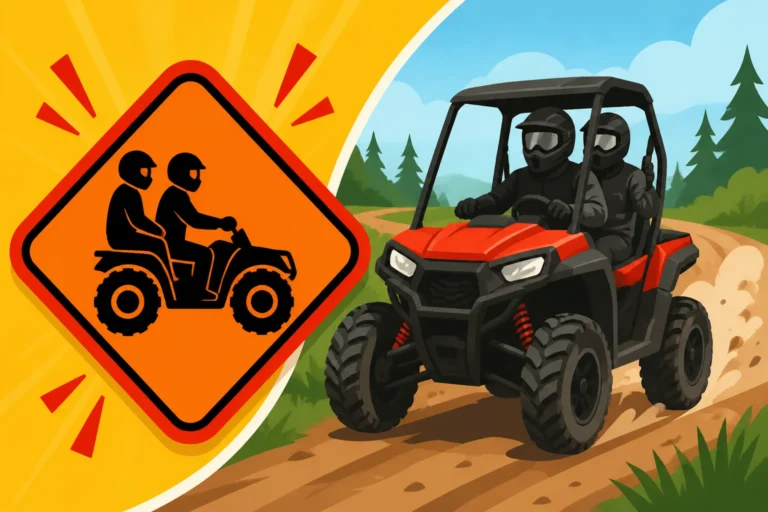
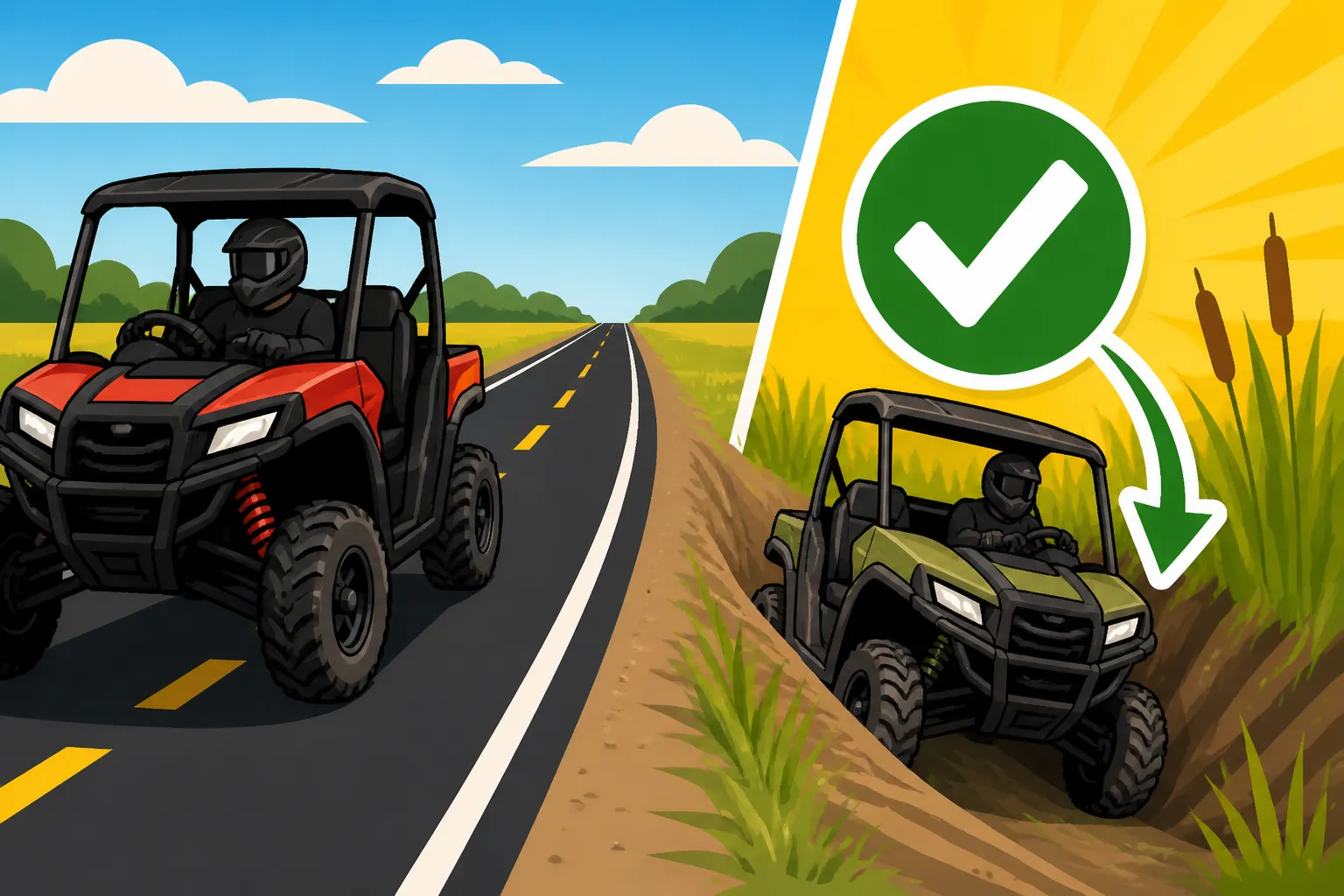
In Manitoba, the law specifically states that an ORV may only be operated in the ditch to the right of the roadway, in the same direction as the adjacent traffic flow. Imagine you're driving your truck down a highway; the ditch on your immediate right, running parallel to your direction of travel, is the one that's generally considered legal for ORV use under specific conditions. This isn't just about convenience; it's a safety measure designed to ensure that if you need to quickly access or exit the ditch, you're doing so in a predictable manner that aligns with established traffic patterns. It helps prevent head-on collisions with other ORVs and reduces confusion for motorists.
For instance, if you're riding your quad west on a road allowance, you must be in the ditch on the north side of the road. Riding in the ditch on the south side, even if it looks identical, would put you on the left side of the road from the perspective of westbound traffic, and that's a no-go. This rule is often overlooked, but it's one of the first things enforcement officers will check. It's crucial to always orient yourself with the flow of traffic on the adjacent roadway, even if you’re deep in the ditch. The intent is to keep you travelling in a consistent, predictable direction relative to other vehicles, whether they're on the road or in the ditch beside you.
Why the Left Ditch is Strictly Off-Limits
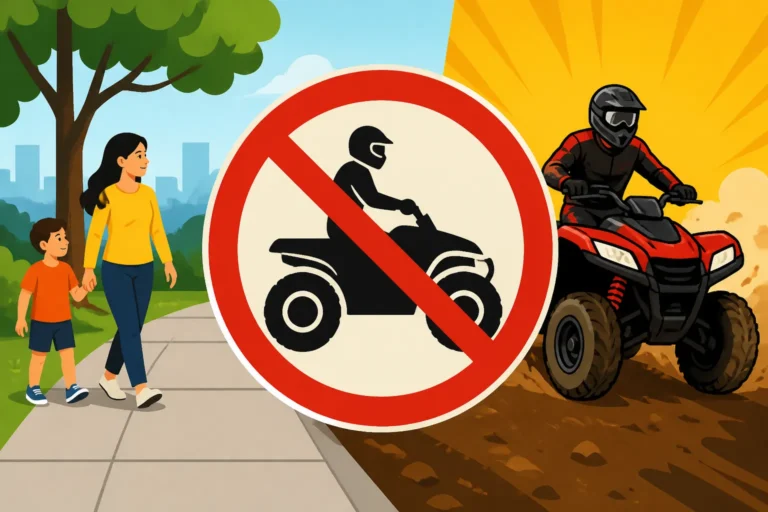
The reason the ditch on the left side of the roadway (from the perspective of adjacent traffic) is prohibited for ORV travel comes down to safety and traffic flow consistency. Picture a scenario where ORVs are travelling in both ditches, with some going against the flow of traffic. This creates a high risk for head-on collisions between ORVs, especially around curves, hills, or in areas with poor visibility. It also adds an unpredictable element for drivers on the main roadway who might expect ORVs to be moving in the same direction.
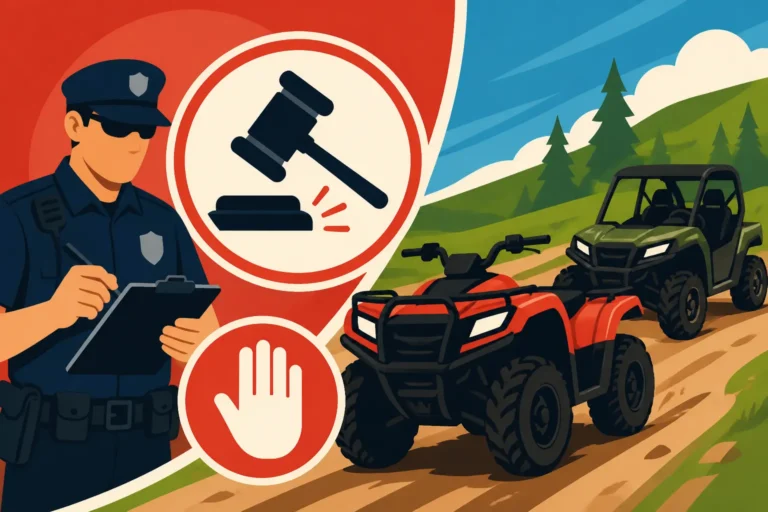
Beyond safety, this rule helps maintain order and clarity on who has the right-of-way and what actions are expected. If you encounter another ORV or even a pedestrian in the right-hand ditch, both parties are generally moving in the same direction, making interactions much safer. Allowing travel in the left ditch would undermine this crucial principle, increasing the potential for accidents and making enforcement incredibly difficult. So, while that left ditch might look like a tempting, clear path, remember that [The Only Legal Ditch Is on Your Right], and venturing into the other one could lead to a significant fine or, worse, an accident.
Navigating the Specifics: Conditions for Legal Ditch Riding
Simply being in the right-hand ditch isn't enough; Manitoba's rules outline several other critical conditions that must be met for legal operation. These conditions cover everything from the speed you can travel to how you interact with intersections and properties. Many riders are surprised by the strictness of these regulations, often assuming that "off-road" means a free-for-all. However, operating in a ditch that runs alongside a public road requires a different level of caution and adherence to specific statutes designed to protect both riders and the public.
Required Direction of Travel and Speed Limits
As mentioned, you must always travel in the same direction as the adjacent traffic flow on the roadway. This means if cars are going north, your ORV in the ditch should also be going north. This isn't just a minor detail; it's a fundamental safety requirement. Imagine if an ORV was moving southbound in the ditch next to northbound traffic – it creates a dangerous and unpredictable situation for everyone. This rule helps maintain a consistent flow, reducing the chances of unexpected encounters with other ditch users or vehicles.
Furthermore, speed limits are also a factor. While there isn't always a separate posted speed limit specifically for ditch riding, the general expectation is that you will operate your ORV in a safe and controlled manner, which usually means well below the posted speed limit of the adjacent roadway. Enforcement officers look for reasonable and prudent operation. Riding at excessive speeds in a ditch, which often has uneven terrain, hidden obstacles, and poor visibility, is not only dangerous but can also be seen as careless operation, leading to tickets. A good rule of thumb is to ride at a speed that allows you to react safely to any changes in the ditch, such as sudden dips, culverts, or encounters with pedestrians or wildlife.
Crossing Roadways: The 5 Metre and 3 Kilometre Rules
Crossing a roadway from a ditch is one of the riskiest maneuvers an ORV rider can make, and Manitoba has very specific rules to govern it. You cannot simply cross a highway wherever it's convenient. Instead, there are two primary rules regarding crossing:
- The 5-Metre Rule: You may cross a highway at a right angle (90 degrees) to the roadway, but only if you are at least five metres from any intersection. This means you can't be crossing right at a corner where vehicles are turning or where visibility might be compromised by buildings or other obstructions. This distance provides a buffer zone, allowing motorists and ORV riders more time to react.
- The 3-Kilometre Rule: If there's an intersection within three kilometres in either direction, you must use that intersection to cross. This rule encourages riders to use designated crossing points where drivers are more likely to expect cross-traffic and where sightlines are generally better. It discourages riders from creating impromptu crossings in high-traffic or less visible areas.
These rules emphasize that crossing a roadway is not to be taken lightly. It requires extreme caution, a full stop, yielding to all traffic, and choosing the safest possible location. Always remember to make sure your view is clear in both directions, and be visible to any oncoming traffic. For more detailed instructions, check out [Manitoba Crossing Rules at 5 Metres and 3 Kilometres].
Operating Near Dwellings, Playgrounds, and Parking Lots
Manitoba's ORV Act also places restrictions on how close you can operate your machine to homes, playgrounds, and other sensitive areas. Generally, you cannot operate an ORV within 30 metres of a dwelling between midnight and 7 a.m. This "30-metre dwelling rule" is designed to prevent noise disturbances during sleeping hours. While it primarily applies to night-time operation, it's always respectful to maintain a reasonable distance and keep noise levels down when near residential areas at any time.
Similarly, riding near playgrounds, schools, or busy parking lots requires extra vigilance. While you might cross a parking lot to get to a trail, doing so requires slow, cautious travel, yielding to pedestrians and other vehicles. You're expected to operate your ORV in a manner that doesn't endanger or disturb others. Imagine kids playing in a yard next to a ditch; your responsibility is to minimize your impact. This means keeping noise down and maintaining a safe distance. Accessories like quiet exhaust systems, which some riders install from brands like SuperATV, can actually help you be a more considerate neighbour when traversing ditches near homes.
Machine Types and Ditch Riding Eligibility
Not all off-road vehicles are created equal in the eyes of Manitoba's ditch riding laws. While quads, dirt bikes, and snowmobiles are generally permitted under the right conditions, there are specific exemptions, most notably for certain four-wheel drive vehicles. Understanding these distinctions is crucial to avoid tickets and ensure compliance. It's easy to assume that if it's an "off-road" machine, it can go anywhere off the road, but the law draws clear lines, especially when it comes to ditches alongside public thoroughfares.
Two and Three-Wheeled Machines in Ditches
For most conventional ORVs like two-wheeled dirt bikes, three-wheeled ATVs (though these are less common now), and even snowmobiles (in season), ditch riding is generally permitted provided all the other rules are followed: travelling in the right-hand ditch, in the direction of traffic, at a safe speed, and respecting crossing rules and proximity to dwellings. These machines are often designed with the agility and clearance needed to navigate the uneven terrain found in ditches.
Dirt bikes, for example, are inherently nimble and can handle varying ditch conditions, from grassy banks to muddy stretches. Quads, or ATVs, offer more stability and are a common sight in Manitoba's ditches. The key for these machines is that they are purpose-built for off-road travel. Riders of these machines must still be mindful of the physical characteristics of the ditch itself. Deep ruts, culverts, and steep banks can be dangerous, regardless of your machine's capabilities. Always assess the ditch condition before entering, and consider if your machine, and your skill level, are appropriate for the terrain.
The Four-Wheel Drive Exemption: Trucks and SUVs are Barred
Here's where many people get confused. While your 4×4 pickup truck or SUV might be incredibly capable off-road, Manitoba's ORV Act specifically prohibits their operation in ditches. This isn't about their off-road capability; it's about their classification. The Act defines an ORV in a way that generally excludes full-size vehicles like trucks and SUVs that are otherwise street-legal and typically registered under the Highway Traffic Act.
The intent behind this is partly due to the size and weight of these vehicles, which can cause significantly more damage to ditches, culverts, and infrastructure compared to a lighter ATV or dirt bike. It's also about maintaining clarity in enforcement: if a full-size truck is allowed in a ditch, where does the line get drawn? Is it an ORV at that point, or still a highway vehicle? To simplify things and prevent abuse, [Manitoba Four-Wheel-Drives Barred From Ditches] alongside public roads. This means if you're thinking of taking your lifted truck for a spin in the ditch next to the Trans-Canada Highway, you're looking at a ticket. This rule is often surprising to truck owners who use their vehicles for off-roading elsewhere but need to understand the specific limitations in a road ditch context.
| Machine Type | Ditch Riding Permitted? | Key Considerations |
|---|---|---|
| ATV (Quad) | Yes | Right-hand ditch, direction of traffic, safe speed |
| UTV (Side-by-Side) | Yes | Right-hand ditch, direction of traffic, safe speed, often wider so mind obstacles |
| Dirt Bike | Yes | Right-hand ditch, direction of traffic, safe speed |
| Snowmobile | Yes (seasonal) | Right-hand ditch, direction of traffic, safe speed, specific winter access rules |
| 4×4 Truck/SUV | No | Explicitly prohibited from road ditches under the ORV Act |
| Amphibious Machine | Yes (limited) | Right-hand ditch, direction of traffic, safe speed, must meet other ORV requirements |
Safety and Legal Compliance Beyond the Ditch
Beyond the specific rules of ditch riding, there are broader safety and legal compliance issues that every ORV rider in Manitoba must be aware of. These range from mandatory equipment and licensing requirements to the overarching power of local municipalities to set their own regulations. Ignoring these broader aspects, even if you're diligently following the ditch rules, can still land you in hot water.
Essential Equipment and Documentation
First and foremost, your ORV needs to be properly equipped. This includes adequate lighting if you're riding from half an hour before sunset to half an hour after sunrise, and a properly functioning spark arrester to prevent wildfires, which is a year-round requirement. While you might be focusing on performance upgrades from a company like SuperATV, don't forget the basics that keep you legal and safe.
Just as important as your machine's equipment is your personal documentation. In Manitoba, you must have your ORV registered through MPI, and you are required to carry your registration card with you at all times when operating the machine. This isn't something you can leave in your truck or at home; an enforcement officer may ask to see it. [Carrying Your Registration Card on Every Ride] is non-negotiable. Furthermore, if you're crossing a highway, you need a valid driver's licence. Basic liability insurance is also included with your registration, but many riders opt for additional coverage for theft, collision, or accident benefits, as the base package is quite minimal. [Manitoba Insurance Included With Registration] details this further.
The Power of Municipal By-Laws and Local Government Districts
One of the most significant pieces of the ORV puzzle in Manitoba is the power held by local municipalities and Local Government Districts (LGDs). While the provincial ORV Act sets a baseline, individual municipalities have the authority to create their own by-laws that can further restrict or even, in some cases, open up areas for ORV use within their boundaries. This means that a ditch that's perfectly legal to ride in one rural municipality might be off-limits just across the border in another.
This patchwork of local rules is a major source of confusion for riders. You might be riding legally in a ditch for miles, only to unknowingly enter a municipality with a "no ORV" by-law in place for all ditches. It's why it's so important to do your homework if you plan to ride in unfamiliar areas. Before heading out, especially on a longer trip that might cross different municipal jurisdictions, it's wise to check with the local municipal office or LGD. They can provide specific information on local restrictions or designated routes. [Manitoba Municipal By-Law Powers] highlights just how impactful these local regulations can be on your riding plans.
Common Misconceptions and Staying Safe on the Trails
Even with a clear understanding of the rules, there are still common misconceptions about ditch riding and general ORV use in Manitoba that can lead to problems. Beyond the legalities, safety should always be your top priority, especially when operating in conditions that can change rapidly. Riders often underestimate the risks associated with ditches or believe certain rules don't apply to them, which can have serious consequences.
Why "Only Riding on Trails" Doesn't Exempt You
A frequent misconception is that if you're primarily using your ORV to get to and from designated trails, or if you only ride on your own land, you don't need to worry about registration or the specific ditch rules. This couldn't be further from the truth. The Manitoba ORV Act applies province-wide, and if you're operating your machine anywhere off your own private property, including traversing a ditch to reach a trail system, it must be registered.
Even if you only ride on club trails, or in provincial parks on designated routes, if those routes involve crossing or travelling in a ditch that's part of a road allowance, the provincial rules apply. There are very few exemptions for registration, such as for commercial fishers or licensed trappers within their operating districts, or for machines used exclusively on private property. For most recreational riders, if your wheels touch any public land or road allowance, you need to be compliant. [Riding Only on Trails Does Not Exempt You] is a vital reminder for all Manitoba riders.
Prioritizing Safety in Ditch Riding and Beyond
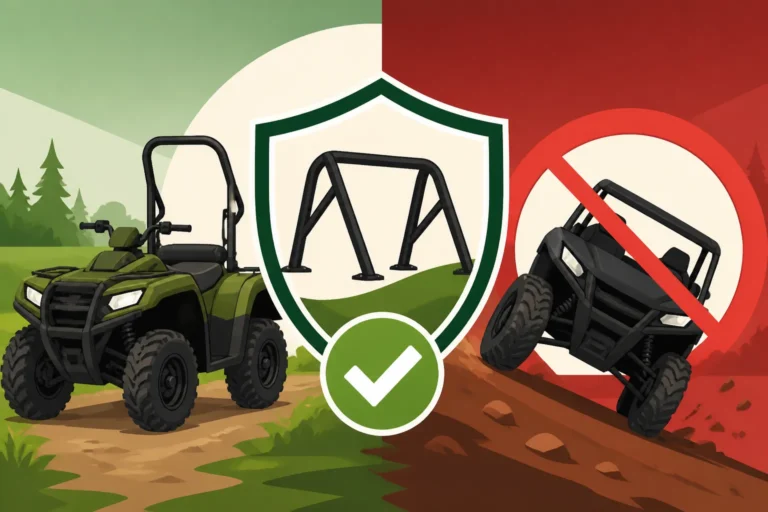
Ditches, while sometimes offering a legal path, are inherently unpredictable environments. They can have hidden culverts, sudden drops, fences, large rocks, and uneven terrain that can easily catch a rider off guard. Riding defensively and always expecting the unexpected is paramount. Always wear appropriate safety gear, including a helmet that meets recognized standards (like Snell or FMVSS). This isn't just about legality; it's about protecting yourself. Even for those with roll-over protection, a helmet is still highly recommended for impacts and debris.
Consider the capabilities of your machine and your own skill level. If a ditch looks too challenging or has poor visibility, it’s always safer to find an alternative route. Avoid riding alone, especially in remote areas, and always let someone know your riding plan. Proper maintenance of your ORV, including checking tire pressure, brakes, and fluid levels, is also a critical safety measure. Equipping your machine with robust skid plates or A-arm guards, perhaps from a brand like SuperATV, can provide crucial protection against hidden obstacles in unpredictable ditch terrain, helping to prevent costly damage and ensure your ride doesn't end prematurely. The wild beauty of Manitoba's landscape comes with its own set of challenges, and being prepared is part of the adventure.
Disclaimer
This article is for general informational purposes only and does not constitute professional advice. Laws, prices and regulations vary by location and change over time. Consult a qualified professional for guidance on your specific situation.