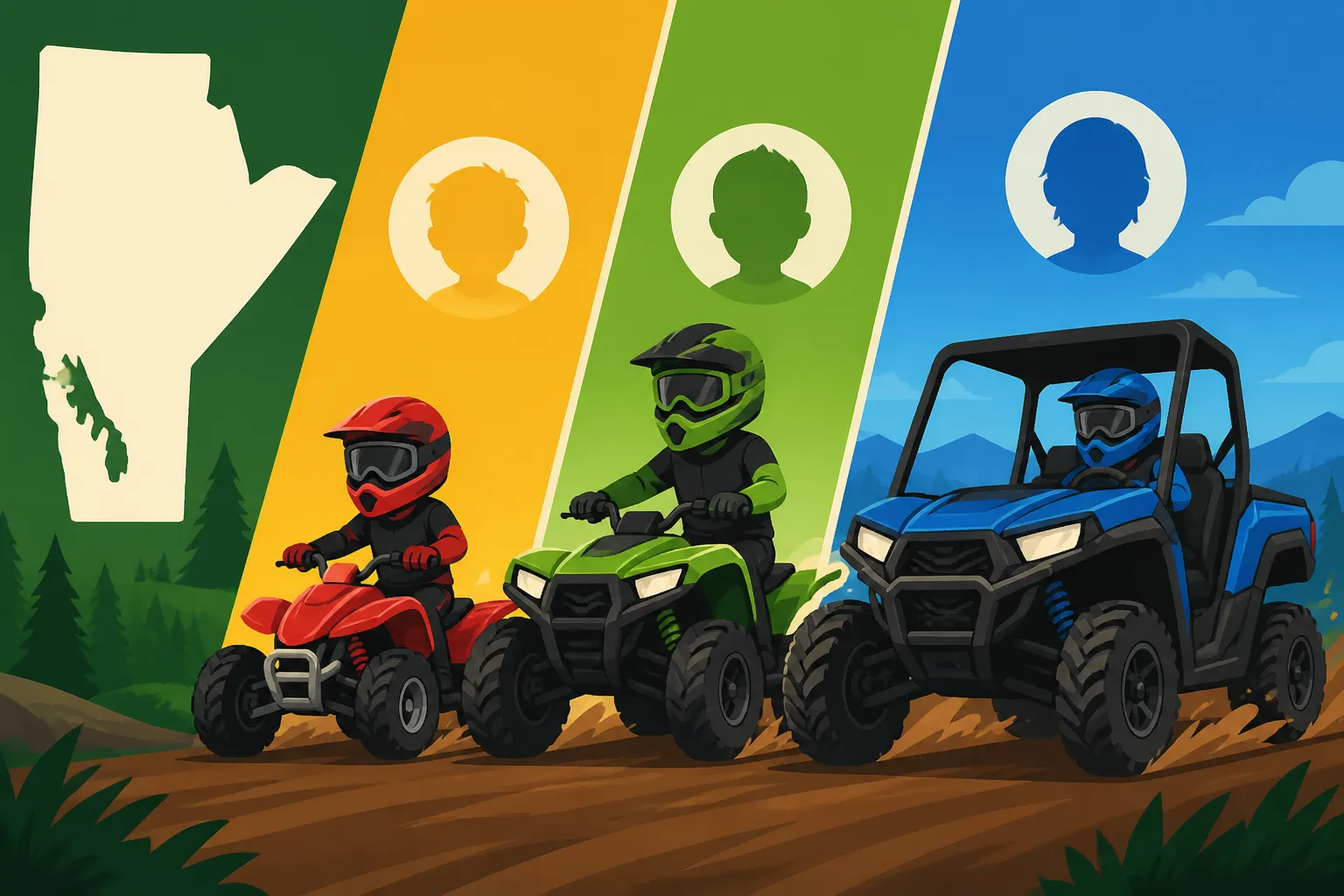
Manitoba Age Tiers for Young Riders
Trying to figure out where your kids can legally and safely ride their ATVs and UTVs in Manitoba can feel like navigating a maze blindfolded. Parents often grapple with confusing regulations, worried about fines or, more importantly, their child's safety and legal standing. This guide is designed to cut through that confusion, breaking down Manitoba's specific age tiers for young off-road vehicle riders so you can hit the trails with confidence and peace of mind.
Understanding the Foundation: Why Age Tiers Matter
The rules around age for off-road vehicle (ORV) operation in Manitoba aren't just arbitrary lines drawn in the sand. They're built on principles of safety, gradual skill development, and ensuring riders have the maturity and physical capability to handle these powerful machines responsibly. As parents, we all want our kids to enjoy the thrill of the ride, but not at the expense of their well-being or getting into trouble with the law. These age tiers are designed to guide that journey, ensuring that as riders grow, their privileges and responsibilities increase alongside their skills and understanding of the risks involved. It’s a framework that acknowledges the differences between a 10-year-old on a small youth quad and a 16-year-old operating a full-sized side-by-side.
It's easy to look at the rules and feel frustrated, especially if your child is an exceptional rider for their age. Many of us grew up riding machines that, by today's standards, might seem a bit too big or too fast for our younger selves. But the current regulations are in place for a reason, often stemming from statistics and safety studies. Ignoring them, even with the best intentions, can lead to serious consequences, from significant fines to invalidating insurance coverage in the event of an accident. So, understanding these foundational reasons helps us appreciate the structure, even if we sometimes wish for a little more flexibility.
The Gradual Approach to Rider Independence
Manitoba's ORV Act adopts a phased approach, recognizing that operating an off-road vehicle safely involves more than just knowing how to accelerate and steer. It requires judgment, an understanding of terrain, awareness of others, and the ability to react quickly to unexpected situations. These are skills that develop over time. The age tiers reflect this by gradually introducing more complex riding environments and reducing the level of direct supervision required as a rider gains experience and maturity.
For instance, a younger rider might be restricted to private property under strict supervision, while an older, more experienced teen might be allowed to ride certain ditches or cross roadways, provided they meet specific licensing requirements. This progression isn't about holding kids back; it's about setting them up for long-term success and enjoyment in the sport by building a solid foundation of safe riding habits. It also encourages parents to be actively involved in their child's riding journey, providing guidance and setting good examples, which is truly invaluable.
The Role of Supervision in Early Riding Stages
At the heart of the lower age tiers is the absolute necessity of direct, active adult supervision. This isn't just about having an adult somewhere on the property; it's about an adult being present, engaged, and able to intervene immediately if needed. The law is quite clear on this, and for good reason. Young riders, especially those just starting, can make impulsive decisions or misjudge situations that an experienced adult can foresee and help them avoid.
Supervision provides a crucial safety net, allowing kids to explore and develop skills in a controlled environment. It's during these supervised sessions that they learn critical lessons about throttle control, braking, navigating obstacles, and respecting the machine's power. It's also a fantastic opportunity for bonding and sharing the passion for ORV riding. Think of it less as a restriction and more as a mentorship program for future responsible riders.
Age Tiers for Riders Under 14 Years Old
This is where the journey often begins for many young enthusiasts. For children under the age of 14, Manitoba's ORV regulations are quite specific and, frankly, non-negotiable when it comes to supervision and where they can ride. It’s a period focused on learning the absolute basics in the safest possible environment, usually private land. This tier emphasizes parental responsibility and a cautious introduction to the world of off-road riding. It means you can't just drop your child off at a friend's farm and expect them to be okay; direct, watchful eyes are legally required.
The main takeaway for this age group is that permission to ride is heavily conditional on continuous adult presence and the location of the ride. We often hear stories of kids who seem "born to ride," but the law doesn't make exceptions for perceived talent. It's about protecting every child and ensuring they operate within a framework that minimizes risk as much as possible. This is also where discussions about appropriately sized machines become paramount, as a child on a machine too large for them is inherently at greater risk. [Manitoba Rules for a 12-Year-Old Rider] provides more specific details relevant to this age group.
Strict Supervision Requirements
For any rider under 14 years of age, direct supervision by a person 18 years or older is mandatory. This isn't a suggestion; it's a legal requirement. The supervisor must be in "clear view" of the young rider at all times. What does "clear view" really mean? It implies visual and auditory contact, being close enough to immediately assess the situation and intervene if necessary. This isn't just watching from the porch while they ride in the back forty. It means being out there with them, actively observing.
Imagine you're at a family farm. Your 11-year-old is riding their youth quad around a field. Being in "clear view" would mean you're either riding another machine nearby, walking alongside them, or positioned in a way that you can see them constantly and shout instructions or warnings. If they disappear behind a stand of trees or over a small hill, even for a moment, that breaks the "clear view" rule. This level of supervision ensures that if they encounter an unexpected obstacle, lose control, or simply need guidance, an experienced adult is right there to provide it. The emphasis is on immediate response and continuous monitoring, rather than distant oversight.
Riding Exclusively on Private Land
For riders under 14, the law restricts their riding to private property. This means no public trails, no Crown land, no roads, not even the ditches alongside public roads. The only exception would be if a specific municipal by-law explicitly opens certain areas, but for this age group, it's a rare occurrence and generally not the rule. This restriction is primarily to protect young riders from the unpredictable nature of public areas, where they might encounter other vehicles, pedestrians, or hazards they aren't equipped to handle.
Private land offers a controlled environment where the landowner can manage potential risks and dictate the rules of engagement. For instance, a farmer might designate a specific pasture or field for their children to ride in, ensuring it's free of livestock, farm equipment, or dangerous obstacles. This controlled setting allows young riders to build confidence and develop their skills without the added complexities and dangers of shared public spaces. It's crucial for parents to understand that taking a child under 14 onto a designated public trail, no matter how quiet it seems, is a violation of the law and can result in significant penalties.
Age Tiers for Riders Aged 14 to 15-and-a-Half
As young riders edge closer to their mid-teens, Manitoba's regulations start to open up a tiny bit, but still with a heavy emphasis on supervision. This age bracket is a transitional period where riders might start to handle slightly more complex riding scenarios, but they are far from having the same privileges as an adult. Think of it as an intermediate stage, where a little more independence is granted, but the watchful eye of an adult remains firmly in place. It's a chance to build on the foundational skills learned on private land and apply them in slightly broader contexts.
The move into this age tier often aligns with an increased physical ability to handle larger youth machines, or perhaps even some smaller adult models, but this doesn't automatically mean full freedom. The law ensures that any expanded privileges are still balanced with essential safety measures. You'll find specific mention of what a [Manitoba 14-Year-Old Rider] is allowed to do, and it's essential to consult these detailed rules.
Ditch Riding Privileges Under Supervision
For riders aged 14 and over, Manitoba's ORV Act introduces the possibility of riding in ditches, but with very specific caveats. This is a notable shift from the strict private land rule for younger kids. However, the requirement for direct supervision by an adult (18 years or older) remains firmly in place. Additionally, the adult must be operating their own ORV, or in a position to effectively supervise, and always maintain "clear view" of the young rider.
Riding in ditches can be more challenging than a flat field, introducing varied terrain, potential hidden obstacles, and proximity to road traffic. This is why supervision is still paramount. The adult supervisor can guide the young rider on navigating uneven ground, explain safe distances from the roadway, and reinforce the importance of situational awareness. It's a stepping stone, preparing them for future independence while ensuring they learn to navigate these new environments responsibly. The rule specifies that this ditch riding is generally on the far right-hand side of the roadway, travelling in the same direction as traffic, adding another layer of complexity that requires an experienced eye.
Crossing Roadways with an Adult Supervisor
This age group also gains the conditional privilege of crossing roadways, a significant step up from merely riding on private land. However, this is not a free pass. The rules for crossing a highway are stringent and require the young rider to be accompanied and supervised by a person 18 years or older who also holds a valid driver's license. The crossing must be done at a right angle to the roadway, yielding to all traffic, and only when there's a clear view of at least 150 metres in both directions. It’s also important that they cross at specific points, such as [Manitoba Crossings at 5 Metres and 3 Kilometres] from intersections.
The adult supervisor is not just there for moral support; they are there to make critical judgment calls, assess traffic, and ensure the crossing is executed safely and legally. This is often the first time a young rider will encounter formal traffic rules while operating an ORV, making the supervisor's guidance indispensable. It teaches them vital lessons about sharing public spaces and the gravity of their actions, preparing them for the day they might cross without direct adult intervention. It's about instilling caution and respect for road safety from an early age.
Age Tiers for Riders Aged 15-and-a-Half and Up (Learner's Permit Equivalent)
For those who have reached 15 and a half years of age and hold a valid Class 6 (motorcycle) or Class 5 (car) learner's permit, a new level of limited independence begins to emerge. This is a crucial developmental stage, as riders are now demonstrating a foundational understanding of road rules and responsibilities through their pursuit of a driver's license. The ORV Act acknowledges this by granting certain privileges that were previously off-limits, though supervision often remains a key component, albeit in a slightly different capacity. It's a bridge period, moving from direct parental oversight to developing independent judgment.
This is where the direct tie-in with general driver licensing begins, signifying that the province sees a strong correlation between responsible vehicle operation on roads and responsible ORV operation. It’s important to remember that a learner’s permit still comes with significant restrictions in the vehicle world, and these transfer over to ORV use as well.
Unsupervised Ditch Riding (Under Specific Conditions)
Once a rider turns 15 and a half and obtains a Class 6 (motorcycle) or Class 5 (car) learner's permit, they may ride an ORV in a ditch without direct adult supervision, provided they meet all other requirements of their permit. This is a big step, signifying a recognition of their increased maturity and demonstrated understanding of traffic laws. However, it's not a free-for-all. All the rules for ditch riding still apply: staying to the right, moving with the flow of traffic, and adhering to local bylaws. The [Manitoba Riders 14 and Over in Ditches] rules are particularly important here.
This new freedom comes with heightened responsibility. Riders must now make their own judgments about safety, speed, and potential hazards without an adult's immediate guidance. This is why having a learner's permit is critical—it implies a basic level of knowledge of traffic laws and an awareness of other road users. It's a chance for young riders to apply what they've learned in a slightly less controlled environment, fostering independent decision-making skills that are vital for future riding. Still, parents often encourage caution and continued practice, as the real world can present unexpected challenges.
Roadway Crossings with a Qualified Accompanying Driver
While riders 15 and a half with a learner's permit can ride ditches independently, the rules for crossing roadways are still stricter. They cannot cross a roadway on their own. Instead, they must be accompanied by a qualified driver, meaning a person aged 18 or older who holds a valid, full Class 5 or higher driver's license, and who is in a position to adequately supervise the crossing. This qualified driver does not necessarily need to be on an ORV themselves, but they must be present and capable of overseeing the safe execution of the crossing.
This provision highlights the continued importance of experienced judgment when interacting with roadways. Even with a learner's permit, young riders might not have developed the quick reflexes or the comprehensive understanding of traffic dynamics required for completely independent crossings. The accompanying driver acts as a safeguard, ensuring that the young rider makes safe choices, yields appropriately, and crosses only when conditions are absolutely clear. It's a practical measure to mitigate risk at points where ORVs intersect with regular traffic, allowing young riders to gain experience in a supervised capacity before earning full crossing privileges.
Age 16 and Older: Full Privileges and Responsibilities
When a rider turns 16 and has obtained a full, unrestricted Class 5 (car) or Class 6 (motorcycle) driver's license, they generally assume the same operating privileges and responsibilities as an adult ORV operator in Manitoba. This is the culmination of the tiered system, recognizing that at 16, with a full license, individuals are deemed capable of making independent decisions regarding vehicle operation, both on and off the road. The emphasis shifts entirely from supervised learning to independent, responsible action.
This is a significant milestone for young riders, granting them the freedom to explore trails and navigate regulations with much greater autonomy. However, "full privileges" also means "full responsibilities," and understanding all aspects of the ORV Act becomes even more critical. Registration, insurance, and knowing [Manitoba ORV Road Rules Explained] are just as important for a 16-year-old as they are for a 40-year-old. [Manitoba Registration Age of 16] is a key piece of information for this group, as it's often the first time they are registering a machine in their own name.
Operating an ORV Independently
With a full Class 5 or Class 6 license, a 16-year-old can operate an ORV independently, meaning they no longer require direct adult supervision for ditch riding or crossing roadways, or any other permitted activity. They are expected to know and adhere to all aspects of the ORV Act, including where they can and cannot ride, speed limits, helmet laws, and any specific municipal bylaws in effect. This newfound independence allows them to join group rides with friends, explore trails on their own, or use their machine for work or recreation with greater freedom.
This stage is about trust—trust that they have absorbed the lessons of the previous tiers, trust in their judgment, and trust in their ability to operate the machine safely and respectfully. While the law grants this independence, many parents continue to instill caution and encourage responsible choices, especially concerning peer pressure or pushing limits. The full license signifies a legal right to operate, but personal responsibility and good decision-making remain paramount for enjoyable and safe riding experiences.
Parental Consent for Registration (Aged 16-17)
Even with full operating privileges at 16, there's an important administrative detail for those under 18: parental consent for registration. If a rider is 16 or 17 years old and wishes to register an ORV in their own name, they will likely need a parent or legal guardian to co-sign the registration documents. This is a common practice for many significant purchases or registrations involving minors, recognizing that while they may operate the vehicle, they are still considered minors in many legal and financial contexts. [Manitoba Parental Consent From 16 to 18] details this requirement.
This consent ensures that a responsible adult is aware of and agrees to the minor owning and registering the ORV. It's a safeguard, not a restriction on riding ability, and typically involves the parent or guardian providing their signature at the Manitoba Public Insurance (MPI) service centre when the ORV is being registered. It’s a moment that bridges the gap between legal operating age and full legal adulthood, ensuring all parties are aligned on the responsibilities that come with ORV ownership.
Essential Safety Gear and Machine Considerations for Young Riders
Beyond the age-specific legalities, there are universal safety principles and equipment considerations that apply to all young ORV riders, regardless of their age tier. Safety gear isn't just a recommendation; it's often a legal requirement and always a common-sense necessity. Furthermore, ensuring a child operates a machine that is appropriately sized and powered for their physical capabilities and skill level is critical for preventing accidents. Parents often invest in good quality gear and machines, knowing that the right equipment can make a significant difference in safety and enjoyment.
When outfitting a young rider, it’s not just about the cheapest option. Durability, fit, and protection are key. Companies like SuperATV, known for a wide range of accessories, also indirectly support safer riding by making machines more capable or by offering parts that enhance protection, though directly for youth machines, the focus is on proper sizing from the manufacturer. It's an investment in your child's safety, and one that every parent should prioritize.
Mandatory Helmet Use and Standards
In Manitoba, helmet use is mandatory for all ORV operators and passengers, regardless of age. There are very few exceptions, and these generally apply to specific situations like farming, fishing, or in some very remote northern communities. For most recreational young riders, a helmet is absolutely required. It’s not just any helmet, either; it must be a helmet that meets recognized safety standards, such as Snell, DOT, or ECE. [Manitoba ATV Helmet Law] reinforces this.
A properly fitting helmet is the single most important piece of safety equipment a rider can wear. It should fit snugly, not wobble, and the chin strap should be securely fastened. Many parents make the mistake of buying a helmet their child will "grow into," but a helmet that's too large can shift during an impact, offering inadequate protection. Investing in a high-quality, certified helmet that fits now is paramount. Helmets should also be regularly inspected for damage and replaced if they’ve sustained a significant impact, even if there's no visible damage.
Appropriate Machine Size and Type
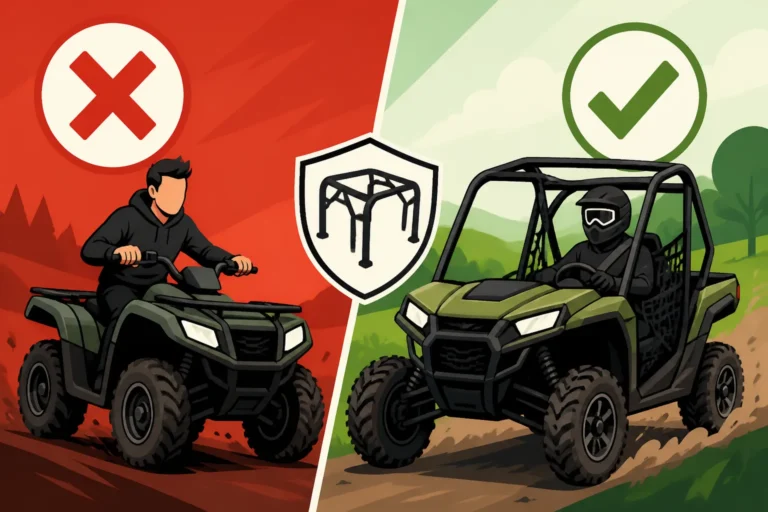
One of the most critical decisions for a young rider's safety is ensuring they are on an ORV that is appropriate for their age, size, and skill level. Manufacturers often provide age recommendations for their youth models, and these are based on factors like weight, height, and developmental stages. Placing a small child on an ATV or UTV that is too large or too powerful for them significantly increases the risk of loss of control and serious injury. This often means resisting the urge to buy a machine they can "grow into" quickly.
For example, youth ATVs come in various engine sizes, typically ranging from 50cc for very young beginners to 250cc for older, more experienced teens. UTVs also have youth models with restricted speeds and smaller dimensions. It's vital to follow these recommendations. A child should be able to comfortably reach the controls, have their feet firmly on the footrests, and be able to easily turn the handlebars. A machine that allows for proper posture and control provides a safer and more enjoyable riding experience. Consider that if you're looking for parts for a full-size machine that you're adapting for lighter use, a company like SuperATV might have options for winches or other accessories, but for youth machines, stick to manufacturer guidelines for sizing.
Here's a summary of Manitoba's age tiers for ORV riders:
| Age Group | Supervision Required | Permitted Riding Areas | Required License/Permit | Notes |
|---|---|---|---|---|
| Under 14 years old | Direct, continuous (18+ in clear view) | Private property only | None | Absolutely no public trails, ditches, or roads. |
| 14 to 15.5 years old | Direct, continuous (18+ in clear view) | Private land, ditches | None | Ditch riding and road crossings require specific adult supervision. |
| 15.5 years old (with Learner's Permit) | Ditch riding: None. Road crossing: Qualified driver (18+ fully licensed) | Private land, ditches, roadway crossings | Class 5L or 6L (Motorcycle or Car Learner's Permit) | Can ride ditches unsupervised, but crossings need a supervising driver. |
| 16 years old and up (with Full License) | None | All legal ORV areas (trails, ditches, roads as per rules) | Class 5F or 6F (Full Car or Motorcycle License) | Assumes full adult operating privileges and responsibilities. |
| 16-17 years old (for Registration) | N/A | N/A | N/A | Parental/guardian consent required to register ORV in their name. |
Parental Responsibilities and Legal Ramifications
The role of a parent or guardian in a young rider's ORV journey extends far beyond simply buying a machine and pointing them toward a field. In Manitoba, parents hold significant legal responsibilities for their children's ORV activities. Failing to adhere to the age-tier rules and other regulations can lead to more than just a stern warning; it can result in substantial fines, legal liability, and in severe cases, even criminal charges, particularly if an accident occurs due to negligence. This is why understanding [Manitoba ATV Age Requirements] is so crucial.
It's a heavy burden, but it's one that underscores the importance of safety and compliance. No parent wants to face the consequences of an avoidable accident or a run-in with the law because they weren't fully informed or didn't take the regulations seriously. This section aims to highlight those critical parental duties and the potential ramifications of overlooking them.
Ensuring Compliance with Age and Supervision Rules
As a parent, you are ultimately responsible for ensuring your child operates an ORV in full compliance with Manitoba's age and supervision rules. This means more than just a casual understanding; it requires active verification of your child's age, their machine's suitability, and the consistent presence of a qualified supervisor when required. If your child is caught riding in an unauthorized area or without the necessary supervision for their age tier, the penalties can fall directly on you as the parent or guardian.
For example, if an officer observes your 12-year-old riding their quad unsupervised on Crown land, not only could the child be stopped, but you, as the parent, could face significant fines for permitting the illegal operation of the ORV. These aren't minor tickets either; the fines can quickly add up, and in some cases, the machine itself could even be impounded. The law clearly places the onus on parents to educate their children and enforce these safety protocols, making sure they understand not just the letter of the law, but also the spirit behind it – which is always about safety.
Liability and Insurance Implications
Beyond fines, parents also need to consider the significant liability aspects associated with their child's ORV use. In the event of an accident where a child is operating an ORV illegally (e.g., without supervision, in an unauthorized area, or on an improperly sized machine), the parent could be held financially liable for any damages or injuries that occur. This liability can extend to property damage, medical costs for injured parties, and even legal fees. The basic [Manitoba Insurance Included With Registration] often doesn't cover all scenarios, especially if rules are broken.
It's crucial to understand that if rules are broken, your insurance coverage could be jeopardized. Most insurance policies have clauses that invalidate coverage if the vehicle is being operated illegally. This means that if your child has an accident while in violation of age or supervision rules, your basic ORV insurance—which typically provides some third-party liability—might not pay out. This could leave you personally on the hook for potentially massive costs. Always review your ORV insurance policy carefully and discuss these scenarios with your insurance broker to ensure you understand your coverage and any limitations, especially when minors are involved.
Interacting with Law Enforcement and Staying Informed
No one wants to have a negative encounter with law enforcement while out enjoying the trails, especially when children are involved. However, understanding how to interact respectfully with peace officers and knowing your rights and responsibilities can make any interaction go smoothly. Being prepared also means staying current with regulations, as laws can occasionally change. The best defense against fines and legal issues is being well-informed and always compliant.
This includes not only knowing the provincial ORV Act but also being aware of any municipal bylaws that might affect where you ride with your children. Many towns and Rural Municipalities (RMs) have their own specific rules about ORV use within their boundaries, which can sometimes be more restrictive than provincial law. Always consult local regulations before riding in a new area.
What an Officer May Ask to See
If you or your child are stopped by a peace officer (which could be an RCMP officer, a Conservation Officer, or a municipal bylaw enforcement officer), they have the authority to ask for specific documentation and information. For adult operators, this typically includes proof of ORV registration, proof of insurance, and a valid driver's license. For young riders, especially those in supervised tiers, they might ask about the age of the rider, the relationship to the supervisor, and the supervisor's identification and license. [What an Officer Can Ask to See in Manitoba] is a valuable reference.
It's always best to be polite, cooperative, and provide the requested information. Trying to evade or argue can escalate the situation unnecessarily. Make sure you have your registration card and any other required documents easily accessible and protected from the elements. Some riders even carry laminated copies or digital photos on their phones (though a physical copy is often preferred). For youth, if they are eligible to ride a ditch, they should be prepared to state their age and the location of their supervisor if applicable.
Keeping Up with Evolving Regulations and Local Bylaws
Manitoba's ORV regulations, like any laws, can evolve. New safety standards might be introduced, age requirements could be adjusted, or new municipal bylaws might be enacted. It’s your responsibility as a rider and a parent to stay informed about these changes. The Manitoba government's website (often through Sustainable Development or MPI) is usually the best source for current provincial ORV legislation. Additionally, contacting the local municipal office or the specific ORV club in an area you plan to ride can provide valuable information on local bylaws and trail-specific rules.
Many ORV clubs are excellent resources, not just for trail information but also for advocating for riders and helping members stay informed about regulatory changes. They often host informational sessions or provide updates through newsletters. Becoming a member of a local club, such as those within the [Manitoba Eastman Riding Areas] or [Manitoba Interlake Riding Areas], can be a proactive way to stay in the loop and ensure you're always riding legally and safely with your family. Regularly checking these sources ensures that your family's riding adventures remain compliant and enjoyable.
Fostering Responsible Riding Habits from a Young Age
Teaching young riders the rules and regulations is only one piece of the puzzle. Equally important, if not more so, is instilling a deep sense of responsible riding habits, good judgment, and respect for the environment and other trail users. The legal framework provides the boundaries, but it's the ethical framework that truly shapes a safe and considerate rider. This starts from the very first ride and continues throughout their development. It's about teaching them to be ambassadors for the sport, not just participants.
This means leading by example, consistently reinforcing safe practices, and having open conversations about the risks and responsibilities. From proper trail etiquette to understanding environmental impact, these lessons go beyond simply operating a machine. They contribute to a holistic approach to enjoying the outdoors respectfully.
Emphasizing Trail Etiquette and Environmental Awareness
Responsible riding means more than just following the speed limit. It involves a strong understanding of trail etiquette and environmental awareness. For young riders, this means teaching them to yield to hikers and horses, stay on marked trails to prevent habitat damage, avoid disturbing wildlife, and always practice "Leave No Trace" principles. Picking up litter (even if it's not yours!), not creating new trails, and understanding sensitive areas are all crucial lessons.
When you're out riding with your kids, talk to them about why these things matter. Point out signs of wildlife, explain why it's important not to spin tires unnecessarily in wet areas (which can damage trails and cause erosion), and demonstrate courteous behaviour to other trail users. Showing them the practical benefits of these actions – like preserving the natural beauty of the [Duck Mountain's Mossberry Trail in Manitoba] or ensuring shared-use trails remain open – helps these lessons stick. This also includes using proper gear like spark arresters, a requirement in Manitoba, to prevent wildfires.
Continuous Learning and Skill Development
Riding an ORV is a skill that benefits from continuous learning and development, no matter the rider's age. For young riders, this means not becoming complacent once they've mastered the basics. Encourage them to practice different techniques, safely navigate varied terrain, and always seek opportunities to improve their skills. While not mandatory, [Manitoba Safety Services Training Options] can be a great way to formally enhance skills and confidence.
This could involve joining a local ATV club that offers youth riding clinics, practicing maneuvers in a safe, controlled environment, or simply having regular conversations about safe decision-making. The goal is to cultivate a lifelong habit of cautious, competent, and considerate riding. Remember, even with the best equipment from companies like SuperATV that enhance machine performance and protection, rider skill and judgment are ultimately the most critical safety factors. By fostering a culture of continuous learning, you're not just raising a rider; you're raising a responsible outdoor enthusiast.
Disclaimer
This article is for general informational purposes only and does not constitute professional advice. Laws, prices and regulations vary by location and change over time. Consult a qualified professional for guidance on your specific situation.