Manitoba Ditch Riding Rules
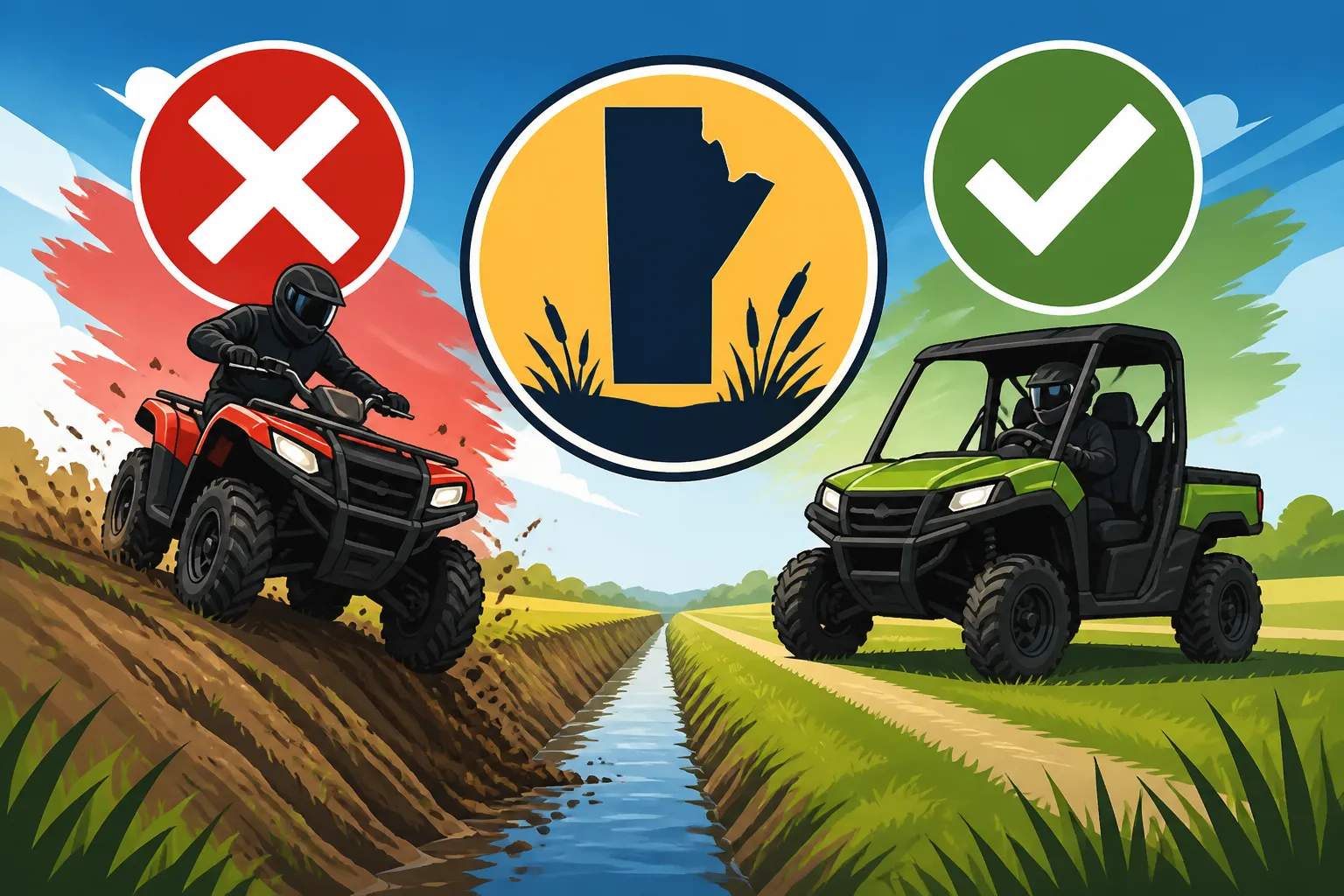
The seemingly simple act of riding your off-road vehicle (ORV) in a ditch in Manitoba can quickly become a tangled web of rules and regulations, leaving many riders scratching their heads and worried about fines. It's a common misconception that ditches are simply fair game, but the reality is far more nuanced. This guide is here to untangle those complexities, walking you through the specific provincial rules, safety requirements, and common pitfalls so you can ride confidently and legally.
Understanding the Basics: What Ditch Riding Really Means in Manitoba
When you picture riding your ATV or UTV, the open ditch beside a road might seem like a natural extension of a trail. It feels like it's "off-road" enough, right? But in Manitoba, "ditch riding" isn't a free-for-all. It's a specific privilege with strict conditions attached, designed to keep both riders and other road users safe. Ignoring these foundational rules can lead to more than just a stern talking-to; it can result in significant fines and even legal trouble.
Why Ditches Are Treated Differently Than Trails
Unlike designated trails that are often maintained by clubs or government bodies specifically for ORV use, ditches run alongside active roadways. This proximity means they fall under a different set of regulations that blend aspects of both off-road and on-road rules. You’re not quite on the highway, but you're not completely isolated in the bush either. This distinction is vital because it means you need to be constantly aware of traffic, visibility, and the safety of others, not just your own enjoyment of the ride. The provincial government recognizes the practical need for riders to use ditches to connect trails or access certain areas, but this allowance comes with a heavy emphasis on responsibility and adherence to specific guidelines.
The General Prohibition on Roadway Riding
Before we even delve into ditches, it's crucial to remember that Manitoba generally prohibits riding ATVs and UTVs directly on public roadways. This isn't just a suggestion; it's a hard and fast rule. The high speeds of cars and trucks, combined with the inherent differences in handling and braking for ORVs, create an extremely dangerous situation. Roadways are designed for motor vehicles with specific safety standards and characteristics, and off-road machines simply don't fit that mould. This underlying prohibition makes the allowances for ditch riding even more important to understand, as it defines the narrow circumstances under which you can operate an ORV near traffic. For a deeper dive into this, check out [Manitoba Bans Riding on Roadways].
The "Right of the Roadway" Principle
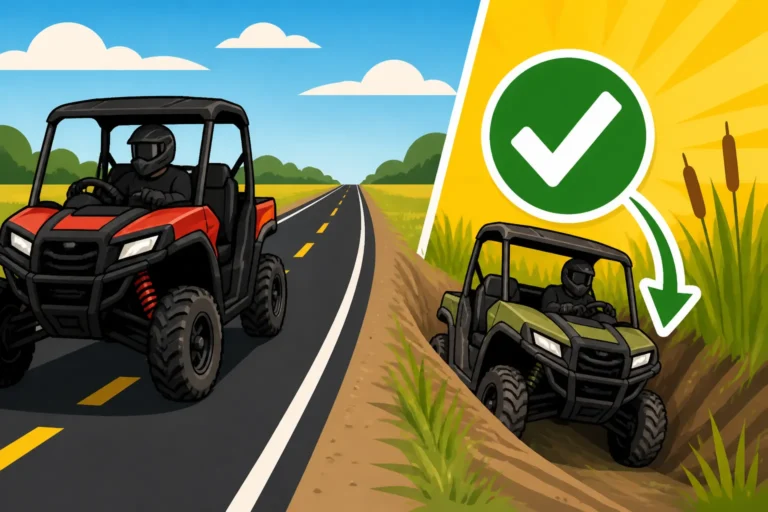
One of the most fundamental aspects of Manitoba's ditch riding rules is the "right of the roadway" principle. This isn't just a suggestion; it’s a strict directional requirement. When you're riding in a ditch, you must travel in the same direction as the adjacent traffic on the roadway. This means if you're on the north side of a highway where traffic is moving east, you must also be heading east. You cannot simply ride whichever ditch suits you, or reverse direction because it's a shorter path. This rule is in place to enhance predictability and reduce the risk of head-on collisions with other ditch riders, or confusion for drivers on the main road. It demands constant awareness of your position relative to traffic flow, and it’s a rule that often trips up riders who are used to less restrictive trail environments. [Only One Ditch of the Two Is Legal] explains this further.
The "Legal Ditch": Where You Can and Can't Ride
So, you understand the general direction, but where exactly is the "legal ditch"? It's more than just a low spot next to the road. The rules specify not only the direction of travel but also which types of vehicles are allowed and how to manage challenging terrain like culverts or steep embankments that might temporarily push you out of the ditch. It's about staying within the defined boundaries of what the law considers a permissible off-road operating space.
Travelling in the Same Direction as Traffic
Let's reiterate this crucial point: you must always travel in the ditch on the right side of the roadway relative to your direction of travel, and always in the same direction as the traffic on the adjacent lane. Imagine you’re driving a car down the highway; your ORV in the ditch should be moving the same way, on the same side as if it were a vehicle on the road. This isn't just about avoiding collisions; it's about making your movements predictable to anyone else who might be operating an ORV in the ditch or observing from the roadway. If you're heading north, you must be in the ditch to the right of the northbound lane. Trying to "cut across" to the other side of the road and travel against traffic in the ditch is strictly prohibited and incredibly dangerous.
This rule eliminates any ambiguity about which ditch is "yours" to ride in at any given moment. It simplifies enforcement and makes it clearer for all users of the area. Think of it as a one-way street rule applied to the ditch. Failure to adhere to this can be easily spotted by law enforcement and result in a ticket, not to mention putting yourself and others at significant risk. Always check your surroundings and ensure you are aligned with the traffic flow.
Restrictions for Four-Wheel-Drives and Other Vehicles
It’s important to note that while ATVs and UTVs are specifically granted some ditch riding privileges under certain conditions, not all off-road vehicles share these. For instance, modified four-wheel-drive trucks or Jeeps, even if they're capable of off-road travel, are generally not permitted to ride in ditches alongside roadways. The Off-Road Vehicles Act in Manitoba defines what an ORV is and, by extension, what it is not. A standard road-registered truck, even if it has massive tires and a lifted suspension, is still considered a motor vehicle designed for the roadway, not for ditch travel.
This distinction prevents a free-for-all in ditches and ensures that only machines designed for rougher, lower-speed off-road use, and specifically legislated for ditch access, are present. It's a common misunderstanding that if a vehicle can go in the ditch, it may go in the ditch. Always remember to check the specific regulations pertaining to your vehicle type. If you’re unsure, it’s always best to err on the side of caution and keep your road-legal vehicle on the pavement.
Crossing Roads and Intersections: Strict Rules for Safety
While you might be allowed to ride in the ditch, crossing a highway or navigating near an intersection is a whole different ballgame. These are high-risk manoeuvres that demand extreme caution and adherence to very specific rules. It's not about making a dash for it; it's about following a precise procedure to minimize the chance of a collision with fast-moving traffic. The province understands that riders need to cross roads to continue their journey, but they’ve put stringent conditions in place to protect everyone involved.
The 5-Metre and 3-Kilometre Rules for Crossings
Manitoba has two critical distance rules for crossing a highway or public road:
- 5-Metre Rule: You must cross the roadway at a right angle (as close to 90 degrees as possible) and at a location that is at least five metres away from any intersection, railway crossing, or private driveway. This distance ensures you are not interfering with traffic flow directly approaching or leaving these critical points. Imagine a car turning into a driveway or an intersection; your crossing shouldn't add to the complexity of that maneuver.
- 3-Kilometre Rule: If you are within a municipality or an area where an intersection is less than three kilometres away from another intersection, you must cross at the nearest intersection. This prevents haphazard crossings between closely spaced intersections and encourages predictability. Outside these areas, you still need to choose the safest, most visible spot, adhering to the 5-metre rule.
These rules are designed to give both you and oncoming traffic ample time to react. They prevent you from popping out unexpectedly near complex traffic situations. You can find more details in [Manitoba Crossing Rules at 5 Metres and 3 Kilometres].
Driver's Licence and Crossing Procedures
To legally cross a provincial highway or public road, the operator of the ORV must possess a valid driver's licence. A learner's permit is not sufficient for this manoeuvre. This ensures that anyone performing this potentially risky action has demonstrated a baseline understanding of road rules and possesses a certain level of experience.
When performing the crossing, you must:
- Stop and Yield: Come to a complete stop before entering the roadway and yield to all traffic on the highway. This is non-negotiable.
- Cross at a Right Angle: As mentioned, cross as perpendicularly as possible to minimize the time spent in the lane of traffic.
- One Machine at a Time: If you're riding in a group, each ORV must cross individually. Do not attempt to cross two or more machines abreast or in quick succession without ensuring the road is clear for each crossing. This prevents a chain reaction if one rider misjudges the timing.
- Maintain Clear View: Ensure you have a clear, unobstructed view of traffic in both directions. Never cross on a blind hill or curve where you can't see far enough ahead.
These steps are critical for your safety and the safety of others. Failing to follow these procedures can lead to serious accidents and severe penalties. Remember, the road is not an extension of the trail, and crossing it requires the same vigilance as driving a car. [Manitoba Crossings Need a Driver's Licence] elaborates on the licensing requirements.
Why Certain Road Structures Are Universally Prohibited
Beyond the general prohibition of riding on the main roadway, specific structures are also strictly off-limits for ORV operation, even for crossing. These include:
- Medians: The grassy or paved strip dividing opposing lanes of traffic on a divided highway. These are not shortcuts and pose significant hazards. [The Median of a Divided Highway Is Closed]
- Interchanges: Complex road junctions involving multiple levels, ramps, and merging traffic. These are designed for high-speed vehicle flow and are incredibly dangerous for ORVs. [Why an Interchange Right-of-Way Is Off Limits]
- Sidewalks: While they might seem like a pedestrian-friendly path, sidewalks are for pedestrians and cyclists, not motorized vehicles, including ORVs. They often have hidden obstacles and are not designed to support the weight or speed of an ATV or UTV. [Why Sidewalks Are Closed to Quads]
Attempting to ride on or across these structures is not only illegal but also extremely hazardous. They represent areas of high traffic density, complex vehicle movements, or vulnerable pedestrian zones that are simply incompatible with ORV operation.
Who Can Ride: Age, Supervision, and Licensing for Ditch Riders
Just like driving a car, operating an ATV or UTV in Manitoba's ditches comes with age restrictions, supervision requirements, and licensing considerations. It’s not simply about being big enough to reach the pedals; it’s about maturity, skill, and adherence to legal frameworks designed to protect younger riders and the public. These rules are put in place to ensure that those operating machines in areas proximate to public roadways have the necessary judgement and experience.
Age Requirements for Ditch Riding
Manitoba has a tiered system for ORV operation, and ditch riding falls under these general rules, with specific nuances:
- Under 14 Years Old: Riders under the age of 14 are generally restricted from operating ORVs in ditches adjacent to provincial highways or public roads. They must be under the direct supervision of an adult (18 years or older) and typically on private land or designated trails. Even then, the machine must be sized appropriately for the child. [Manitoba Rules for a 12-Year-Old Rider] provides further context on young riders.
- 14 Years Old and Over (No Learner's Permit): Riders aged 14 and over may operate an ORV in a ditch without adult supervision, but this is typically limited to areas not adjacent to provincial highways and under specific conditions. They still cannot cross highways without a driver's licence.
- 15.5 Years Old (Learner's Permit): At 15.5 years, a rider can obtain a Class 6M (motorcycle) or Class 5L (learner) driver's licence. While this allows them to drive a car with supervision, it does not authorize them to cross a highway on an ORV. A full Class 5 or Class 6 driver's licence is required for that. [Manitoba Learner Stage Riders at 15 and a Half] highlights this distinction.
- 16 Years Old and Over (Full Licence): Once a rider holds a full Class 5 or Class 6 driver's licence, they can operate an ORV in ditches adjacent to highways and legally cross highways, provided all other rules (like the 5-metre/3-kilometre rule) are followed.
These age and licensing requirements are crucial for ensuring that riders in potentially hazardous areas near roads have the requisite experience and understanding of traffic laws. It's about protecting both the rider and the public. [Manitoba ATV Age Requirements] is a good resource for understanding these age rules in detail.
The Mandatory Helmet Law and Ditch Riding
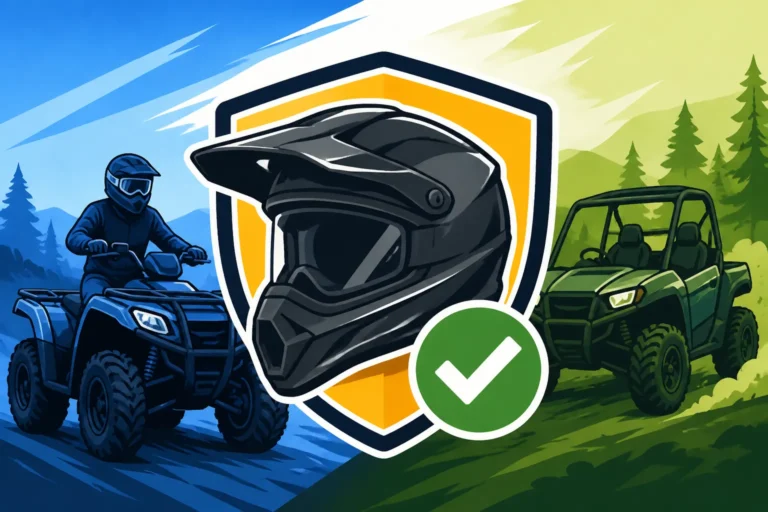
The Manitoba helmet law applies equally to ditch riding as it does to any other form of ORV operation. If you are operating an ORV, you must wear an approved helmet. This is not a suggestion; it is a legal requirement designed to protect your head in the event of an accident, which can happen just as easily in a ditch as on a challenging trail.
- Approved Standards: The helmet must meet specific safety standards, such as those set by DOT (Department of Transportation), Snell, or ECE. Look for the appropriate certification label on your helmet.
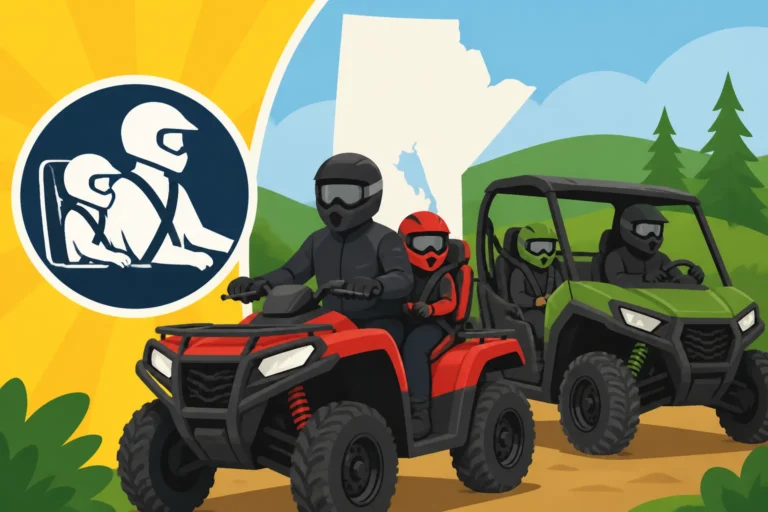
- Passengers Too: Any passenger on your ORV must also wear an approved helmet. The rules don't distinguish between operator and passenger when it comes to head protection.
- UTV Roll-Over Protection (ROP): While most ORV operators need a helmet, there is a specific exemption for UTVs (side-by-sides) that are equipped with a factory-installed roll-over protective structure (ROPS) and seatbelts, if the operator and passengers are wearing those seatbelts. This is because the ROPS and seatbelts provide a similar level of protection to a helmet in many situations. However, even with ROPS, some riders still prefer to wear helmets for additional safety, especially in rough terrain.
Always ensure your helmet is properly fitted, fastened, and in good condition. A damaged or ill-fitting helmet offers little protection. [Manitoba Helmet Law and Its Exemptions] provides a full breakdown of who needs to wear one and when.
Other Safety Considerations
Beyond age and helmets, responsible ditch riding involves several other safety considerations:
- Visibility: Especially important in ditches, where you might be obscured by tall grass or terrain features. Consider adding a safety flag to your ORV for increased visibility to other ditch riders and potentially to traffic. Brightly coloured clothing is also a good idea.
- Machine Maintenance: Ensure your ORV is in good working order. Brakes, steering, lights, and tires should all be regularly checked. A breakdown in a ditch adjacent to a highway can put you in a very vulnerable position.
- Carrying Documentation: Always carry your ORV registration card and proof of insurance. Law enforcement officers have the right to request these documents. If you're using aftermarket parts to enhance your machine's visibility or durability, make sure they don't compromise any safety features or legal requirements. Reputable brands like SuperATV offer a range of products, from improved lighting kits to stronger skid plates, that can enhance both safety and performance in varied terrain.
Always be prepared for the unexpected, and ride defensively, anticipating potential hazards from both the ditch environment and the adjacent roadway. [Carrying Your Registration Card on Every Ride] explains the importance of having your papers on hand.
Essential Safety Gear and Machine Requirements for Manitoba Ditches
Ditch riding isn't just about knowing the rules; it's also about having the right gear and ensuring your machine is properly equipped. The provincial regulations, combined with good common sense, dictate certain necessities to keep you safe and your ORV compliant. From what you wear on your head to what's protecting the underside of your machine, being prepared can make all the difference in an unexpected situation.
Visibility Enhancements for Ditch Riding
Operating in a ditch means you're often partially obscured by vegetation or the contour of the land. This makes visibility incredibly important, not only for you to see what's ahead but also for others to see you.
- Lighting: Your ORV must have adequate lighting, especially if you're riding from half an hour before sunset to half an hour after sunrise, or at any other time when visibility is poor. This includes a functioning headlight and taillight. Consider upgrading your lighting with brighter, more reliable options. SuperATV offers high-performance LED light bars and pod lights that can drastically improve your visibility, allowing you to spot obstacles earlier and making you more noticeable to others, whether they are fellow ditch riders or drivers on the adjacent road.
- Safety Flags: While not always explicitly mandated for all ditch riding, a brightly coloured safety flag mounted on a whip is an excellent addition, particularly in areas with tall grass or undulating terrain. It extends above your machine, making you visible over obstacles.
- Reflective Tape and Clothing: Adding reflective tape to your machine and wearing bright, reflective clothing can significantly increase your visibility, especially in low light conditions. This can be a lifesaver when you're near active roadways.
Remember, being seen is just as important as seeing. Investing in good visibility equipment is a small price to pay for increased safety.
Protection and Durability for Varied Terrain
Ditches are rarely smooth, manicured paths. They can be rough, rocky, muddy, and full of hidden obstacles. Equipping your machine for this kind of environment is crucial for both its longevity and your safety.
- Skid Plates and A-Arm Guards: The underside of your ORV, including the engine, transmission, and suspension components, is vulnerable to impacts from rocks, stumps, and debris. Robust skid plates and A-arm guards provide essential protection. Products from brands like SuperATV are known for their durability and can offer superior protection compared to stock components, saving you from costly repairs down the line.
- Tires: The right tires can make a huge difference. Aggressive tread patterns provide better traction in mud and loose soil, while a durable sidewall can resist punctures from sharp objects. Ensure your tires are in good condition and properly inflated for the terrain you'll be riding.
- Winches: While not mandatory, a winch can be an invaluable piece of equipment for ditch riding. Getting stuck in mud or a soft spot in a ditch can leave you stranded, especially if you're riding alone. A winch allows you to self-recover or assist a fellow rider, transforming a frustrating situation into a manageable one.
Preparing your machine for the realities of ditch terrain isn't about making it indestructible, but about making it resilient and reliable.
Essential Gear for Every Ride
Beyond your machine, there's personal gear and supplies you should always carry:
- First-Aid Kit: Accidents happen. A well-stocked first-aid kit for minor injuries is non-negotiable.
- Communication Device: A fully charged cell phone is a minimum, but be aware of dead zones in more remote areas. Consider a satellite communicator for rides far from cell service.
- Tools and Repair Kit: Basic tools, tire repair kit, zip ties, and duct tape can help you make minor trailside repairs and get back home.
- Water and Snacks: Dehydration and low energy can impair judgment. Always carry enough water and high-energy snacks for your planned ride.
- Weather-Appropriate Clothing: Manitoba weather can change rapidly. Layers, rain gear, and protection from the sun are all important.
Being prepared for both the environment and potential mishaps ensures a safer and more enjoyable ditch riding experience.
Respecting Private Property and Communities: The 30-Metre Rule and By-Laws
While ditch riding can be a legitimate way to travel, it doesn't grant you carte blanche to disregard private property rights or community peace. Manitoba has specific rules to ensure ORV operation is done respectfully, particularly near dwellings and in populated areas. Ignoring these regulations can lead to conflict with landowners, noise complaints, and legal consequences, tarnishing the reputation of all responsible riders.
Understanding the Dwelling Proximity Rule
One of the most important rules for responsible ORV operation, especially near populated areas, is the "30-Metre Dwelling Rule." This regulation dictates that you cannot operate an off-road vehicle within 30 metres of a dwelling (a house, cottage, or other residence) between the hours of midnight and 7 a.m. This rule is specifically designed to prevent noise disturbances during sleeping hours. Imagine the frustration of someone being woken up by the sound of an ORV roaring by their bedroom window in the early hours of the morning.
This rule emphasizes the need for riders to be aware of their surroundings and to be good neighbours. Even outside of these hours, exercising courtesy by reducing speed and noise levels when passing near homes is always recommended. It's about respecting the peace and quiet of others, a small price to pay for the privilege of riding. The specific details of this rule are elaborated in [Manitoba's 30-Metre Dwelling Rule].
Noise By-Laws and Community Relations
Beyond the provincial 30-metre rule, many municipalities and local government districts in Manitoba have their own by-laws concerning noise and ORV operation. These local rules can sometimes be more restrictive than provincial ones, especially in urban fringe areas, towns, and communities where residents expect a certain level of quiet. A municipality might prohibit ORV use entirely on certain roads or within specific zones, or they might enforce stricter noise limits.
It’s crucial to remember that local by-laws are legally enforceable. Before you plan a ride through a particular area, especially one you’re unfamiliar with, it's always a good idea to check with the local municipal office. Ignoring local by-laws can lead to fines and strained relations between riders and residents. Positive community relations are vital for maintaining access to riding areas. [Manitoba Noise Complaints About Quads] highlights the impact of noise.
When Local Rules Override Provincial Ones
This is a key point of confusion for many riders: when do local rules take precedence over provincial ones? Generally, if a municipal by-law is more restrictive than the provincial Off-Road Vehicles Act, the municipal by-law takes precedence within that municipality's jurisdiction. This means a town council could, for example, ban ORV use on all ditches within its town limits, even if the provincial act would otherwise permit it.
Conversely, a municipality cannot make a by-law that is less restrictive than the provincial act. For example, a town cannot declare that helmets are optional, as that would contravene the provincial helmet law. The provincial act sets the minimum standard, and local governments have the power to impose additional, stricter restrictions to suit their local context and resident concerns. This highlights the importance of being informed about both provincial and local regulations before you ride. [Manitoba Municipal By-Law Powers] delves into the authority of local governments.
Consequences of Non-Compliance: Fines, Penalties, and Enforcement
Ignorance of the law is never an excuse, and nowhere is this more true than with ORV regulations. Law enforcement officers, including RCMP, local police, and Conservation Officers, are empowered to enforce the Off-Road Vehicles Act in Manitoba. The penalties for non-compliance can range from significant fines to more severe consequences, depending on the nature and severity of the infraction. These consequences are designed to deter unsafe and illegal riding, protecting both the rider and the public.
Common Violations and Fines
Several common violations can lead to tickets and fines for ORV riders in Manitoba:
- Unregistered ORV: Operating an ORV that is not properly registered with Manitoba Public Insurance (MPI) is a straightforward violation. Every ORV, unless specifically exempted, needs valid registration.
- No Helmet: Failing to wear an approved helmet when required is a serious safety infraction with a corresponding fine.
- Improper Ditch Riding: This includes riding against the flow of traffic, operating in a prohibited ditch, or riding a vehicle type (like a car-based 4×4) not allowed in ditches.
- Illegal Road Crossing: Failing to stop, yield, or cross at a right angle, or crossing without a valid driver's licence, can result in penalties.
- Violation of the 30-Metre Rule: Disturbing residents by operating too close to a dwelling during restricted hours will lead to a fine.
- No Proof of Registration/Insurance: Failing to carry your valid registration card and proof of liability insurance.
The cost of these tickets can add up quickly, often running into hundreds of dollars per infraction. [Manitoba Ticket Costs for Riders] gives a broader overview of potential expenses. It's far cheaper and safer to simply follow the rules.
Careless Operation and More Serious Offences
Some actions go beyond simple infractions and can be deemed "careless operation," which carries much stiffer penalties. Careless operation is generally defined as operating an ORV without due care and attention, or without reasonable consideration for other persons or property. This can include:
- Excessive Speed: Riding too fast for the conditions, especially in a ditch near a road or in areas with poor visibility.
- Reckless Behaviour: Performing stunts, driving erratically, or taking unnecessary risks.
- Operating Under the Influence: Just like driving a car, operating an ORV while impaired by alcohol or drugs is illegal and carries severe penalties, including fines, licence suspension, and even imprisonment. [Manitoba Impaired Riding Penalties]
- Causing Damage: Careless operation that results in damage to public or private property.
Penalties for careless operation can include much higher fines (potentially thousands of dollars), impoundment of your ORV, suspension of your driver's licence, and even criminal charges depending on the severity of the incident. These are not just minor inconveniences; they can have a significant and long-lasting impact on your life. [Manitoba Careless Operation Penalties] offers more information on these serious consequences.
Carrying Your Papers: Proof of Registration and Insurance
This might seem like a minor detail, but it's critically important: always carry your ORV registration certificate and proof of liability insurance with you whenever you are operating your machine. These documents serve as proof that your ORV is legally registered and insured, and that you are complying with provincial requirements.
- Accessibility: Keep them in a waterproof bag or container, readily accessible, but safe from the elements and loss. Many riders use a small dry bag in their storage compartment or a plastic sleeve in a jacket pocket.
- MPI Coverage: All registered ORVs in Manitoba automatically receive basic third-party liability coverage through MPI. This is essential for protecting you if you cause damage or injury to others while riding. However, basic coverage often does not include coverage for your own injuries or theft of your machine. You may need to purchase additional coverage through a private insurer for comprehensive protection. [Manitoba Insurance Included With Registration] and [Manitoba Insurance Proof on the Trail] explain these requirements.
Failing to produce these documents when requested by law enforcement can result in a separate ticket, adding to your woes. It's a simple step that can save you a lot of hassle.
Beyond the Ditches: Other Legal Riding Opportunities in Manitoba
While ditches offer a means of travel, they are often just a necessary link between more exciting and safer riding destinations. Manitoba boasts a fantastic network of dedicated off-road trails and vast expanses of Crown land that offer a much more immersive and enjoyable riding experience, free from the constant vigilance required when operating near public roads. Understanding where else you can ride legally is key to fully enjoying your ORV in the province.
Designated Trails and Club Riding Areas
Manitoba is home to numerous designated ORV trails, many of which are maintained by dedicated ATV and UTV clubs. These trails are specifically designed and managed for off-road use, offering a safer and often more scenic experience than ditches.
- Club Trails: Organizations like the Eastman ATV Association, Westman ATV Association, and various smaller local clubs maintain extensive networks of trails. These trails are often signed, mapped, and sometimes include amenities like shelters or staging areas. Membership in these clubs often grants access to these trails and contributes to their maintenance. [Manitoba ATV Trails: Club Ground and Crown Land] provides an overview.
- Provincial Parks: Some provincial parks, such as Duck Mountain Provincial Park, have designated ORV routes. It’s crucial to check park-specific regulations as most parks prohibit ORV use outside of these designated routes. Always consult park maps and rules before entering. [Manitoba Parks Allow Machines on Designated Routes Only]
- Funding: The $25 trails fee collected with every ORV registration goes directly into a fund that supports trail development and maintenance across the province, highlighting the commitment to providing these dedicated riding spaces.
These designated trails are where the real adventure often lies, offering diverse terrain, beautiful scenery, and a community of fellow riders.
Crown Land Access and Private Property
Manitoba has vast tracts of Crown land (public land) that are generally open to ORV use, subject to certain restrictions and responsible operating practices.
- General Access: In many areas of Crown land, you can ride your ORV for recreational purposes. However, specific restrictions might apply in sensitive environmental areas, wildlife management areas, or during certain seasons (e.g., hunting season might have specific rules). Always check for any posted signs or provincial regulations for the specific area you plan to visit. [Manitoba Rules for Riding Crown Land]
- Crown Leases: Some Crown land is leased for agricultural, forestry, or other commercial purposes. You cannot ride on Crown land under lease without the express permission of the leaseholder. This is a common mistake and can lead to trespass charges. [Consent From a Crown Lease Holder]
- Private Land: To ride on private land, you must obtain permission from the landowner. Trespassing is illegal and can lead to fines and legal action. Always seek explicit permission before entering private property, and respect any conditions the landowner may set. [Consent From a Landowner in Manitoba]
Knowing the difference between Crown land, Crown leases, and private land is crucial for legal and respectful riding.
Remote Communities and Special Exemptions
Manitoba's vast geography includes many remote communities, particularly in the northern regions, where ORVs are not just recreational vehicles but essential modes of transportation.
- Remote Community Exemption: In certain designated "remote communities" that do not have all-weather road access, some of the stricter ORV rules regarding registration, helmet use, and road crossing may be relaxed within the community limits. This acknowledges the practical necessity of ORVs for daily life in these areas. However, these exemptions are specific to the community and do not apply if you leave the designated area. [Manitoba Remote Community Exemption]
- Occupational Exemptions: Individuals engaged in certain occupations, such as licensed trappers or commercial fishers, may have specific exemptions from registration or helmet requirements when operating their ORV directly for their livelihood within their designated trapline or fishing area. These are very specific exemptions and do not apply to recreational use. [Manitoba Licensed Trapper Exemption] and [Manitoba Commercial Fisher Exemption] provide more details.
These exemptions are designed for specific circumstances and should not be misinterpreted as general allowances. Always verify if an exemption applies to your situation before relying on it.
Equip Your Machine for Manitoba Ditches
Given the unique challenges of ditch riding in Manitoba – proximity to traffic, varied terrain, and potential for obstacles – outfitting your machine properly isn't just a recommendation; it's a strategic move for safety and performance. Beyond the legal minimums, smart modifications and accessories can make your experience safer, more comfortable, and prevent costly breakdowns.
Visibility Enhancements
As discussed, being seen is paramount when you're operating an ORV in a ditch near a road. This is an area where investing in quality aftermarket parts truly shines.
- Superior Lighting: Stock headlights and taillights are often just adequate. Upgrading to brighter LED lights, such as those offered by SuperATV, can dramatically improve your visibility to others, especially at dawn, dusk, or in inclement weather. Think about adding auxiliary lights that illuminate the sides of your machine, increasing your presence from different angles for passing traffic or other ditch riders. These powerful light bars and cubes cut through darkness and brush, helping you spot hidden potholes or drainage culverts.
- Whip Lights and Flags: A tall, brightly coloured safety flag is a simple yet effective way to increase your vertical visibility, especially in tall grass where your machine might otherwise be hidden. For night riding, illuminated whip lights add an undeniable layer of safety, making your ORV a clear beacon in the darkness.
- Mirrors: While not always mandatory, robust side mirrors can greatly improve your awareness of other ditch users or activity behind you. They're a simple addition that can prevent unexpected encounters.
These enhancements aren't just about compliance; they're about proactively reducing risk in an environment that demands constant vigilance.
Protection and Durability
Manitoba ditches can be unforgiving. They’re often unmaintained, featuring everything from hidden rocks and stumps to deep mud ruts and drainage pipes. Protecting your machine’s vital components will save you headaches and repair bills.
- Heavy-Duty Skid Plates: The standard plastic skid plates on many ORVs offer minimal protection against serious impacts. Upgrading to a full set of aluminum or high-density UHMW (ultra-high-molecular-weight polyethylene) skid plates is a game-changer. Brands like SuperATV specialize in these, offering robust underside protection for your engine, transmission, A-arms, and CV boots. This means you can confidently navigate uneven terrain without fear of puncturing your oil pan or snapping a tie rod.
- A-Arm and CV Boot Guards: These specific guards protect critical suspension components and the delicate rubber boots that cover your constant velocity (CV) joints. A torn CV boot can lead to premature joint failure, a costly repair that can strand you.
- Stronger Tires: For typical ditch conditions, you'll want tires that are resistant to punctures and offer good traction across varying surfaces – from soft soil to gravel. Look for tires with a higher ply rating and an aggressive, self-cleaning tread pattern.
Investing in these protective measures means your machine is more likely to withstand the rigours of ditch riding, reducing downtime and keeping you on the trail (or in the ditch) longer.
Essential Gear for Every Ride
Beyond the machine itself, ensuring you have the right personal gear and emergency supplies is crucial for any ride, especially one that might take you close to less travelled areas or out of cell service.
| Category | Essential Items | Why It's Needed |
|---|---|---|
| Personal Safety | Approved Helmet (DOT, Snell, ECE) | Mandatory by law, critical head protection. |
| Goggles/Eye Protection | Shields eyes from dust, debris, insects, and branches. | |
| Gloves | Improves grip, protects hands from abrasions and weather. | |
| Sturdy Footwear (over-ankle boots) | Protects feet and ankles, provides good grip on controls. | |
| Weather-Appropriate Clothing (layers, rain gear) | Manitoba weather is unpredictable; stay dry and comfortable. | |
| Machine Safety | First-Aid Kit | Essential for treating minor injuries. |
| Basic Tool Kit (wrenches, screwdrivers, zip ties, duct tape) | For minor trailside repairs. | |
| Tire Repair Kit (plug kit, small air compressor/pump) | To fix punctures and maintain tire pressure. | |
| Winch (with tree saver, snatch block, shackle) | For self-recovery from mud, soft spots, or obstacles. | |
| Spare Drive Belt (for UTVs/ATVs with CVT) | Common wear item; breakdown can leave you stranded. | |
| Fire Extinguisher (small, UTVs) | For accidental fires (engine, grass, etc.). | |
| Navigation & Communication | Fully Charged Cell Phone | For emergencies (be aware of dead zones). |
| GPS Device / Satellite Communicator (e.g., inReach, Spot) | For navigation and emergency communication in areas without cell service. | |
| Paper Map and Compass | Backup navigation for when electronics fail. | |
| Supplies | Water and Snacks | Stay hydrated and energized. |
| Headlamp/Flashlight (with extra batteries) | For unexpected nightfall or working on machine in low light. | |
| Knife/Multi-tool | Versatile for various tasks. | |
| Sunscreen and Bug Spray | Essential for comfort during long rides. |
Proper preparation means thinking ahead and packing for potential scenarios, ensuring your ditch riding adventures are safe and enjoyable.
Disclaimer
This article is for general informational purposes only and does not constitute professional advice. Laws, prices and regulations vary by location and change over time. Consult a qualified professional for guidance on your specific situation.