Serial Numbers on an Older Manitoba Machine
It's a familiar story for many of us who love the open trails and the thrill of an ATV or UTV: you find an amazing deal on an older machine, perhaps from a neighbour or an online marketplace. You bring it home, excited, only to realize that when it comes time for registration or a transfer of ownership, the all-important serial number – that unique identifier for your pride and joy – is either nowhere to be found, or so faded it's practically invisible. This guide will walk you through the frustrating reality of tracking down those elusive serial numbers on older Manitoba machines and what to do when they seem to have vanished into thin air.
The Challenge of Tracking Older Machine Serial Numbers in Manitoba
Getting your off-road vehicle registered and insured with Manitoba Public Insurance (MPI) is a critical step before you hit any trails, ditches, or even your own land, unless you qualify for one of the specific exemptions. The linchpin of this entire process is often the Vehicle Identification Number (VIN) or serial number. For newer machines, this is usually a straightforward affair, but with older quads and side-by-sides, it can quickly become a head-scratching scavenger hunt.
Why Serial Numbers Can Be Elusive on Vintage Machines
Think about the life an ATV or UTV lives: it's exposed to mud, grit, water, sun, and the occasional branch scraping by. For older machines, this means decades of wear and tear working against the durability of a stamped or etched serial number. Over time, rust can creep in, paint can peel, and impacts can obscure or deform the characters. Many older manufacturers didn't have the same robust, standardized VIN placement or engraving methods we see today, meaning the numbers might have been in more vulnerable spots or simply not as deeply etched. Previous owners, too, might have inadvertently painted over them, attached accessories that cover them, or even (though less common) attempted to alter them, complicating identification. It's a real frustration when you're trying to do everything by the book, but the machine itself isn't cooperating.
The Importance of a Readable VIN for Registration
A clear, readable VIN is more than just a formality; it's the legal backbone of your machine's identity. When you go to an Autopac agent to register your off-road vehicle, this number is what ties the machine directly to you as its rightful owner. It allows MPI to confirm it's not a stolen vehicle, to ensure accurate record-keeping, and to facilitate any future transfers. Without a verifiable VIN, you're essentially trying to register a machine without a proper birth certificate, and that can cause significant delays and complications. MPI needs that number to enter into their system, connect it to your ownership documents, and issue you a registration certificate and plate. If the number is missing or illegible, it flags a major issue that needs to be resolved before you can legally operate your machine. This is why it's so important to sort this out, especially if you plan to ever sell it or if an officer stops you on the trail. [Carrying Your Registration Card on Every Ride] is a must, and that card is only valid if the VIN on it matches the machine.
Where to Hunt for That Elusive Serial Number
Finding a serial number on an older off-road machine can sometimes feel like a treasure hunt, but knowing where to start looking can save you a lot of time and frustration. Manufacturers generally follow some common practices, even if they've evolved over the years.
Common Locations for VINs on ATVs and UTVs
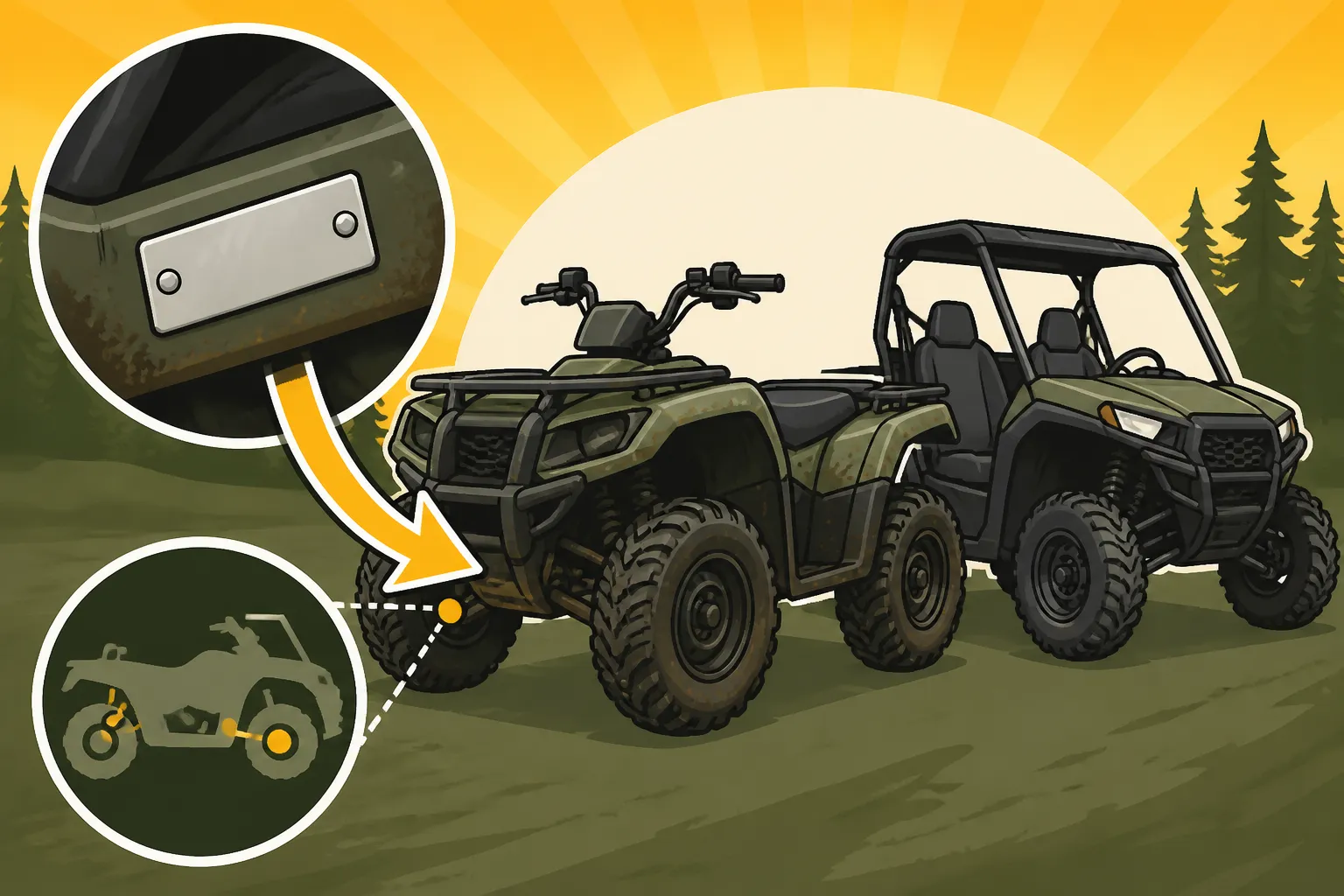
The most common place to find a VIN on an ATV or UTV is usually stamped directly into the frame. For most quads, you'll want to check the front left side of the frame, near the front wheel, or sometimes closer to the steering column. It might be on a vertical support beam or a crossmember. For side-by-sides, which have a more substantial frame, look along the frame rails, often near one of the wheel wells, or again, towards the front driver's side. Sometimes, manufacturers will also place a VIN or serial number on the engine block itself, though this might be a secondary identifier rather than the primary one. Look for a metal plate or sticker, sometimes riveted to the frame or engine casing, though these are more prone to falling off or fading on older machines. Always check multiple spots, as some manufacturers used more than one location. Remember that [One Plate Per Machine, Front or Rear] is the rule, but the VIN is what MPI uses to track that machine.
Tips for Uncovering Faded or Obscured Serial Numbers
So, you've found a likely spot, but the numbers are just a blur of rust or dirt? Don't despair just yet! A little persistence and the right technique can often reveal those hidden characters.
- Clean the Area Thoroughly: Start with a wire brush or sandpaper to gently remove rust, grime, and old paint. Use a degreaser if there's oil or grease built up. Be careful not to scrub too aggressively, as you don't want to further damage the numbers.
- Good Lighting is Key: Use a strong flashlight, even in daylight. Hold it at different angles – sometimes the numbers will "pop" when the light catches the indentation just right. A headlamp can be invaluable for hands-free work.
- Rubbings: One old-school trick is to place a piece of thin paper (like tracing paper or even a dollar bill) over the area and gently rub a crayon or soft pencil lead over it. The raised or indented numbers might transfer onto the paper, giving you a clearer impression.
- Magnification: A magnifying glass can help immensely in distinguishing faint lines or partially obscured digits.
- Patience: This isn't a race. Take your time, try different methods, and work carefully. Once you've got it, make sure to take clear photos from various angles. [Photographing a VIN Before a Manitoba Sale] is a smart move, even if you're not selling it right away, just for your own records.
What to Do If Your Serial Number is Unreadable or Missing
You've searched high and low, you've scrubbed, rubbed, and shined, and still, that all-important serial number remains a mystery or is just completely gone. This is a common hurdle with older machines, and it definitely throws a wrench into the registration process. But don't give up hope just yet; there are steps you can take.
Navigating Registration Without a Clear VIN
If your off-road machine's serial number is genuinely unreadable or missing, you're facing a challenge that MPI agents see more often than you might think. Your immediate step should be to gather any and all documentation you do have. This could include old bills of sale, a previous registration card from another owner, insurance documents, or even old repair receipts that might list a partial VIN or other identifying features. Take clear, detailed photos of the machine, including the areas where the VIN should be, to show that it's genuinely obscured or absent.
Next, you'll need to visit an Autopac agent. Explain your situation thoroughly. They might have specific procedures for cases like this, which could involve filling out a sworn affidavit, having a physical inspection of the machine, or providing additional proof of ownership history. It's a more involved process than a standard registration, but it's not impossible. In some cases, MPI might assign a new serial number after verification, but that's typically a last resort and requires extensive proof that the machine is legitimately yours and not stolen. For specific guidance on what to expect, you might want to look into [Manitoba Registration When the VIN Is Gone]. It’s a bit of a bureaucratic maze, but a necessary one to ensure your machine is legal.
Proving Ownership and Value with Limited Documentation
When the serial number is a no-show, proving clear ownership becomes paramount. This is where a robust paper trail, even a reconstructed one, can save the day.
What to Assemble:
- Bill of Sale: Even if it's an informal handwritten one, a bill of sale is crucial. It should clearly state the buyer's name, seller's name, date of sale, purchase price, and a detailed description of the machine (make, model, year, and any visible identifying numbers, even if incomplete). Both parties should sign and date it.
- Previous Registration: If the previous owner registered it, ask for a copy of their old registration certificate. This document is proof that at one point, the machine was officially recognized.
- Affidavit of Ownership: This is a sworn statement, often signed in front of a commissioner of oaths, detailing how you acquired the machine, acknowledging the missing or illegible VIN, and affirming your lawful ownership. This is where a service like LawDepot can be incredibly helpful. You can use their platform to draft a professional, legally sound bill of sale or an affidavit of ownership, which can significantly strengthen your case with MPI. Having a well-prepared document like this shows you're serious about proving ownership and following due process, especially when dealing with [Manitoba Machines With No Paperwork].
Table: Documentation for Unclear VIN Scenarios
| Document Type | Purpose | Key Details to Include | Helps With |
|---|---|---|---|
| Bill of Sale | Proves the transaction and transfer of ownership | Buyer/Seller names, date, price, machine description, signatures | Ownership proof, tax assessment |
| Previous Reg. Card | Shows prior legal registration and owner history | Old VIN (if readable), previous owner's name, registration dates | Historical record, VIN verification |
| Affidavit of Owner. | Sworn statement affirming legal possession without standard documents | How machine was acquired, reason for missing VIN, declaration of lawful ownership | When standard documents are insufficient |
| Photos of Machine | Visual evidence of the machine and VIN location | All sides, engine, areas where VIN should be, any visible numbers, damage | Machine identification, condition assessment |
MPI may still require additional steps, but having these documents in hand, potentially drafted with the assistance of a reputable service like LawDepot, will put you in a much stronger position. Remember that [Manitoba Registration Without a Bill of Sale] is an uphill battle, so any document that solidifies your claim is valuable.
Protecting Your Machine's Identity for Future Transfers
Whether you've just gone through the struggle of registering an older machine with a tricky serial number or you're planning to buy or sell a machine in the future, establishing a clear identity for your off-road vehicle is paramount. This isn't just about avoiding headaches for yourself; it's about ensuring a smooth process for future owners and maintaining the machine's value and legality.
The Role of a Solid Bill of Sale
A comprehensive, well-executed bill of sale is perhaps the single most important document for any off-road vehicle, especially when dealing with machines where serial numbers might be prone to fading or becoming obscured. It serves as undeniable proof of the transaction and transfer of ownership. A basic handwritten note might seem sufficient, but a detailed document can prevent countless future headaches.
What makes a bill of sale strong?
- Full Buyer and Seller Information: Include legal names, addresses, and contact information for both parties.
- Detailed Machine Description: List the make, model, year, colour, and most importantly, the complete and accurate serial number or VIN. If the VIN is known to be incomplete or difficult to read, note that on the bill of sale and describe its location.
- Sale Date and Price: Clearly state when the transaction took place and the agreed-upon purchase price. This is crucial for RST (Retail Sales Tax) calculations when the buyer registers the machine.
- "As Is" Clause: For private sales, it's wise to include language stating the machine is sold "as is, where is" without warranties, protecting the seller from future claims about condition.
- Signatures: Both the buyer and seller should sign and date the document. Having a witness sign can add another layer of verification.
A clear bill of sale minimizes ambiguity, which is particularly valuable if MPI needs to do extra verification due to an unclear VIN. Services like LawDepot provide customizable bill of sale templates that guide you through including all the necessary legal language, making the process much easier and more secure for both parties. This is essential for navigating [Manitoba Transfer of Ownership Rules] smoothly. Whether you're buying [A Bill of Sale From a Manitoba Neighbour] or from a dealer, ensure it's robust.
Record Keeping Best Practices for ORV Owners
Beyond the bill of sale, meticulous record-keeping is your best defence against future challenges. Think of your machine's documentation as its personal history book – the more complete it is, the easier it is to verify its identity and legality.
- Keep Original Documents Safe: Store the original bill of sale, registration certificates, and any inspection reports in a secure place.
- Make Copies and Digitize: Create physical copies and digital scans of all important documents. Store digital copies in a cloud service or on an external hard drive, separate from your machine. This way, if a physical document is lost or damaged, you have backups.
- Photograph the VIN: As discussed earlier, take multiple clear photographs of the serial number, especially when you first acquire the machine or after you've successfully uncovered it. Date-stamp these photos if possible. This is a crucial step that can make all the difference, as highlighted in [Photographing a VIN Before a Manitoba Sale].
- Maintain Service Records: Keep receipts for major repairs, parts purchased, and regular maintenance. These documents can help prove ongoing ownership and can sometimes include machine details that corroborate other records.
- Insurance Documents: Always have your current insurance policy information readily accessible. This is another layer of proof of ownership and ensures you're covered.
- MPI Registration Certificate: Always carry your current registration certificate when riding. This card links you directly to your machine and its registered serial number. This is directly addressed in [Carrying Your Registration Card on Every Ride].
By keeping these records diligently, you create a robust history for your off-road vehicle. This makes any future transfer of ownership, insurance claims, or interactions with law enforcement significantly smoother, reducing stress and potential legal complications. It also ensures that if your physical serial number becomes even more degraded over time, you have ample proof of your machine's unique identity.
Disclaimer
This article is for general informational purposes only and does not constitute professional advice. Laws, prices and regulations vary by location and change over time. Consult a qualified professional for guidance on your specific situation.