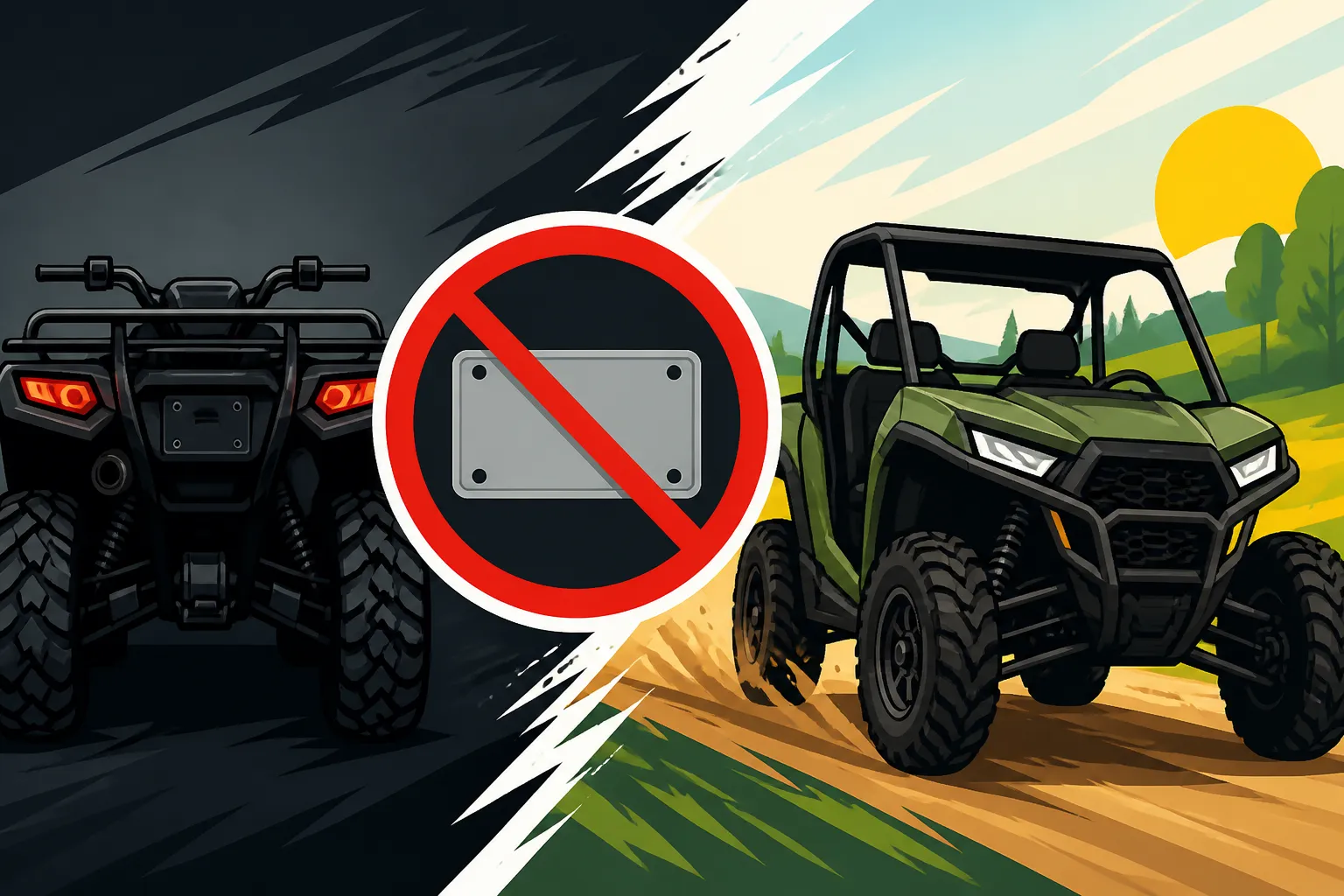
Why a Defence Department Quad Needs No Plate
It can be incredibly frustrating to navigate all the rules and regulations around off-road vehicles in Manitoba, especially when it feels like everyone else has to jump through hoops to get registered. You've gone through the process, paid your fees, and mounted your plate, only to spot a machine that seems to defy all those requirements. This guide is here to demystify one of those head-scratching scenarios: why a Defence Department quad operates without a provincial plate, and what that means for the rest of us.
Manitoba's General ORV Registration Mandate
For most of us who love hitting the trails or using our machines for work on the land, understanding Manitoba's registration requirements is step one. It often feels like a universal rule that applies to every single off-road vehicle in the province, and for the vast majority, that feeling isn't wrong at all.
The Broad Requirement for All Riders
Let's be real, the moment you buy an ATV or UTV, especially from a dealer, the conversation almost immediately turns to registration. You're told you need to get it registered with Manitoba Public Insurance (MPI), obtain a plate, and carry your registration card. This isn't just a suggestion; it's a legal obligation under the Off-Road Vehicles Act for almost everyone. Whether you're planning a weekend adventure through the Sandilands Provincial Forest or just using your quad to check fences on your farm, the expectation is generally that your machine will be registered and display a valid plate. [Manitoba ORV Registration Through MPI]
This broad requirement means that even if you're only riding on private land that isn't your own, or crossing a municipal road, your machine needs to be legally recognized by the province. It's a key part of ensuring accountability and traceability for machines operating outside of strictly controlled environments. You might think, "Well, I'm only riding on a specific trail system, why do I need a province-wide registration?" The reality is that [Manitoba Requires Registration in Any Location] where the Act applies, which is virtually everywhere public, and many private settings too.
The entire process involves providing proof of ownership, such as a bill of sale, and verifying your identity. It's designed to create a clear record of who owns which machine, helping to deter theft and ensure that basic operating responsibilities are understood. For anyone purchasing a used machine from a private seller, this documentation is absolutely critical, and platforms like LawDepot can be a real lifesaver for drafting clear, legally sound bills of sale to ensure a smooth transfer of ownership and subsequent registration. It helps to clarify the transaction and protects both buyer and seller.
The Purpose of Registration
You might wonder why Manitoba has such stringent registration rules in the first place, and it’s a valid question when you're shelling out your hard-earned cash. The primary purpose goes beyond just creating a paper trail. Registration plays a vital role in funding trail development and maintenance, promoting rider safety, and providing a framework for enforcement. It's about creating a safer, more organized environment for everyone who enjoys off-road recreation.
Part of your registration cost includes what's known as the Off-Road Trails Fee. This small, non-refundable surcharge of $25 (as of recent changes) goes directly into a fund managed by the province, specifically earmarked for grants to ATV and UTV clubs for trail development, maintenance, and rider education initiatives. So, when you pay your registration, you're directly contributing to the very trails and infrastructure that many riders enjoy. [The $25 Trails Fee Added to Every Registration] It's a way for the riding community, through the provincial government, to collectively invest in the future of the sport.
Beyond the trails fee, registration ensures that machines have at least basic third-party liability insurance, which is included with your MPI registration. This is crucial for protecting you and others in case of an accident involving property damage or injury. Without this baseline, the financial burden of an incident could be catastrophic for everyone involved. It’s not just about getting a plate; it’s about participating in a system that aims to make off-road riding sustainable, enjoyable, and safer for all Manitobans.
Common Exemptions to Registration in Manitoba
While it feels like almost every ORV needs a plate, there are indeed specific situations and categories of machines or operators that are exempt from the standard provincial registration requirements. These aren't loopholes; they are carefully defined exceptions based on specific circumstances or the nature of the machine's use. Knowing these can help clear up some of the confusion you might encounter on the trails.
Riding on Your Own Property
One of the most common and often misunderstood exemptions relates to riding on privately owned land. The general rule is that you do not need to register your ORV if it is exclusively operated on land owned by you or on land that you have a legal lease agreement for. This means if your quad literally never leaves your farm, your cabin property, or your expansive acreage, it may not require a provincial plate.
However, this exemption comes with significant caveats. "Exclusively operated" is the key phrase. It means the machine cannot be used on public roads, Crown land, or even briefly cross a road to get to another part of your property, unless you meet specific road crossing rules and have a registered machine. Many riders mistakenly believe that owning a large piece of land grants them universal exemption, but the moment that machine touches a public right-of-way, even for a few feet, the exemption typically no longer applies. [Manitoba Machines Used Only on Your Own Land]
So, while the idea of avoiding registration by sticking to your own land is appealing, the practical application often proves challenging for most riders who eventually need to transport their machine or access other riding areas. The intent of this exemption is for genuine on-property use, not as a blanket waiver for broader recreational activities. If you ever decide to sell such a machine, even if it's never been registered, having clear ownership documents is still crucial for the new owner to register it properly, and tools like LawDepot can assist you in creating these essential private sale agreements.
Specialized Commercial Use Cases
Beyond private property, Manitoba's Off-Road Vehicles Act also carves out exemptions for certain machines used in very specific commercial contexts. These aren't for general business use, but rather for traditional, often remote, resource-based activities where ORVs are indispensable tools. These exemptions recognize the unique operational needs of these industries.
For instance, licensed trappers can be exempt from registering their ORV when it's being operated within their registered trapline district. This makes practical sense; trappers often operate in very remote, rugged terrain where their ORV is essential for their livelihood, and the administrative burden of registration might be impractical given their operating environment. The exemption is tied directly to their professional activity and geographic area. [Manitoba Licensed Trapper Exemption]
Similarly, commercial fishers can also receive a registration exemption for their ORVs when these machines are being used directly for their commercial fishing operations. Again, this is a targeted exemption recognizing that these machines are tools of a trade, often used in specific, remote areas like ice fishing operations or hauling gear to remote lakes. These exemptions are not for recreational riding; they are strictly for the designated commercial activity. [Manitoba Commercial Fisher Exemption] It's important to remember that these exemptions are specific and require the individual to be actively engaged in the qualifying activity. If that trapper decides to take their quad on a recreational ride outside their trapline, it would then typically need to be registered.
The Federal Government Exemption for Off-Road Vehicles
Now we get to the core of the question: why does a Defence Department quad need no plate? This particular exemption isn't about property ownership or commercial use; it stems from a fundamental principle of Canadian law regarding jurisdiction and the nature of the federal government's operations.
Sovereignty and Jurisdiction
In Canada, we have a division of powers between the federal government and provincial governments. Generally, provinces have authority over matters like property, civil rights, and local government, which includes things like vehicle registration, road rules, and driver licensing. However, the federal government retains jurisdiction over areas explicitly assigned to it by the Constitution, such as national defence, interprovincial and international trade, and criminal law.
Vehicles owned and operated by the Department of National Defence (DND), which includes the Canadian Armed Forces, fall squarely under federal jurisdiction. This means they are not subject to provincial statutes, like Manitoba's Off-Road Vehicles Act, for registration purposes. The DND operates under its own federal regulations and policies, which dictate how their vehicles are identified, maintained, and operated. This is a matter of constitutional law, where federal operations take precedence over provincial rules when those operations are legitimate exercises of federal power. [Why a Defence Department Quad Needs No Plate]
So, when you see a military quad, be it an ATV or a side-by-side, it's not "getting away with" not being registered. It's simply operating under a different, federally mandated system. This principle applies to all federal government vehicles, not just ORVs, meaning you'll see federal vehicles like Canada Post trucks or RCMP vehicles with federal plates rather than provincial ones, or specific internal markings in the case of DND equipment.
Practical Implications for Federal Machines
What does this mean in practice? It signifies that DND vehicles, including quads and UTVs used by military personnel, are identified through their own internal numbering and asset tracking systems rather than provincial license plates. These machines are typically used for specific military purposes: training exercises in remote areas, logistics support during operations, security patrols on military bases, or for search and rescue missions.
When military personnel operate these machines, they do so under the authority of their command and in accordance with DND regulations, which often include their own safety protocols and operator qualifications. For instance, a DND quad might be used by a reconnaissance team during a field exercise in Shilo or by engineers in a remote training area. The identification of the vehicle is crucial for internal accountability and operational control within the military, rather than for provincial enforcement of road or trail laws.
Therefore, if you encounter a Defence Department quad on Crown land or near a military facility, it's operating legally without a provincial plate. It’s a direct consequence of the constitutional framework that governs federal entities, ensuring that the military can carry out its duties across the country without being hindered by varying provincial registration demands. This exemption is not transferable or applicable to private citizens; it's specific to the federal government's operations.
Distinguishing from Other Government Vehicles
It's crucial to understand that this federal exemption is highly specific to the Department of National Defence. It does not extend to all government-owned vehicles, especially those belonging to provincial or municipal entities. Many people mistakenly lump all "government" vehicles into one category when it comes to exemptions.
For example, a quad used by Manitoba Hydro to access remote power lines, or a UTV operated by a provincial park ranger, or a municipal vehicle used by a rural municipality's public works department, will generally require provincial registration and display a regular (or specialized government) provincial license plate. These entities operate under provincial jurisdiction, and their vehicles are subject to the same registration rules as privately owned machines, albeit sometimes with specific categories of plates.
The key differentiator is the level of government. While a DND machine operates under federal authority, a Conservation Officer's quad, for instance, is a provincial asset and therefore must comply with provincial vehicle registration laws. This distinction highlights the unique position of the federal Department of National Defence and clarifies why their ORVs are treated differently from most other machines you'll see in Manitoba.
Other Important Considerations and the Big Picture
Understanding the federal exemption is just one piece of the puzzle. For the vast majority of Manitoba riders, the provincial rules still apply, and there are other important aspects of registration and operation that are worth remembering. These considerations help ensure that you stay compliant and safe on your adventures.
Dealer Plates and Temporary Use
Even when a machine is destined for registration, there are temporary situations where a permanent plate might not yet be affixed. Dealers, for instance, frequently need to move unregistered machines around their lots or for test drives. They operate under a specific exemption that allows them to use dealer plates, which are temporary in nature and indicate the machine is part of a dealer's inventory. [Manitoba Dealer Plate Exemption] These plates are tied to the dealership, not the individual machine, and are used for business purposes before the ORV is sold and registered to a private owner.
Furthermore, once you purchase an ORV, either new from a dealer or used from a private seller, Manitoba provides a short grace period. You generally have [You Get Seven Days to Move a Plate] from your previously owned, registered machine to your newly acquired, unregistered one, or to complete the new registration process. This isn't an exemption from registration itself, but a practical window to facilitate the administrative transition. It's designed to give you enough time to get to an Autopac agent and complete the necessary paperwork without immediately breaking the law the moment you drive your new-to-you machine home. This brief period is a testament to the fact that while rules are firm, there's always a practical allowance for life's necessities.
What Riders Need to Carry Even with Exemptions
While the Defence Department exemption or even a private property exemption might mean no provincial plate, it doesn't mean a free pass on all other regulations. Every rider, regardless of their machine's registration status, still has responsibilities concerning safety and proof of ownership.
For those whose machines are registered, it is a legal requirement to [Carrying Your Registration Card on Every Ride]. This card is your proof that the machine is legitimately registered, insured, and that you are authorized to operate it. Keep it safe, dry, and accessible, perhaps in a waterproof bag in your storage compartment. For those operating under a specific exemption (like a trapper on their trapline or if you're riding on your own land), while you might not carry a registration card, it’s incredibly wise to carry proof of your exemption, such as your trapper’s license or documents proving land ownership. This can save you a lot of hassle if you encounter an enforcement officer.
Beyond registration documents, all riders in Manitoba must adhere to the Off-Road Vehicles Act concerning operating rules, age restrictions, and safety equipment. This includes the mandatory [Manitoba Helmet Law and Its Exemptions] for operators and passengers, speed limits, and rules about where you can and cannot ride. Ignorance of these laws is not an excuse, and enforcement officers will expect you to be compliant. These rules apply universally to ensure the safety of all participants and to minimize environmental impact.
When in Doubt, Check and Confirm
The world of ORV regulations can sometimes feel like a maze, and the absolute worst thing you can do is assume you're exempt or that a rule doesn't apply to you. When it comes to registration, exemptions, or any aspect of operating your ATV or UTV, if you're unsure, always seek clarification from official sources.
Your local Autopac agent, who handles [Manitoba ORV Registration Through MPI], is an excellent first point of contact for questions about provincial requirements. They are trained to interpret the regulations and can provide specific advice tailored to your situation. You can also consult the official Manitoba Off-Road Vehicles Act online for the precise wording of the laws. Making an informed decision now can save you significant fines and headaches later.
For anyone purchasing a used machine, especially from a private seller, ensuring you get proper documentation is vital, even if you’re told it "doesn't need registration" for a specific reason. A well-drafted bill of sale is your proof of ownership, and it’s what you'll need if you ever decide to register the machine or sell it yourself. This is another area where resources like LawDepot can be invaluable, offering templates and guidance to help you create legally sound private sales agreements, ensuring that all parties are protected and that the transfer of ownership is clear and verifiable. [Buying From a Private Seller in Manitoba] It means that even if a machine once fell under an exemption for a previous owner, your clear documentation facilitates your own compliant use moving forward.
Disclaimer
This article is for general informational purposes only and does not constitute professional advice. Laws, prices and regulations vary by location and change over time. Consult a qualified professional for guidance on your specific situation.