Manitoba Registration for an Imported Machine
Bringing an off-road vehicle into Manitoba from another province or country can feel like navigating a maze of paperwork and rules. Many riders dream of that perfect ATV or UTV they found online or spotted on a road trip, only to hit a wall of uncertainty when it comes to getting it registered here. This guide is here to walk you through the often-confusing process of registering an imported machine in Manitoba, making sure you know exactly what to expect and what documents you'll need to hit the trails legally.
Why Importing a Machine to Manitoba Can Be a Headache
It's a common story: you find a fantastic deal on a side-by-side in Saskatchewan, or perhaps you've inherited a beloved quad from a family member who lived down in Minnesota. You get it home, excited to ride, only to realize that getting a Manitoba plate isn't as simple as just showing up at an Autopac agent. The frustration often stems from differing provincial or national regulations regarding sales tax, proof of ownership, and even vehicle standards. Many riders mistakenly assume that if it's registered somewhere else, it'll be a breeze here, but Manitoba has its own specific requirements that can catch you off guard.
Different Rules for Different Origins
The first big hurdle is understanding that where your machine comes from dictates which hoops you'll need to jump through. An ATV arriving from Alberta will have a different set of requirements than one coming across the border from North Dakota. This isn't just about provincial pride; it's about the legal frameworks that govern vehicle sales, taxation, and import duties. You might be dealing with federal customs regulations, differing provincial sales tax rates, or simply a lack of standardized paperwork that makes proving ownership a nightmare. This initial complexity is often where people get stuck, feeling overwhelmed before they even begin.
Proving Ownership and Value
One of the biggest pain points for imported machines, especially those bought privately, is providing clear proof of ownership. If you're buying a machine that's changed hands a few times, or if the original paperwork is lost, you could be in for a challenge. Manitoba Public Insurance (MPI), which handles ORV registration, needs a clear paper trail to ensure the machine isn't stolen and that all taxes are properly collected. Beyond just ownership, they also need to establish the machine's value for sales tax purposes. If your bill of sale seems too low, or if there's no clear value stated, you might find yourself facing questions or even delays while an appraisal is conducted. This is where meticulous record-keeping, even for a private sale, becomes absolutely critical.
Essential Documents for Registration
When you're ready to register your imported machine, think of your Autopac agent as a gatekeeper. They can't let you through without the right keys, and in this case, those keys are your documents. Missing even one piece of paper can send you back to square one, prolonging the wait before you can finally get that [Manitoba ORV Registration Through MPI].
Proof of Ownership: The Bill of Sale
This is arguably the most crucial document. Whether you're buying from a private seller or a dealership, a comprehensive bill of sale is non-negotiable. For a machine purchased within Canada, a standard bill of sale detailing the buyer, seller, machine make, model, VIN, purchase price, and date of sale is usually sufficient. Some riders find online templates, such as those offered by LawDepot, helpful for ensuring all necessary details are included, especially in private sales where a formal dealer invoice isn't available. Without this, you might find yourself needing to demonstrate a [Manitoba Registration Without a Bill of Sale], which adds extra steps.
However, if you're importing from outside Canada, like the United States, your bill of sale needs to be accompanied by customs documentation. This isn't just about what you paid the seller; it's about proving that the machine legally entered Canada.
Customs Documentation for International Imports
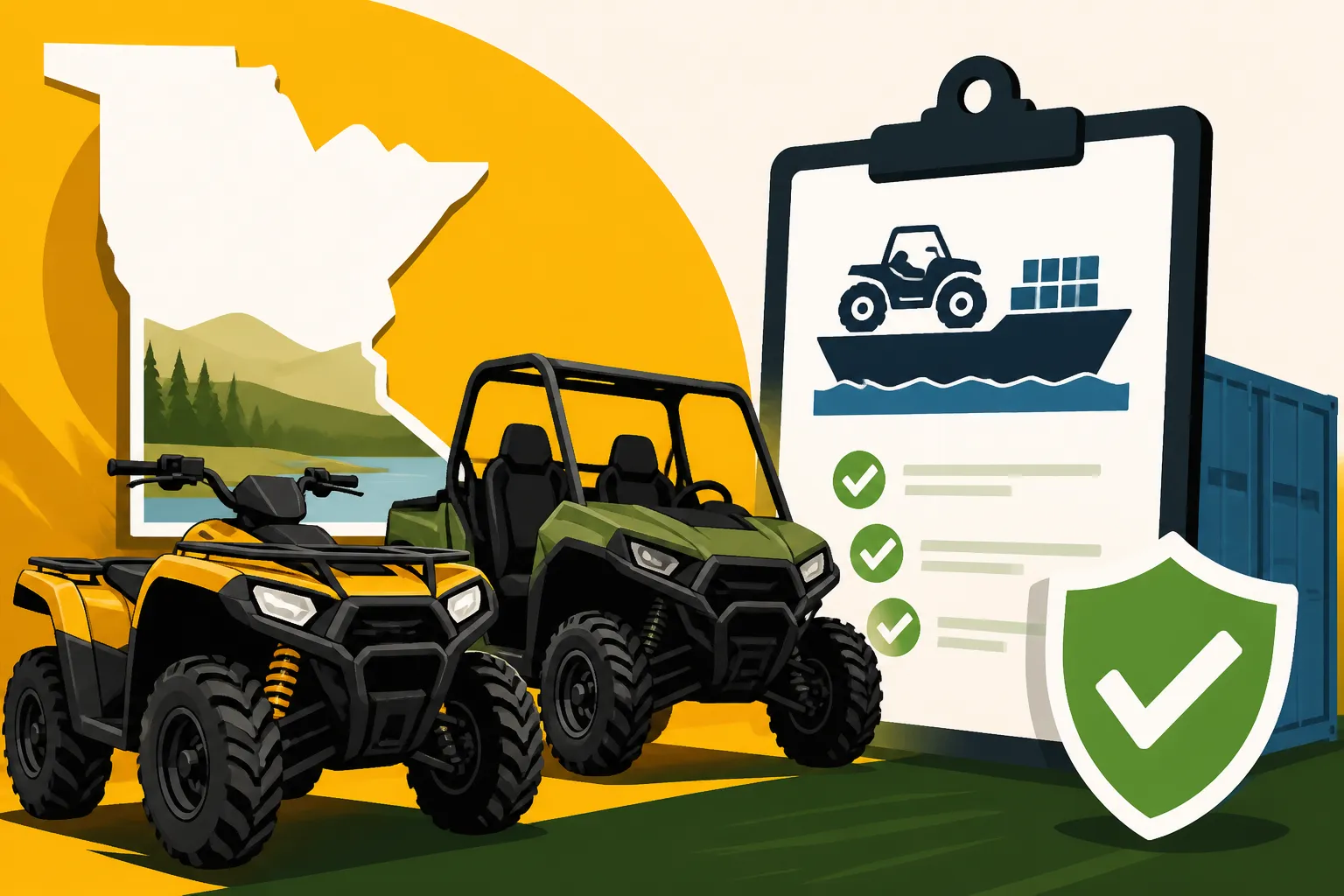
If your machine is coming from the United States or any other country, you absolutely need proof it cleared Canadian customs. This usually means a stamped Form 1 from the Canada Border Services Agency (CBSA) or other relevant customs forms. This document confirms that any applicable duties and taxes have been paid at the border. Without this, MPI cannot register your machine, as it would be considered illegally imported. This step is critical and often a point of confusion for riders who aren't familiar with international import regulations. Always keep your customs paperwork safe; it's as important as the bill of sale for international purchases. [Manitoba Customs Forms at Registration] are a must-have.
Vehicle Information Number VIN Verification
Every off-road vehicle has a unique Vehicle Information Number (VIN). This 17-digit code is essential for identifying your machine, checking for stolen vehicle records, and ensuring the machine meets any required safety standards. When you import a machine, especially from outside Manitoba, MPI will need to verify this VIN. Sometimes this involves a physical inspection by the Autopac agent, or they may simply check it against the bill of sale and other documents. It's vital that the VIN on all your documents matches the VIN stamped on the machine itself. Any discrepancies will lead to delays and potentially require further investigation.
Odometer Reading and Appraisals
For vehicles with odometers (common on side-by-sides), the reading at the time of sale is typically required. This helps establish the machine's condition and can influence its assessed value for tax purposes. If the purchase price on your bill of sale seems unusually low compared to the machine's actual market value, MPI may require an appraisal to determine the appropriate sales tax. This is particularly relevant for machines imported from other jurisdictions where local market values or tax structures might differ significantly. Be prepared to justify the price or provide documentation supporting it.
The Registration Process at MPI
Once you have all your ducks in a row with the paperwork, your next stop is an authorized Autopac agent. This is where all those documents come together, and you officially apply for your Manitoba registration. Remember, [MPI Registers, Insures and Taxes in One Visit], making it a one-stop shop for getting your machine trail-ready.
Visiting an Autopac Agent
Find your nearest Autopac agent and bring all your original documents. It's often helpful to call ahead or check their website for specific requirements or to see if you can book an appointment, especially if you have a complex import situation. When you arrive, the agent will review your bill of sale, customs documents (if applicable), and verify the VIN. They will input the machine's details into the provincial system. Be ready to answer questions about the machine's history, its intended use, and its condition.
Paying Taxes and Fees
This is where the financial part comes in. You'll be required to pay the provincial sales tax (RST) on the declared value of the machine. For machines imported from outside Canada, this RST is collected by MPI, even if you paid duties at the border. The agent will calculate the RST based on the purchase price on your bill of sale or, if deemed necessary, an appraised value. Don't forget, every ORV registration in Manitoba also includes a mandatory [The $25 Trails Fee Added to Every Registration], which supports trail development and maintenance across the province. You'll also pay the annual registration fee itself. It's a good idea to factor in [Manitoba ORV Registration Cost] into your overall budget for bringing a machine into the province.
Receiving Your Registration Card and Plate
Once everything is processed and payments are made, the Autopac agent will issue your Manitoba Off-Road Vehicle Registration Card and your single registration plate. It's vital to carry your registration card with you whenever you're operating the machine; think of it like your driver's license for your quad or side-by-side. The plate will need to be mounted according to Manitoba regulations, typically on the rear for quads and side-by-sides, or the front for dirt bikes. Remember, you'll need to know [Manitoba Plate Mounting by Machine Type] to ensure you comply.
Special Considerations for Imported Machines
While the general process covers most scenarios, some situations with imported machines require a bit more attention. These are the details that can really trip up even experienced riders.
Machines with No Paperwork or Lost Titles
What if you bought an older machine from a private seller in another province, and they've lost the original bill of sale or title? This is a common and frustrating problem. Manitoba generally requires a clear chain of ownership. If you're missing critical documents, you might need to try and trace previous owners, or in some cases, apply for a sworn declaration of ownership. You may need legal documents to assert ownership, and resources like LawDepot can provide templates for affidavits or statutory declarations, which might be helpful in establishing your claim to the machine. Without a solid paper trail, registering the machine can become significantly more complicated. This often falls under the category of [Manitoba Machines With No Paperwork].
Foreign Language Documents
If you've imported a machine from a non-English or non-French speaking country, any supporting documents (like a bill of sale or customs declaration) might need to be translated by a certified translator. MPI needs to be able to clearly understand all the details to ensure compliance. Don't assume that a quick online translation tool will suffice; official bodies typically require professional certification for legal documents.
Insurance Requirements
In Manitoba, basic third-party liability insurance is typically included with your ORV registration. However, this base coverage is minimal and often doesn't cover things like theft, fire, or collision damage. For comprehensive protection, especially on a valuable imported machine, you'll want to explore additional coverage options through an Autopac agent or a private insurance broker. It’s always a good idea to discuss [Manitoba ATV Insurance Options] to ensure your new import is fully protected, especially as it might be new to you and potentially more expensive than a local purchase.
Dealing with Different Vehicle Standards
While less common for standard ATVs and UTVs, if you're importing a highly customized or older machine, there's a slight chance it might not meet Manitoba's basic safety or environmental standards, particularly if it's from a jurisdiction with very different regulations. Always check for any specific requirements or certifications, especially for machines from outside North America. Most common recreational machines, however, tend to have widely accepted standards.
Table: Key Document Checklist for Imported ORVs
To help keep you organized, here’s a quick checklist of the documents you'll likely need, depending on where your off-road machine is coming from:
| Document Type | From Another Canadian Province | From the United States (or other country) | Notes |
|---|---|---|---|
| Bill of Sale | Yes | Yes | Must include VIN, buyer/seller info, price, date. Check for LawDepot templates. |
| Customs Forms (CBSA Form 1) | No | Yes | Proof of legal import and duty/tax payment. |
| Previous Registration/Title | Recommended | Recommended | Helps establish a clear chain of ownership. |
| VIN Verification | Yes | Yes | Checked by Autopac agent against machine and documents. |
| Odometer Reading | If applicable | If applicable | For machines with an odometer, noted on bill of sale. |
| Proof of Identity | Yes (for buyer) | Yes (for buyer) | Valid driver's license or other government-issued ID. |
| Proof of Manitoba Address | Yes (for buyer) | Yes (for buyer) | Utility bill, lease agreement, etc., if new to province. |
Remember, having these documents prepared in advance will save you a lot of time and potential frustration at the Autopac counter.
The Cost of Bringing a Machine In
Beyond the purchase price of your imported machine, there are several costs associated with getting it legally registered and ready for the trails in Manitoba. Budgeting for these upfront will prevent any unwelcome surprises.
Sales Tax (RST)
Manitoba charges Retail Sales Tax (RST) on the purchase price of off-road vehicles. This is currently 7%. If you bought your machine in another Canadian province, you might have paid sales tax there. In some cases, Manitoba offers a tax credit for taxes paid in another province, but this isn't universal and requires proof. For machines imported from outside Canada, you will pay the Manitoba RST when you register, regardless of any duties paid at the border. It's important to understand [Manitoba Tax on an Out-of-Province Purchase] and how it applies to your specific situation.
Trails Fee
As mentioned, a non-refundable $25 trails fee is added to every ORV registration in Manitoba. This fee goes towards maintaining and developing the province's extensive network of off-road trails. It's a small but important contribution to the riding community and is collected automatically when you register.
Registration Fees
The actual registration fee for your off-road vehicle varies depending on the machine type and its classification. This annual fee, along with the trails fee and RST, makes up the total initial cost you'll pay at the Autopac agent. Keep in mind that [Manitoba ATV Registration Renewal] typically happens with your Autopac policy, so you'll encounter these fees annually.
Potential Additional Costs
Sometimes, there are extra costs that sneak up on new owners of imported machines. If your machine's value is disputed, you might need to pay for an independent appraisal. If documents are in another language, translation services will add to your expenses. If you're using LawDepot or similar services to create missing documents or declarations, there might be a small cost for those templates. Freight costs to get the machine to Manitoba, especially from a distant province or country, also need to be considered in your overall budget.
Final Steps Before You Ride
Once you've successfully navigated the registration process, there are just a couple more things to remember before you hit your favourite Manitoba trail or head out for some bush riding.
Plate Mounting and Display
Manitoba requires your registration plate to be visibly mounted on your machine. For quads and side-by-sides, this is typically on the rear. For dirt bikes, it's usually on the front. Ensure it's securely attached and not obscured by mud, gear, or modifications. An improperly displayed plate can lead to a roadside stop.
Carrying Your Registration Card
It's not enough to just have a plate; you must carry your physical registration card (the actual paper document) with you whenever you operate the ORV. This is your proof of registration and insurance. Many riders keep it in a waterproof bag or a designated compartment on their machine to protect it from the elements. Ignoring this simple rule could result in a fine. [Carrying Your Registration Card on Every Ride] is a non-negotiable rule in Manitoba.
By being prepared with the right documents and understanding the process, you can turn the potentially daunting task of registering an imported off-road vehicle in Manitoba into a smooth experience. Happy trails!
Disclaimer
This article is for general informational purposes only and does not constitute professional advice. Laws, prices and regulations vary by location and change over time. Consult a qualified professional for guidance on your specific situation.