Manitoba Registration for an Auction Buy
Buying an off-road vehicle (ORV) at an auction in Manitoba can feel like hitting the jackpot – the thrill of the bid, the anticipation of a great deal, and the vision of hitting the trails with your new quad or side-by-side. But let's be realistic: that excitement can quickly turn into a headache when you try to register your new-to-you machine, especially if the paperwork isn't as straightforward as a private sale or dealer purchase. This guide is all about helping you navigate the sometimes-muddy waters of registering an ORV you've acquired through an auction in Manitoba, so you can get out and ride without unnecessary delays.
The Allure and The Unknown: Why Auctions Can Be Tricky for ORV Buyers
There's a certain magic to an auction, isn't there? You're there, adrenaline pumping, hoping to snag that perfect ATV or UTV for a steal. Auctions offer a unique opportunity to find machines that might not be available through traditional dealerships or private listings, sometimes at a very attractive price. Estate sales, government surplus auctions, and even impound lot auctions can present a diverse range of machines, from well-loved workhorses to nearly new models.
However, this exciting "deal" often comes with a significant caveat: the unknown. Unlike buying from a private seller where you might chat with the previous owner, or a dealer who handles all the paperwork, an auction is usually a no-frills, "as-is, where-is" transaction. You might not get the full history of the machine, detailed maintenance records, or even the original owner's contact information. This lack of a clear, personal paper trail is where the most common frustrations begin when it comes time to register with Manitoba Public Insurance (MPI) at an Autopac agent. They need to understand the journey of that machine, and an auction purchase often creates a few more steps in that journey.
The "As-Is, Where-Is" Reality and Its Impact on Registration
When you buy something "as-is, where-is" at an auction, it means you're accepting it in its current condition, with all its faults, and it's your responsibility to move it. For registration purposes, this primarily impacts the paperwork. A traditional bill of sale between two individuals or a dealer invoice is a pretty solid document for MPI. It clearly states the buyer, the seller, the machine's details, the sale price, and the date. At an auction, you'll receive an auction receipt or invoice, which proves you bought it from the auction house. But that receipt might not always contain all the detailed information an Autopac agent typically looks for to establish the complete chain of ownership.
This can be a sticking point because MPI needs to ensure that the machine hasn't been stolen, that all previous ownership is properly accounted for, and that the appropriate retail sales tax (RST) can be assessed. If the documentation from the auction isn't comprehensive, you might find yourself needing to provide additional information or even preparing supplementary documents to satisfy the registration requirements. It’s not that the auction purchase is invalid; it’s just that the standard procedures sometimes require a bit more legwork from you.
Missing Maintenance Records and Machine History
While not directly a registration issue, the absence of maintenance records or a full machine history from an auction can add to your overall anxiety. You might be buying a machine with a great engine, but unknown electrical quirks or suspension issues. For registration, the primary concern is clear title and identification. However, the lack of history could impact the machine's value assessment for tax purposes or raise questions about its operational legality if it has been heavily modified. The good news is that for registration itself, MPI focuses on identification (VIN), proof of ownership, and payment of taxes and fees, rather than the machine's service history. Still, it's something to be aware of for your own peace of mind and future riding enjoyment.
Essential Paperwork: What You Absolutely Need for Auction Buys
Getting your auction-purchased ORV registered in Manitoba hinges on one thing: paperwork. Without the right documentation, your trip to the Autopac agent will be frustratingly unproductive. The key is to understand what MPI requires and how your auction documents fit into that puzzle.
The Elusive Bill of Sale: What to Do When It's Gone
The standard bill of sale is often the first piece of paperwork an Autopac agent expects to see. It’s the formal record of the transfer of ownership from one party to another. However, many auction houses provide their own invoice or statement of sale rather than a traditional bill of sale form. This is usually acceptable, provided it contains all the necessary information.
What information is necessary? It should clearly identify:
- The name and contact information of the auction house (the seller).
- Your name and contact information (the buyer).
- A detailed description of the ORV, including its make, model, year, and crucially, its Vehicle Identification Number (VIN).
- The purchase price of the ORV.
- The date of the sale.
If your auction receipt is basic and lacks some of these details, you might need to supplement it. Sometimes, you can request a more detailed invoice from the auction house. In other cases, you might need to create a supplementary document yourself, such as a formal bill of sale form, and attach the auction receipt as proof of payment. Websites like LawDepot offer templates for comprehensive bills of sale that you can adapt to include the auction house details as the seller, if needed. The goal is to present a clear, unbroken chain of ownership to MPI. For more on general registration requirements, you might find [How to Register an ATV in Manitoba] helpful.
Proving Ownership: The Chain of Custody
MPI needs to know who owned the machine before you. In a typical private sale, the seller signs over their [Manitoba Transfer of Ownership Rules] documentation. With an auction, the auction house acts as the intermediary. Their invoice, when detailed, establishes that they legally acquired the machine (even if temporarily for the sale) and then transferred it to you. This acts as a critical link in the chain of custody.
If the auction house received the machine from a previous registered owner, they might have documentation (like a signed-off registration certificate) from that prior owner. While you might not see this document directly, the auction house's ability to sell the machine implies they have good title. If you face challenges at the Autopac agent due to unclear ownership history, you might be asked to provide an affidavit or statutory declaration attesting to the circumstances of your purchase. This isn't common for straightforward auction buys, but it’s a possibility if the paper trail is exceptionally vague. Again, resources like LawDepot can provide templates for these legal declarations.
Verification of the VIN: A Crucial Step
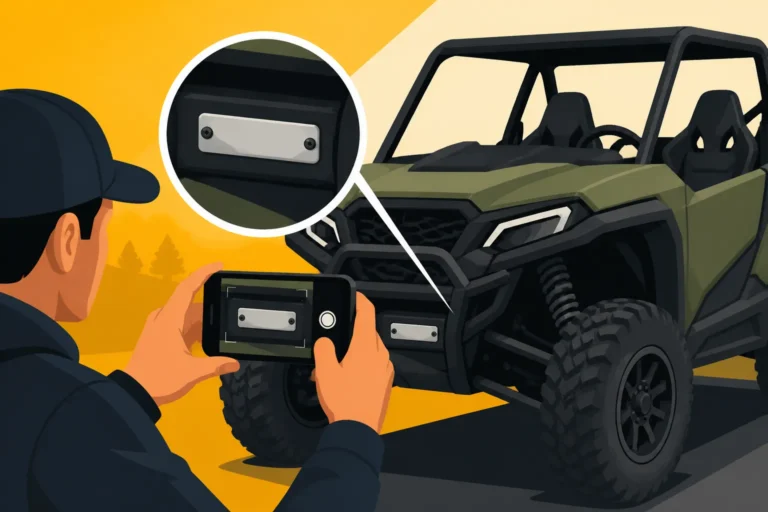
The Vehicle Identification Number (VIN) is the unique fingerprint of your ORV. It’s absolutely essential for registration. MPI uses the VIN to identify the machine, check for liens, and ensure it's not reported stolen. Before you even bid at an auction, make sure you can physically locate and verify the VIN on the machine. Take a photo if you can.
What happens if the VIN is damaged, illegible, or appears to be tampered with? This is a serious red flag. An Autopac agent will not register a machine with a questionable VIN. You could be facing a situation where you've bought a machine that can never be legally registered. If the VIN is missing or significantly obscured, you'll need to contact MPI directly for guidance, but it's often a difficult problem to resolve. For more insights on this specific issue, check out [Manitoba Registration When the VIN Is Gone]. It’s a challenge best avoided by doing your due diligence before the hammer drops.
Navigating the System: Registering Your Auctioned ORV
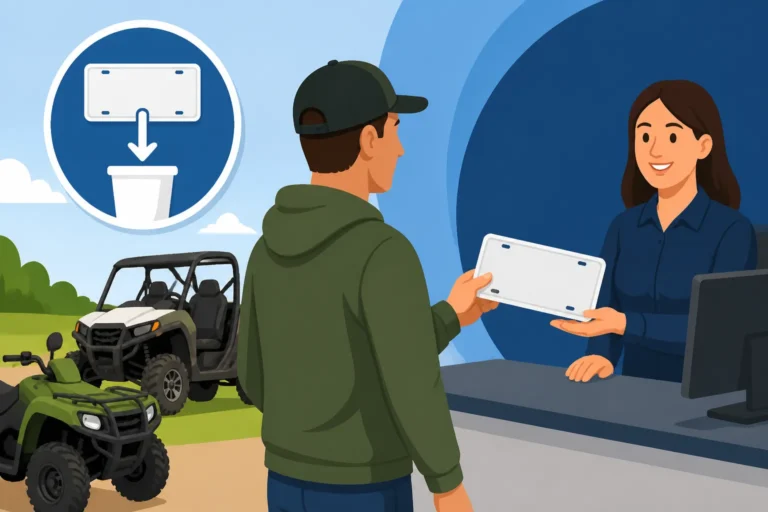
Once you’ve got your paperwork in order, the next step is to visit an Autopac agent. This is where the rubber meets the road, and you'll find out if your auction purchase can be officially welcomed into the Manitoba ORV family.
Your Visit to the Autopac Agent
When you head to your local [Manitoba Autopac Agents and ORV Registration] office, make sure you bring everything you think you might need. Here's a checklist:
| Document Type | Required for Auction Buy? | Notes |
|---|---|---|
| Auction Invoice/Receipt | Yes | Must show buyer, seller, ORV details (VIN), sale price, date. |
| Proof of Identity | Yes | Driver's License or other valid government-issued ID. |
| Proof of Address | Yes | Utility bill, lease agreement, etc. (if ID doesn't show current address). [Manitoba Registration and Proof of Address] |
| Previous Registration | No, but helpful | If the auction house provided the previous owner's signed-off registration, bring it. Otherwise, not expected. |
| Statutory Declaration | Possibly | If documentation is unusually sparse or if MPI requests further proof of ownership. Use LawDepot for templates. |
| Cash/Debit/Credit | Yes | For registration fees, trails fee, and retail sales tax (RST). |
The Autopac agent's role is to act as MPI's representative. They will review your documents, verify your identity, and enter the machine's details into the system. They are looking for clear evidence of ownership, a legitimate VIN, and proper calculation of any taxes due. Be prepared to answer questions about how you acquired the machine. Politeness and clear answers go a long way in ensuring a smooth process.
Addressing Missing Documents or Discrepancies
Sometimes, despite your best efforts, an Autopac agent might encounter a discrepancy or feel that a piece of documentation is missing. This can be frustrating, especially if you thought you had everything. Common issues might include:
- A vague auction invoice: If it doesn't clearly list the VIN or the full purchase price, the agent might ask for clarification.
- Incomplete ownership chain: If MPI's records show a previous registered owner and the auction house didn't provide a signed transfer, the agent might need more assurance.
- VIN issues: Any physical discrepancy with the VIN could halt the process.
If you hit a roadblock, don't panic. Ask the agent exactly what additional information or documentation they require. Can you get a more detailed statement from the auction house? Do you need to fill out a statutory declaration swearing to the facts of the purchase? Sometimes, a quick call to the auction house can resolve minor issues. In more complex cases, you might need to leave the Autopac office, gather the requested information, and return. Patience is truly a virtue here.
Tax Implications for Auction Buys
This is where many auction buyers get a bit of a shock. In Manitoba, you'll pay Retail Sales Tax (RST) on your ORV purchase, collected at the time of registration. The standard rate is 7%, which combines with the federal GST for a total of 12% on most purchases. However, the key point for auction buys is how MPI determines the value on which this tax is applied.
MPI often uses established valuation guides, sometimes referred to as the "Blue Book" (specifically for recreational vehicles), to determine the fair market value of an ORV, especially for private sales or situations where the sale price seems unusually low. This means that even if you snagged your quad for what you consider a phenomenal deal at auction – let's say $2,000 – MPI might assess its book value at $4,000, and you'll pay RST on the $4,000 figure, not your $2,000 purchase price. This can be a source of significant frustration for buyers who feel they are being taxed on money they didn't spend. For more details on this, you can refer to [Manitoba Blue Book Values for ORVs] and [Manitoba Tax on an Auction Buy].
It's crucial to factor this potential tax adjustment into your budget before you bid. Don't assume you'll pay tax only on the hammer price. Be prepared for MPI to apply tax based on their valuation.
Avoiding Pitfalls: Due Diligence Before You Bid
The excitement of an auction can sometimes make us overlook critical details. To avoid headaches down the line, especially with registration, it's vital to do your homework before you raise your hand or click that bid button. A little pre-auction investigation can save you a lot of grief and money later.
Pre-Auction Checks: Don't Get Caught Off Guard
You know the old saying: "Buyer beware." This is especially true at auctions. You're typically not allowed to take a machine for a test drive, and your inspection time might be limited. But even a quick visual inspection can tell you a lot.
Here’s what to look for and ask about:
- Locate the VIN: Find the Vehicle Identification Number on the frame. Is it legible? Is it tampered with? If you can't find it or it looks suspicious, walk away. This is your absolute first line of defense.
- General Condition: While not directly for registration, obvious damage might indicate a salvage title or a history of serious accidents, which could make registration more complex. Look for signs of structural damage, extensive rust, or parts held on with duct tape and hope.
- Ask About Paperwork: Before bidding, ask the auction house staff exactly what documentation they provide for ORV sales. Will it be a detailed invoice? Do they have any information about the previous owner or a signed transfer? Getting this clarity upfront is invaluable. They might not have all the answers, but knowing what to expect can help you prepare.
- Check for Liens (if possible): While most auction houses don't actively clear liens, some might disclose them. This leads to our next critical point.
Understanding Liens and Encumbrances
This is perhaps the biggest hidden danger when buying an ORV at auction. A lien is a legal claim against an asset (your ORV) that is often used as collateral for a debt. If the previous owner had a loan secured by the ORV and defaulted, the lender could still have a claim on the machine, even after you've bought it at auction. MPI will not register a machine with an active lien against it without that lien being cleared.
How do you check for a lien in Manitoba? You can conduct a Personal Property Registry (PPR) search in Manitoba using the VIN. This search will tell you if there are any registered liens against the machine. While this might be difficult to do on the fly at an auction viewing, it's a step that could save you from buying a machine you can never truly own. Some auction houses might provide a VIN list in advance, allowing you to perform these checks. If you can't verify that the machine is clear of liens, bidding on it is a significant risk. For more on this, look up [Manitoba Registration and Lien Records].
Budgeting Beyond the Hammer Price
It's easy to get caught up in the excitement of the auction and only focus on the final bid price. However, a smart buyer accounts for all the additional costs.
- Auctioneer's Fees: Most auction houses charge a buyer's premium, a percentage added to your successful bid.
- Retail Sales Tax (RST): As discussed, be prepared for MPI to tax you on the machine's book value, which could be higher than your purchase price. For example, [Manitoba RST Collected at Registration] will explain that this is a separate calculation from your bid.
- Registration and Trails Fee: Every ORV registered in Manitoba requires a base registration fee and the mandatory [The $25 Trails Fee Added to Every Registration]. You'll pay this at the Autopac office. For a full breakdown, see [Manitoba ORV Registration Cost].
- Transportation: How will you get your new ORV home from the auction site? Factor in the cost of a trailer, fuel, or hiring a transporter.
- Repairs and Maintenance: Remember, it's "as-is." Budget for immediate repairs or deferred maintenance you might uncover after closer inspection.
- Insurance: Don't forget you'll need liability insurance to operate your ORV legally, which is typically purchased through MPI at the time of registration. [Manitoba Insurance Included With Registration] covers the basics.
By taking a holistic view of the potential costs, you can make a much more informed decision at the auction and avoid any unpleasant financial surprises when you try to get your new machine registered and ready for the trails.
Disclaimer
This article is for general informational purposes only and does not constitute professional advice. Laws, prices and regulations vary by location and change over time. Consult a qualified professional for guidance on your specific situation.