How to Register an ATV in Manitoba
One of the most common headaches for new ATV and UTV owners in Manitoba, or even those moving to our beautiful province with their machines, is figuring out the registration process. It can feel like a maze of paperwork and rules, leaving you wondering where to even begin to get your quad or side-by-side legally ready for the trails and ditches. This guide is here to untangle that process, walking you through everything you need to know to successfully register your off-road vehicle with Manitoba Public Insurance (MPI) and hit the trails worry-free.
Understanding Why Registration Matters in Manitoba
Before we dive into the nitty-gritty of forms and fees, let's talk about why registration is so crucial here in Manitoba. It's not just a formality; it's a legal requirement that underpins responsible off-road vehicle (ORV) ownership and operation. Many riders assume it only applies if they're hitting organized trails, but that's a common misconception that can lead to unexpected trouble.
More Than Just a Trail Pass – The Law Applies Everywhere
It's a mistake many new riders make: they think if they're only riding on private land or in remote areas, they don't need to bother with registration. The truth is, in Manitoba, if your ATV or UTV is operated anywhere other than your own private property (with very specific caveats we'll explore later), it must be registered and carry a valid plate. This isn't just about trail access; it's a provincial law that applies to public lands, ditches, Crown land, and even crossing roadways. Essentially, the moment your wheels touch public ground, that registration becomes non-negotiable. An unregistered machine on public land can result in fines and headaches, putting a real damper on your riding plans. Remember, [Registration Applies Everywhere, Not Just on a Trail].
The Role of MPI and Autopac in ORV Registration
Unlike some other jurisdictions where vehicle registration is handled by a separate department, here in Manitoba, the process for off-road vehicles is managed by Manitoba Public Insurance (MPI) through its network of Autopac agents. These agents are your go-to for pretty much everything related to vehicle licensing, insurance, and yes, ORV registration. They're the friendly faces who will help you sort through the paperwork, process your payments, and issue your plate and registration card. Think of your local Autopac agent as the central hub for getting your machine legally on the go. They consolidate the registration, basic insurance, and tax collection into a single, relatively streamlined visit.
What Actually Gets Registered – Machines, Not People
It's important to understand that when we talk about "registering an ATV," we're not registering you as an operator; we're registering the machine itself. The registration process creates a legal record of ownership for that specific off-road vehicle, tied to its unique Vehicle Identification Number (VIN). This helps track machines, aids in recovery if stolen, and ensures accountability. The rules apply to a wide array of machines, including quads, side-by-sides, dirt bikes, and even amphibious machines, provided they meet the definition of an off-road vehicle under the provincial act. Each machine gets its own registration certificate and plate, distinct from your driver's licence or any other personal identification.
Gathering Your Documents for a Smooth Registration Process
The key to a hassle-free registration experience is preparation. Showing up at an Autopac agent with all your ducks in a row – meaning all the necessary documents – will save you time, frustration, and a potential second trip. Here’s a breakdown of what you’ll need.
Proof of Ownership – The Bill of Sale is Key
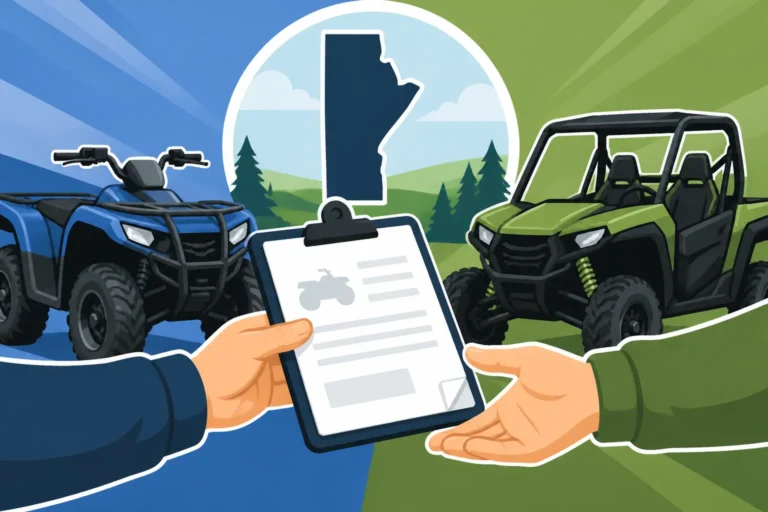
This is arguably the most critical document you’ll need. Whether you've bought a brand-new machine from a dealer or a used one from a private seller, you must have legitimate proof that you are the rightful owner.
- From a Dealer: If you purchased your ATV or UTV from a recognized dealership, they will provide you with a comprehensive bill of sale. This document should clearly list the dealer's information, your information, the machine's full description (make, model, year, VIN), the purchase price, and the date of sale. Often, the dealer will handle some of the initial paperwork themselves, making your trip to the Autopac agent primarily for final processing.
- From a Private Seller: This is where things can sometimes get a little tricky, but it doesn't have to be. For a private sale, a clear, dated, and signed bill of sale is absolutely essential. It needs to include:
- The full names and addresses of both the buyer (you) and the seller.
- The complete Vehicle Identification Number (VIN) of the machine.
- The make, model, and year of the ATV or UTV.
- The date of the transaction.
- The agreed-upon sale price.
- Signatures of both the buyer and the seller.
It's highly recommended to use a standard bill of sale template to ensure all necessary information is captured. Resources like LawDepot can be invaluable for drafting a legally sound bill of sale for private transactions, giving both parties peace of mind. Without a proper bill of sale, MPI may require additional steps to verify ownership, which can significantly delay your registration. If you're wondering about [Manitoba Machines With No Paperwork], this is where ensuring a robust bill of sale becomes even more critical.
Personal Identification and Proof of Age
Just like registering any other vehicle, you'll need to prove who you are.
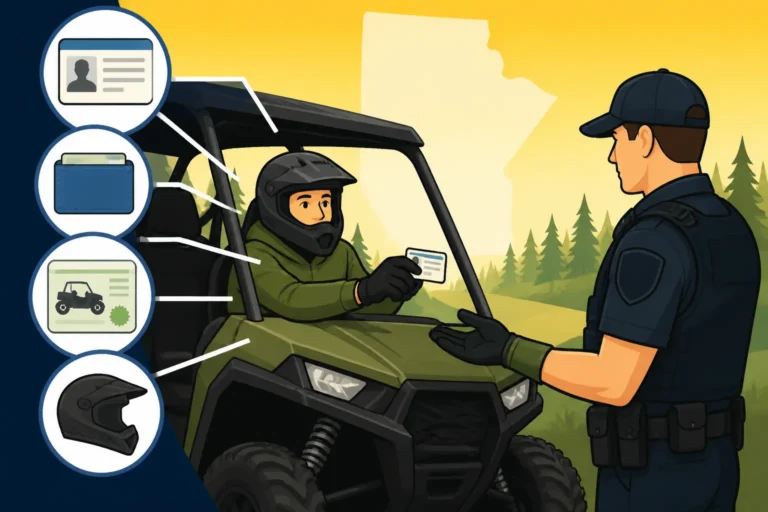
- Valid Photo ID: Bring at least one piece of government-issued photo identification, such as your Manitoba driver's licence, a Manitoba Identification Card, or a passport. This is to verify your identity and ensure the registration is linked to the correct individual.
- Proof of Age: While you can ride certain ORVs at younger ages, to register an ORV in your name, you must be at least 16 years old. If you're 16 or 17, you'll also need [Manitoba Parental Consent From 16 to 18] from a parent or legal guardian. They will typically need to accompany you to the Autopac agent and sign the necessary forms. Your photo ID usually serves as proof of age, but be prepared to provide a birth certificate if there's any ambiguity, especially for those close to the 16-year mark. For more details on age requirements, refer to [Manitoba Registration Age of 16].
Vehicle Information – Knowing Your Machine Inside and Out
Beyond the bill of sale, having specific details about your machine readily available is vital.
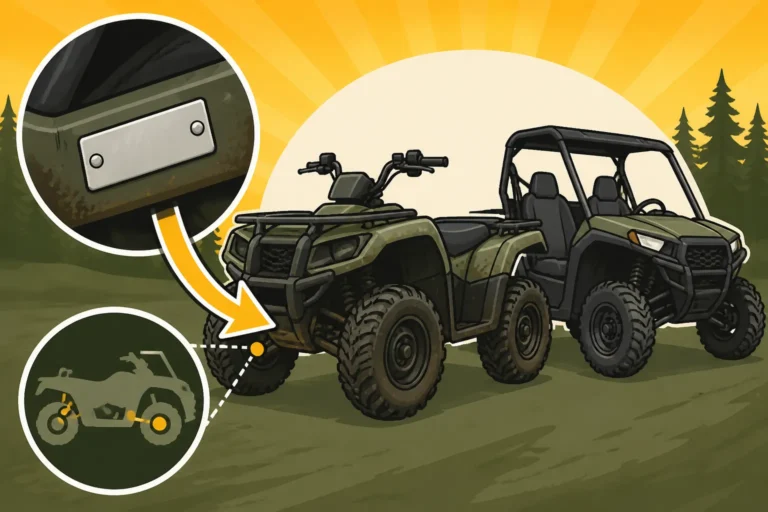
- Vehicle Identification Number (VIN): The VIN is your machine's unique fingerprint. It's usually stamped on the frame in an easily accessible location. Double-check that the VIN on your bill of sale matches the VIN on the machine itself. Any discrepancies can cause major issues during registration.
- Make, Model, and Year: Ensure you know these details accurately. They help MPI classify the vehicle correctly and ensure all provincial requirements are met.
- Engine Size: Have the engine displacement (e.g., 500cc, 700cc) handy, as this can sometimes be relevant for classification purposes.
The Step-by-Step Registration Process at an Autopac Agent
Once you've gathered all your documents, the actual registration process at an Autopac agent is usually straightforward. They are well-versed in these procedures and can guide you through any specific questions or unusual circumstances.
Your Visit to an Autopac Agent
Head to your nearest Autopac agent during their business hours. You'll present your proof of ownership (bill of sale), your personal identification, and any other required documents (like parental consent if applicable).
- Paperwork Review: The agent will review all your documents to ensure they are complete and accurate. They will enter your machine's details into the MPI system. This is a critical step, as any errors here could lead to issues down the road. They'll also check for any outstanding liens against the vehicle if it's a used purchase, which is an important safeguard for buyers.
- Information Verification: They might ask you questions about the machine's primary use (e.g., recreational, farm use) as this can sometimes affect certain exemptions or classifications, though for most recreational riders, it's a standard process.
- Processing the Transaction: Once everything is verified, the agent will process the registration. This involves collecting the necessary fees and issuing your new registration documents.
Understanding the Costs – Fees, Taxes, and the Trails Surcharge
Registering an ORV in Manitoba comes with several costs that are typically paid all at once at the Autopac agent. Understanding these components helps you budget accordingly.
- Registration Fee: This is the base fee for legally registering your off-road vehicle in the province. This fee is standard for all ORVs, regardless of type or engine size.
- Retail Sales Tax (RST): Manitoba's Retail Sales Tax (RST) is collected at the time of registration, especially for private sales where it wasn't collected by a dealer. The RST applies to the purchase price of the machine. If you bought from a dealer, they would have collected this at the point of sale. For private sales, MPI will assess the value of the machine, often using industry guides like the "Blue Book" to determine the taxable value, ensuring fairness across transactions. This is where [Manitoba RST Collected at Registration] comes into play.
- Off-Road Trails Fee: This is a mandatory surcharge added to every ORV registration in Manitoba. This fee helps fund the development and maintenance of ORV trails across the province, supporting the very infrastructure that many riders enjoy. It's an investment in the riding community, and it's important to know that [The $25 Trails Fee Added to Every Registration] is a non-negotiable part of your total cost.
For a complete breakdown of what you can expect, including potential basic insurance coverage (which is mandatory and part of the registration), it's a good idea to research [Manitoba ORV Registration Cost].
What You Get – Plates, Cards, and Temporary Documents
Once your transaction is complete and payment is made, you'll walk away with the necessary proof of registration.
- Registration Certificate: This is your official document proving that your ATV or UTV is registered. It contains all the pertinent information about your machine and its registered owner. It's absolutely crucial to [Manitoba Registration Cards Carried at All Times] when operating your ORV, as law enforcement may ask to see it. Many riders keep a laminated copy or a digital image on their phone (in addition to the physical card) for convenience, but the physical card is always the official one.
- License Plate: You will be issued one license plate for your off-road vehicle. Unlike passenger vehicles which often have front and rear plates, [Manitoba Issues One Plate, Not Two] for ORVs. The specific mounting location varies by machine type (e.g., rear for quads, front for dirt bikes), but it must be clearly visible.
- Temporary Operating Permit (if applicable): In some cases, if the plate isn't immediately available or if there's a slight delay, you might receive a temporary permit that allows you to operate your ORV legally for a short period until your permanent plate arrives or is issued.
Common Registration Scenarios and What You Need to Know
The basic process covers most situations, but a few common scenarios often bring up specific questions. Let's look at some of these.
Registering a Used Machine from a Private Seller
This is one of the most frequent situations outside of buying new from a dealer. When you purchase a used ATV or UTV from a private individual, the onus is on you, the buyer, to ensure the transfer of ownership is properly recorded and the machine is registered in your name.
- Transfer of Ownership: The seller is responsible for signing over the transfer portion of their registration certificate to you. This acts as the official handover document. Make sure the seller's signature is authentic and matches the name on the certificate. If the seller doesn't have the certificate, or if it's an older machine without one, you'll need a very robust bill of sale, perhaps one created using a service like LawDepot, to establish a clear chain of title. It's your responsibility to bring this signed transfer document (or the comprehensive bill of sale) to an Autopac agent within a specific timeframe – typically seven days from the date of sale – to complete the transfer and register the machine in your name. This is crucial for adhering to [Manitoba Transfer of Ownership Rules] and [Buying From a Private Seller in Manitoba].
- Checking for Liens: Before finalizing a private sale, it's always wise to check for any outstanding liens on the machine. A lien means someone else has a financial claim against the vehicle, and if you buy it with an active lien, you could become responsible for that debt. MPI agents can often check for liens during the registration process, but you can also conduct a personal property registry search beforehand for peace of mind.
New Residents and Out-of-Province Machines
Moving to Manitoba with your off-road vehicle? Welcome! You'll need to register your machine here to comply with provincial laws.
- Within 15 Days: As a new resident, you typically have a grace period (often 15 days) to register your out-of-province ORV in Manitoba. You'll need similar documentation: proof of ownership from your previous jurisdiction (e.g., your old registration certificate, title, or bill of sale), and your personal identification. The process will be similar to registering a new-to-you machine, including paying the Manitoba registration fee, RST (if applicable), and the trails fee. Details can be found in [Manitoba Registration for a New Resident].
- Visiting Riders: What if you're just visiting Manitoba with your ORV from another province or state? Good news! Generally, if your off-road vehicle is properly registered and insured in your home jurisdiction, you do not need to register it in Manitoba for temporary recreational use. You are expected to follow all of Manitoba's operating rules and carry proof of your home registration and insurance. So, [Does a Visiting Rider Have to Register in Manitoba]? Typically, no, as long as your home registration is valid.
Special Exemptions and Their Limitations
While most ORVs need to be registered, there are a few specific exemptions under the Act. However, these are quite narrow and come with strict conditions.
- Own Property Use: An ORV does not need to be registered if it is operated exclusively on land owned by the owner of the ORV. This means if you only ever ride it on your own private farm, acreage, or cabin property, you might be exempt. However, the moment it leaves your property and enters public land, ditches, or even crosses a public road, it must be registered. This is the core of [Manitoba Own-Property Registration Exemption].
- Farm Use, Trappers, and Commercial Fishers: There are exemptions for ORVs used primarily for specific agricultural purposes, by licensed trappers within their trapline district, or by commercial fishers in the course of their business. These exemptions are not blanket passes; they are tied to the specific activities and locations. For example, a farm quad used for recreation on a Sunday would likely still require registration if it leaves the farm property. You can explore these nuances further in [Manitoba Registration Exemptions Explained].
- Remote Communities: In certain remote communities without all-weather road access, specific exemptions might apply. These are very specific to designated communities and are not a widespread exemption for anyone living outside major centres.
It’s always best to assume you need to register your machine unless you are absolutely certain you meet one of these very specific, limited exemptions. When in doubt, register it. It's the safest way to ensure you're always operating legally and avoiding potential fines or complications.
| Document Type | Required For | Key Information Needed | Notes |
|---|---|---|---|
| Proof of Ownership | All Registrations | Seller/Buyer Info, VIN, Make/Model/Year, Sale Price, Date, Signatures | Dealer invoice or detailed private bill of sale (e.g., via LawDepot) |
| Personal ID | All Registrations | Name, Address, Date of Birth, Photo | Valid government-issued photo ID (driver's licence, ID card) |
| Proof of Age | Under 18 Registrants | Birthdate | Often covered by Photo ID; birth certificate may be needed if 16/17 |
| Parental Consent | Registrants 16-17 | Guardian's signature, proof of relationship | Guardian must accompany registrant to Autopac agent |
| Vehicle Information | All Registrations | VIN, Make, Model, Year, Engine Size | Found on machine frame, bill of sale, or previous registration |
| Old Registration | Used/Out-of-Province | Previous owner's details, transfer section | For verifying transfer of ownership (private sale) |
Disclaimer
This article is for general informational purposes only and does not constitute professional advice. Laws, prices and regulations vary by location and change over time. Consult a qualified professional for guidance on your specific situation.