One Plate Per Machine, Front or Rear
It's easy to feel a bit lost when it comes to the nitty-gritty details of registering your off-road vehicle in Manitoba, especially when you're trying to figure out something as seemingly simple as plate placement. Many riders scratch their heads wondering if they need two plates, or where exactly that single plate should go to stay on the right side of the law. This guide is here to clear up all that confusion, walking you through Manitoba's straightforward single-plate system and ensuring you know precisely how to display your plate, whether you're riding a quad, a dirt bike, or a snowmobile.
Understanding Manitoba's Single Plate System for ORVs
When you get your new off-road vehicle (ORV) registered in Manitoba, one of the first things you might notice, or wonder about, is the license plate. Unlike cars or trucks that typically have two plates – one for the front and one for the rear – ORVs operate under a slightly different, and often simpler, rule here in our province. This single-plate system is designed to be practical for the varied terrains and uses that ATVs, UTVs, dirt bikes, and snowmobiles encounter.
The "One Plate" Rule: What It Means for You
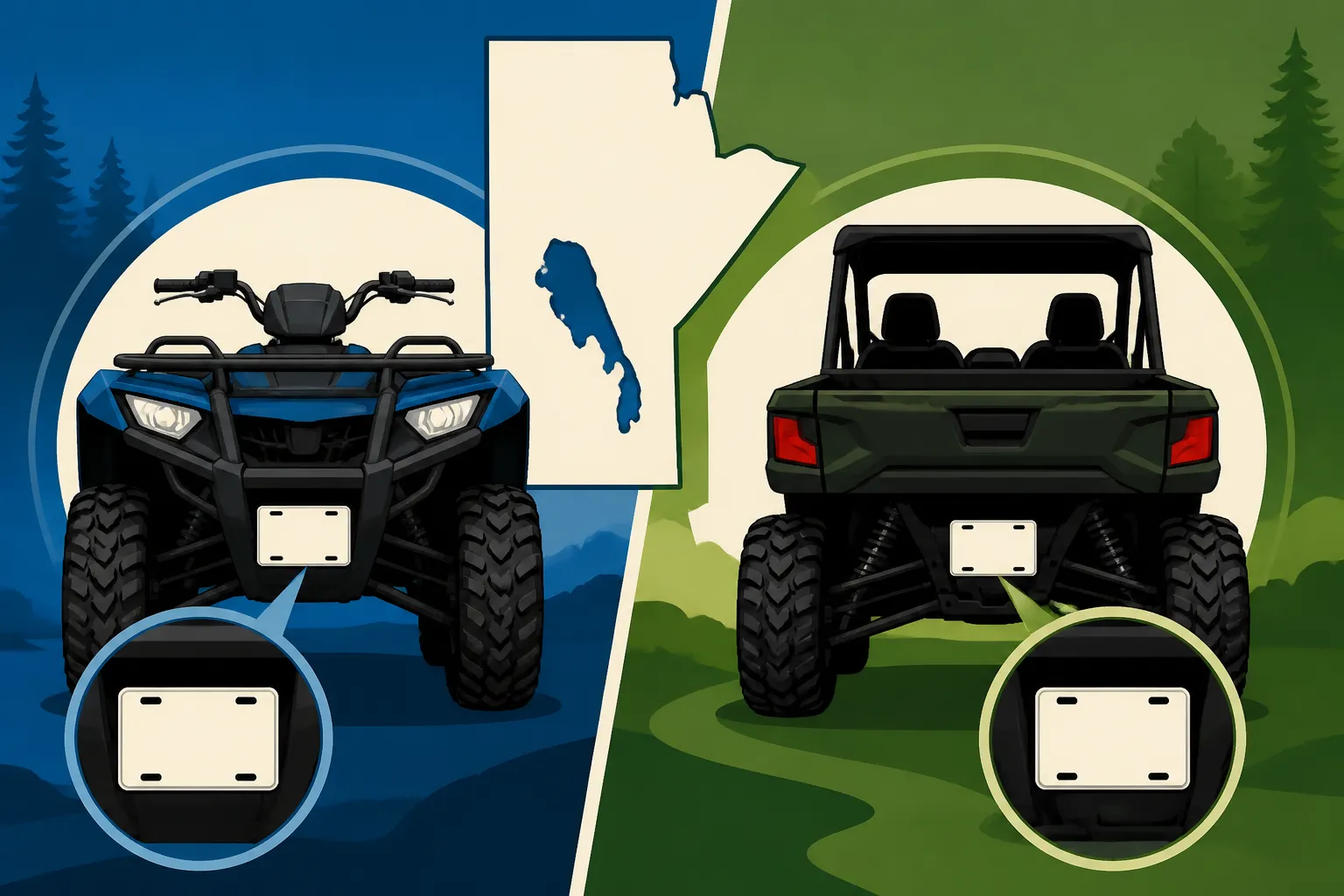
In Manitoba, the rule for off-road vehicles is crystal clear: you only get, and only need, one license plate. This isn't a mistake at the Autopac agent; it's the standard operating procedure for every registered ORV in the province. This single plate serves as the primary identifier for your machine, connecting it directly to your registration details held by Manitoba Public Insurance (MPI). For many riders new to the ORV scene, or those coming from jurisdictions with different rules, this can sometimes be a point of confusion. They might expect a front and rear plate, similar to what they’re used to on their daily driver, and then find themselves asking for a second one that simply doesn't exist for their quad or sled.
The intent behind this rule is largely practical. Off-road vehicles are often exposed to harsh conditions, tight trails, and potential impacts that could easily damage or dislodge a second, less protected plate. Streamlining to a single plate helps reduce the chances of loss and makes enforcement simpler, as there's only one location an officer needs to check. It simplifies the manufacturing and distribution process, too. So, when you receive just one plate, rest assured, that's exactly what you're supposed to have.
Dispelling the Two-Plate Myth
The idea that an ORV should have two license plates is a common misconception, often born from experiences with other types of vehicles or from rules in other provinces or states. Perhaps you've heard a friend from Alberta mention their dual plate setup for a recreational vehicle, or maybe you're simply applying your knowledge of passenger car regulations to your new side-by-side. It’s an understandable assumption, but it doesn't apply here in Manitoba for ORVs. The law is quite specific, and it only mandates one plate per machine.
This distinction is important because trying to attach a second, non-existent plate, or assuming you're somehow exempt from displaying the single plate, can lead to unnecessary trouble. We've seen riders try to fashion their own "front plate" out of cardboard or plastic with the numbers written on, thinking they're being compliant. While the intention might be good, it's not the correct procedure and won't satisfy the requirements of the law. Stick to the one official plate issued by MPI, and you'll be on the right track. The rules are designed for simplicity and safety, and adhering to them is part of responsible riding in Manitoba.
Where Your Registration Card Fits In
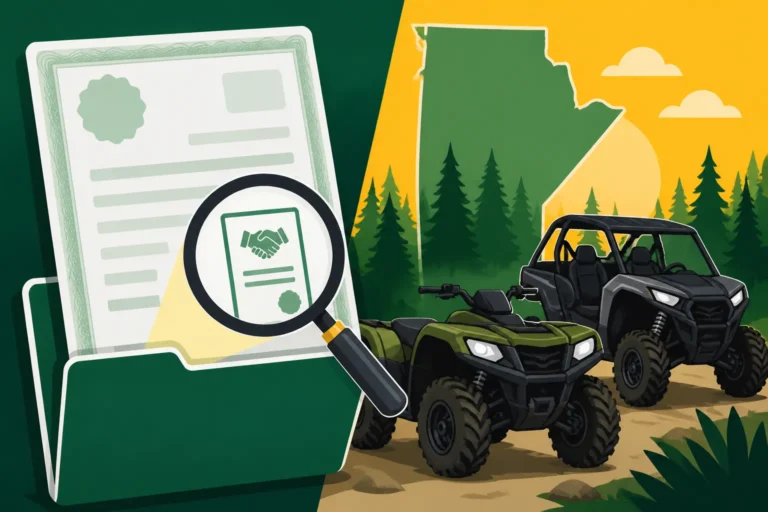
While the physical license plate is crucial for external identification, it's equally important to remember that your registration isn't just a piece of metal. It's a certificate, a document, that proves your ORV is legally registered to you. This is why, alongside ensuring your plate is properly displayed, you absolutely must carry your registration card with you whenever you're operating your machine. Think of it as your ORV's identification.
This little piece of paper holds all the vital information about your off-road vehicle, including its make, model, VIN, and your ownership details. An enforcement officer, whether it's an RCMP officer, a conservation officer, or a municipal by-law officer, will expect to see this card if they pull you over. Having your physical plate visible on your machine and your registration card on your person demonstrates full compliance. Neglecting to carry the card can be just as problematic as not having a plate at all. Make it a habit to always tuck it into a waterproof pouch in your riding gear or a secure compartment on your machine. For more details, refer to [Manitoba Registration Cards Carried at All Times].
Front or Rear: Deciding Where to Mount Your Plate
Once you've wrapped your head around the one-plate rule, the next logical question is: where exactly does it go? This isn't a free-for-all; Manitoba law has specific guidelines depending on the type of off-road vehicle you're operating. These rules aren't arbitrary; they're designed to ensure maximum visibility for enforcement and safety, considering the unique characteristics and common uses of each machine type.
Quads and Side-by-Sides: The Rear Rule
For the vast majority of four-wheeled off-road vehicles, including your typical ATV (quad) and the larger, multi-passenger side-by-sides (UTVs), the rule is straightforward: the license plate must be mounted on the rear of the machine. This is the most common placement you'll see on the trails and rural roads of Manitoba, and for good reason. On a quad or side-by-side, the rear offers the best unobstructed view for anyone approaching from behind, whether it's another rider, a vehicle on a crossing, or an enforcement officer.
Think about the design of these machines. The front often has a winch, a bumper, or is simply designed for navigating tight spots where a protruding plate could get snagged or damaged. The rear, however, typically provides a flatter, more open surface, often on a rack or a dedicated mounting spot. It’s crucial that the plate is securely fastened and clearly visible. This means no mud or debris obscuring the numbers, and it should be mounted horizontally, not at a crazy angle. Many riders use sturdy brackets or even fabricate their own to ensure the plate can withstand the rigours of off-road travel without getting bent, lost, or made illegible. For more specific guidance on placement, check out [Manitoba Plates on the Rear of a Quad].
Two-Wheelers and Snowmobiles: The Front and Left Side Rules
Now, if you're riding a two-wheeled off-road motorcycle, like a dirt bike, or a snowmobile, the plate placement rules shift to accommodate the distinct designs and operational environments of these machines. These variations highlight the practical thinking behind Manitoba's ORV regulations.
For dirt bikes, the single plate must be displayed on the front of the machine. If you consider the design of a dirt bike, the rear wheel and fender are often where a lot of mud, dirt, and roost from the tires will collect, making a rear plate quickly unreadable. The front, typically on the front fender or number plate area, offers a much cleaner and more visible location. When an officer is observing a dirt bike, they are usually looking at it head-on or from the front as it approaches or passes. This placement ensures the plate is clearly seen without being obscured by the rider's body, the bike's exhaust, or trail debris. The plate should be mounted as flat as possible, facing forward, to optimize readability. For a deeper dive, read [Manitoba Plates on the Front of a Two-Wheeler].
When it comes to snowmobiles, the rules dictate that the plate must be mounted on the left side of the machine. This might seem a bit unusual at first glance, but it's entirely functional. On a snowmobile, both the front and rear can be problematic for consistent plate visibility. The front is often covered by snow, ice, or can be subject to impact from drifts, while the rear might be obscured by a towed sled, snow flap, or the rider's stance. Placing the plate on the left side ensures that it's generally visible to someone passing, or to an officer observing from the side of a trail. It also often keeps the plate relatively clean from snow thrown up by the track. Just like with other ORVs, it needs to be securely attached, clear of obstructions, and legible. Discover more about this specific requirement in [Manitoba Plates on the Left of a Snowmobile].
Practical Plate Placement: Tips for Visibility and Security
Knowing where to put your plate is one thing, but ensuring it stays put, remains visible, and meets the spirit of the law out on the trail or in the bush is another. Off-road riding puts your machine, and by extension your license plate, through a lot. Mud, dust, water, branches, and vibrations are all common enemies of a securely mounted and clearly visible plate. Taking a few extra steps during installation can save you a headache (and potentially a ticket) down the line.
Ensuring Your Plate is Clearly Visible
The primary goal of a license plate is identification, and for it to serve that purpose, it must be easily readable at a reasonable distance. This means thinking beyond just "attaching it somewhere." When mounting your plate, consider the angle: it should be as flat and horizontal as possible, not tilted upwards or downwards to the point where the numbers become distorted or obscured. Avoid placing it where parts of your machine – like a spare tire, a jerry can, a cargo box, or even your riding gear – might block the view.
Cleanliness is also paramount. A plate caked in mud, dust, or snow is effectively invisible, no matter how perfectly it's mounted. It's good practice to give your plate a quick wipe before heading out, especially after a particularly muddy or dusty ride. Enforcement officers are looking for clear, unambiguous identification. If they have to dismount and get close to read your plate, it’s not properly visible. Take a step back after mounting and assess it from different angles, imagining you're an officer trying to read it from a few feet away. For more on this, see [Mounting Your Plate Where It Can Be Seen].
Protecting Your Plate from Damage and Loss
The off-road environment is notoriously harsh on equipment, and license plates are no exception. A flimsy plastic bracket or loosely fitted bolts are an invitation for your plate to go missing on the first bumpy trail. Vibration alone can loosen fasteners, while an errant branch or a slide through a mud pit can easily bend, tear, or completely rip off a poorly secured plate.
To prevent this, invest in sturdy mounting hardware. Metal brackets, Nyloc nuts (which resist loosening from vibration), or even backing plates can significantly increase your plate's resilience. Some riders opt for custom-fabricated mounts that recess the plate slightly, offering a degree of protection from direct impacts while still maintaining visibility. Consider where you ride: if you're frequently in dense bush, placing the plate slightly inboard rather than on the outermost edge of a rack can help it avoid snagging. While you want it visible, you also need it durable enough to withstand the adventures you seek.
What to Do If Your Plate Gets Lost or Damaged
Despite your best efforts, accidents happen, and sometimes a plate does get lost or becomes so damaged it's no longer legible. Discovering your plate is missing or illegible when you're far from home can be a stressful moment, but it's important to know the steps to rectify the situation promptly. The first thing you should do is contact an Autopac agent as soon as possible. They are the authorized providers for all MPI services, including issuing replacement plates.
You'll need to explain the situation to them – whether it was lost, stolen, or damaged beyond recognition. There will likely be a fee for a replacement plate, and you'll need to provide your ORV's registration details. While waiting for your new plate, it's generally not advisable to ride your machine, as it would be operating without a visible license plate, which is a violation. If you absolutely must move it for essential purposes, ensure you have documentation proving you've initiated the replacement process. Being proactive here is key to avoiding potential penalties. For the full procedure on getting a replacement, refer to [Manitoba Plate Replacement If Lost].
Why These Rules Exist: Safety, Identification, and Enforcement
Sometimes, rules can feel like arbitrary hurdles, but the regulations surrounding ORV plate placement in Manitoba are anything but. They are rooted in practical considerations for safety, identification, and the efficient enforcement of the province's off-road vehicle laws. Understanding the 'why' behind these rules can help foster a greater sense of responsibility and compliance among riders.
Enhancing Rider Safety and Accountability
A clearly displayed license plate isn't just a formality; it's a vital tool for accountability. In the event of an accident, a medical emergency, or even a simple lost and found scenario on a trail, an easily identifiable machine can make all the difference. Emergency services, fellow riders, or law enforcement can quickly identify the vehicle and, through its registration, find the owner or other relevant information. This quick identification can be crucial for locating missing riders or for proper incident reporting.
Moreover, the plate acts as a deterrent against irresponsible or illegal riding behaviour. When a machine is clearly identifiable, operators are more likely to adhere to speed limits, stay on designated trails, and respect private property. It adds a layer of traceability that encourages safer, more considerate operation, knowing that their actions can be linked back to them. It helps create a more orderly and respectful riding community for everyone.
Supporting Trail Maintenance and Regulations
Manitoba's ORV registration system includes a crucial component: the trails fee. This fee, collected at the time of registration, directly contributes to the maintenance and development of off-road trails across the province. [The $25 Trails Fee Added to Every Registration] ensures that the infrastructure we all enjoy can be sustained and improved. The plate, therefore, becomes a symbol of this contribution.
When enforcement officers are checking for compliance on trails, the presence of a properly displayed plate confirms that the rider has contributed to this system. It helps to differentiate between those who are legally registered and have paid their share, and those who might be attempting to use the trails without proper authorization. This system helps to ensure that resources are available to repair land, fund rider education programs, and keep our riding areas safe and enjoyable for future generations.
Legal Implications of Incorrect Plate Placement
Ignoring the rules for plate placement or failing to display a plate at all isn't just poor etiquette; it carries legal consequences. Operating an unregistered ORV, or one with an improperly displayed or illegible plate, can result in fines and penalties. Enforcement officers in Manitoba take these rules seriously because they are fundamental to identifying machines, tracking ownership, and ensuring compliance with all ORV regulations, including those related to safety and environmental protection.
If you're stopped by an officer and your plate is found to be improperly placed, obscured, or missing, you could face a citation. The specific penalties can vary, but even a warning can be an inconvenience. Beyond the immediate financial cost, repeated violations could lead to more significant issues. It's far simpler and less stressful to ensure your plate is correctly mounted and visible from the outset. Understanding the potential repercussions, such as those outlined in [Manitoba Ticket Costs for Riders], should serve as a strong incentive for diligent compliance.
Navigating Registration: Key Steps and Documents
Getting your off-road vehicle registered in Manitoba is a fundamental step to enjoying it legally on designated trails and areas. While the plate itself is a visible symbol of this, the registration process involves a few key steps and documents that every ORV owner should be familiar with. Knowing what to expect makes the process smooth and ensures you're ready to ride.
The Initial Registration Process
The journey to getting your ORV plate begins with the registration process itself. In Manitoba, this is primarily handled through any Autopac agent across the province. These agents are your go-to resource for all things related to MPI, including registering your ATV, UTV, dirt bike, or snowmobile. You'll need to bring specific documentation with you to complete the registration.
Typically, this includes proof of ownership (like a bill of sale), identification for yourself, and details about the machine, such as its Vehicle Identification Number (VIN). The agent will process your information, calculate any applicable sales tax, collect the registration fee, and the mandatory trails fee. Once everything is in order, they will issue your registration certificate and, crucially, your single license plate. For a detailed walkthrough of what to bring and what to expect, refer to [How to Register an ATV in Manitoba] and [Manitoba Autopac Agents and ORV Registration]. It's a fairly straightforward process designed to get you on your way quickly and legally.
Transferring Ownership and Plate Considerations
Life happens, and sometimes you might sell your ORV or buy a used one from a private seller. When this occurs, understanding the process for transferring ownership and what happens with the license plate is absolutely critical. In Manitoba, the registration and plate are tied to the owner and the machine. When you sell an ORV, the registration associated with your name essentially ends. The plate belongs to you, not necessarily the machine once it leaves your possession, but in practice, you might surrender it or transfer it to a new machine you acquire.
The buyer will then need to register the machine in their own name. This typically involves presenting a valid bill of sale to an Autopac agent. It's incredibly important to have a clear, detailed bill of sale for private sales. Resources like LawDepot can be invaluable for drafting professional and legally sound bills of sale, ensuring all parties are protected and the transfer process is transparent. This document ensures clear proof of purchase and helps the new owner register the machine without a hitch. The new owner will then be issued their own plate, specific to their new registration. For comprehensive information on this process, consult [Manitoba Transfer of Ownership Rules].
Renewing Your Registration
Like all vehicle registrations, your ORV registration in Manitoba isn't a one-time affair; it needs to be renewed periodically. The good news is that ORV registration renewal is typically aligned with your personal Autopac policy renewal. This means if you have other vehicles insured with MPI, your ORV registration will likely come up for renewal at the same time, simplifying the process by consolidating your paperwork.
You'll receive a renewal notice from MPI, just as you would for your car or truck. You can then visit an Autopac agent, or in some cases, complete the renewal online or by phone, depending on MPI's current options. It's vital to renew your registration on time to avoid any lapse in legal operation. Continuing to ride an ORV with an expired registration is just as problematic as riding an unregistered one. Staying on top of your renewal ensures you're always legal and covered. For more specific details on the renewal process, check out [Manitoba ATV Registration Renewal].
Plate Placement Quick Reference
To help clarify where your single Manitoba ORV plate should go, here's a handy table summarizing the general requirements:
| Machine Type | Plate Placement | Key Considerations |
|---|---|---|
| ATV (Quad) | Rear | Mounted on a flat, unobstructed surface, often a rear rack or dedicated bracket. Ensure it's horizontal and clearly visible from behind. |
| Side-by-Side (UTV) | Rear | Similar to ATVs, the rear is the primary location. Needs to be visible above any cargo or accessories. |
| Dirt Bike (Two-Wheeler) | Front | Typically mounted on the front fender or a dedicated number plate area. Must face forward clearly and not be obscured by forks or handlebars. |
| Snowmobile | Left Side | Placed on the left side of the machine. Needs to be clear of exhaust, running boards, and any towed equipment. Ensure it's legible even with snow accumulation. |
| Amphibious Machine | Rear (typically) | While not explicitly detailed as much as other types, the general principle of clear visibility applies. If it has a rear area similar to a quad, that would be the common placement. Always aim for the most unobstructed view from the rear. |
Remember, clear visibility and secure attachment are universal requirements, regardless of the specific placement for your machine type.
Disclaimer
This article is for general informational purposes only and does not constitute professional advice. Laws, prices and regulations vary by location and change over time. Consult a qualified professional for guidance on your specific situation.