Residents Allowed the Most Direct Route Home
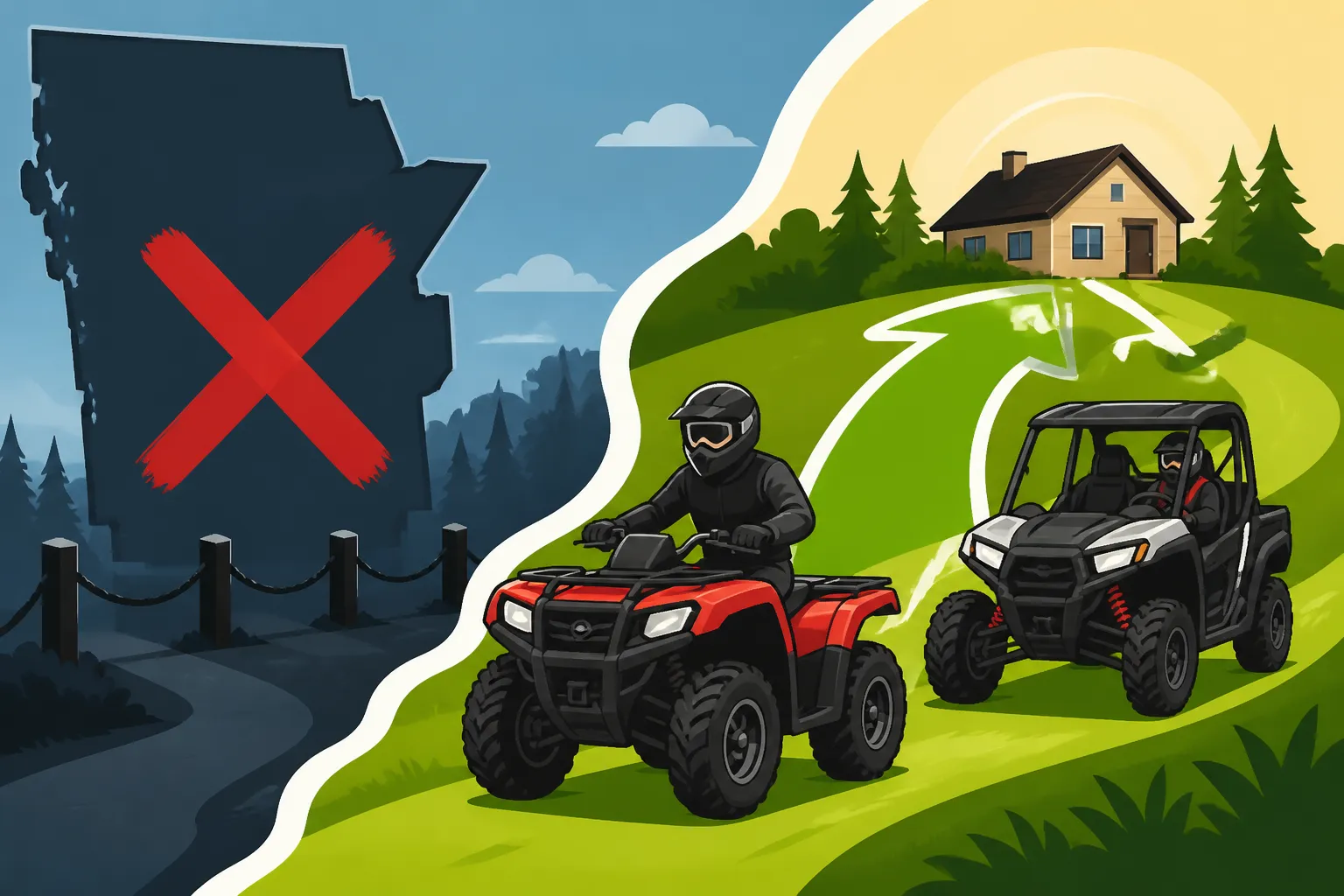
A wildfire-area closure can leave Manitoba ATV and UTV riders unsure whether they may travel home through the affected area. The key is that a resident’s trip home may be allowed only under a limited exception and only along the most direct permitted route. Check the closure order before moving; it is not a general pass to keep riding.
What “the most direct route home” means
When an area is closed to travel, residents may be allowed to take the most direct route home. That exception is about getting home, not continuing a ride, reaching a recreation site or taking a preferred scenic route. The exact terms of the closure order matter, so check them rather than assuming every resident or vehicle is covered.
“Most direct” should be understood as the most direct route that is actually open and permitted. A shorter route on a map may pass through a closed area, use a route not authorized for your machine or lead into a hazard. Do not enter a restricted area simply because it appears to be the shortest way home.
A closure can affect roads, trails, Crown land and other travel areas. It may also set out exceptions or conditions. Read the applicable order and any posted signs, and follow directions from officials. Manitoba Area Closure Orders explains the role of closure orders, while When a Minister Closes an Area to Travel covers what a travel closure can mean for riders.
This is best treated as a narrow exception, not permission to ride wherever you want until reaching home. If the order does not clearly allow your trip or the route is unclear, pause and confirm with the appropriate official before entering the affected area.
Does the exception cover an ATV or UTV?
Do not assume that an exception for residents automatically authorizes every vehicle or route. The wording of the order controls. Check whether it applies to your situation and whether your ATV or UTV can legally use the route you intend to take.
Even when travel home is permitted, other rules still matter. A closure exception does not itself make a roadway, ditch, trail or private property open to off-road vehicles. Your machine must be allowed on the route under the rules that normally apply, and you must have permission to cross or use land where permission is required.
| Question | What to check before setting out |
|---|---|
| Are you covered by the resident exception? | Confirm how the order defines the people or trips that may travel. |
| Is your destination your home? | A trip to a cabin, trailhead or another stop may not fit a homeward exception. |
| Is the route open? | Check closure boundaries, signs and current instructions. |
| Can your ATV or UTV use that route? | Confirm the route is lawful for your machine, not just passable. |
| Is there another condition? | Follow any limits stated in the order or by officials. |
A route used for ordinary road travel is not automatically an ATV route. Manitoba generally restricts off-road machines from roadways, with limited circumstances for travel such as permitted crossings. Review Manitoba ORV Road Rules Explained before treating a road as part of your route. Local rules can add restrictions too, so check the municipality or local government district where relevant.
If the closure area includes Crown land, do not assume that the resident exception overrides access restrictions or land-use conditions. The same caution applies to trails, private property and Crown leases. Manitoba Crown Land Riding Explained and Manitoba Crown Lease Access Rules can help clarify the separate access questions.
How to plan a permitted trip home
If a closure affects an area where you live or are riding, verify the rules before moving. Conditions can change, and an old map or a route saved on your phone may not show a new closure.
- Find the current closure information. Check the official closure notice and any map or updates provided by the responsible authority. Use Manitoba Wildfire Season Rules for Riders for context on how wildfire restrictions affect off-road travel.
- Read the exception, not just the headline. Confirm who may travel, the purpose allowed and any route or timing conditions. If the wording is unclear, ask an official before entering the area.
- Identify an open, lawful route. Choose the most direct route that is both permitted by the order and legal for your machine. Do not cut across closed land to save time.
- Check conditions at the point of travel. Look for signs, barriers and instructions from officials. A route shown as open earlier may no longer be usable.
- Keep the trip limited to getting home. Do not add trail riding, sightseeing, errands or stops that take you away from the permitted purpose.
- Carry what you need to establish your situation. Keep your registration certificate with you, as required for riding, and be ready to explain your destination and route if asked. The Certificate Manitoba Riders Must Carry at All Times covers the registration document.
- Turn back if conditions or directions change. A permitted route is not a reason to continue into smoke, active fire hazards, blocked access or an area officials have closed.
Plan for the possibility that your normal route is unavailable. If the only route you know crosses a closure boundary or uses a trail you are not sure is open, do not guess. Contact the authority responsible for the closure or ask an official at a checkpoint.
What the exception does not allow
Permission to take the most direct route home is not permission to keep riding in a closed area for recreation. It does not automatically authorize a detour to a trail, a stop at a campsite or travel to another property. If your purpose changes from getting home, the exception may no longer apply.
It also does not cancel ordinary operating requirements. Registration, insurance, equipment and route rules remain relevant unless a specific rule or order says otherwise. Nor does it give a rider permission to cross private land, a Crown lease or another restricted area without the required authority.
Wildfire restrictions are separate from the travel exception. A road or route may remain open while certain activities are restricted, or an area may be closed to travel altogether. Use current notices rather than relying on what was allowed on a previous ride. Manitoba Fire Season Riding Restrictions and Checking the Fire Restrictions Map From Your Phone are useful related reads.
If you are a visitor rather than a resident, do not rely on the resident homeward exception. A visitor’s circumstances may not fit it, even if the route would otherwise be convenient. Check the closure terms and follow instructions; if travel is not clearly allowed, remain outside the closed area and seek direction from officials.
The practical rule is simple: a resident may be allowed to go home by the most direct route, but only within the terms of the current order. Confirm that you qualify, that your ATV or UTV may use the route, and that the route is open now. When any of those points is uncertain, stop and verify before riding.
Disclaimer
This article is for general informational purposes only and does not constitute professional advice. Laws, prices and regulations vary by location and change over time. Consult a qualified professional for guidance on your specific situation.