Where Your $25 Trails Fee Actually Goes
Manitoba riders can pay the off-road trails fee when registering an ATV or UTV without knowing what the money supports. The fee is intended to help fund trail-related work, but it is not a personal trail pass and does not guarantee that a route near you will receive funding. Here’s how to understand its purpose, limits and practical value.
What the $25 trails fee is
The trails fee is collected as part of registering an off-road vehicle in Manitoba. It is commonly described as $25 per registration, but confirm the current amount and how it appears on your transaction with an Autopac agent or the appropriate provincial office. The fee is tied to registration, not to how often you ride or which trails you use.
That distinction can be easy to miss. A rider who never visits a developed club trail may still have to pay the fee when registering a machine. Equally, paying it does not mean a rider has purchased access to every trail, public land parcel or provincial park. For more on when the charge is collected, see Manitoba Trails Fee Collected With Registration and The $25 Trails Fee Added to Every Registration.
The fee is part of Manitoba’s approach to supporting off-road trails through registration. It is not the same as an annual club membership, a provincial park vehicle permit, or a special event permit. Those charges serve different purposes and may apply in addition to registration. Manitoba also does not have a universal ATV trail pass that works like a pass in some other jurisdictions. See Manitoba Has No ATV Trail Pass for that distinction.
| Payment or requirement | What it is generally for | What it does not automatically provide |
|---|---|---|
| Trails fee collected with registration | Supports eligible trail-related work and programmes | Access to every trail or a guarantee of work in your area |
| Club membership | Supports a particular club and may include club-specific benefits | Permission to ride wherever you choose |
| Provincial park vehicle permit | Covers the vehicle under applicable park rules | Permission to use routes that are closed to ORVs |
| Special event permit | Applies to an organized event when required | A general permit for everyday riding |
| Registration | Registers the machine and meets applicable registration requirements | Permission to ignore land-access rules or local restrictions |
The fee is generally not optional based on whether a rider plans to use a trail. It is also not normally refunded just because a machine is sold, stored, or used only on private property. Check Manitoba Trails Fee Is Non-Refundable for the refund question, and confirm the current rules before relying on an exception or expecting money back.
A useful way to think about the charge is as a contribution to a wider trail system, rather than a fee-for-service purchase. You pay through registration, but you do not receive an individual credit balance, a named route entitlement, or a promise that a particular trail will be repaired or maintained. The benefit is collective and depends on what projects are approved and carried out.
What the money is intended to support
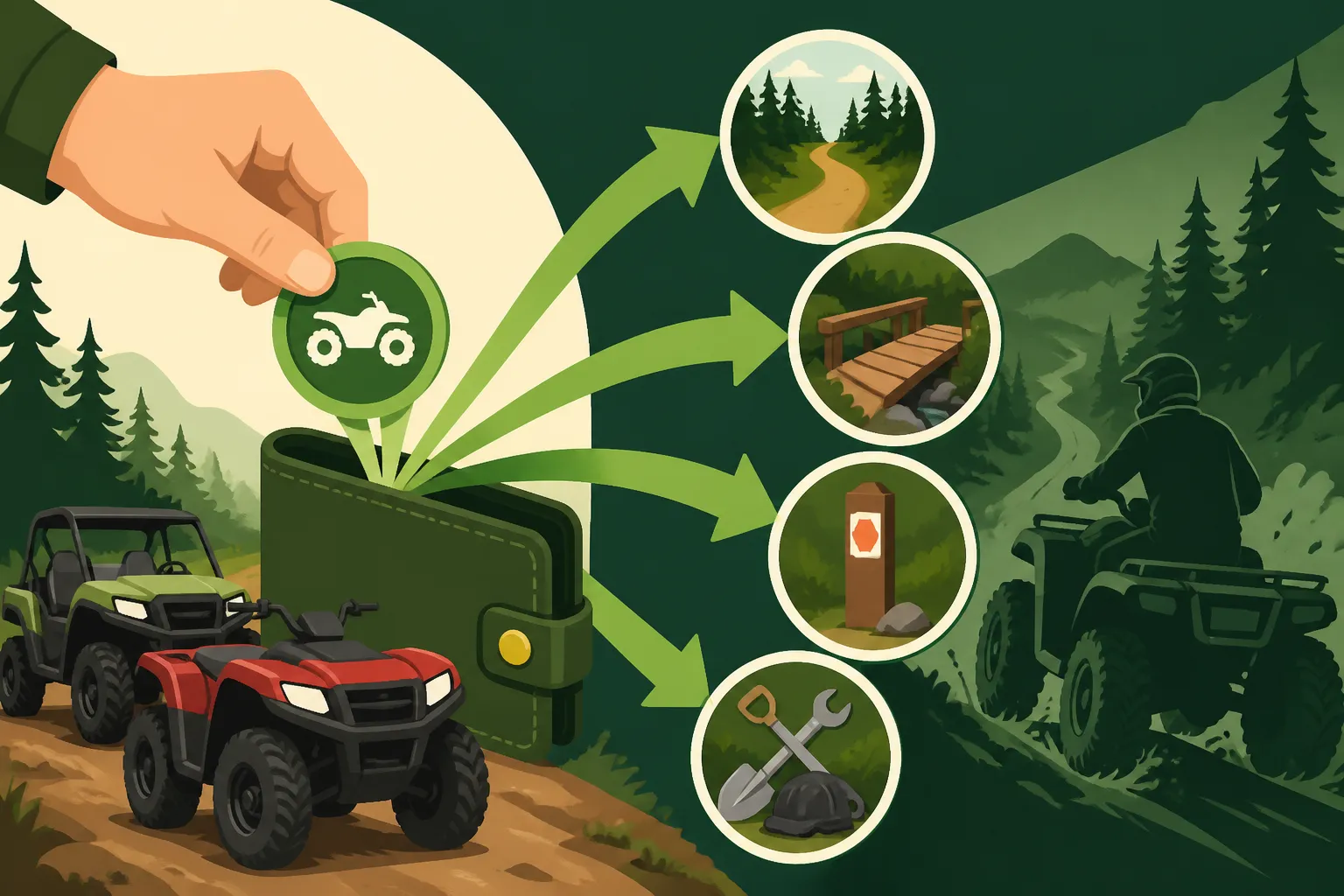
The trails fee is associated with support for Manitoba’s off-road trail network and related work. That can include trail maintenance grants, restoration or repair where riding has damaged land, and rider education initiatives. These are different kinds of work: one keeps a route usable, another addresses impacts, and another helps riders make safer and more responsible decisions.
Trail maintenance and development
Trail work is more than clearing brush. Depending on the route and project, maintenance can involve repairing worn sections, improving drainage, addressing erosion, replacing or fixing structures, maintaining signs, and making a route safer to follow. Trail development can also involve work needed to establish or improve an organized route, subject to land access, approvals and the programme’s requirements.
Funding can help clubs and other eligible groups take on projects they may not be able to cover through local fundraising alone. A trail organization might need equipment, materials, contractor support or planning before a project can proceed. A grant can contribute to that work, but it should not be assumed to pay every cost or cover routine operations indefinitely.
The grants are not the same thing as a guarantee that every route gets regular maintenance. Funding normally depends on eligible projects, applications, review and available programme resources. Some trails may be better organized to apply than others; some may have different land-use arrangements or require permissions before any work can begin. For more about the grant role, see Trails Fee Money Spent on Trail Maintenance Grants.
Repairing land affected by riding
Trail use can affect soil, vegetation and water, especially where routes become muddy, are used during poor conditions, or spread beyond an established corridor. Repair work may help address damage and reduce the chance that it continues. Depending on the situation, that could involve restoring a route, directing use away from sensitive ground or improving a crossing.
This is not a licence to ride through damaged or sensitive areas and assume the fee will pay for cleanup later. Riders remain responsible for following access rules, staying on permitted routes and avoiding places that are closed or unsuitable for motorized use. A fee that supports restoration does not turn an unauthorized route into a legal one, nor does it remove the need to get permission where permission is required.
Restoration also takes time. A project may need assessment, landholder agreement, planning and suitable conditions before work can happen. The money does not necessarily result in an immediate repair after a complaint, and the trail may need to remain closed while a site recovers. The related topic Trails Fee Money Repairing Land Damaged by Riders explains this part of the fee’s purpose.
Rider education
Education is another way to support the trail system. Riders who understand route rules, land access, trail etiquette and environmental risks are less likely to create problems that close routes or damage relationships with landholders and communities. Education may also help riders make better decisions about speed, group riding, weather and shared trails.
Education funding is not the same as a compulsory training requirement. Manitoba’s registration rules and a voluntary safety course are separate questions. The fee’s connection to education does not mean every rider must complete a course before riding, and it does not automatically provide an individual with training. See Trails Fee Money Funding Rider Education Programmes for the programme distinction.
These three areas—maintenance, restoration and education—are useful ways to understand the fee’s intended public benefit. They are not a promise that every dollar from each registration will be visibly spent on a particular local project. For current programme details, ask what projects and funding rounds are active rather than assuming that an older project list describes the present situation.
Why the benefit may not be visible near you
A rider may pay the fee year after year and still see a trail that appears unchanged. That does not necessarily mean the fee has no purpose, but it does mean the benefit is not as direct as paying for a specific service.
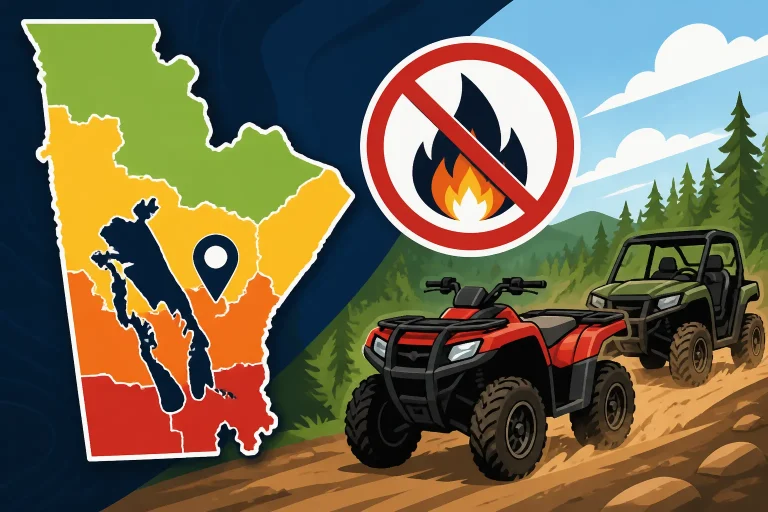
First, funds may support projects in different parts of the province. The route closest to your home is not automatically the route that receives a grant. A project elsewhere may involve a higher-priority safety issue, a more complete application, an urgent repair, or a route that serves a larger network. The fee is collected as part of a province-wide system, not as a local contribution earmarked by the rider’s address.
Second, a trail project may be hard to see once completed. Drainage improvements, erosion control and repairs to a damaged section can reduce future problems without making a route look dramatically different. Signs and route planning can also prevent confusion without being obvious to someone who already knows the area.
Third, funding is only one part of getting work done. A club or project organizer may need access approval, a plan, volunteers, matching resources or qualified contractors. A route on private land, a Crown lease or another managed area may require consent or coordination before work can begin. If permission is not in place, available funding alone cannot authorize construction or maintenance.
Finally, club trails and routes on other lands do not all have the same management structure. Some routes rely heavily on volunteers. Others may be affected by seasonal restrictions, fire risk, land conditions or a landholder’s decision to close access. A grant programme can support eligible work, but it does not control every factor that determines whether a route stays open.
If you are trying to find out whether a particular local trail has benefited, ask the club or organization responsible for it. They may know whether a project was proposed, approved, completed or delayed. A question about how the programme works is different from a question about where a specific grant went, so it can help to be precise about what you want to know.
What the fee does not buy
The most important limit is that paying the trails fee does not give a rider permission to use any route. Permission and access depend on the land, the route and the applicable rules. A machine’s registration does not override a park restriction, a municipal bylaw, a closure or a landholder’s decision.
Nor does the fee replace other requirements. Riders still need to meet applicable registration and insurance rules, carry required documents, follow operating restrictions and use only routes they are allowed to use. A park may require a separate vehicle permit, and a club may have its own membership arrangements. An organized event can have additional requirements. These are separate from the registration fee.
The fee also does not guarantee that a specific trail will be built, repaired, open year-round or maintained to a particular standard. Trail conditions can change with weather, water, fire danger, land use and volunteer capacity. Check route information before making a long trip, and do not treat an old map or past access as proof that a trail is open today. For details on the separate park charge, see Manitoba Park Vehicle Permits.
It is not a personal donation that can be directed to the trail you prefer. Riders generally cannot identify one machine’s payment with a specific project or request that their particular registration contribution be returned to a chosen club. A club may have its own membership fees or fundraising options, which are a more direct way to support local activity.
And it is not a refund promise if you do not ride. The fee is associated with registration, rather than being charged each time you enter a trail. Selling a machine, storing it over winter or riding exclusively on land you own does not automatically make the trails fee refundable. If you are unsure whether an exemption or other rule applies to your situation, confirm it before registering; do not assume non-use creates an exception.
How to check where support is going
If you want a clearer picture than the general purpose of the fee, check for current programme information and ask questions that distinguish policy from project-level spending. The amount, process and available project information can change, so rely on current official details rather than an old post or an informal summary.
A practical approach:
- Confirm the current fee and collection point. Ask an Autopac agent how the trails fee appears in the registration transaction and whether the amount or collection process has changed.
- Ask for the current trail-funding programme details. Confirm which kinds of projects can receive support, who is eligible to apply, and where current or completed project information is published.
- Ask about your area specifically. Contact the local club or trail organization and ask whether it has applied for, received or completed funded work. A general programme description may not answer a local question.
- Separate plans from completed work. An announced project, an approved grant and a finished repair are different stages. Ask which stage applies before concluding that a trail has been improved.
- Keep access and funding questions separate. Even when a trail has received support, check whether it is open and whether you have permission to ride it. A funding decision does not create a rider’s access right.
You can also ask what outcomes the programme reports. Useful information might include the types of projects supported, the regions involved, whether work is complete, and how education activities are delivered. If details are not available in a public summary, ask which office or programme contact can answer a more specific question.
For riders who want to contribute beyond the fee, practical options include joining a local club, volunteering for trail work, supporting education events, and reporting damage or closures through the appropriate organization. Clubs often have the best local knowledge of route conditions and maintenance needs. But volunteering or club membership still does not replace the rules for registration, land access or permits.
The fee’s value is easiest to assess when expectations are realistic. It helps support shared trail-related work; it is not an individual pass, a guarantee of a nearby project or a substitute for local permission. That distinction can make the charge less mysterious and help riders ask better questions about how trail funding is managed.
Frequently Asked Questions
Is the Manitoba trails fee charged every time I ride?
No. It is collected with applicable off-road vehicle registration, not each time a rider uses a trail. Confirm the current amount and collection details when registering.
Does paying the fee let me ride on any Manitoba trail?
No. You still need to follow access rules, closures, park requirements, local bylaws and landholder permissions. The fee is not a province-wide access pass.
Does the money go to the trail nearest to my home?
Not necessarily. The fee supports a broader programme, and a particular route is not guaranteed funding. Ask the local trail organization about projects in your area.
Can I get the fee refunded if I do not use trails?
Non-use does not automatically make the fee refundable. Confirm current rules with an Autopac agent or the appropriate provincial office before relying on an exemption or expecting a refund.
Disclaimer
This article is for general informational purposes only and does not constitute professional advice. Laws, prices and regulations vary by location and change over time. Consult a qualified professional for guidance on your specific situation.