Manitoba Licensed Trapper Exemption
It can be a real headache, keeping up with all the registration rules for your off-road vehicles in Manitoba. Just when you think you've got it all sorted for your ATV or UTV, you remember you also use it for specific work, and you start to wonder if there's any relief from the constant paperwork and fees. This guide is going to dive deep into a very specific, but incredibly helpful, exception: the Manitoba Licensed Trapper Exemption, detailing who qualifies, what it covers, and exactly how it works so you can use your machine for your livelihood without unnecessary red tape.
Understanding the Manitoba Trapper Exemption
For those who rely on their ATVs, UTVs, and even snowmobiles to carry out their essential work on a trapline, the thought of registering every single machine and paying all those associated fees can feel like an unfair burden. Thankfully, Manitoba recognizes the unique circumstances of licensed trappers and offers a specific exemption from ORV registration requirements. This isn't a free pass to ride anywhere you want, mind you, but a targeted relief designed to support a vital part of our provincial heritage and economy.
Who Qualifies as a Licensed Trapper?
First and foremost, to even consider this exemption, you absolutely must be a currently licensed trapper in Manitoba. This isn't for hobbyists or occasional users; it's strictly for individuals who hold an active, valid trapper's license issued by the provincial government. This license is your official credential, proving that you are engaged in commercial trapping as a livelihood or significant activity. Without it, this exemption simply doesn't apply to you, and your machine will need full registration like any other ORV.
Your trapper's license isn't just a piece of paper; it represents your official designation and the legal right to operate within a specific trapline district. The province issues these licenses after you meet certain criteria, which often include proving knowledge of sustainable trapping practices and adhering to wildlife management regulations. It’s this active, official status that forms the bedrock of your eligibility for the ORV registration exemption.
It's also important to remember that this isn't a "family" exemption. While family members might assist on the trapline, the exemption typically applies to the licensed trapper operating the machine for trapline activities. If your spouse or child is operating an ORV on the trapline, they would need to be either a licensed trapper themselves, or the machine would need to be registered, unless specific provincial guidelines extend coverage to non-licensed individuals under the direct supervision and activity of the licensed trapper. Always check the very latest regulations from the province for clarification on this point, as interpretations can sometimes vary slightly.
What Machines Are Covered?
The beauty of this exemption lies in its practical application: it generally covers any off-road vehicle that a licensed trapper uses directly for the purposes of their trapping activities. This means your trusty ATV, the robust side-by-side (UTV) you use to haul traps and pelts, and even your snowmobile during the winter trapping season, can all potentially fall under this exemption. The key here is the purpose of use – is it integral to the operation of your trapline? If so, it's likely covered.
Think about the daily grind of trapping. You might use an ATV to check traps in remote areas, carrying supplies, or transporting harvested furs back to your base. A UTV could be essential for hauling larger equipment or multiple animals. In winter, a snowmobile is often the only practical way to navigate deep snow to access your trapline. The exemption acknowledges these realities, understanding that these machines are not recreational toys but crucial tools of the trade.
However, a critical nuance exists: the machine must genuinely be used for trapping activities. If you also own another ATV that you exclusively use for weekend trail riding with friends, that machine would absolutely require standard registration. The exemption isn't tied to you as a person, but to the activity the machine facilitates. If you're using your "trapper's quad" for a summer fishing trip outside your trapline district, it would need to be registered like any other recreational machine. This distinction is paramount to staying compliant and avoiding potential issues.
Geographic Scope: Where Does the Exemption Apply?
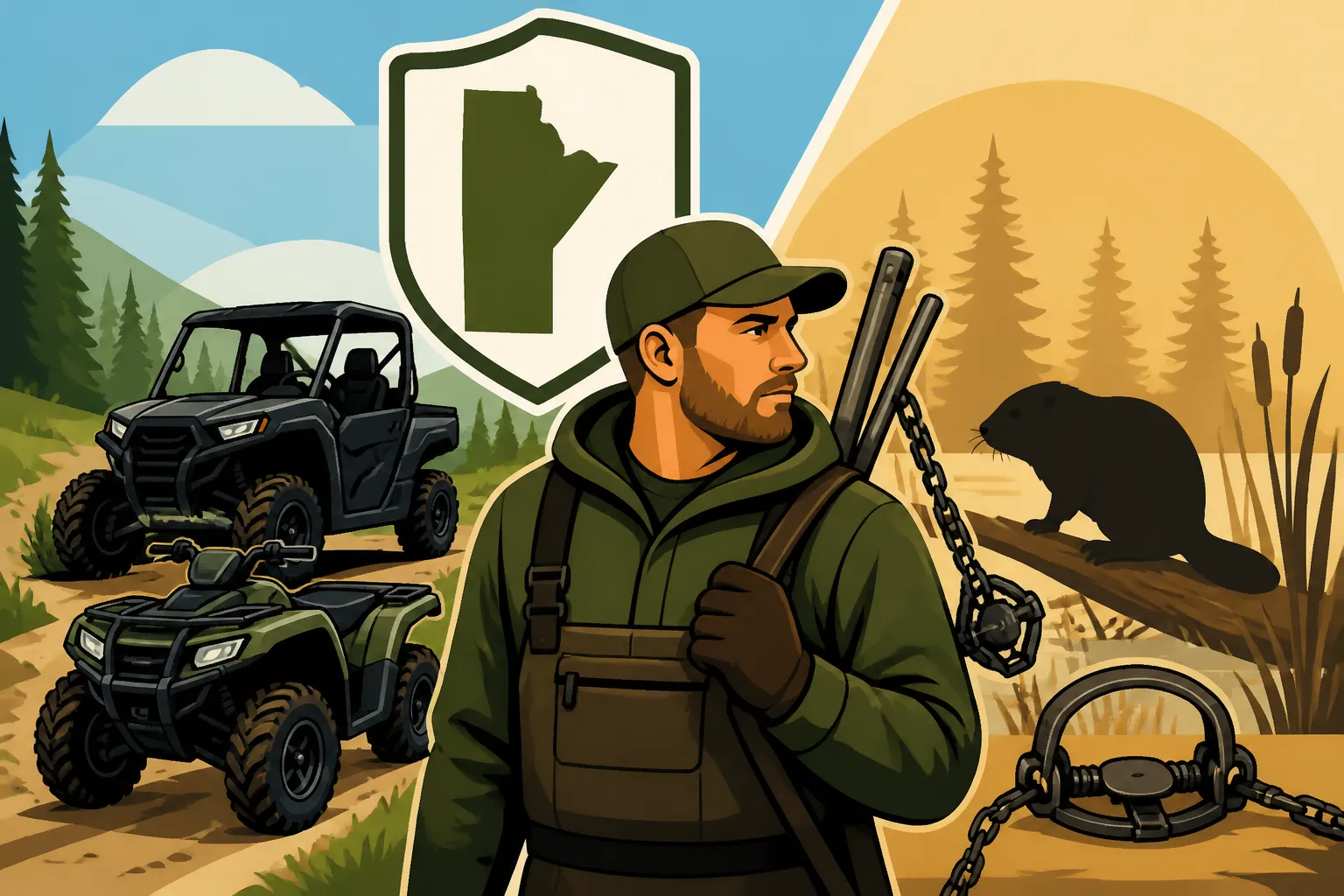
This is perhaps the most crucial detail of the trapper's exemption: it applies only within your registered trapline district. This isn't an exemption that allows you to ride unregistered machines across the province or even in adjacent areas. Your trapper's license designates a specific geographic area where you are authorized to trap, and it is strictly within these boundaries that your ORV can operate without standard registration.
Imagine your trapline district as your designated workplace. Your off-road vehicle, when used for trapping, is essentially a piece of equipment for that workplace. Just as you wouldn't expect a piece of farm machinery to be exempt from road registration when driving it to the grocery store, your ORV is only exempt when it's actively engaged in trapline work within the confines of its defined district. Leaving that district, even by a short distance, immediately revokes the exemption, and your machine would then be subject to regular registration requirements.
This means you need to be acutely aware of your trapline's boundaries. Carrying a detailed map of your registered district, perhaps even a GPS with your boundaries marked, is not just helpful—it's practically essential. If a conservation officer or law enforcement official encounters you operating an unregistered ORV, you will need to demonstrate that you are a licensed trapper and that you are operating within your designated trapline district. This geographical limitation is non-negotiable and forms the backbone of the entire exemption. [Licensed Trappers Skip Registration in Their Trapline District] is a key point here.
The Specifics of the Exemption in Practice
Knowing that the exemption exists is one thing, but understanding its practical implications and limitations is quite another. Many trappers might assume a blanket freedom from all rules, but that's simply not the case. This exemption offers relief from registration but doesn't remove other responsibilities or common-sense precautions. It's about being informed and prepared, ensuring you can focus on your trapping without worrying about legal missteps.
How the Exemption Differs from Standard Registration
The most obvious difference, of course, is that you won't be paying the annual registration fee or receive a registration card and license plate from Manitoba Public Insurance (MPI). This is a significant financial and administrative saving, acknowledging the often-seasonal and remote nature of trapping work. You bypass the entire process of visiting an Autopac agent to register your machine, which can save considerable time, especially if you live in a remote area.
However, it's crucial to understand what this doesn't exempt you from. While you might not have a license plate, you're still expected to adhere to all operating rules under the Off-Road Vehicles Act. This includes things like age restrictions for operators, helmet laws (unless another specific exemption applies, such as for farming or hunting, which might also apply to trapping under certain conditions), and safe operating practices. Your machine still needs to be in good working order, with appropriate lighting if operating after dark, and a functioning spark arrester to prevent wildfires. [Manitoba Spark Arrester Requirements] are year-round.
Furthermore, the exemption from registration doesn't automatically mean you're exempt from other provincial statutes or municipal by-laws that might apply to ORV use. While local by-laws are often less restrictive in remote, rural areas, it's always wise to be aware of any specific rules that might govern your trapline district, especially if it borders or includes areas with higher population density or specific environmental protections. The exemption is very specific to registration, not a blanket waiver of all ORV laws.
Proof You'll Need to Carry
Just because your machine isn't registered doesn't mean you can ride around without any paperwork. Far from it! If you're operating an unregistered ORV, you absolutely must be able to prove that you qualify for the exemption if stopped by law enforcement or a conservation officer. The primary piece of evidence you'll need is your valid, current Manitoba trapper's license. This is non-negotiable. Think of it as your ORV's "registration" for that specific purpose.
Beyond your license, it's highly advisable to carry additional documentation that supports your claim. This could include:
- Proof of ownership: A bill of sale or other title document for the ORV itself. This shows the machine belongs to you. [Manitoba Proof of Ownership on the Trail] is always a good idea.
- A map of your trapline district: An official map from Manitoba Natural Resources and Northern Development, clearly outlining your registered trapline area. This helps to immediately establish the geographical limits of your exemption.
- Contact information: For the department that issued your trapping license, should an officer need to verify your status.
Having these documents readily available, perhaps in a waterproof pouch on your person or securely stored on the machine, will make any interaction with authorities much smoother. It demonstrates your compliance and understanding of the rules, saving you time and potential headaches. While LawDepot might be known for general legal templates, for specific provincial licenses like a trapper's license, you'll be dealing directly with the provincial government. However, for any personal documents like a bill of sale, or perhaps a formal agreement if you co-own a machine, LawDepot could offer useful templates to ensure clear ownership records.
When the Exemption Does NOT Apply
It bears repeating, because this is where many misunderstandings occur: the trapper's exemption is very specific and has clear boundaries. It absolutely does not apply under several key circumstances, and knowing these will help you avoid costly fines or legal troubles.
Firstly, if you are using your ORV for any recreational purpose, the exemption is immediately void. This means pleasure riding, trail exploration, heading out for a picnic, or using it to visit friends, even if those friends are within your trapline district. The moment your intent shifts from trapline work to leisure, your machine requires full registration. This is a bright-line rule, and officers are trained to discern the purpose of your travel.
Secondly, the exemption is strictly tied to your registered trapline district. If you leave those boundaries, even to drive a short distance on a public road to access another part of your trapline or to travel to a nearby community for supplies, your ORV must be registered. This is often the biggest trap for trappers, pun intended, as the lines between "trapline travel" and "general travel" can blur. Consider having a second, registered machine for any travel outside the district, or plan for alternative transport methods.
Finally, the exemption is only for licensed trappers operating machines for trapping activities. If you lend your ORV to someone who is not a licensed trapper, or if a licensed trapper uses it for non-trapping work (e.g., helping a friend clear brush on their property outside the trapline), it needs to be registered. The exemption is about the function and context, not just the owner.
Here's a quick comparison of the two scenarios:
| Feature | Licensed Trapper Exemption (within trapline) | Standard ORV Registration (general use) |
|---|---|---|
| Registration Required? | No | Yes |
| License Plate? | No | Yes (One plate per machine) |
| Annual Fees? | No | Yes (Includes Trails Fee) |
| Purpose of Use | Strictly for trapping activities | Recreational, work (non-exempt), etc. |
| Geographic Scope | Within registered trapline district only | Anywhere legal to ride in Manitoba |
| Proof Required | Valid Trapper's License, ORV ownership | Registration card, ORV ownership |
| Insurance | Highly Recommended (Liability) | Mandatory (Basic Liability) |
| Operating Rules | Still applies (helmets, age, etc.) | Still applies (helmets, age, etc.) |
Navigating the Boundaries of Your Trapline District
Understanding the geographical limitations of the trapper exemption is paramount. Your trapline district is not just a general area; it's a specific, legally defined parcel of land. Riding an unregistered ORV outside these boundaries, even unintentionally, can lead to serious consequences. It's a bit like knowing the property lines of your own land – you wouldn't inadvertently trespass, and the same caution applies here.
Defining Your Registered Trapline District
Your trapline district is officially designated by the provincial government, specifically through Manitoba Natural Resources and Northern Development. When you obtain your trapper's license, you are typically assigned or have access to a map that clearly outlines the precise boundaries of your registered district. This is not something you estimate or assume; it is a fixed, surveyed area. It can be a registered trapline line, a Registered Trapping Area (RTA), or an Open Trapping Area (OTA) depending on your license type and location.
These boundaries are often defined by natural features like rivers, lakes, and ridge lines, or by surveyed lines on a map. They are put in place not only to allocate trapping rights but also for wildlife management and conservation purposes. Having a physical copy of this map, or an equivalent digital version on a GPS device, is an indispensable tool for any trapper relying on the ORV exemption. It provides undeniable evidence of your authorized operating area if ever questioned.
Without a clear understanding and respect for these boundaries, the exemption becomes a liability rather than a benefit. It's not enough to simply know your area generally; you need to be able to pinpoint your exact location relative to the official district lines at all times. This might involve periodic checks of your GPS or consulting your paper map, especially when you're working in unfamiliar terrain or near the edges of your designated district.
Crossing Roads and Public Land within the Trapline
Even within your registered trapline district, there are still rules about how you interact with public infrastructure, particularly roads. While your ORV might be exempt from registration within the district, that doesn't mean you can disregard the provincial Off-Road Vehicles Act entirely when it comes to road crossings or specific types of travel. The rules around [Manitoba Crossing Rules at 5 Metres and 3 Kilometres] still apply. You can't just barrel across a provincial road wherever you please, even if you're on your trapline.
Generally, you'll still need to follow designated crossing procedures, which typically involve coming to a complete stop, yielding to traffic, and crossing at a 90-degree angle. These safety regulations are in place for the protection of all road users, including yourself. If your trapline requires you to cross a paved or gravel public road, you must do so safely and legally. The exemption does not grant you special privileges regarding traffic laws.
For public land within your trapline district, such as Crown Land, your exemption allows you to operate your unregistered ORV for trapping purposes. However, always be mindful of any other specific restrictions that might apply to certain Crown Lands, such as provincial parks or designated wildlife management areas, even if they overlap with your trapline. While trapping often has specific allowances in these areas, it's always best to be aware of any unique regulations that might be in place for ORV use beyond the general Off-Road Vehicles Act. [Manitoba Crown Land Access Rules] are something every trapper should be familiar with.
What Happens if You Stray Outside the District?
This is where the rubber meets the road, or rather, where the unregistered ORV meets the law. If you are found operating an unregistered ATV or UTV outside the precise boundaries of your registered trapline district, you are essentially operating an illegal vehicle. The exemption simply ceases to apply. This can lead to serious consequences, much like operating any other unregistered vehicle.
The penalties can include significant fines, the impoundment of your vehicle, and potentially even legal charges. A conservation officer or RCMP member encountering you with an unregistered ORV and no valid reason (i.e., not within your trapline for trapping purposes) will treat it as a violation of the Off-Road Vehicles Act. This can be a very expensive mistake, easily costing you hundreds or even thousands of dollars in fines, towing fees, and impoundment costs.
To avoid this, it's crucial to be absolutely certain of your location. If you anticipate needing to travel outside your trapline district for any reason – even for short distances to refuel, pick up supplies, or access different parts of your trapping area via public roads – you must ensure that ORV is properly registered with MPI. Some trappers might choose to have one ORV specifically registered for these types of excursions, while using an unregistered one strictly within the trapline. Planning ahead and knowing your limits are your best defense against inadvertently breaking the law.
Other Important Considerations for Trappers
While the registration exemption offers considerable relief, it's vital for trappers to understand that it's not a complete blanket waiver of all responsibilities. There are still crucial aspects of ORV ownership and operation that remain firmly in place, ensuring safety, liability coverage, and overall compliance. Overlooking these can put you at significant risk, both personally and financially.
Insurance and Liability
Even if your ORV is exempt from registration, basic third-party liability insurance is an absolute must-have. Manitoba's basic ORV registration package does include basic liability coverage, but since you're not registering, you won't have that automatically. If you're involved in an accident, even one that is not your fault, and cause damage to property or injury to another person, you could be held personally liable for potentially massive costs. Imagine accidentally damaging a fence, another vehicle, or worse, causing injury to a fellow trapper or recreational user on a shared trail.
Without insurance, your personal assets could be at risk. This isn't just about covering your own machine (which would require additional comprehensive or collision coverage), but about protecting yourself from claims made by others. It's highly recommended to consult with an insurance broker to discuss specialized off-road vehicle insurance that covers third-party liability for machines used in commercial activities like trapping. While LawDepot offers templates for many legal agreements, for insurance, you'll want to speak with a licensed insurance professional who understands Manitoba's specific ORV insurance landscape.
Don't let the registration exemption lull you into a false sense of security regarding insurance. It's a separate, yet equally critical, component of responsible ORV ownership. Just because you don't have a plate doesn't mean you're immune to causing an accident or being held accountable for it. Protecting your livelihood and your personal finances with adequate liability insurance is a non-negotiable step for any trapper. [Manitoba Basic Liability Coverage Skips Injuries] is a reality, so additional coverage beyond the absolute minimum is often wise.
Safety Gear and Operating Rules
The registration exemption does not, in any way, excuse you from following crucial safety regulations. These rules are in place to protect you, the operator, and anyone else who might be in the vicinity. [Manitoba Helmet Law and Its Exemptions] still applies. Unless you qualify for a specific exemption (which some farming, hunting, or trapping activities might, under certain conditions, such as having an approved roll-over protective structure and wearing a seatbelt on a UTV), you must wear an approved helmet when operating your ATV. For UTVs, if fitted with seatbelts, they must be worn.
Age restrictions for operators also remain in effect. [Manitoba ATV Age Requirements] dictate who can operate an ORV and where, regardless of whether it's registered or not. If a younger family member is helping on the trapline, they must meet the provincial age and supervision requirements for ORV operation. Ignoring these rules not only puts individuals at risk but can also lead to fines and legal complications, especially in the event of an accident.
Furthermore, general safe operating practices are expected. This includes not driving while impaired, maintaining appropriate speeds for conditions, giving way to other users on shared trails (even if those are within your trapline), and operating machines that are in good mechanical condition. Your ORV is a tool for your trade, and just like any other piece of equipment, it needs to be operated safely and maintained properly.
Documenting Ownership and Use
Even without a registration card, maintaining meticulous records of your ORV's ownership and its specific use for trapping is incredibly important. This might seem like extra work, but it's your strongest defense if you ever need to prove your eligibility for the exemption or resolve a dispute.
Firstly, keep all proof of purchase documents. This includes the bill of sale, any financing agreements, and service records. This establishes you as the rightful owner of the machine. [A Bill of Sale From a a Manitoba Neighbour] is crucial, even for private sales. Should your ORV ever be stolen (a devastating blow for a trapper), having these documents will be essential for reporting it to the police and potentially recovering it.
Secondly, create a simple logbook or record of when and where you use the ORV for trapping activities. This doesn't need to be overly elaborate, perhaps just dates, times, and a brief description of the trapline tasks performed. While not strictly mandatory, this kind of documentation can serve as supplementary evidence of your legitimate use should you ever face questioning about the exemption. It backs up your claim of using the machine principally for trapping.
Finally, ensure your trapper's license is always current and readily accessible. Keep a copy (or the original, in a waterproof holder) with you whenever you're on the trapline. Remember, the entire exemption hinges on you being a licensed trapper, so proving that status immediately is key. If your license expires, so does your exemption, making your ORV subject to full registration requirements until it's renewed.
Why This Exemption Matters for Trappers
The Manitoba Licensed Trapper Exemption isn't just a minor administrative detail; it's a significant recognition of the unique challenges and traditions associated with trapping. It reflects a practical understanding by the province of the realities faced by individuals who work in remote, often rugged, environments as part of their livelihood. This exemption provides tangible benefits that help sustain this historic and economically important activity.
Reducing Burden and Cost
Let's be honest, every penny counts when you're running a trapping operation. Having to pay annual registration fees, plus the [The $25 Trails Fee Added to Every Registration], for multiple machines that are solely used for work in a remote area, can quickly add up. This exemption directly alleviates that financial pressure. It means trappers can invest those funds back into their equipment, supplies, or other aspects of their business, rather than into repetitive paperwork.
Beyond the direct financial savings, there's the administrative burden. Trappers often operate in areas far from Autopac agents or urban centers. The time and effort required to travel, queue, and process registrations for multiple machines, possibly multiple times a year if you're dealing with different types of ORVs (ATV, UTV, snowmobile), can be substantial. The exemption frees up precious time, allowing trappers to focus on their actual work – managing their lines, harvesting, and preparing their furs.
This reduction in burden fosters a more sustainable trapping environment. By removing unnecessary costs and administrative hurdles, the province helps ensure that trapping remains a viable livelihood for those who pursue it. It's a smart policy that recognizes the economic realities of a specific, rural industry.
Supporting a Traditional Livelihood
Trapping is more than just an industry; for many, it's a deep-rooted tradition, often passed down through generations. It's a way of life that connects individuals to the land and to the historical practices of their ancestors. This exemption acknowledges and respects that heritage. By making it easier for trappers to use the necessary tools of their trade, the province implicitly supports the continuation of this important cultural and economic activity.
In many remote and Northern communities, trapping remains a vital source of income and a means of subsistence. For these communities, ORVs are not just for recreation; they are essential for daily survival and economic activity. The exemption ensures that these critical tools can be utilized without adding undue financial strain or administrative complexity, which might disproportionately affect those in more isolated regions. [Manitoba Remote Community Exemption] also exists for similar reasons.
It also helps to maintain a sense of fairness. Trappers are not driving their ORVs on highways or in high-traffic urban areas, where the need for stringent registration and identification (like license plates) is highest. Their work is typically off-road, in wild spaces. The exemption understands this distinction, providing a policy that aligns with the practical realities of how trappers use their machines.
Maintaining Compliance Without Red Tape
One of the often-unseen benefits of a well-crafted exemption like this is that it encourages compliance. If the rules are practical and make sense for a specific user group, those users are more likely to understand and follow them. For trappers, the exemption clarifies that they don't need to navigate the full registration process, but it also clearly defines the boundaries and conditions under which this relief applies.
This clarity helps trappers avoid unintentional breaches of the law. Instead of feeling overwhelmed by a system that doesn't quite fit their unique situation, they have a clear path to legal operation. They know they need their license, they need to stay within their district, and they need to use the machine for trapping. This simplicity is a powerful tool for promoting adherence to regulations.
Ultimately, the Manitoba Licensed Trapper Exemption is a testament to thoughtful policymaking. It acknowledges a specific need, provides practical relief, and does so in a way that respects both the traditions of trapping and the broader goals of ORV management and safety in the province. It simplifies life for a vital part of Manitoba's rural economy, allowing them to carry on their work efficiently and legally.
Disclaimer
This article is for general informational purposes only and does not constitute professional advice. Laws, prices and regulations vary by location and change over time. Consult a qualified professional for guidance on your specific situation.