Manitoba Snopass Reciprocity With Saskatchewan
A Manitoba Snopass can help make a Saskatchewan snowmobile trip simpler, but “reciprocity” does not mean every trail, road or piece of land is automatically open to you. Here’s how to understand the arrangement, what the pass does and does not cover, and what to check before hauling your sled across the provincial boundary.
What Manitoba and Saskatchewan Snopass Reciprocity Means
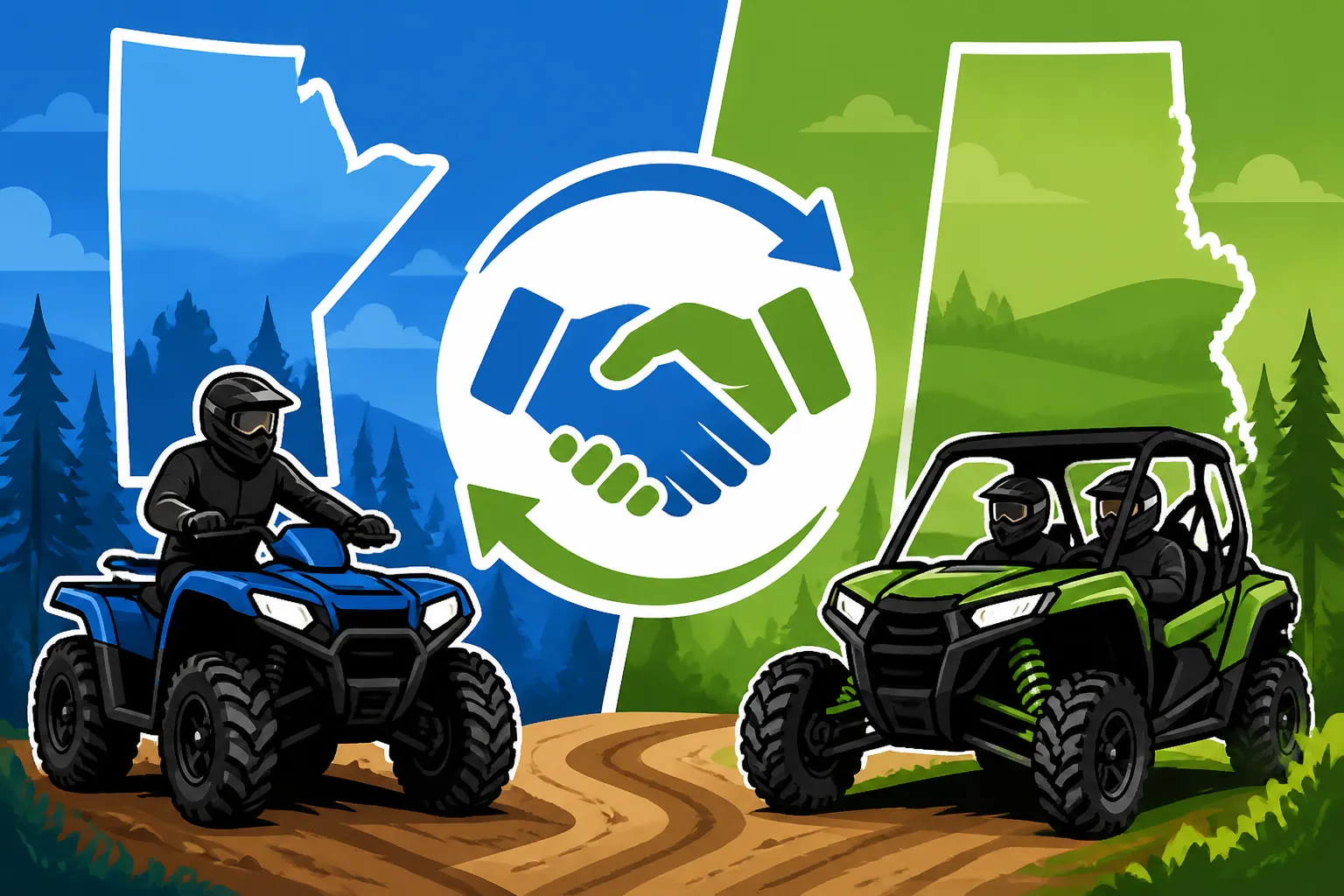
Manitoba’s Snopass is a trail permit for snowmobiles, not a general vehicle permit. Through reciprocal arrangements, a current Manitoba Snopass may be accepted on participating Saskatchewan snowmobile trails. The important qualifier is participating: a pass does not create universal access to every route or property in Saskatchewan.
For a Manitoba rider, reciprocity is best understood as a way to avoid buying a second trail permit for eligible trails, where the two provinces’ snowmobile organizations recognize each other’s permits. It does not replace the other requirements that apply to your machine and your ride. You still need to meet applicable registration, insurance, equipment, land-access and operating rules.
Reciprocity is also separate from permission to ride. A groomed trail shown on a map may be closed, temporarily rerouted, or subject to a local restriction. A trail permit does not give you permission to leave the designated route and ride across private land, a field, a Crown lease or another restricted area.
A simple way to keep the pieces straight is:
- Snopass: A trail permit associated with eligible snowmobile trail use.
- Registration and insurance: Separate requirements for the machine and its operation.
- Land access: Permission to use the specific route or property.
- Operating rules: The rules that apply where you are riding, including local restrictions and trail etiquette.
That distinction matters in both directions. A Saskatchewan rider visiting Manitoba may have a home-province permit recognized on eligible Manitoba trails, but that does not make the rider exempt from Manitoba’s operating rules. Likewise, a Manitoba Snopass should not be treated as an all-access pass for Saskatchewan.
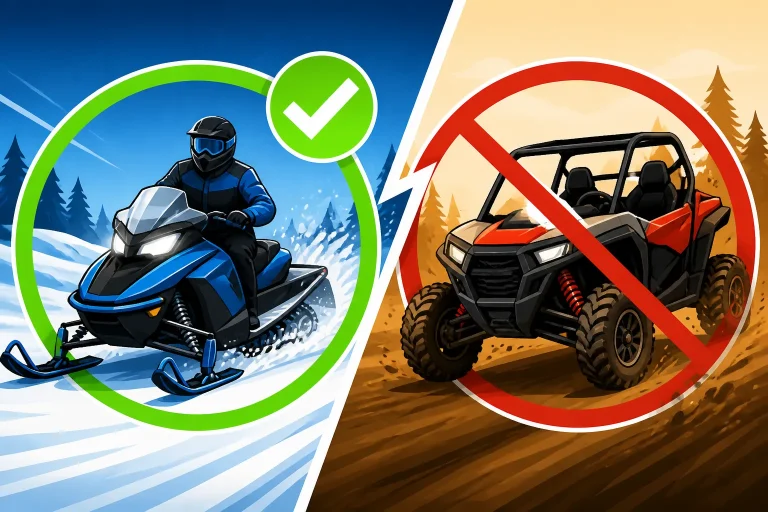
If you are comparing what a Snopass covers with what is needed to operate a machine, start with Manitoba Snopass Is for Snowmobiles Only. Quads and side-by-sides are not made eligible for snowmobile trails just because they are registered or because their owner has a Snopass. The separate guide Manitoba Snopass Rules for Quads explains that distinction.
The practical answer
If you are travelling to Saskatchewan, assume your Manitoba Snopass may cover only the trail systems included in the current reciprocal arrangement. Before you leave, confirm that the specific trails you plan to ride accept it, that the pass is valid for the dates of your trip, and that you have any required machine documents.
This is more reliable than relying on a general statement that “Manitoba and Saskatchewan have reciprocity.” The agreement may be broad, but the route you choose still matters. Trail clubs can have local closures or conditions that affect access even when the permit itself is recognized.
What Reciprocity Does Not Cover
A Snopass is not a substitute for every other permission or document. Riders sometimes assume that because a pass is recognized across the border, it covers the whole trip. In reality, trail permission is just one part of a legal and practical ride.
| Question | What reciprocity may help with | What it does not automatically provide |
|---|---|---|
| Can I use eligible trails without buying a second trail permit? | It may allow a current Manitoba pass to be accepted on participating Saskatchewan trails. | It does not necessarily cover every trail or local trail system. |
| Can I ride any route shown on a map? | It may support access to designated trails covered by the arrangement. | It does not override closures, private property rights or local restrictions. |
| Does the pass register my snowmobile? | No. | It does not replace registration or other machine documents. |
| Does it provide insurance? | No. | It does not replace the insurance required for the machine or rider. |
| Can I use it on a quad or UTV? | No, not as a snowmobile trail permit. | It does not grant access for other vehicle types. |
| Do I follow Manitoba rules in Saskatchewan? | No. | You must follow the rules that apply where you are riding. |
It is not machine registration
A trail permit and vehicle registration serve different purposes. Keep your registration information with you and make sure the machine meets the requirements that apply in the province where you ride. Do not assume that a Snopass decal, receipt or permit confirmation proves that the sled is properly registered.
If you are unsure what documents to carry, the guides The Certificate Manitoba Riders Must Carry at All Times and Manitoba Proof of Ownership on the Trail cover related questions for riders in Manitoba. For a cross-border trip, confirm the applicable document rules with the relevant provincial authority and trail organization.
It is not insurance
A Snopass does not provide liability coverage or other insurance for a crash, injury or damage. Confirm that your policy covers the machine and the activities you plan to undertake, including travel outside Manitoba if relevant. Ask your insurer directly rather than assuming a policy travels with you unchanged.
The requirements and coverage details can differ by province and policy. Manitoba Insurance Rules for Visitors is useful background for riders entering Manitoba, but a Manitoba rider travelling to Saskatchewan should also verify their own policy’s terms before departure.
It is not permission to leave the trail
A trail pass does not grant access to land beyond the trail corridor. Do not treat a trail crossing, field edge or track in the snow as an invitation to continue in any direction. Stay on the authorized route and respect signs, gates, closures and property boundaries.
If the groomed trail crosses or approaches land with separate access conditions, follow the posted instructions and guidance from the local trail organization. When the status is unclear, stop and check rather than ride through and ask later.
It does not replace local operating rules
The rules that apply to your ride depend on where you are. Speed, equipment, age, road crossings, alcohol and cannabis restrictions, and other operating requirements may differ between Manitoba and Saskatchewan. A permit reciprocal arrangement does not make the two provinces’ rules identical.
Before travelling, review Manitoba Visitors and Operating Rules if you are hosting Saskatchewan riders in Manitoba. For a Manitoba rider heading west, check the current rules and guidance for the specific Saskatchewan area where you will ride.
How to Confirm Your Manitoba Pass Will Be Accepted
The safest approach is to verify reciprocity against your actual trip plan. Avoid relying only on an old forum post, a friend’s experience from a previous season, or a map that does not show current trail status. Trail networks and permit arrangements can change, and a route may be closed even if the pass arrangement remains in place.
Confirm with the organizations responsible
Check with the organizations that manage or administer the trail permit arrangement in each province. In Manitoba, that means checking current Snopass information through the province’s snowmobile trail organization. For Saskatchewan, confirm acceptance with the provincial snowmobile organization or the trail club responsible for your destination.
Ask a direct question that includes the details of your trip:
- Is a current Manitoba Snopass accepted on the trail system I plan to ride?
- Are there any trails, clubs or areas that are excluded from the reciprocal arrangement?
- Does the pass need to be displayed in a particular way?
- Does each snowmobile need its own permit, or does the arrangement work differently?
- Are there local fees, club requirements or access conditions beyond the provincial pass?
- Is the route currently open, and are there temporary closures or reroutes?
If you are riding several trail systems, ask about each one rather than assuming that a yes for one club applies everywhere in the province. A trail map can help identify the network, but the local club or organization is the better place to confirm current access and conditions.
Check the pass details before the trip
Make sure the permit is current and associated with the machine you will use, if the permit instructions require that. Keep any confirmation or proof of purchase accessible, and follow the official instructions about displaying or carrying the pass. Do not assume that a photo of a pass, a previous year’s decal or an online order receipt is enough unless the issuing organization says it is.
If you have bought or replaced a sled, recently changed its details, or are travelling with more than one machine, ask whether anything needs to be updated. The simple step of checking the pass information before loading can prevent a frustrating discussion at a trailhead.
The guide Where Else a Manitoba Snopass Is Honoured can help with the broader question of recognition outside Manitoba. For current trip planning, however, the specific Saskatchewan trail system still needs to be checked directly.
Check the route, not only the permit
A pass can be valid while a particular section of trail is not rideable. Snow conditions, grooming, land access, weather and local closures can all affect a route. Check recent trail updates shortly before departure and again before unloading.
When a trail club or local authority posts a closure, treat it as a route restriction—not as a problem that a reciprocal pass can solve. Do not ride around a barrier or cross private property to rejoin the trail unless the responsible authority has clearly directed riders to do so.
Planning a Cross-Border Snowmobile Trip
A trip to Saskatchewan is easier when you prepare for the whole ride instead of focusing only on the pass. A few checks before you tow can save time, reduce the risk of being turned back, and help your group avoid getting separated from current trail information.
Before you leave home
Use this checklist as a starting point:
- Choose the trail system. Identify the trailhead, intended route and any connections you plan to use.
- Confirm permit acceptance. Ask whether a current Manitoba Snopass is accepted on those specific trails and check for exclusions.
- Check trail status. Look for closures, grooming reports, reroutes and conditions close to your departure date.
- Review machine documents. Confirm registration and insurance requirements for your sled and keep the relevant documents accessible.
- Check local operating rules. Find out what requirements apply in the area, including any rules for crossings, equipment and rider conduct.
- Plan fuel and stops. Do not assume services are available at every trailhead or along a remote route.
- Tell someone your plan. Share your route, expected return time and a way to reach you if plans change.
- Prepare for poor signal. Save useful information offline and carry a backup navigation option.
- Inspect the sled and tow vehicle. Check the machine, trailer, tie-downs and safety equipment before departure.
- Keep a plan B. Be ready to use a different trail system or postpone the ride if access or conditions change.
Carry a paper or offline map even if you usually navigate by phone. In areas with weak service, you may not be able to load a new map or check a live update once you are on the trail. A waterproof map pouch can protect a paper copy from snow and wet gloves. If you order one through Amazon, check that it is large enough for the map you plan to carry and that its closure can be used with winter gloves.
A power bank and charging cable can help keep a phone available for navigation or emergency communication, but they are not a substitute for a route plan. Amazon is one possible place to look for a compact power bank; choose one that suits the temperature and charging needs you expect, and test it before the trip. If you already own reliable gear, there is no reason to replace it just for a cross-border ride.
At the trailhead
Before unloading, read the trailhead signs and check for local instructions. Confirm you are at the correct starting point, that the route is open, and that your group understands where the trail goes. If a sign conflicts with an old map or a saved route, follow the current posted restriction and contact the trail organization for clarification.
Keep proof of your permit and machine documents where you can access them without unpacking your entire sled. Use the display method required by the permit organization, and do not modify or obscure the permit to make it fit a preferred location.
It is also worth confirming that every rider understands the route plan and regroup points. On a group ride, agree in advance on what to do if someone falls behind, a sled develops a problem or the trail is blocked. Good communication matters more on a long ride than having the fastest machine.
If your pass is questioned
If a club volunteer, trail representative or officer asks about your permit, stay calm and show the pass and supporting proof you have. Explain that you are riding under the reciprocal arrangement, then ask which specific requirement applies if there is a disagreement. Do not argue on the trail or continue into an area you have been told is closed.
If you are told the pass is not accepted on that trail, do not assume the person is wrong because another rider used it elsewhere. The issue may be a local exclusion, a different trail operator, an expired pass or a change in the route. Contact the relevant organization and confirm before continuing.
Common Questions About Saskatchewan Reciprocity
Does a Manitoba Snopass work everywhere in Saskatchewan?
Do not assume so. Reciprocity may apply to participating snowmobile trail systems, but the arrangement does not automatically open every trail or route in the province. Confirm acceptance with the organization responsible for your destination and check the route’s current status.
Do I need to buy a Saskatchewan permit as well?
The point of reciprocity is that a recognized pass may be accepted on eligible trails without needing a second permit for the same covered use. But acceptance can depend on the trail system and current terms. Confirm directly before you travel, especially if you plan to ride trails managed by multiple clubs.
Does a Manitoba Snopass cover my quad or side-by-side?
No. A Snopass is a snowmobile trail permit, not a general off-road vehicle permit. It does not give an ATV or UTV access to snowmobile trails. If you are planning to ride a different machine type, confirm that the route allows it and check the applicable vehicle and access rules.
Can I use the Snopass as proof of registration or insurance?
No. Keep the appropriate registration and insurance information for the machine. The pass addresses trail access on eligible routes; it does not replace those separate requirements.
What if I am visiting Saskatchewan from Manitoba for only one day?
A short trip does not remove the need to confirm permit recognition and trail access. Check the exact trail system, ask whether your pass covers the intended ride, and review the route status before you unload. Do not assume a day trip is exempt from local trail or operating requirements.
What if the trail is closed even though my pass is valid?
Follow the closure. A valid pass does not override a temporary trail closure, unsafe condition or land-access restriction. Contact the local trail organization for an approved alternate route, or choose another area.
Can Saskatchewan riders use their home permit on Manitoba trails?
Reciprocal arrangements may apply in the other direction on participating Manitoba trails, but the visitor still has to meet Manitoba’s operating rules and any applicable access requirements. See Manitoba Rules for a Visiting Saskatchewan Rider for the Manitoba-side questions. The permit arrangement and the operating rules are separate matters.
The Safest Way to Think About Reciprocity
For a Manitoba snowmobiler, reciprocity can make a Saskatchewan ride more convenient, but it is not a blanket promise that one pass covers every trail. Treat your Snopass as a trail-permit credential whose recognition depends on the participating network and current conditions. Then verify the individual trail, carry the documents required for your machine, and follow the rules where you are riding.
If you remember only one thing, make it this: confirm the pass and the route separately. A reciprocal permit may be accepted while a trail is closed, excluded or subject to extra local conditions. Checking both before you leave is the simplest way to avoid arriving at a trailhead with the wrong assumption—or having to turn back after your sled is already unloaded.
Disclaimer
This article is for general informational purposes only and does not constitute professional advice. Laws, prices and regulations vary by location and change over time. Consult a qualified professional for guidance on your specific situation.