Designated Routes and Nothing Else
A Manitoba provincial park can look like one big open riding area when you arrive with a trailer, but that does not mean every road, track or open patch is legal for an ATV or UTV. The key is to stay on routes specifically designated for off-road vehicles. This guide explains how to identify those routes, check for changes and avoid costly wrong turns.
What designated routes mean in Manitoba parks
A park is not an open riding area
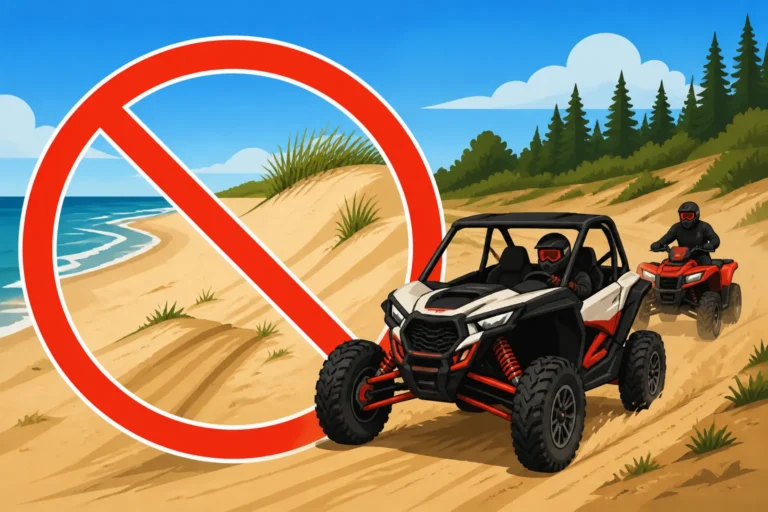
A provincial park’s boundaries do not give riders permission to travel anywhere inside them. Where off-road vehicles are allowed, use is limited to routes designated for that purpose. A visible track in the bush, an old access road or a path made by other riders is not proof that the route is open to ATVs or UTVs.
That distinction can be frustrating when a route appears on a phone map or seems to lead naturally toward a lake, campsite or another trail. But a line on a general map may show a road, hiking route, snowmobile corridor or informal track rather than a route approved for motorized riding. Treat the official park information and on-site signs as your guide, not the fact that someone else has driven there before.
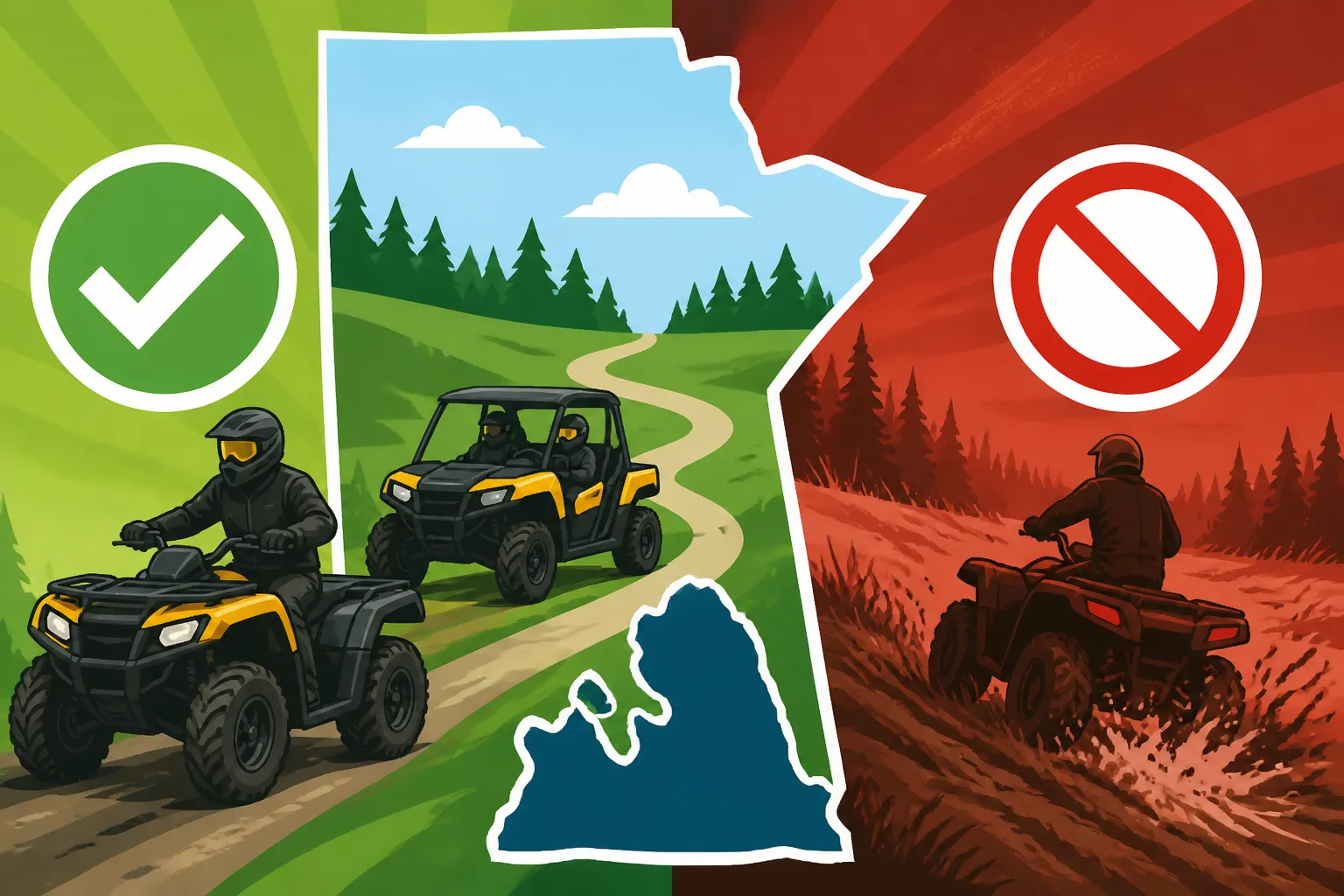
The practical rule is simple: if you cannot confirm that the route is designated for your machine, do not ride it until you have checked. [Manitoba Parks Allow Machines on Designated Routes Only] explains the basic restriction, while [Manitoba Parks With No Designated Route] is a useful reminder that some parks may not offer an approved route for ORVs at all.
Designation applies to the route, not just the destination
A legal destination does not make every way of reaching it legal. For example, a rider may be allowed to use a particular designated route but not the nearby shortcut through trees, wet ground or an unmarked access road. Likewise, being close to a permitted trail does not mean you can leave it to visit a viewpoint or meet someone in another part of the park.
Think of the route as a defined corridor, rather than a general invitation to explore. Stay on its travelled surface, follow posted directions and turn around if the route is closed or you cannot tell where it continues. This is especially important in bush areas where several tracks can look equally established.
If you are planning around a campsite, lake or trailhead, confirm the full route from your starting point to your destination. A map may show a route ending near a location without showing a legal connection all the way there. For broader background on riding beyond park boundaries, see [Manitoba Crown Land Riding Explained]; Crown land access rules do not replace park rules when you enter a provincial park.
How to check whether a route is open to your ATV or UTV
Start with park-specific information
Before loading up, look for information tied to the exact provincial park you plan to visit. Use official park maps, current notices and guidance from the park office or staff. A general map of Manitoba, an outdoor recreation app or a map layer showing roads may not identify which routes are designated for ORVs.
Check that the information is for the right park and the right type of use. A route that is open to one kind of traffic may not be open to your ATV or side-by-side. Also look for conditions that change access, such as temporary closures, construction, fire restrictions or seasonal limits. [Manitoba Park Trail Conditions Pages] and [Manitoba Park Trail Closures] are useful topics to review when you are checking what may have changed before a ride.
Apps can help with orientation, but they should be treated as supporting tools rather than permission to ride. For instance, onX Offroad may help you review mapped terrain and plan where to look, but a displayed line alone does not confirm that a route is officially designated or currently open. Cross-check it against the park’s own information and signs.
Read signs at the trailhead and along the route
When you arrive, pause before unloading. Read the signs at the entrance, parking area and trailhead, and check for information about vehicle types, closures, direction of travel or other restrictions. A quick look while everyone is eager to get moving can prevent a frustrating unload-and-turn-around later.
Signs farther along the route matter too. A closure notice or restriction may apply to only part of a route, so do not assume that a trailhead sign tells you everything about conditions ahead. If a sign conflicts with an older printed map or an app, follow the posted restriction and ask park staff for clarification before continuing.
Take a photo of a sign or map when that helps your group remember the route, but do not rely on a photo from a previous visit as proof that access is unchanged. [Reading the Trailhead Sign Before You Unload] offers a useful approach to that final on-site check. For a larger trip, [Manitoba Trail Conditions Before You Haul] can help you think through what to verify before towing to a riding area.
| What you are checking | What to confirm | What not to assume |
|---|---|---|
| Park map | The route is identified for ORV use | Any mapped road is open to ATVs or UTVs |
| Vehicle type | Your machine is permitted on that route | ATV access automatically means UTV access |
| Current conditions | Closures and seasonal notices are clear | A route was open on a previous visit |
| Trailhead signs | Directions and restrictions match your plan | The first sign is the only notice that matters |
| Phone map or app | It helps with orientation and route planning | A mapped line is official authorization |
Staying on the route during the ride
Follow the approved corridor even when a shortcut looks harmless
Shortcuts are tempting when a group is trying to catch up, avoid a puddle or reach a nearby feature. In a park, leaving a designated route can take riders into sensitive ground or an area closed to motorized use. A faint track through brush may look convenient, but it could be an unauthorized trail or a route used for a different purpose.
If an obstacle makes the designated route difficult, do not create a detour around it. Stop where it is safe, assess the situation and decide whether turning back is the responsible option. A detour can widen the disturbed area, damage vegetation or lead your group farther from a permitted route than expected.
Wet conditions make this judgment even more important. A muddy section may invite riders to fan out and search for firmer ground, but that can quickly turn one narrow route into several damaged tracks. If the route is unsafe or impassable, turn around rather than pushing into nearby terrain. [Manitoba Sensitive Areas to Avoid] covers why certain landscapes deserve extra care.
Do not treat other trails as substitutes
Parks can contain hiking trails, canoe routes, service roads and corridors used by other recreation groups. Their presence does not make them ATV or UTV routes. Stay on the route specifically designated for your vehicle, and do not follow a track simply because it looks maintained or has fresh tire marks.
Shared-use areas also call for courtesy. Reduce speed when visibility is limited, give other trail users room and avoid startling people or wildlife. If the route is narrow, wait for a safe place to pass rather than pushing another user off the trail.
This is where route planning helps. You can mark a confirmed route in a mapping tool, including onX Offroad, and share the same plan with everyone in the group. Still, keep the official park map or information available and be ready to change plans if signs or staff identify a closure. The app can help you follow your plan; it cannot turn an undesignated track into an approved route.
Planning a legal, low-stress park ride
Confirm the whole outing before you tow
A little preparation can save a long drive with a trailer only to discover that your intended route is unavailable. Before leaving home, confirm that the park has a designated route for the vehicle you plan to bring, that the route is open and that your entry and parking plan make sense. Check whether you need a separate park vehicle permit, since park access requirements and machine registration are different things. [Manitoba Park Vehicle Permit Cost] is a relevant topic when budgeting for a park visit.
Make sure everyone in the group understands the route boundaries and the turn-around plan. This matters especially when riders have different experience levels or when a group includes several machines. Agree that nobody will take an unmarked shortcut to catch up, and choose a place to regroup if the party becomes separated.
It is also sensible to save the official map or park details for offline access where possible. Cell coverage can be inconsistent, particularly away from busier areas. onX Offroad or another mapping app may help with navigation, but carry a reliable reference to the park’s route information too. If the app’s display and posted signs disagree, stop and resolve the difference before proceeding.
Recheck for closures and changing conditions
A route that was open when you first planned the trip may be affected by changing conditions. Weather, fire restrictions, maintenance or a park closure can alter access. Recheck notices shortly before you leave and again when you arrive. If you are uncertain about a posted restriction, ask park staff rather than relying on assumptions or second-hand advice.
Seasonal restrictions deserve particular attention. Fire-related limits may affect travel or access in specific areas, and conditions can change quickly during a dry period. Review [Manitoba Fire Season Riding Restrictions] and any park-specific notices before setting out. If a closure applies, do not ride around a barrier or use a nearby informal track to get past it.
If no designated route is open, choose another legal riding area rather than improvising inside the park. A changed plan can be disappointing, especially after towing a machine a long distance, but staying off closed or undesignated routes protects the landscape and keeps your group on the right side of the rules. When in doubt, confirm the route with the park before unloading.
Disclaimer
This article is for general informational purposes only and does not constitute professional advice. Laws, prices and regulations vary by location and change over time. Consult a qualified professional for guidance on your specific situation.