Manitoba Group Ride Planning
A Manitoba group ride can go sideways before anyone reaches the trail: one trailer arrives late, the route assumes more fuel range than a machine has, or riders discover a closure after unloading. A little planning helps prevent those headaches. This guide covers choosing a suitable area, coordinating people and machines, preparing for changing conditions, and keeping a group together on the ride.
Choose a route that works for the whole group
Match the ride to the least experienced rider
Start with the people, not the map. A route that feels easy to a regular bush rider may be stressful for someone on their first group outing, a young rider, or a passenger who is new to a UTV. Ask participants about their experience, machine type, comfort with mud or uneven ground, and how long they can comfortably ride.
Agree on the kind of day you want before picking a trail. Is this a relaxed outing with frequent stops, a longer loop with a lunch break, or a skills-building ride on familiar ground? If the group has a wide range of experience, plan around the least experienced rider rather than expecting them to keep up. A slower pace and a shorter route are usually better than repeatedly asking someone to push beyond their comfort zone.
Be specific when you describe the plan. “A moderate ride” can mean different things to different people. Explain whether the route may include rough ground, narrow sections, water, sand, or long stretches without an easy exit. For a family ride, confirm that every young rider’s machine, supervision arrangements, and riding plan meet applicable requirements. See [Manitoba Supervision Requirements for Young Riders] and [Manitoba Rules for a Child Passenger] when children are part of the group.
Choose a region and confirm access
Manitoba has a mix of club trails, backcountry riding areas, park routes, and other places where access depends on permission or local rules. Areas around Duck Mountain, the Agassiz region, Belair Forest, Sandilands, and Lac du Bonnet may come up in trip planning, but a familiar place name is not proof that a particular route is open or suitable for your machines. Conditions and access can vary by trail, land status, season, and local restrictions.
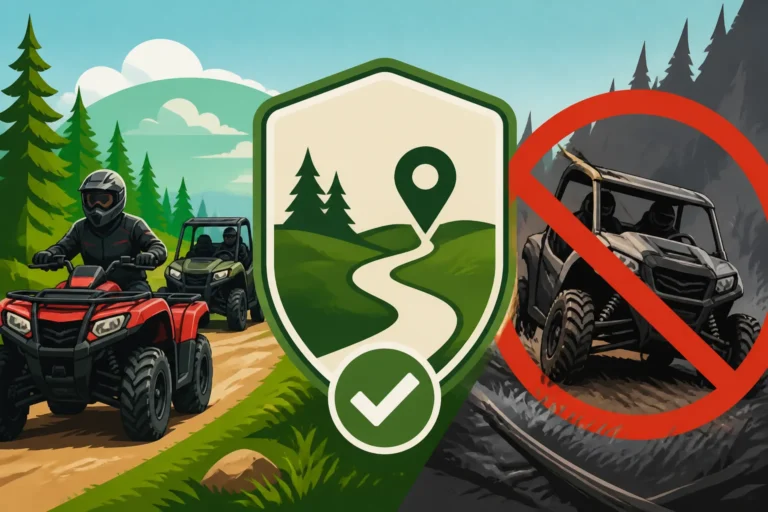
Check the route with the people closest to it: the relevant club, land manager, park office, municipality, or community council. Ask whether the route is open to your machine type, whether there are temporary closures, and whether parking or staging is available. If your plan involves Crown land, a lease, or private property, confirm the applicable access and permission requirements rather than assuming that a visible track is open to everyone.
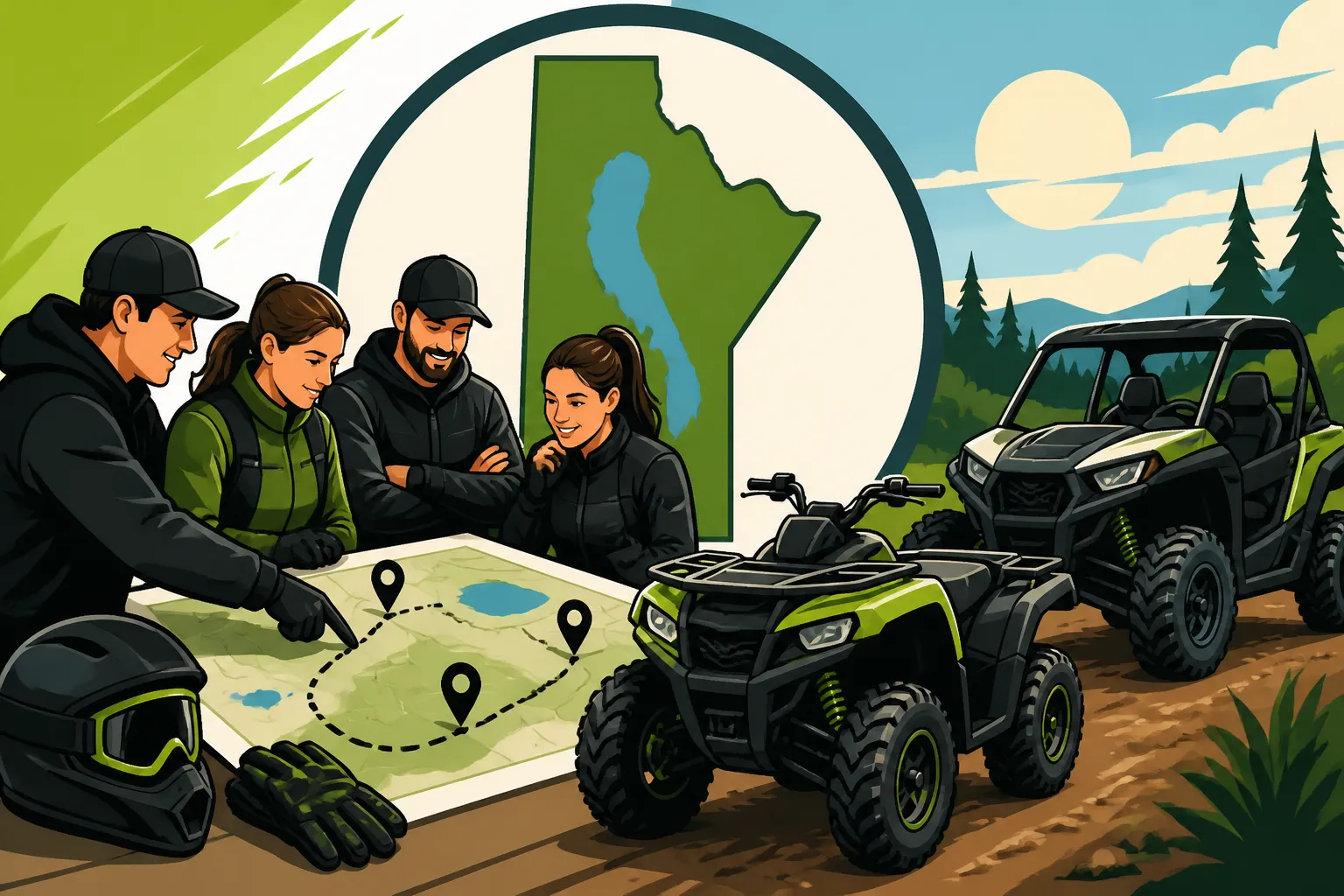
Maps are useful planning tools, not permission slips. An app such as onX Offroad can help you review a route and discuss possible navigation options with the group, but confirm access and current conditions through the responsible local source. For additional background, read [Manitoba ATV Trails: Club Ground and Crown Land] and [Manitoba Crown Land Access Rules].
Build a route with a sensible turnaround point
A group ride should have a clear start, a planned destination or loop, and a point where the group can turn back if the day is taking longer than expected. Avoid planning a route based only on the distance shown on a map. A short distance over rough, muddy, or unfamiliar terrain can take much longer than riders expect, especially when the group stops to regroup or deal with a minor mechanical issue.
Plan a conservative version of the ride and treat extra distance as optional. Decide in advance where you will shorten the route if the group is behind schedule, the weather changes, or a machine is having trouble. Identify likely stopping places and potential exits where the group can safely pause without blocking a trail or access point.
If the route crosses several land types or jurisdictions, verify each section. A trail that appears continuous on a screen may not mean continuous legal access on the ground. Useful local planning topics include [Manitoba Trail Conditions Before You Haul] and [Manitoba Crown Lease Access Rules].
Organize people, machines, and meeting logistics
Set a realistic group size and assign roles
A large group can be enjoyable, but it is harder to keep together and takes longer to regroup. Consider splitting a large outing into smaller riding groups, particularly if participants have very different speeds or experience. Make sure everyone knows which group they are in, who is leading it, and who is bringing up the rear.
Assign simple roles before leaving the staging area:
- Ride leader: Knows the planned route, sets the pace, and decides when to stop or turn back.
- Sweep rider: Rides last, checks that nobody has been left behind, and alerts the leader if the group needs to stop.
- Navigation backup: Has the route available independently and can help if the leader’s device fails.
- Support contact: Knows the day’s plan and when to expect an update, especially if the ride is remote.
One person can take more than one role on a small ride, but avoid making the same rider responsible for everything. The leader should be able to focus on riding, not constantly check whether every participant has fuel, directions, and a working phone.
Establish a rule that nobody leaves the group alone without telling the leader. If a rider needs to stop, the group should pull over at a safe location and regroup rather than letting the line stretch out of sight. For longer rides, talk through how you will communicate if mobile reception is poor. Do not assume every route has reliable cell service.
Choose meeting and staging details carefully
Agree on one meeting point and one departure time. Share the exact location in writing, along with any useful landmarks, parking instructions, and a backup contact method. If riders are coming from Winnipeg, Brandon, Steinbach, Dauphin, or another community, allow enough travel time for trailers, fuel stops, and loading delays.
Confirm that the staging area can accommodate the group’s trucks and trailers. A narrow pull-off that works for one vehicle may not work for a convoy. Avoid blocking gates, driveways, trail access, or other users’ parking. If you are unsure whether a staging spot is appropriate, check with the local club or land manager before inviting a large group.
Agree on what “ready to ride” means. For example, everyone should have unloaded, completed a basic machine check, gathered personal gear, and heard the route briefing before departure. That prevents the familiar scene where the first riders are waiting on the trail while someone is still searching for gloves or adjusting a trailer strap.
Decide what everyone needs to bring
Share a packing list before ride day, especially with newer participants. Riders should bring suitable protective gear, water, food, weather-appropriate layers, and any personal medication they may need. The leader should also know who is carrying basic repair supplies, first aid items, and a tool kit suited to the machines in the group.
| Planning item | What to decide before the ride | Why it matters |
|---|---|---|
| Route | Start, planned loop, turnaround point, and shorter option | Gives the group a shared plan and an easy way to adjust |
| Fuel | Expected range and refuelling plan | Prevents one machine from dictating an unplanned stop far from services |
| Navigation | Primary map and an independent backup | Helps if a device loses power or the group separates |
| Communication | How riders will stop, regroup, and contact help | Avoids confusion when riders cannot hear or see one another |
| Staging | Parking, trailer space, and departure time | Reduces congestion and late starts |
| Roles | Leader, sweep, and backup navigator | Makes responsibilities clear before something goes wrong |
| Conditions | Closures, weather, fire restrictions, and local access | Helps keep the plan lawful and appropriate for the day |
Prepare for Manitoba conditions and riding rules
Check conditions shortly before departure
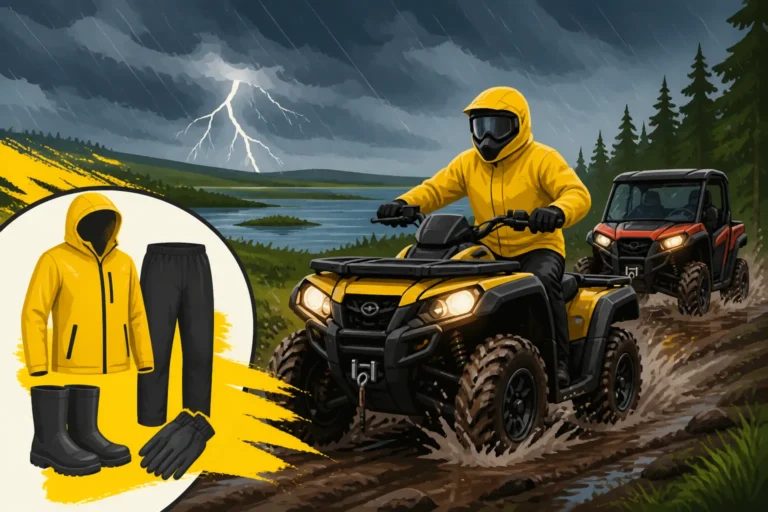
A route you planned weeks ago may not be the route you can ride on the day. Weather, rain, fire risk, trail work, seasonal access, and local closures can all affect a trip. Check relevant trail or park information close to departure, then check again before unloading if conditions may have changed during the drive.
Ask whether recent rain has made a route especially difficult or vulnerable to damage. A muddy section may be passable to one machine but cause trouble for a group with varied tires, experience, and equipment. If the trail is too wet or a closure is in place, choose another route rather than widening the trail, bypassing a barrier, or continuing through sensitive ground. Planning with local clubs can help you understand what is happening on the corridor; [Manitoba ATV Clubs Worth Joining] is a useful place to continue learning about club involvement.
Fire restrictions deserve particular attention during dry periods. Confirm whether the route or area is affected by an order or closure, and follow rules about equipment, campfires, and travel. Do not treat an old screenshot or saved route as confirmation that access remains open. Review [Manitoba Wildfire Season Rules for Riders] and [Manitoba Area Closures During Fire Season] as part of your planning.
Check registration, insurance, and required documents
Before the ride, remind everyone to confirm that their machine is properly registered where required and that they can carry the required documentation. Riders should also check what insurance applies to their machine and what proof they need to have available. These details are easy to overlook when people are focused on the route and their trailer checklist.
Do not assume that a group ride, private property, or trail setting automatically removes registration or operating requirements. Rules can depend on the machine, location, and circumstances. If participants are visiting from another province or country, they should confirm the requirements that apply to their machine and their home registration or insurance. The group organizer can remind people to check, but each rider should be responsible for their own documents.
The leader should avoid presenting legal guidance as a substitute for checking official requirements. If someone is unsure about registration or documents, resolve the question before the ride instead of hoping it will not matter on the trail. See [Carrying Your Registration Certificate on Every Ride] and [Manitoba Insurance Rules for Visitors].
Set expectations for responsible trail use
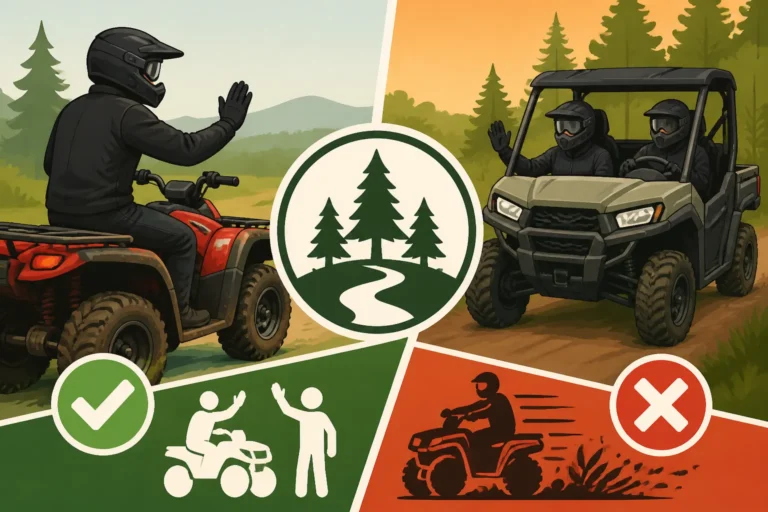
A group ride affects more than the riders in the group. Other trail users, nearby residents, landowners, wildlife, and the condition of the route all matter. Keep machines on routes where access is permitted, ride at a pace that allows control, and give other users room to pass. Follow signs and barriers, and do not create a new path around a muddy spot or obstruction.
Quiet, predictable riding matters near homes and cabins. Slow down when passing people, livestock, or other machines, and avoid lingering noisily near a residence. Pack out litter and leave gates, signs, and trail features as you found them. If you find damage or a problem that could affect other riders, report it to the appropriate club or land manager rather than trying to make an unauthorized repair.
A group leader can make these expectations part of the pre-ride briefing. It is easier to prevent an avoidable conflict when everyone hears the same ground rules before the engines start. For additional etiquette guidance, read [Manitoba Trail Etiquette Locals Expect].
Keep the ride comfortable, flexible, and safe
Use clear regrouping habits
Agree on regrouping points before setting off. These might be trail junctions, designated rest areas, or other safe places where everyone can pull over without blocking the route. Do not make every rider guess whether the group is stopping or continuing. The leader should give a clear signal or communicate the plan at each stop.
If the group becomes separated, riders should follow the agreed procedure instead of improvising. For example, the group may decide that the leader waits at a planned junction while the sweep checks the last known section. The right procedure depends on the terrain, visibility, and communication options, so discuss it before entering a remote stretch. Nobody should take a risky shortcut or ride faster than is safe just to catch up.
Keep the pace steady rather than fast. Sudden acceleration and braking can create a ripple through a line of machines, especially where visibility is limited. Leave enough room to react to dust, loose ground, or a rider stopping ahead. Newer participants often appreciate being told explicitly that they can ask for a break without holding up the group.
Plan breaks, fuel, and a comfortable finish
A good ride plan includes more than trail distance. Build in time for breaks, food, water, photos, and minor delays. Groups naturally move more slowly than solo riders because everyone needs to stop, regroup, and check on one another. If the route is unfamiliar, allow additional time rather than scheduling the day so tightly that a small delay becomes stressful.
Set a fuel plan that considers the machine with the shortest practical range, not just the largest tank in the group. Riders should arrive with fuel topped up as agreed, and the leader should identify whether refuelling is possible along the plan. Do not rely on reaching a service station without confirming it is accessible and open when needed.
Choose a turnaround time as well as a turnaround location. If the group reaches a point later than expected, shortening the route may be safer than trying to finish the original plan in fading light or worsening weather. Share the expected return time with someone who is not riding, along with the meeting area and the plan for contacting them if the group is delayed.
Make a final pre-ride briefing
A short briefing can prevent confusion once the group is spread along a trail. Keep it practical and include:
- The route, turnaround point, and any planned alternate.
- The leader, sweep, and backup navigator.
- The regrouping rule and what to do if someone stops.
- The expected pace, break plan, and fuel assumptions.
- The weather or access concerns the group should watch for.
- The return-time plan and who outside the group knows it.
Give people a chance to raise concerns before departure. Someone may have a machine issue, a passenger who needs more frequent stops, or a reason to choose the shorter option. It is far easier to adapt at the staging area than after the group has travelled deep into an unfamiliar route.
If you use onX Offroad or another navigation app, make sure more than one person knows how to access the planned route. Keep devices charged and consider carrying a paper map for areas where reception may be unreliable. The app can support navigation, but it should not replace local access checks, a clear group plan, or good judgment on the trail.
Disclaimer
This article is for general informational purposes only and does not constitute professional advice. Laws, prices and regulations vary by location and change over time. Consult a qualified professional for guidance on your specific situation.