Manitoba Trails With Camping
A Manitoba ATV or UTV camping trip can go sideways before you leave the trailhead: a route may be open to machines while the nearby campsite is not, or a campsite may be bookable but unreachable by your planned trail. This guide explains how to match legal riding routes with authorized overnight spots, plan around Manitoba conditions, and avoid hauling your machine a long way for a campsite you cannot use.
Where to Find Manitoba ATV Trails With Camping
Start with a trail and campsite that are connected
For a ride-in camping trip, the important question is not simply whether a trail exists or whether a campground is nearby. You need to establish that your machine can legally travel the whole route to the overnight spot, and that camping is allowed at that exact location. A road, trail, campsite access road and shoreline can all have different rules.
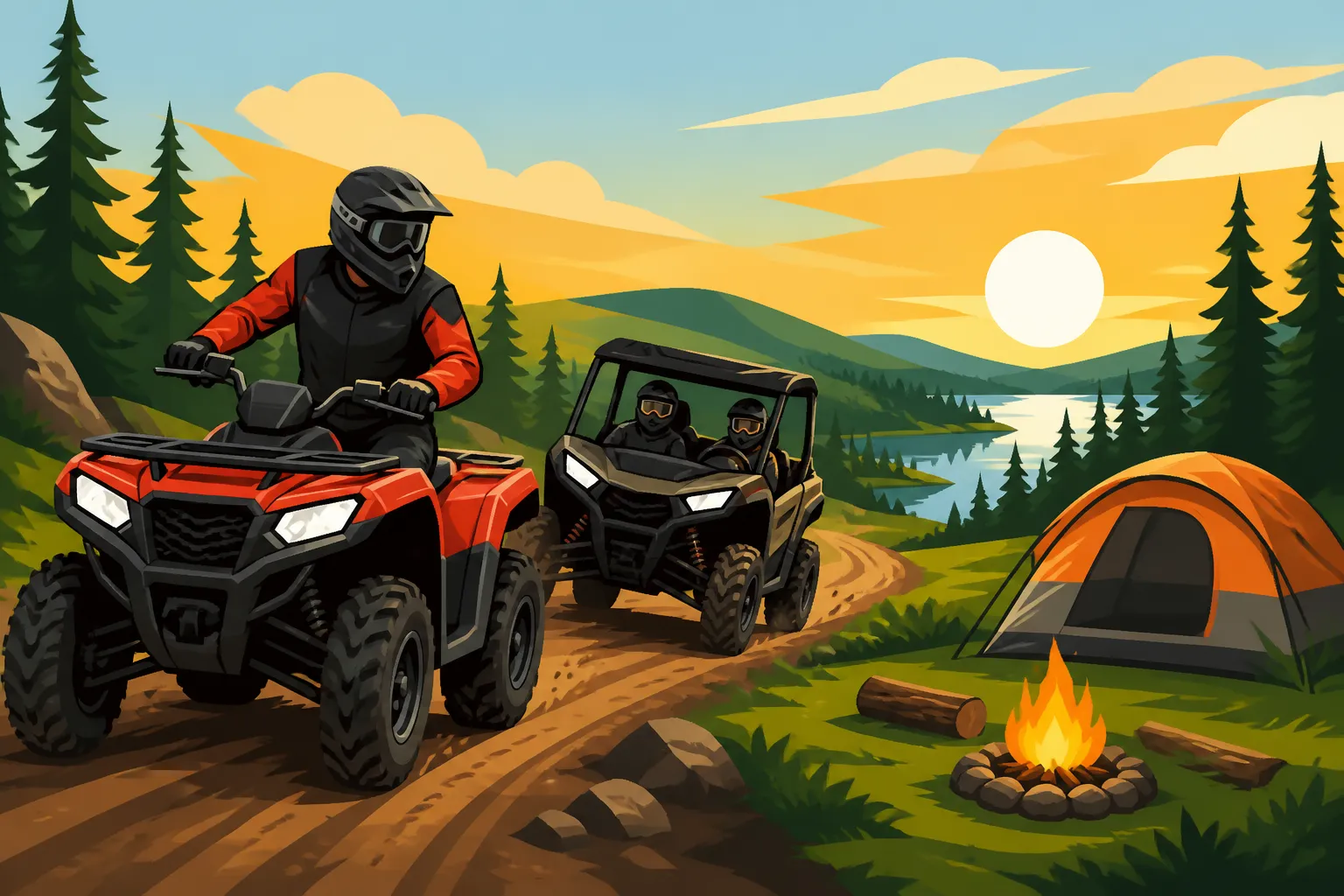
The Mossberry Trail in Duck Mountain is one Manitoba route associated with backcountry camping, including remote lakeside sites. It is a promising place to research if you want a ride with an overnight stop, but don’t treat that general description as confirmation that every section is open, every site is available, or every machine can reach it. Check route access, campsite details and current conditions before you go. [Booking a Backcountry Campsite on the Mossberry Trail] is a useful next read for planning that specific trip.
For other areas, begin with the local riding club, land manager or campground operator rather than relying on a map pin. Club trails may cross a mix of land types, and a route that appears continuous on a screen may pass through a section with separate access rules. The distinction between club ground, Crown land, leased land and provincial park land matters; [Manitoba ATV Trails: Club Ground and Crown Land] explains why it pays to identify who manages the land before you ride.
Understand the difference between a campground and backcountry camping
A developed campground can offer a defined site, facilities and an established check-in process. That can make it a practical choice for families or first-time camping riders, especially if you can leave your machine parked and use it only on permitted trails. But a nearby campground is not automatically an ATV campground. Ask whether you can bring the machine to your site, where it may be parked, and which routes are open to it.
Backcountry camping is a different kind of plan. A remote site may have fewer facilities, limited access and no nearby help if you arrive late or discover a problem. Confirm how the site is reached, whether reservations or permits are required, what you need to carry in and out, and whether the route is suitable for your machine and experience. Don’t assume that a campsite beside water is accessible from the trail just because it looks close on a map.
| Camping option | What to confirm before riding | Planning consideration |
|---|---|---|
| Developed campground | Whether ORVs may enter, park or travel on access roads | Check campground rules separately from trail rules |
| Designated backcountry site | Reservation or permit requirements, access route and facilities | Carry supplies for a more self-sufficient stay |
| Private land campsite | Permission from the landowner and the route to reach it | Get clear permission for both riding and camping |
| Crown land or leased land | Land status, access restrictions and any required consent | A public-looking route may cross land with an occupier or leaseholder |
When the campsite sits in or near a provincial park, be especially careful about assuming that ordinary park roads or hiking trails are open to an ATV or UTV. Manitoba parks allow machines on designated routes only. Check the relevant park information for the precise route and site rather than relying on a general park map. [Manitoba Parks Allow Machines on Designated Routes Only] is a good starting point for understanding that distinction.
How to Check Access, Campsites and Route Conditions
Verify every part of the route, not just the destination
A reliable trip plan follows the route from the unloading point all the way to camp. Identify the trailhead, the riding corridor, any connecting roads or crossings, the campsite entrance and the return route. If your plan uses a club trail, check with the club about current access. If it crosses Crown land or leased land, confirm the applicable access conditions before treating it as a public route. [Manitoba Crown Land Access Rules] can help you understand why land status and permission matter.
A digital map can help you compare route options and save a plan for offline use. Some riders use onX Offroad to review mapped routes and organize a ride, but a mapped line is not proof that a trail is legally open or that camping is allowed. Use mapping tools as planning aids, then check the relevant club, park, land manager or campsite operator for the rules that apply to your exact trip. Save a second route in case a section is closed or unsuitable.
Also check whether the trail is intended for your machine. A route that works for a small ATV may be too narrow, rough or restricted for a wide side-by-side. Confirm the machine types allowed, any seasonal restrictions, and whether your planned route includes gates, bridges or other features that could affect access. The more remote the campsite, the more important it is to settle those questions at home instead of at the trailhead.
Check conditions close to departure
Trail conditions can change after rain, high water, wind damage or local maintenance work. A route that was manageable last weekend may be deeply rutted or blocked by fallen trees now. Before hauling, check updates from the trail club or land manager and look for closures or notices affecting the campsite and its access route. [Manitoba Trail Conditions Before You Haul] covers the checks worth making before you commit to a long drive.
A route app can still be useful here. You might use onX Offroad to review your saved route and note junctions, but confirm any important condition or access detail with the people responsible for the trail. Keep an offline map or paper backup, particularly if your planned ride passes through areas with weak or no cell service. A campsite with no signal can be lovely; discovering that your only route information is stuck behind a loading screen is less so.
Before setting out, share your itinerary with someone who is not on the ride. Include the trailhead, campsite, expected return time and a plan for what to do if you are delayed. For a remote overnight trip, agree on a check-in time and carry basic first-aid supplies, weather-appropriate clothing, food and water. Do not count on being able to reach help quickly just because the ride looks short on a map.
Confirm camping and fire rules separately
A campsite reservation or landowner’s permission does not necessarily answer every question about fires, food storage, waste or machine use. Read the site rules and check for current restrictions before leaving. Fire conditions can change, so check Manitoba’s official restrictions information close to departure rather than relying on what was allowed during an earlier trip. [Manitoba Fire Ban Lookups] offers a focused guide to checking those restrictions.
Pack as though you will need to leave the site as you found it. Bring bags for garbage, keep food secured, and avoid disturbing vegetation or shoreline areas. If the campsite has a toilet or fire ring, use it according to the posted instructions. Where facilities are absent, follow applicable land-manager guidance for human waste and campfires; don’t improvise in a sensitive area.
Noise is another part of being a considerate camping rider. A group arriving late, revving machines near tents or riding repeatedly past a quiet site can spoil the experience for other campers and create friction with nearby residents. Park where directed, keep the group together, and shut machines down once you are at camp. [Manitoba Trail Etiquette Locals Expect] has more on sharing routes respectfully.
Planning the Ride and Overnight Stay
Choose a trip that fits your group
Be honest about how far your group can comfortably ride in a day. Distance on a map does not account for mud, rough sections, navigation stops, mechanical issues or time spent letting other trail users pass. For a first overnight ride, a shorter route with a confirmed campsite and a straightforward return is often more enjoyable than an ambitious loop with several uncertain connections.
Match the route to the least experienced rider and the least capable machine in the group. A side-by-side may need more clearance and room to turn than a quad, while younger riders may need closer supervision and more frequent breaks. A plan that assumes everyone can maintain the fastest rider’s pace tends to create stress, especially when the group is carrying camping gear.
Think through the practical details before you pack. Decide how you will carry water, food, clothing and sleeping gear without overloading the machine. Check that cargo is secured, keep heavier items low where practical, and leave space for rain gear and emergency supplies. If you are bringing a trailer or towing anything, verify that the machine, route and campsite access are suitable for it.
Build in time for Manitoba’s changing conditions
A long summer evening can make a trip feel less urgent, but don’t plan to reach a remote campsite at the edge of darkness. Leave time for a slow section, a wrong turn, a flat tire or a weather change. Set a turnaround time that lets you return safely if the route becomes difficult or the campsite access is blocked.
Weather can affect both comfort and access. Rain may make some ground slippery or soft, while wind and temperature drops can make an exposed lakeside site uncomfortable. Check the forecast for the route and campsite area, not only the town where you start. Pack layers and rain protection even when the day begins warm and clear.
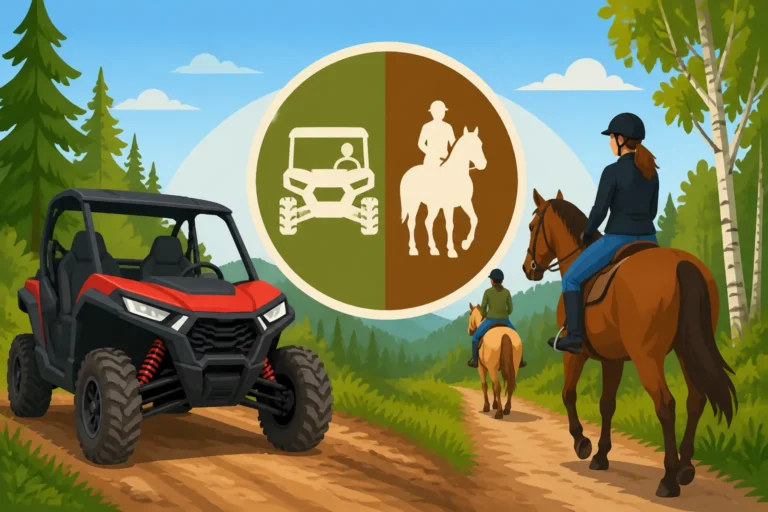
Wildlife and other trail users are part of the experience. Slow down where visibility is limited, give people and animals room, and avoid disturbing nesting or sensitive habitat. If a route is shared with hikers, horses or other riders, reduce speed and pass carefully. A relaxed pace is not wasted time; it is often what makes an overnight ride feel like a trip rather than a race.
Use a final pre-departure checklist
The day before departure, check that the route and campsite are still open and that your reservation or permission is in order. Confirm the correct trailhead, unloading location, parking arrangements and any instructions for arriving at the campsite. If a local club or land manager has posted an update, revise your route instead of assuming the original plan still applies.
A simple checklist can prevent the frustrating last-minute surprises:
- Confirm the trail is open to your type of ATV or UTV.
- Verify that camping is authorized at the specific site and that any required booking or permit is complete.
- Check the whole route, including connectors and campsite access.
- Review trail conditions, weather and fire restrictions.
- Save maps for offline use and carry a backup.
- Tell someone your itinerary and expected return time.
- Secure camping gear and pack food, water, first aid and weather layers.
- Make a backup plan in case the route or campsite is unavailable.
If you use onX Offroad or another mapping app, save the route before leaving home and make sure you know how to use it without a cell connection. Then treat it as one part of your preparation, not as the final authority on closures, land permission or campsite rules. That small distinction can save a long drive and help keep a good ride from turning into an avoidable access problem.
For broader planning, [Manitoba ATV Trail Map Downloads] can help you explore mapping options, while [Manitoba Trailheads With Trailer Parking] is useful if your trip depends on finding a suitable place to unload. Check details directly with the relevant club, park or site operator before you travel, since trail access, facilities and campsite availability can differ from one location to another.
Disclaimer
This article is for general informational purposes only and does not constitute professional advice. Laws, prices and regulations vary by location and change over time. Consult a qualified professional for guidance on your specific situation.