Cannabis Barred in or on a Machine
Navigating the rules for off-road vehicles (ORVs) in Manitoba can sometimes feel like trying to find your way through a new, dense bush trail without a map. Add to that the complexities of cannabis laws, and suddenly, what might seem like a simple enjoyment can quickly land you in serious trouble. This guide is here to clear the air, helping you understand exactly where cannabis stands when you're operating an ATV or UTV in our beautiful province.
Understanding the Law: Cannabis and Off-Road Machines
It's easy to assume that because cannabis is legal for recreational use in Canada, you can pretty much enjoy it wherever and whenever you please, much like alcohol was once perceived by some. However, when it comes to operating an off-road vehicle in Manitoba, the rules around cannabis are crystal clear and quite restrictive. The core principle is that just as you cannot operate your ORV while impaired by alcohol, you cannot do so while impaired by cannabis. Beyond impairment, there are also strict rules about possessing cannabis in or on your machine, even if you're not actively consuming it or aren't impaired.
The law views an ORV operator under the influence of cannabis no differently than a driver of a regular vehicle on a paved road. The dangers are obvious: slowed reaction times, impaired judgment, reduced coordination, and distorted perception. These are all recipes for disaster, not just for the operator, but for passengers, other trail users, and even wildlife. Think about navigating a tricky rock garden, crossing a fast-moving creek, or making a split-second decision to avoid an unexpected obstacle – these situations demand your full, unimpaired attention.
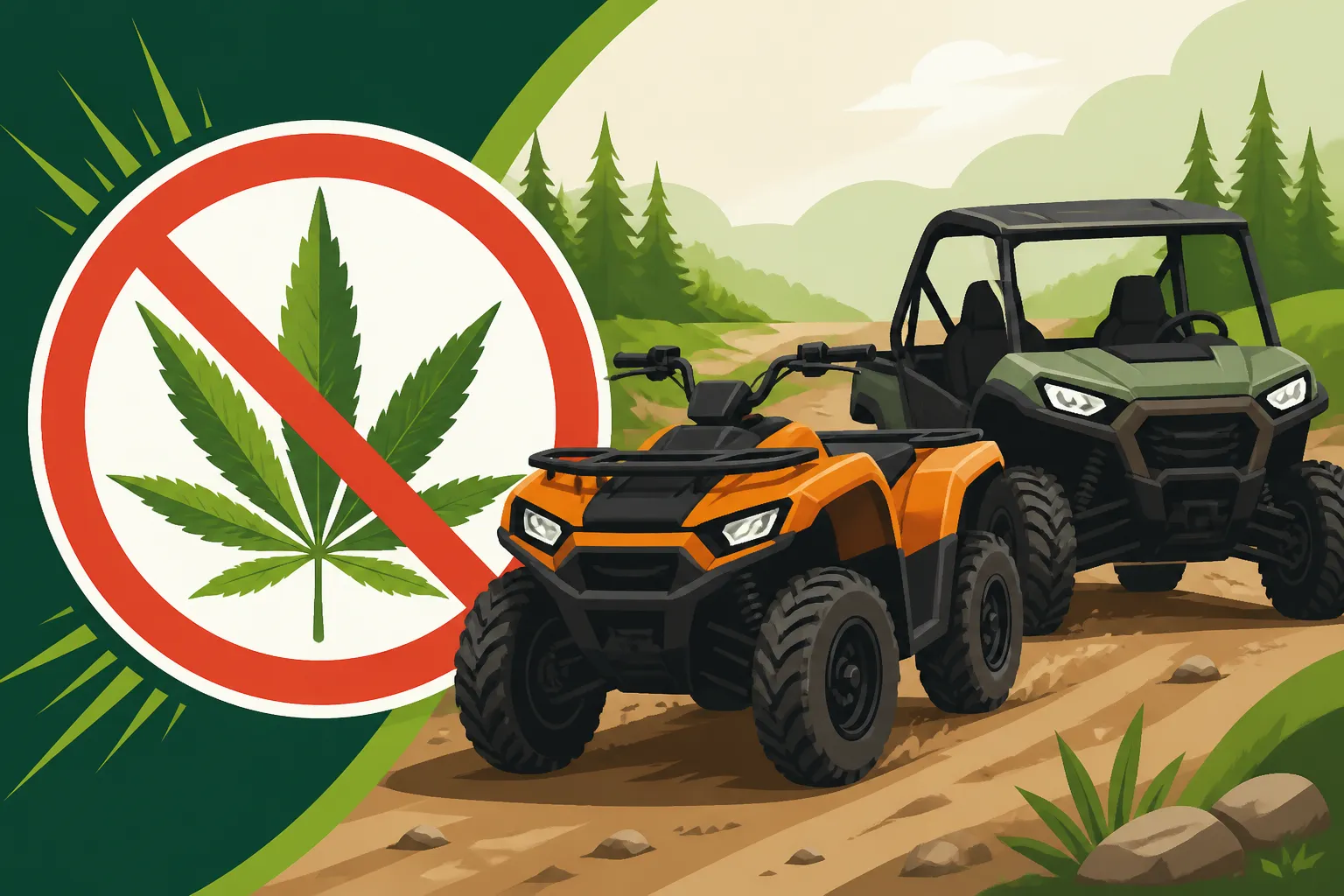
Furthermore, it's not just about being impaired. Manitoba's Off-Road Vehicles Act (ORV Act) is designed to ensure safety and responsible use, and that includes specific prohibitions on cannabis. You simply cannot have cannabis in your immediate possession, or anywhere accessible within the machine, while operating it on any public land, trail, or even crossing a public road. This means no cannabis in your jacket pocket, no stash in the glove box of your side-by-side, and certainly no smoking a joint while you're behind the handlebars. The law aims to prevent the risk of impaired operation entirely by restricting its presence in the first place.
Where Cannabis is Explicitly Prohibited on an ORV
Let's break down the "where" because this is where many riders get tripped up. It's not just about public trails. The rule generally applies to any situation where your ORV is being operated or is accessible on public land. This includes designated ATV trails, Crown land where ORVs are permitted, municipal lands, and any road crossing.
Imagine you're planning a weekend camping trip to the Duck Mountain Provincial Park, and you've packed your side-by-side to explore the [Mossberry Trail's 30 Kilometres in Manitoba]. While you might have cannabis legally purchased for consumption back at your campsite, the moment you put it in or on your ORV to transport it, you could be breaking the law. Even if it's securely stored in a closed bag in a cargo box, an officer may interpret "in or on a machine" broadly, especially if it's easily accessible. The safest bet is to keep cannabis completely separate from your ORV if you're transporting it to a private location or campsite where consumption is permitted. This often means transporting it in a separate, registered road vehicle, not on the ORV itself.
The regulations are designed to be unambiguous to prevent any loopholes or subjective interpretations. This means that if you're pulled over by a conservation officer or RCMP on a trail, and they find cannabis in your machine, you could face penalties regardless of whether you seem impaired at that moment. The focus is on the presence of the substance itself in an ORV operating environment. This is a critical distinction that many riders overlook, thinking that "as long as I'm not high, it's fine." It's not.
Consequences of Cannabis Possession or Impaired Riding
The penalties for violating cannabis rules while operating an ORV in Manitoba are not trivial. These aren't just slaps on the wrist; they can significantly impact your life, your wallet, and your ability to enjoy ORV riding in the future. The law treats impaired driving—whether in a car or on an ORV—with the seriousness it deserves due to the inherent dangers.
If an officer determines you are operating your ORV while impaired by cannabis, you could face charges under the Criminal Code of Canada, just like impaired driving in a car. This can lead to heavy fines, licence suspensions (not just your ORV operating privileges, but potentially your driver's licence for road vehicles too), and even jail time. Your ORV could be seized, and you'll incur towing and impoundment fees. Beyond the immediate legal repercussions, a criminal record can have long-lasting effects on employment, travel, and even insurance rates. For example, similar to how [Manitoba Impaired Riding Penalties] are severe for alcohol, they are equally so for cannabis.
Even if impairment isn't proven, but you're found with cannabis in or on your machine in a prohibited manner, you could face significant fines under the provincial ORV Act. These fines can range from hundreds to thousands of dollars, depending on the specifics of the offence and any prior infractions. There's also the very real possibility of your ORV being impounded, leading to further costs and inconvenience. It's not just about avoiding a criminal record; it's about avoiding substantial financial burdens and the loss of your riding privileges. The message is clear: the risk is simply not worth it.
Ensuring a Safe and Legal Ride Every Time
So, how do you make sure you're always on the right side of the law when it comes to cannabis and your ORV in Manitoba? The answer is quite simple: assume zero tolerance when you're anywhere near your machine. This means no cannabis in your machine, no cannabis in your system if you're going to ride, and absolute clarity on consumption rules when you're off the trails. This principle helps avoid any confusion and ensures that your focus is entirely on the ride and the trail ahead.
It's about personal responsibility and understanding that the joy of ORV riding comes with the responsibility of upholding safety standards for everyone. This includes taking care of your machine, wearing appropriate safety gear, and ensuring you're in the right frame of mind and body to operate it. Whether you're upgrading your suspension with parts from a reputable supplier like SuperATV or simply doing your pre-ride check, safety must be paramount.
Think of it this way: your ORV is a powerful piece of equipment that requires skill, focus, and quick reflexes. Anything that compromises these elements—be it cannabis, alcohol, or even certain prescription medications—is a hazard. By making a conscious decision to separate cannabis use from your ORV activities, you're not just avoiding legal trouble; you're actively contributing to a safer riding community for everyone.
Best Practices for Avoiding Trouble
To further minimize any risk, consider these practical steps. First and foremost, if you choose to consume cannabis, do so responsibly and completely separate from any ORV activity. This means no cannabis at the trailhead, no cannabis at a designated riding area, and definitely no cannabis before or during a ride. Plan your consumption for times when you are absolutely certain you will not be operating your ORV, and ensure enough time has passed for any impairment to wear off completely. Just like with alcohol, impairment can linger, and you might feel fine but still be over the legal limit for safe operation.
Second, if you're transporting cannabis to a legal private location (like your cabin or a friend's private property where consumption is permitted), always keep it in a secure, sealed container and transport it in a traditional, registered road vehicle, not on your ORV. Ensure it's out of reach of the operator and passengers, ideally in the trunk or a locked cargo compartment of your truck or SUV. This creates a clear distinction and minimizes any potential misunderstanding with law enforcement. Remember, carrying your [Manitoba Registration Cards Carried at All Times] is crucial, but it doesn't excuse illegal substances.
Third, educate yourself and your riding buddies. Share this information with anyone you ride with. A group is only as safe as its least responsible member. Ensuring everyone understands the rules can prevent a single person's mistake from affecting the entire group's day or even putting lives at risk. Encourage open conversations about responsible use and the importance of adhering to the law.
Practical Steps to Stay Safe
| Action | Description | Legal Impact | Safety Impact |
|---|---|---|---|
| No Cannabis in/on ORV | This includes any part of your ATV or UTV, even if it's stored and sealed. Keep it completely separate if transporting to a legal consumption site. | Avoids provincial ORV Act fines and potential impoundment for possession. | Prevents any temptation or accidental consumption while operating the machine. |
| No Impaired Riding | Absolutely zero consumption of cannabis (or alcohol) before or during ORV operation. Allow ample time for any effects to wear off. | Avoids Criminal Code charges, heavy fines, licence suspension, and jail time. | Crucial for maintaining full cognitive and physical ability, preventing accidents. |
| Transport Separately | If transporting cannabis to a private, legal consumption location, use a registered road vehicle (car, truck) with cannabis securely sealed and out of reach of occupants. | Confirms intent to consume off-trail, avoids ORV-specific possession penalties. | Maintains clear separation between ORV activity and cannabis. |
| Educate Your Group | Discuss these rules with your riding companions to ensure everyone is aware and complies. | Promotes collective adherence to the law, reducing group risk. | Fosters a safer riding environment for all members of the group. |
| Stay Informed | Keep up-to-date with any changes to provincial ORV or federal cannabis laws. Laws can evolve, and ignorance is not a defence. | Ensures ongoing compliance with current legislation. | Adapts safe practices to reflect current legal requirements. |
It's also a good idea to ensure your machine is in top shape. Regular maintenance, checking your tires, brakes, and lights (especially if you plan on [Manitoba Rules for Riding After Dark]) is part of responsible riding. You wouldn't want mechanical failure to compound a bad situation. Even something as simple as replacing a worn-out tire or ensuring your SuperATV winch is in perfect working order can make a huge difference in your safety out on the trails.
Dispelling Common Misconceptions
There are often lingering misunderstandings when new laws are introduced, and cannabis laws are no exception. Let's tackle some of the common myths or misinterpretations that riders might have, specifically regarding ORVs in Manitoba.
One common misconception is that "on private land, anything goes." While private property owners have more leeway to set their own rules, the general operating rules for ORVs in Manitoba still apply to operators, even on private land, especially regarding impairment. You still cannot legally operate an ORV while impaired by cannabis, regardless of whose field or bush you're riding in. The issue of impairment is about your capacity to operate a machine safely, and that doesn't change based on land ownership. While a landowner might permit cannabis consumption on their property, operating a machine there while impaired is still illegal and incredibly dangerous. [Manitoba Rules for Riding Private Land] still emphasize safe operation.
Another myth is that if cannabis is in a "smell-proof" bag or container, it's undetectable and therefore not an issue. While a good container helps with discretion, it doesn't change the letter of the law. If an officer has reasonable grounds to search your machine and discovers cannabis, the container won't protect you from a charge. The law focuses on possession in or on the machine, not whether it's hidden or detectable by smell. Focus on legal compliance, not evasion.
Some riders might also think that because there are specific medical cannabis regulations, these somehow grant an exemption for ORV operation. This is also a dangerous misconception. Medical authorization for cannabis use does not exempt you from laws against impaired operation. Just like certain prescription medications can impair your ability to drive or operate machinery, so too can medical cannabis. If you are authorized for medical cannabis, you must still ensure you are not impaired when operating an ORV. Your safety and the safety of others must always come first. When considering your gear, whether it's a new helmet that meets [Manitoba Helmet Standards Accepted] or a SuperATV light bar for better visibility, always prioritize safety and compliance.
Finally, there's the idea that enforcement officers are too busy with "bigger" issues to worry about cannabis on an ORV. While enforcement priorities can shift, relying on the hope that you won't get caught is a gamble you don't want to take. Conservation officers, RCMP, and local police all have the authority to enforce the ORV Act and Criminal Code provisions related to impaired operation. They are specifically trained to identify signs of impairment and will act if they observe unsafe or illegal behaviour. [Manitoba Equipment Checks by Officers] are common, and these checks can easily lead to discovery of other infractions.
In conclusion, the rules around cannabis and ORVs in Manitoba are designed for public safety and apply universally across all public lands and situations where your ORV is in operation. By understanding these rules, making responsible choices, and communicating openly with your riding community, you can ensure your adventures in Manitoba remain safe, fun, and completely legal.
Disclaimer
This article is for general informational purposes only and does not constitute professional advice. Laws, prices and regulations vary by location and change over time. Consult a qualified professional for guidance on your specific situation.