30 Metres From a Playground
Many of us who love the thrill of riding ATVs and UTVs across Manitoba's incredible landscapes sometimes face a challenge that isn't about rough terrain or tricky river crossings. It's about navigating the rules that keep us, and everyone else, safe and happy, especially when our machines get close to populated areas. One specific rule that often catches riders off guard, leading to confusion and potential fines, is the "30-metre rule" concerning playgrounds. It's a vital regulation that can impact where and how you ride, and understanding it is crucial for every responsible off-road enthusiast in our province. This guide is dedicated to explaining this particular rule in detail, helping you avoid common pitfalls and ensure your rides are always within the bounds of the law and respectful of our communities.
Understanding Manitoba's 30-Metre Rule for Playgrounds
Defining the "30 Metres From a Playground" Regulation
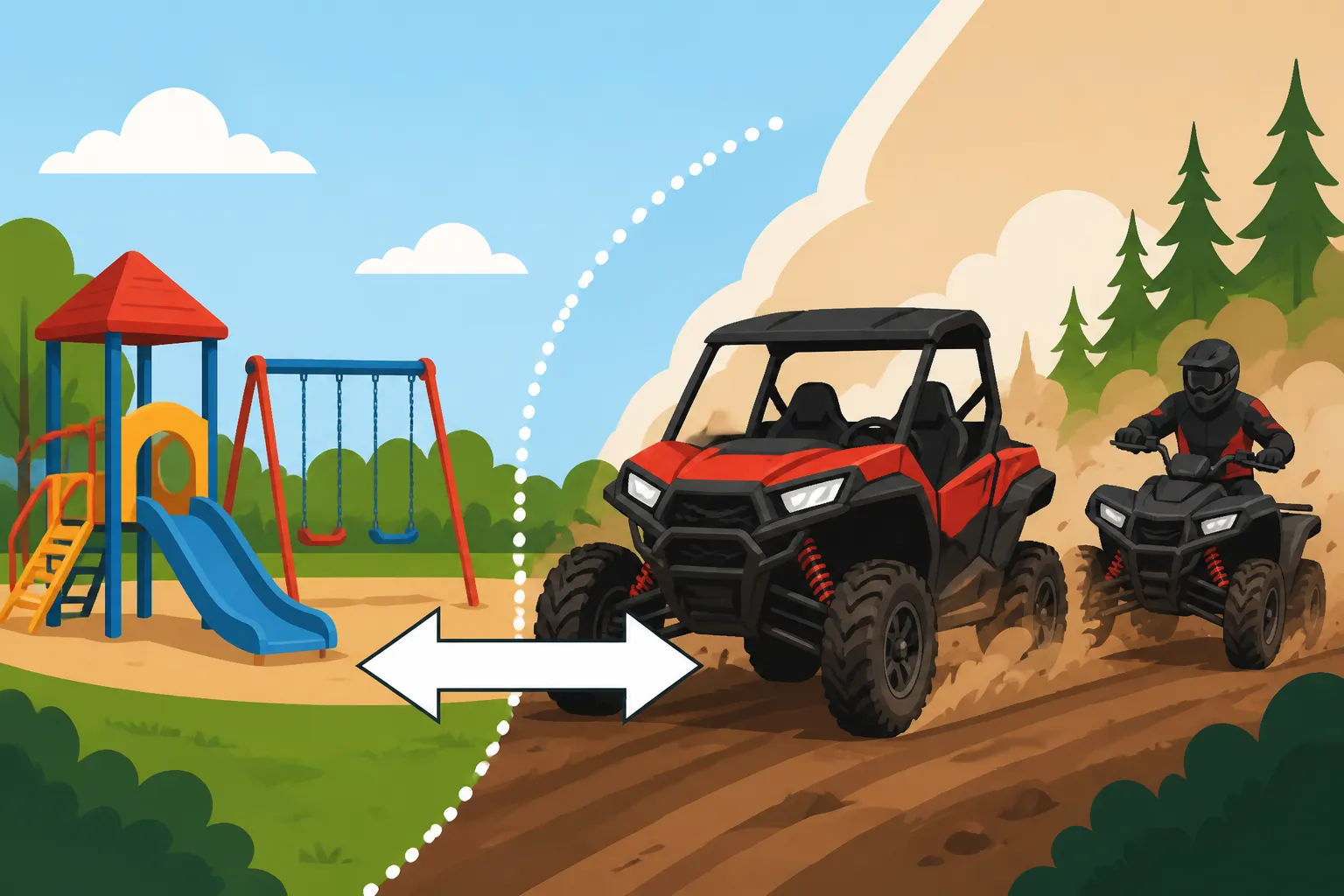
Under The Off-Road Vehicles Act in Manitoba, there's a clear directive designed to protect children and maintain peace in public spaces: you are not permitted to operate an off-road vehicle within 30 metres of any playground. This isn't a vague guideline; it's a specific distance that acts as a mandatory buffer zone. The primary goal here is to separate the dynamic environment of an ORV, with its potential for speed, noise, and dust, from areas where children are actively playing. It's about preventing accidents, minimizing disturbances, and ensuring that our recreational activities don't infringe on the safety and enjoyment of others.
To put 30 metres into perspective, imagine the length of roughly three school buses lined up bumper-to-bumper. That's a significant distance, and it provides a reasonable margin for safety. It means that if a playground is in sight, you need to ensure you're maintaining that minimum separation. This rule is a cornerstone of responsible riding, emphasizing that while we have the freedom to explore, that freedom comes with the responsibility to respect public spaces and vulnerable populations. It applies equally to all types of off-road vehicles, from a powerful utility side-by-side like a SuperATV Commander to a nimble sport quad, so no machine is exempt from this requirement.
This provincial rule applies consistently, whether you're navigating the edges of a smaller community or traversing trails near larger towns. It speaks to a broader principle of good neighbourliness that underpins much of our provincial ORV legislation. Overlooking this detail, perhaps because you're focused on the trail ahead or simply unaware, can lead to unpleasant interactions with local residents or, worse, a ticket from law enforcement. Understanding and adhering to this rule is a simple but impactful way to demonstrate respect and ensure the longevity of ORV access in Manitoba.
Why This Rule Exists: Safety, Noise, and Community Peace
The 30-metre rule around playgrounds is deeply rooted in practical considerations for public safety and quality of life. First and foremost is the safety of children. Playgrounds are bustling hubs of activity where kids, often full of energy and sometimes lacking a strong sense of danger, can move unpredictably. They might dart suddenly, chasing a ball or a friend, without looking or listening for approaching vehicles. An off-road vehicle, even at a moderate speed, presents a serious hazard in such an environment. The 30-metre buffer provides a critical reaction window, both for the rider to spot a child and for a child to register the presence of a machine, drastically reducing the risk of a collision.
Beyond the immediate physical safety, there's the undeniable impact of noise. ATVs and UTVs, while offering exhilarating rides, can be quite loud, especially if they're modified or being operated under acceleration. Imagine trying to have a peaceful conversation or enjoy a quiet moment with your family at a park, only for the constant drone or roar of an off-road engine to interrupt the tranquility. Such noise pollution can quickly generate complaints from residents, leading to local opposition against ORV use. The mandated distance helps to mitigate this disturbance, preserving the calm and enjoyable atmosphere that playgrounds and parks are meant to offer.
Finally, this regulation is crucial for fostering and maintaining positive community relations. When off-road riders show consistent respect for designated public spaces, it builds trust and goodwill within local communities. Conversely, repeated disregard for rules like the playground setback can create tension, leading residents to view all ORV enthusiasts negatively. This can have broader implications, potentially resulting in stricter local bylaws, reduced trail access, or even outright bans in certain areas. Adhering to the 30-metre rule is a visible demonstration of responsible riding, which ultimately benefits everyone who enjoys off-road recreation in Manitoba. It's about ensuring our passion doesn't come at the expense of others' peace and safety.
Navigating the 30-Metre Rule in Real-World Riding Scenarios
Identifying a Playground and Estimating the Distance
A common challenge for riders is not just knowing about the 30-metre rule, but correctly applying it in the varied environments of Manitoba. How do you identify a "playground" consistently, and how do you accurately measure 30 metres when you're out on a trail with no measuring tape? Generally, a playground is an area clearly equipped with play structures like swings, slides, climbing frames, or sandboxes, typically found in public parks, schoolyards, or designated community recreational areas. If you see any such equipment, assume it's a playground. Better to be safe than sorry, especially when children's safety is involved.
When it comes to estimating the 30-metre distance, most of us aren't carrying a surveyor's wheel on our [Manitoba ATV Trails: Club Ground and Crown Land] adventures. A practical way to visualize it is to think of the length of three large cars or two standard basketball court free-throw lines. Another mental benchmark could be the width of a typical residential street, which is often around 10-12 metres, so you'd need about two and a half to three of those. If you’re riding a trail that runs parallel to a park or residential area, you need to be extra vigilant. Many modern GPS apps or online mapping tools can show public parks and amenities, which can be invaluable for pre-ride planning to help you identify these zones before you even leave home.
It's also important to understand that this rule applies regardless of whether children are actually present or not. The prohibition is based on the existence of the playground, not its current usage. So, even if the playground appears empty on a chilly autumn afternoon or early in the morning, the 30-metre rule still applies. This means constant awareness of your surroundings is paramount. If you find your planned route taking you too close to a playground, you should be prepared to find an alternative path or, if absolutely necessary, dismount and walk your machine through the restricted zone to ensure compliance and safety.
Planning Your Routes to Avoid Conflicts
The most effective way to adhere to the 30-metre rule and avoid any uncomfortable encounters or fines is through diligent route planning. Before you even load your machine, whether it's a new utility quad or a well-loved [Manitoba Plates on the Rear of a Quad], take the time to study maps of your intended riding area. Look specifically for parks, schools, community centers, and any areas marked as playgrounds. Online satellite imagery and local municipal maps can be incredibly helpful for identifying these sensitive zones. If you spot a trail section that appears to skirt too close to a playground, mark it as a no-go zone or identify a clear detour.
Often, designated multi-use trails are routed to avoid these highly sensitive areas, but it's not a guarantee, especially in older trail systems or areas where development has expanded. If you're riding a powerful machine like a SuperATV Polaris RZR, you might cover ground quickly, making it even more vital to have a clear understanding of your route beforehand. For segments that are unavoidably close to residential areas or community parks, plan to significantly reduce your speed, minimize noise, and be exceptionally cautious. This might mean idling past a section or even turning off your engine and walking your machine if the situation demands it, particularly if the path is narrow or visibility is poor.
Connecting with local ATV clubs, such as those that manage parts of the [Manitoba Woodridge Club Trails] or the [Manitoba Agassiz Club Trail], can also provide invaluable local knowledge. These clubs often have detailed maps, know where specific bylaws are in effect, and can advise on sensitive areas to avoid. They are also often involved in community outreach and trail maintenance, making them excellent resources for responsible riding practices. Being an informed rider, armed with local knowledge and a well-planned route, is your best defense against accidental violations and helps ensure a positive public image for all ORV enthusiasts.
Consequences of Non-Compliance and Broader Community Impact
Penalties for Violating the 30-Metre Rule
Disregarding the 30-metre rule around playgrounds in Manitoba is not just a polite request; it's a legal obligation, and failing to meet it can lead to tangible penalties. Law enforcement, which can include the RCMP, local police services, or even Conservation Officers, has the authority to issue fines for violations under The Off-Road Vehicles Act. While specific fine amounts are subject to change, they are typically substantial enough to serve as a significant deterrent. Getting caught operating an ORV too close to a playground can quickly turn an enjoyable ride into a costly mistake. For instance, such an infraction could fall under the general penalty provisions, with [The $2,000 General Penalty Under the ORV Act] being a potential consequence for serious breaches.
Beyond the immediate financial hit of a fine, there can be additional complications. Depending on the severity of the violation, or if it's a repeat offense, authorities might impound your off-road vehicle. In more extreme cases, particularly where there's evidence of reckless behaviour, you could face charges related to careless operation, which carries even higher penalties and could potentially impact your driving record. When officers conduct [Manitoba Equipment Checks by Officers], they might also inquire about your route and any specific areas you've traversed, making it clear that adherence to operational rules is part of their enforcement mandate.
The overarching purpose of these penalties isn't simply to punish riders. It's to reinforce the importance of these safety regulations and to prevent harm. The 30-metre rule provides a clear and measurable standard for safe operation near sensitive areas. Therefore, riders who are found to be in violation, whether through ignorance or deliberate disregard, are held accountable. This accountability serves to protect the public and underscores the serious nature of operating off-road vehicles responsibly within our communities. It's a powerful incentive to always be aware of your surroundings and plan your rides carefully.
Impact on Rider Access and Community Relations
Each time an ORV rider knowingly or unknowingly violates regulations like the 30-metre playground rule, it unfortunately contributes to a negative stereotype for the entire riding community. Public perception is a powerful force that directly influences future access to trails and riding areas. When local residents witness off-road machines operating too close to parks where their children play, it generates legitimate safety concerns and noise complaints. These complaints are often directed at municipal councils, local government districts, and even provincial authorities, which can trigger a chain reaction leading to adverse outcomes for riders.
Consider the long-term ramifications: a pattern of non-compliance can prompt local governments to enact stricter bylaws, increase enforcement patrols, or even permanently close certain trails or riding areas. Such actions are often a direct response to sustained community pressure, fueled by incidents of irresponsible riding. It's a frustrating reality that the actions of a few individuals can negatively impact the recreational opportunities for many responsible riders. If a community feels that ORV use is consistently disruptive or unsafe, they are likely to push for more restrictive measures, making it increasingly difficult for everyone to enjoy the sport.
This is precisely why being a responsible rider, adhering to all regulations including the 30-metre rule, is so crucial. It’s not just about avoiding a personal fine; it’s about being an ambassador for the sport and preserving future riding opportunities in Manitoba. ATV organizations and clubs work tirelessly to build positive relationships with communities and advocate for rider access. Their efforts can be easily undermined by instances of irresponsible behaviour. By consistently demonstrating respect for public safety and community peace, riders can help cultivate a positive image, which is vital for maintaining and even expanding access to the incredible riding experiences Manitoba has to offer.
Broader Context: Riding Near Other Sensitive Areas in Manitoba
Dwellings and Other Places of Assembly
While the 30-metre rule for playgrounds is a specific and critical regulation, it's essential to understand it within the broader framework of responsible ORV operation in Manitoba. This framework extends to other sensitive areas, most notably private dwellings. For example, Manitoba has a [Manitoba's 30-Metre Dwelling Rule], which prohibits the operation of an off-road vehicle within 30 metres of a dwelling between the hours of midnight and 7 a.m. This rule, much like the playground regulation, is designed to ensure peace and quiet, particularly during hours when residents are typically sleeping or seeking tranquility in their homes. It reflects the province's commitment to balancing recreational pursuits with the rights of residents to quiet enjoyment of their property.
These various setback rules collectively underscore a provincial philosophy: off-road vehicles, while providing immense enjoyment, must be operated in a manner that is considerate of others and minimizes disruption. It's not just about playgrounds and homes; this principle extends to any area where people might gather or reside, even if specific distances aren't codified. For instance, while there might not be a "30-metre rule" for a church, a community hall, or an outdoor market, common sense dictates that riders should exercise extreme caution, reduce speed, and minimize noise when passing near any such place of assembly. The general principles of safety, respect, and noise abatement should always apply.
The takeaway here is to always be vigilant and proactive in your awareness of your surroundings. If you're approaching any area that appears populated or where people might be present, it's always best to slow down, reduce your engine's roar, and be prepared to yield or reroute. A powerful machine like a SuperATV General is capable of impressive performance, but it also carries the responsibility of operating quietly and respectfully in populated areas. This approach not only helps you avoid legal issues but also fosters positive relationships with the communities you ride through, showcasing a commitment to responsible and considerate riding.
Municipal By-Laws and Local Restrictions
It’s crucial for Manitoba ORV riders to remember that provincial laws, while comprehensive, don't always tell the whole story. [Manitoba Municipal By-Law Powers] grant cities, towns, and rural municipalities the authority to create their own local bylaws that can further regulate or restrict the use of off-road vehicles within their specific jurisdictions. This means that while a provincial rule might outline general guidelines, a local bylaw could impose even stricter restrictions, or prohibit ORV use entirely in certain areas, even those not explicitly covered by provincial legislation.
These local bylaws often emerge from specific community concerns, such as a high volume of noise complaints, safety concerns regarding children and pedestrians on local roads, or environmental worries. For example, a municipality might ban ORVs from all public parks, not just playgrounds, or restrict their use on certain residential streets. This localized variation means that what is perfectly permissible in one rural municipality could land you a significant fine in a neighbouring town. Before you embark on an unfamiliar trail system, especially if it traverses or is close to a community, it’s always wise to check the relevant municipal website or make a quick call to the local municipal office.
Ultimately, the combination of provincial legislation and diverse municipal bylaws means that riders in Manitoba need to be diligent and well-informed. There isn’t a single, universal "rule book" that covers every square inch of the province. By making the effort to understand both the provincial laws and any applicable local bylaws, you can ensure that your off-road adventures are not only thrilling but also fully compliant with all regulations, safeguarding both your enjoyment and the positive standing of the ORV community. This dual-layer of rules ensures that local communities have the tools to manage ORV impacts effectively within their unique contexts.
Here is a table summarizing some key setback rules and considerations for ORV riders in Manitoba:
| Sensitive Area | Typical Rule/Consideration | Specifics | Primary Purpose |
|---|---|---|---|
| Playground | No operation within 30 metres | All times | Child Safety, Noise Reduction |
| Dwelling | No operation within 30 metres | Midnight – 7 a.m. | Noise Reduction, Peace |
| Roadways/Ditches | Specific rules apply for operation | [Manitoba Ditch Riding Rules], [Manitoba Crossing Rules at 5 Metres and 3 Kilometres] | Public Safety, Traffic Flow |
| Private Land | Consent of owner required | Always | Property Rights, Trespass Prevention |
| Crown Lease | Consent of lease holder required | Always | Respect for Lease Holder Rights |
| Municipal Parks | Check local by-laws | Can vary greatly by municipality | Community Peace, Safety |
Disclaimer
This article is for general informational purposes only and does not constitute professional advice. Laws, prices and regulations vary by location and change over time. Consult a qualified professional for guidance on your specific situation.