Manitoba ORV Road Rules Explained
Riding your ATV or UTV in Manitoba can be an incredible experience, offering access to stunning trails and wide-open spaces. But let's be honest, figuring out exactly where you can and can't legally operate your off-road vehicle, especially when it comes to roads, ditches, and crossings, can feel like navigating a legal minefield. It's frustrating when you just want to enjoy your machine without constantly worrying about breaking a rule you didn't even know existed. This comprehensive guide is here to clear up that confusion, detailing Manitoba's specific rules for ORV operation on or near public roadways, ensuring you can ride responsibly and confidently.
The Foundational Rule: Roadways Are Generally Off-Limits
It’s probably the most important thing to understand right off the bat: in Manitoba, your off-road vehicle (ORV) is, by definition, not designed or generally permitted for use on public roads. This isn't just a suggestion; it's a fundamental principle of ORV legislation in the province. Many riders coming from other areas, or even just starting out, often get this wrong, assuming that if a road is quiet, it's fair game. Unfortunately, that assumption can lead to serious legal trouble and, more importantly, put you and others at risk.
Why Roads Are Not Your Riding Ground
The core reason [Manitoba Bans Riding on Roadways] is safety. ORVs lack many of the safety features required for on-road vehicles, such as turn signals, brake lights that are easily visible in traffic, and the structural integrity to withstand collisions with cars and trucks. They also handle very differently than road vehicles, especially at higher speeds or when braking suddenly on pavement. Imagine trying to stop a heavy utility-style ATV loaded with gear when a car unexpectedly pulls out – the dynamics are completely different, and often, not in the ORV's favour. The law aims to prevent these dangerous interactions, keeping ORVs in environments where they are designed to perform best, like trails and open land. This isn't about limiting your fun; it's about protecting lives.
Understanding What "Roadway" Truly Means
So, what exactly counts as a "roadway" that's off-limits? It's more than just the paved or gravel surface you drive on. The definition extends to include shoulders, medians, and the entire right-of-way of most public roads. A divided highway, for example, isn't just the lanes of traffic; it includes the grassy strip in the middle. [The Median of a Divided Highway Is Closed] to ORV traffic, even if it looks like a convenient shortcut or a clear path. Similarly, interchanges – those complex systems of ramps and bridges designed to move traffic efficiently between highways – are absolutely forbidden. [Why an Interchange Right-of-Way Is Off Limits] boils down to the fact that these are high-speed, high-traffic zones where an ORV would be incredibly vulnerable and disruptive. It’s crucial to think of the entire width of the road allowance, not just where the cars drive, as a no-go zone for your ORV.
Sidewalks and Parking Lots – Not for ORVs
Beyond the main roadway, there are other areas often mistakenly thought to be permissible for ORVs. Sidewalks are one such place. While they might seem like a pedestrian-free route in some rural areas, [Manitoba Bans Riding a Sidewalk]. Sidewalks are designed for foot traffic, sometimes bicycles, and definitely not the weight and speed of an ATV or UTV. The risk to pedestrians, even when you think no one is around, is simply too high. Similarly, large parking lots, while seemingly open, are generally not for joyriding. There can be exceptions, such as [Crossing a Parking Lot to Reach a Trail] if it's the most direct and safest route and you are doing so respectfully and at a very low speed. However, using a parking lot as a personal playground or a shortcut where you're not actually attempting to access a legal riding area is still prohibited. Always assume these paved areas are off-limits unless there’s a clear, local by-law or specific instruction otherwise for access purposes.
Ditch Riding: Navigating the Grey Areas
Ditch riding is probably one of the most talked-about and often misunderstood aspects of ORV operation in Manitoba. Many riders see ditches as a natural extension of off-road terrain, a convenient way to get from point A to point B without hitting the main road. While Manitoba does permit ditch riding under specific circumstances, it's far from a free-for-all, and there are very strict rules that, if ignored, can quickly land you a ticket.
The Legal Ditch and the Illegal Ditch
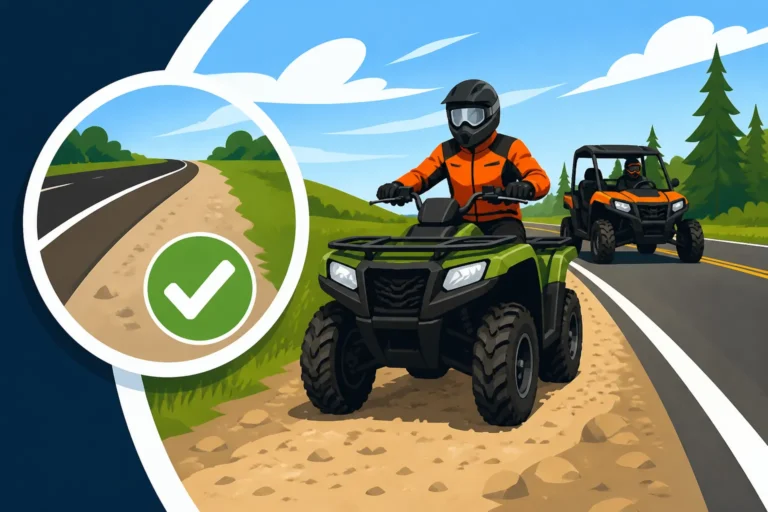
The first thing to wrap your head around is that not all ditches are created equal in the eyes of the law. According to [Manitoba Ditch Riding Rules], you are generally only allowed to ride in the ditch on the right-hand side of the roadway, in the same direction as the adjacent traffic. This is a critical safety measure, ensuring that if you must exit the ditch or interact with traffic, you are doing so predictably. [The Only Legal Ditch Is on Your Right] means you can't just pick the ditch that looks easiest to ride; it has to be the one corresponding to the direction of travel. [Travelling the Same Way as Traffic] helps maintain some level of predictability, even if you are not directly in the traffic flow. Trying to ride against traffic in a ditch is incredibly dangerous, as drivers on the road might not see you, especially if you suddenly pop up to cross.
Restrictions on Ditch Use
Even when you're in the "right" ditch, there are still rules to follow. For instance, four-wheel-drive trucks or SUVs, even if they have off-road capabilities, are generally [Manitoba Four-Wheel-Drives Barred From Ditches]. This rule is specific to off-road vehicles (ATVs, UTVs, dirt bikes, snowmobiles), not regular passenger vehicles trying to escape traffic. Speed limits also apply, and you're expected to operate your ORV at a reasonable speed that is safe for the conditions and does not endanger anyone. Remember, the ditch is often shared with utilities, property lines, and sometimes even pedestrians or cyclists, so responsible operation is key. If you're on a multi-passenger UTV, ensure everyone is seated properly and wearing their seatbelts if fitted, and never overload your machine.
Specifics for Youth and Learner Riders in Ditches
Age plays a significant role in where and how you can ride an ORV, including in ditches. [Manitoba Riders 14 and Over in Ditches] are permitted to operate an ORV in a ditch, provided they follow all other rules and safety requirements. However, if you're a rider aged 15 and a half and hold a valid Class 6 Learner's Permit (motorcycle learner's), you have slightly different rules for crossing a highway, but for general ditch riding, the 14 and over rule applies. A specific rule to remember is [Where a Learner Licence Lets a 15-Year-Old Ride] only applies to the roadway crossing aspect, not for general ditch travel. Younger riders (under 14) are typically restricted to private land or designated trails and usually require direct adult supervision, so ditch riding is generally not an option for them. Always check the latest age requirements and ensure proper supervision or licensing for your specific age group.
Crossing Roadways: When You Absolutely Must
Sometimes, there's no way around it – you need to cross a public road to get from one section of a trail to another, or to access your property. Manitoba's ORV Act acknowledges this necessity but lays out very stringent rules to ensure these crossings are done as safely as possible. These aren't suggestions; they are legal requirements designed to minimize risk to everyone involved.
The Strict Rules for Crossing a Highway
When you're faced with a highway crossing, you can't just zip across. There are specific distance requirements you need to adhere to. You must cross within [5 Metres From an Intersection] or [3 Kilometres From the Nearest One]. This allows drivers on the highway to anticipate your presence more easily. Before you even think about moving, you must bring your ORV to a complete stop, yield to all approaching traffic, and ensure you have a clear, unobstructed view in both directions. [Manitoba Crossings Need a Clear View] is non-negotiable – if you can't see, you can't cross. Furthermore, you must possess a valid driver's licence to perform a highway crossing. [Manitoba Crossings Need a Driver's Licence] means that those with only an ORV safety course certificate or those too young to hold a driver's licence cannot legally cross a highway, even if supervised. [Stopping and Yielding Before You Cross a Highway] is paramount; traffic on the road always has the right of way.
Group Crossings and Safety Considerations
If you're riding with a group, the rules for crossing a highway become even more critical. You cannot cross as a group. [Group Crossings Go One Machine at a Time]. Each rider must treat it as an individual crossing, stopping, yielding, and ensuring clear visibility before proceeding. This staggered approach prevents multiple machines from being in the roadway at once, which can confuse drivers and increase the risk of an incident. It also gives each rider the opportunity to make their own independent assessment of safety. Always wait for your buddy to completely clear the roadway before you even start your own assessment for crossing. Communication within your group is essential here.
Licence Requirements for Crossings
As mentioned, a valid driver's licence (Class 1-6) is required for anyone operating an ORV across a provincial highway. This means that a younger rider, even if they meet the age requirements for operating an ORV in a ditch or on private land, cannot legally cross a highway if they don't have a driver's licence. [A Learner's Permit Will Not Let You Cross] for example, unless it's a specific Class 6 (motorcycle) learner's permit, and even then, specific conditions and supervision might apply. This is a crucial distinction and often overlooked. The rationale behind this is that crossing a highway requires the same level of judgment and understanding of road rules as operating a motor vehicle on the road, which is why a driver's licence is mandated. Always ensure that anyone operating an ORV that needs to cross a highway is properly licensed, or plan an alternative route that avoids highway crossings if your group includes unlicensed riders.
Shoulder Riding: The Agricultural Exception
While ditches offer a limited travel option, riding on the paved or gravel shoulder of a roadway is even more restricted. In Manitoba, shoulder riding is not a general privilege for ORV users; it's a specific exemption tied primarily to agricultural purposes. This distinction is vital, as simply riding your recreational ORV on a shoulder could lead to a fine.
The Narrow Window for Shoulder Travel
The primary allowance for shoulder riding is for [Manitoba's Agricultural Shoulder Exception]. This means if you are a farmer operating an ORV that is principally used for farming, you may use the shoulder of a provincial highway for distances up to 3 kilometres to access your land or fields. This isn't a loophole for recreational riders; it's a practical provision for those who rely on ORVs as essential farm equipment. [When a Farm Quad May Use the Shoulder] is strictly defined by the machine's primary use and the operator's purpose. It’s about utility, not leisure. If you're heading out to your hunting blind or simply exploring, the shoulder is still off-limits.
Equipment and Speed Limits
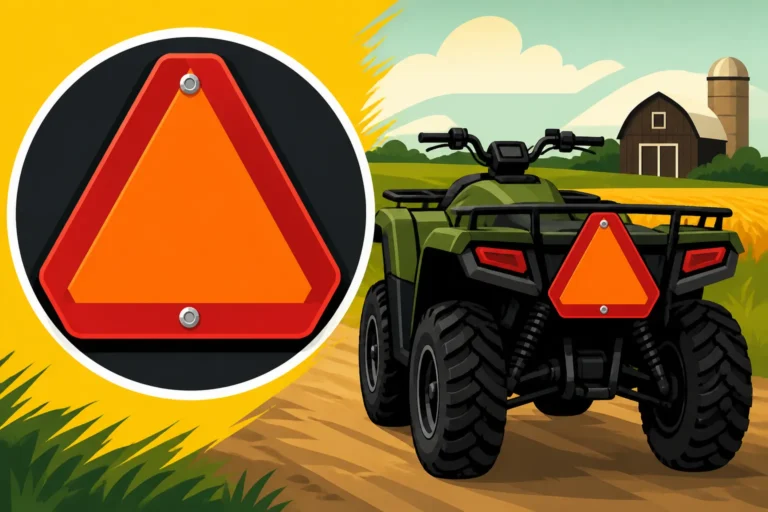
If you are using your ORV for legitimate agricultural purposes on the shoulder, there are specific equipment and operational requirements. Your machine must be equipped with a [Manitoba Slow-Moving Vehicle Signs] sign, clearly displayed on the rear. This bright orange triangle is universally recognized as a warning to other motorists that the vehicle ahead is traveling at a reduced speed. You are also subject to a strict speed limit; you cannot exceed [40 km/h at Most] while operating on the shoulder. This low speed helps minimize the speed differential between your ORV and highway traffic, enhancing safety. Ensure your machine is visible, especially during dawn or dusk, with all available lights on. Remember, [The Warning Sign Required for Shoulder Riding] isn't optional; it's a mandatory safety feature for this specific use.
Who Can Use the Shoulder (and Who Can't)
Beyond the agricultural use, there's also a design requirement. The exception for shoulder use generally applies to ORVs with [More Than Two Wheels Required]. This means dirt bikes are typically excluded from this shoulder-riding privilege. Furthermore, the operator must hold a valid driver's licence, and [Your Licence Must Carry No ORV Restriction] preventing the operation of an ORV. This means if you have a condition on your licence that prohibits ORV use, or if you only have a learner's permit (unless it's a specific, unrestricted Class 6 learner's for motorcycles that might apply to a snowmobile), you cannot legally operate on the shoulder even for agricultural purposes. It reinforces the idea that understanding and adhering to road rules is paramount, even on the shoulder.
Here's a quick table to summarize ORV access to various road-related areas:
| Area Type | General Rule for ORVs | Specific Conditions/Exceptions |
|---|---|---|
| Roadway (Lanes) | Prohibited | None. Never ride in traffic lanes. |
| Median | Prohibited | Never. Part of the roadway. |
| Interchange | Prohibited | Never. High-speed, high-traffic area. |
| Sidewalk | Prohibited | Never. Reserved for pedestrians. |
| Ditch (Right) | Permitted | Must travel with traffic, 14+ years old, no 4WD trucks. |
| Ditch (Left) | Prohibited | Never. Against traffic flow is dangerous. |
| Shoulder | Restricted | Agricultural use only, 40 km/h limit, SMV sign, 3 km max, >2 wheels. |
| Crossing Highway | Permitted | Valid driver's licence, stop, yield, clear view, 5m/3km rule, one at a time. |
| Parking Lot | Restricted | Generally prohibited, except for direct access to a trail/property. |
Helmets, Passengers, and Machine Equipment
Beyond where you can physically ride, Manitoba also has strict regulations regarding personal safety gear, passenger limits, and the basic equipment your ORV must have to be considered roadworthy for any permitted on-road or ditch use. These rules are designed to protect you, your passengers, and others, and they apply even when you're just accessing a trail or crossing a road.
The Mandatory Helmet Law and Exemptions
For most ORV operators and passengers in Manitoba, wearing an approved helmet is absolutely mandatory. This isn't just a suggestion; it's a critical piece of safety gear that can literally save your life. The law specifies that helmets must meet recognized safety standards, such as those set by Snell or the U.S. Department of Transportation (FMVSS). Always look for these certification labels inside your helmet. [Manitoba Helmet Standards Accepted] means you can't just wear any old helmet; it needs to be certified.
However, there are a few very specific [Manitoba Helmet Law and Its Exemptions]. For instance, individuals engaged in [Farming, Fishing, Hunting and Trapping] may be exempt from wearing a helmet while engaged in these activities on their own land or a specified work area, provided their ORV is equipped with a roll-over protective structure (ROPS) and they are wearing a seat belt. Similarly, if your UTV has a factory-installed ROPS and seatbelts, [When a Seat Belt Replaces a Helmet] in specific circumstances, such as being a commercial fisher or trapper. If you modify your ORV with aftermarket roll cages, make sure they meet safety standards and that your use aligns with the specific exemptions. Never assume an exemption applies to your recreational ride.
Passenger Rules and Limits
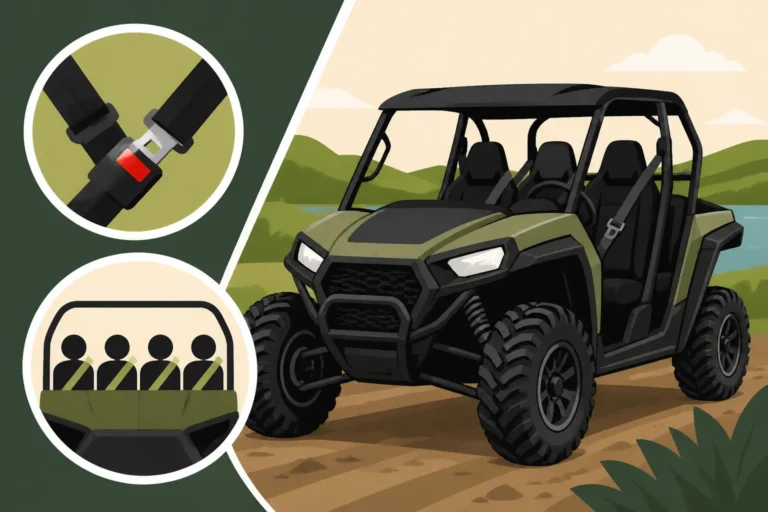
Your ORV, whether an ATV or UTV, is designed to carry a specific number of people safely. This is determined by the manufacturer and is often indicated on a sticker or in your owner's manual. It's crucial to adhere to [Passengers Only as Designed]. Trying to squeeze an extra person onto an ATV designed for one, or overloading a UTV, significantly impacts the machine's handling, braking, and stability. This is not only illegal but extremely dangerous, especially on uneven terrain or when near roads. If your UTV comes with factory-installed [Seat Belts and Passenger Limits on a Manitoba UTV], everyone must use them. Seatbelts are there for a reason and are integral to the vehicle's safety system. Always ensure your passengers understand these rules and are properly secured before you even start the engine.
Essential Machine Equipment for Road-Adjacent Travel
Even when you're just in the ditch or making a quick crossing, your ORV needs certain equipment to be visible and safe. Lights are paramount, especially if conditions are anything less than bright daylight. [Manitoba Lighting Requirements on a Machine] dictate that your ORV must have at least one headlamp and one tail lamp that are lit from half an hour before sunset until half an hour after sunrise, and at any other time when visibility is poor. These lights must be visible from a distance of 60 metres. This ensures other people, whether pedestrians or drivers, can see you coming and going.
Another often-overlooked but crucial piece of equipment is a spark arrester. [Manitoba Spark Arrester Requirements] mandate that all ORVs must have an exhaust system equipped with a spark arrester that is in good working order. This device prevents hot carbon particles from escaping your exhaust and potentially starting a wildfire, a very real risk in Manitoba's dry seasons. This is required all year round, not just during fire bans, as a preventative measure. Ensure your spark arrester is not removed or tampered with. SuperATV, for example, offers various exhaust components and accessories, but always verify they meet local regulations and maintain a functional spark arrester.
Understanding Local By-Laws and Enforcement
While the provincial ORV Act sets the baseline rules for Manitoba, it's really important to understand that local municipalities and communities have the power to create their own by-laws. These local rules can sometimes be more restrictive, or in rare cases, even open up specific roads or areas for ORV use that would otherwise be prohibited. Ignoring these local variations can lead to unexpected fines and frustration.
Municipal Authority and Varying Rules
[Manitoba Municipal By-Law Powers] mean that your local town, rural municipality, or even Northern Community Council can enact specific rules about ORV operation within their boundaries. This is why it's so critical to [Checking a Municipal By-Law Before a Long Drive] to a new riding area. For example, some [Manitoba Municipalities With ORV By-Laws] might designate certain streets as permissible for ORVs to access trails, or they might restrict riding hours within residential areas more strictly than the provincial rules. In some unique cases, by-laws might even be seasonal, where [By-Laws That Open a Road for One Season] allow ORV access during specific times of the year, perhaps for winter trail access. This patchwork of rules means what's legal in one town might not be in the next. Always check with the local authorities or look for posted signage when riding in a new area.
Penalties and Consequences of Non-Compliance
Breaking these rules, whether provincial or municipal, can carry significant penalties. [Manitoba Ticket Costs for Riders] can quickly add up, ranging from hundreds to thousands of dollars depending on the severity of the infraction. Operating an ORV carelessly, or in a manner that endangers others, can fall under [Manitoba Careless Operation Penalties], which might result in fines up to $5,000 and even court costs. Furthermore, if you are found to be impaired while operating your ORV, the penalties are severe, mirroring those for impaired driving of a road vehicle, including licence suspension and substantial fines. [Manitoba Impaired Riding Penalties] are no joke and are strictly enforced. Beyond the financial impact, repeated infractions could affect your insurance rates or even your ability to register an ORV in the future.
Who Enforces These Rules and What They Can Ask
You might encounter various law enforcement officials while riding. This includes RCMP, local police services, and Conservation Officers. They all have the authority to enforce the ORV Act and related municipal by-laws. When stopped, an officer can ask to see several things. [What an Officer Can Ask to See in Manitoba] typically includes your ORV registration card (which must be carried on your person at all times), proof of insurance, and your driver's licence if you've been operating on or near a roadway, or crossing a highway. They can also perform equipment checks to ensure your machine has a functional spark arrester, proper lights, and meets other safety requirements. Cooperation with officers is always the best approach. Ensuring you have [Carrying Your Registration Card on Every Ride] in a waterproof pouch is a smart move.
Key Age Restrictions and Supervision
Manitoba has specific age-based rules for who can operate an ORV and where, particularly when it comes to riding on public lands or near roadways. These rules are designed to ensure young riders gain experience safely and are appropriately supervised until they reach a certain level of maturity and skill. It's not just about the machine; it's about the rider's readiness.
Age-Based Riding Privileges on Public Land
The provincial regulations divide young riders into different age tiers, each with its own set of rules. For example, [Manitoba Riders Under 14 Need Supervision] at all times when operating an ORV on public land or designated trails. This supervision must come from an adult, usually a parent or guardian, who is also operating an ORV and can provide immediate assistance. They are generally restricted from riding in ditches.
As riders get older, more privileges become available. [Manitoba Riders 14 and Over in Ditches] are permitted to operate an ORV in a ditch, provided they adhere to all other ditch riding rules (same direction as traffic, right-hand ditch only). They can also operate on Crown Land or designated trails without direct adult supervision, though it's always wise for young riders to ride with others and inform someone of their route.
Finally, [Manitoba Riders 16 With a Full Licence] have the most freedom, as their age combined with a full Class 1-6 driver's licence means they meet the requirements for crossing highways and generally operating the ORV in any legal area without supervision. These [Manitoba Age Tiers for Young Riders] are set to progressively introduce riders to more complex operating environments.
Parental Consent and Responsibility
For riders aged 16 to 18, even if they hold a driver's licence, there's an additional step when it comes to registration. If they are the owner of the ORV, [Manitoba Parental Consent From 16 to 18] is required when registering the machine through MPI. This acknowledges that while they may be old enough to drive, they are still considered minors in many legal contexts, and their parents or guardians retain some responsibility. Even for younger riders who are permitted to ride with supervision, parents bear the ultimate responsibility for ensuring their child adheres to all safety rules, wears appropriate gear, and operates a machine suitable for their age and skill level. Many parents find accessories from brands like SuperATV useful for adapting machines for younger riders, such as speed limiters or safety flags, but these don't override the legal age requirements.
The Role of a Driver's Licence
As we've touched on, a driver's licence is a significant factor in where and how you can operate an ORV, particularly near roadways. While you don't necessarily need a driver's licence to operate an ORV on private land or designated trails (depending on age), you absolutely do need one to cross a provincial highway. This answers the question, [Do You Need a Licence for an ATV in Manitoba?] – yes, if you're interacting with the provincial highway system. This requirement is in place because crossing a highway involves navigating traffic and understanding road rules, skills typically associated with holding a driver's licence. Without one, even if you're supervised, you cannot legally perform such a crossing. This reinforces the idea that operating an ORV in proximity to public roads carries responsibilities akin to driving a car.
Disclaimer
This article is for general informational purposes only and does not constitute professional advice. Laws, prices and regulations vary by location and change over time. Consult a qualified professional for guidance on your specific situation.