Matching the VIN to the Bill of Sale
One of the most common headaches when buying or selling an off-road vehicle here in Manitoba is making sure all the paperwork lines up with the machine itself. It might seem like a small detail, but ensuring the Vehicle Identification Number (VIN) on your bill of sale perfectly matches the VIN stamped on your ATV or UTV is absolutely crucial. This guide will walk you through why this matters so much, where to find those elusive numbers, and how to protect yourself from future registration woes or even the heartbreak of a stolen machine.
Why Matching the VIN is Absolutely Critical
When you're caught up in the excitement of a new machine – whether you're buying it or selling it – it’s easy to overlook what seems like a minor detail. But trust me, a mismatched VIN on your bill of sale versus the physical machine can turn that excitement into a major headache, especially here in Manitoba. This isn't just about bureaucracy; it's about protecting your investment, ensuring legal ownership, and keeping yourself out of tricky situations.
Avoiding Registration Roadblocks at MPI
Imagine this: you've just bought your dream quad from a private seller, you've got your bill of sale, and you're eager to get it registered. You head down to your local Autopac agent, full of anticipation, only to be told that the VIN on your paperwork doesn't match the number on the machine. Suddenly, your dreams of hitting the trails turn into a frustrating maze of phone calls and unanswered questions. This is a far too common scenario when the VIN isn't verified at the point of sale. Manitoba Public Insurance (MPI), our provincial insurer and registrar, is quite strict about these details, and for good reason. They need a clear, unambiguous link between the physical machine and its legal documentation to process your [Manitoba ORV Registration Through MPI]. If there's a discrepancy, they might refuse to register the vehicle until the issue is resolved, leaving you with a machine you can't legally operate.
Protecting Yourself from Stolen Machines
This is probably the most serious reason to meticulously check the VIN. Unfortunately, stolen off-road vehicles are a reality. A seller who is unwilling or unable to show you a clear, unaltered VIN, or whose paperwork doesn't match the machine, should raise immediate red flags. When you buy a machine, you want to be absolutely certain it has a clean history and that you're not inadvertently purchasing stolen property. A mismatched or tampered VIN could mean you're buying a hot machine, which could lead to it being confiscated by law enforcement, and you losing both your money and the vehicle. Always remember, if something feels off, it probably is. Take the time to do your due diligence and ensure the VIN is legitimate and matches all provided documents. This step is a cornerstone of [Buying From a Private Seller in Manitoba].
Ensuring a Clean Transfer of Ownership
Beyond registration and theft concerns, matching the VIN ensures a clean and legal transfer of ownership. When you eventually decide to sell your machine, you'll want to provide the next owner with clear, unquestionable documentation. A history of mismatched VINs could complicate future sales, make it difficult to prove your ownership, and even affect the resale value of your ATV or UTV. A correctly recorded VIN on your bill of sale, perfectly aligning with the machine itself, provides an unbroken chain of ownership. This chain is what protects both the buyer and the seller. It means that when you sign that transfer document, usually found on your existing registration certificate, you're transferring exactly what you say you are. This attention to detail is vital for smooth [Manitoba Transfer of Ownership Rules].
Where to Find the VIN on Your ATV or UTV
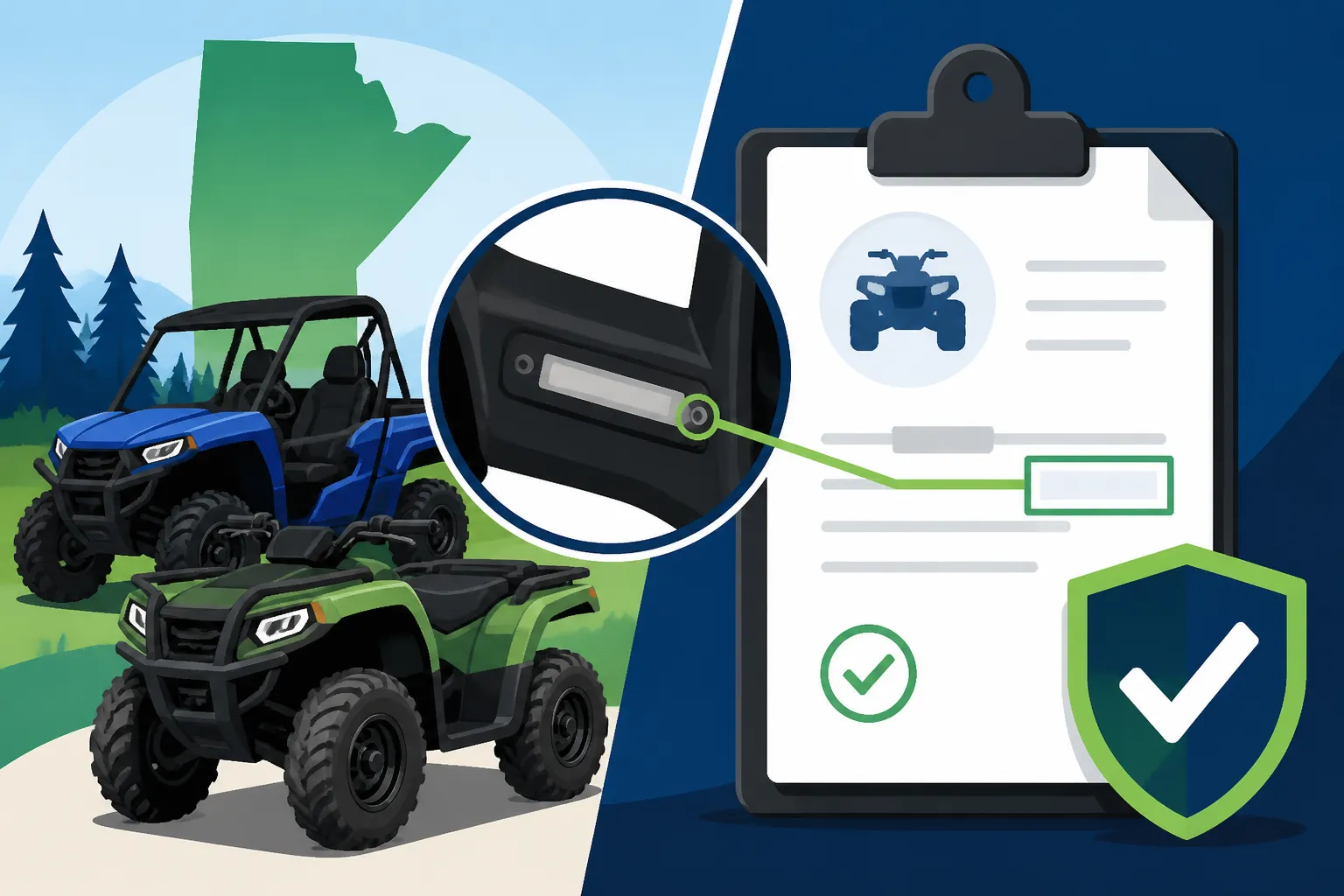
So, you know why it's important. Now, let's talk about where to find this crucial identifier on your machine. The VIN isn't always in the same spot on every off-road vehicle, but there are common places you should always check first. Remember, this number is factory-stamped into the frame of the machine, not a sticker that can be easily removed or replaced.
Common Locations on Different Machine Types
Manufacturers are required to place the VIN in an easily accessible, yet secure, location. On most ATVs (quads), you'll typically find the VIN stamped on the frame itself. Often, it's on the front left side of the frame, near the left front wheel, where the A-arm attaches to the frame. It could also be under the seat, on the frame cross-member, or near the steering column. For UTVs (side-by-sides), the VIN is frequently located on the frame structure, usually in the front wheel well on the driver's side, or sometimes near the passenger seat frame. Snowmobiles will have it on the tunnel, usually on the right side near the footrest or under the hood on the bulkhead. It's usually a 17-character alphanumeric code, though older machines might have shorter VINs. Don't be shy about getting down on your hands and knees with a flashlight, or even consulting your owner's manual if you're really stumped. Knowing these locations is key to a smooth process, especially when you're looking at [A Bill of Sale From a Manitoba Neighbour].
| Machine Type | Common VIN Locations |
|---|---|
| ATV (Quad) | Front left frame (near A-arm), under seat, steering column area |
| UTV (Side-by-Side) | Driver's side front wheel well, passenger seat frame |
| Snowmobile | Tunnel (right side near footrest), bulkhead under hood |
| Dirt Bike | Steering head tube, frame near engine mounts |
What to Do If the VIN is Damaged or Missing
Sometimes, especially with older machines or those that have seen a lot of hard use in the Manitoba bush, the VIN can be difficult to read. It might be obscured by mud, paint, rust, or even damage from an accident. Your first step is to thoroughly clean the area. Use a wire brush, degreaser, and good lighting. If you still can't read it clearly, or worse, if it appears to be intentionally altered or missing, this is a serious red flag.
If the VIN is genuinely illegible due to wear or damage and you're the current owner trying to register it, MPI may require a police verification or an inspection by a qualified mechanic to confirm the machine's identity. However, if you're buying a machine and the VIN is unreadable or looks tampered with, my strong advice is to walk away from the deal. It's not worth the potential trouble and legal complications down the line. You could end up with a machine that MPI refuses to register, or one that is eventually seized as stolen property. In such cases, trying to register a machine without a clear VIN can become a real ordeal, highlighting why [Manitoba Registration When the VIN Is Gone] is a significant challenge.
The Bill of Sale: What to Look For
The bill of sale is your proof of purchase, your legal document. It's not just a piece of paper; it's the foundation of your ownership. In Manitoba, whether you're buying from a private seller or a dealer, this document is what MPI will scrutinize when you go to register.
Essential Information Beyond the VIN
While the VIN is paramount, a comprehensive bill of sale should include several other key pieces of information to protect both the buyer and the seller. Make sure it clearly states:
- Date of Sale: This is crucial for establishing when ownership officially transferred.
- Full Names and Addresses of Both Buyer and Seller: Complete contact information for both parties.
- Detailed Machine Description: This includes the year, make, model, and colour of the ATV or UTV. The more detail, the better.
- Purchase Price: Clearly state the agreed-upon price. This is what MPI will use to calculate the Retail Sales Tax (RST) you'll pay when you register. Yes, [Manitoba RST Collected at Registration] happens even on private sales.
- Signatures of Both Buyer and Seller: This makes it a legally binding document. Some people even like to have a witness sign, though it's not strictly required for most private sales.
- "As Is" Clause (if applicable): For private sales, sellers often include a clause stating the machine is sold "as is, where is," meaning no warranties are implied or given. This protects the seller from claims about mechanical issues after the sale.
- Odometer/Hour Meter Reading: While not always required for ORVs, it's good practice to include it as it provides a snapshot of the machine's usage at the time of sale. This helps track depreciation and usage.
Having all this information documented clearly can prevent future disputes and ensures a smooth process when dealing with [Manitoba Autopac Agents and ORV Registration].
Using a Template for Peace of Mind
Let's be honest, not everyone is a legal expert, and writing a solid bill of sale from scratch can feel daunting. That's why using a reputable template is such a smart move. Websites like LawDepot offer easy-to-use bill of sale templates specifically for vehicles, which you can customize for an ATV or UTV sale. These templates guide you through all the necessary fields, ensuring you don't miss any critical information, including the all-important VIN field. Using a template from a service like LawDepot helps ensure consistency and professionalism, making the document clear and legally sound. It takes the guesswork out of the process and gives both parties confidence that the transaction is properly documented. While it might seem like a small thing, a well-drafted bill of sale is your primary defense against future complications, especially if there are questions about [Manitoba Registration and Lien Records].
Step-by-Step: The VIN Matching Process
So, you've found a machine you're interested in, or you're preparing to sell yours. What's the actual process for making sure that VIN is a match? It's really quite simple, but it requires a bit of attention to detail and a willingness to be thorough.
Before You Hand Over Any Money
This is the most crucial stage for the buyer. Before you exchange a single dollar, or even agree to the purchase, you absolutely must physically inspect the machine's VIN and compare it to any paperwork the seller provides.
- Locate the VIN on the Machine: As discussed earlier, use your flashlight and a cloth to find and clean the stamped VIN on the frame. Write it down carefully, character by character. Double-check for any signs of alteration, such as grinding marks, re-stamping, or welding in that area.
- Examine All Seller Paperwork: Ask the seller for any existing registration cards, previous bills of sale, or financing documents. They should have their current [Manitoba Registration Cards Carried at All Times] or a transfer document. Compare the VIN on these documents to the one you just wrote down from the machine.
- Cross-Reference with the Bill of Sale: If you're using a blank bill of sale (perhaps a template from LawDepot) or the seller has one prepared, make sure the VIN you found on the machine is meticulously copied onto that document. Do not rely on the seller just telling you the VIN; see it with your own eyes, and write it yourself if necessary.
- Ask for a "Stolen Machine Check": While not an official MPI service, you can use online resources (often for a small fee) or ask the seller to demonstrate a clear stolen vehicle check. Some police departments might even assist with this, though their capacity varies. This is just another layer of protection.
- Take Photos: Snap clear photos of the VIN on the machine itself and of the completed bill of sale, especially the section where the VIN is written. This creates an undeniable record of your due diligence.
- Review the Transfer Document: If the seller is transferring their current registration, make sure the VIN on the transfer section matches, and that they've signed it over correctly. This is part of the [Manitoba Transfer of Ownership Steps].
Taking these steps diligently will save you a world of hurt down the road. Never rush this part of the process.
If the Numbers Don't Match Up
So, what happens if you find a discrepancy? This is where you need to hit the brakes immediately.
- Minor Typo: If it's something like an 'O' instead of a '0' or a 'B' instead of an '8' on the bill of sale that was just written down, you might be able to correct it right there with the seller, initialling the change. However, if the VIN stamped on the machine is genuinely different from what's on official past registration documents, that's a much bigger problem.
- Significant Discrepancy or Tampering: If the VINs are significantly different, or if you suspect any tampering on the machine's frame, do not proceed with the purchase. It's simply too risky. A seller who is legitimate will understand your concerns and either be able to provide clear documentation to resolve the issue or acknowledge the problem. If they get defensive, pushy, or try to rush you, these are major red flags.
- No Paperwork or Unclear History: If the seller has [Manitoba Machines With No Paperwork] at all, and you can't verify the VIN against anything, you're essentially buying a machine with no traceable history. This is incredibly risky and generally not advisable unless you're comfortable with the potential challenges this presents when trying to register it with MPI.
When in doubt, walk away. There will always be other machines, but a legal and clear title to your off-road vehicle is priceless. Don't be afraid to ask [Manitoba Registration Questions Riders Ask] or [What an Officer Can Ask to See in Manitoba] if you have any doubts.
Disclaimer
This article is for general informational purposes only and does not constitute professional advice. Laws, prices and regulations vary by location and change over time. Consult a qualified professional for guidance on your specific situation.