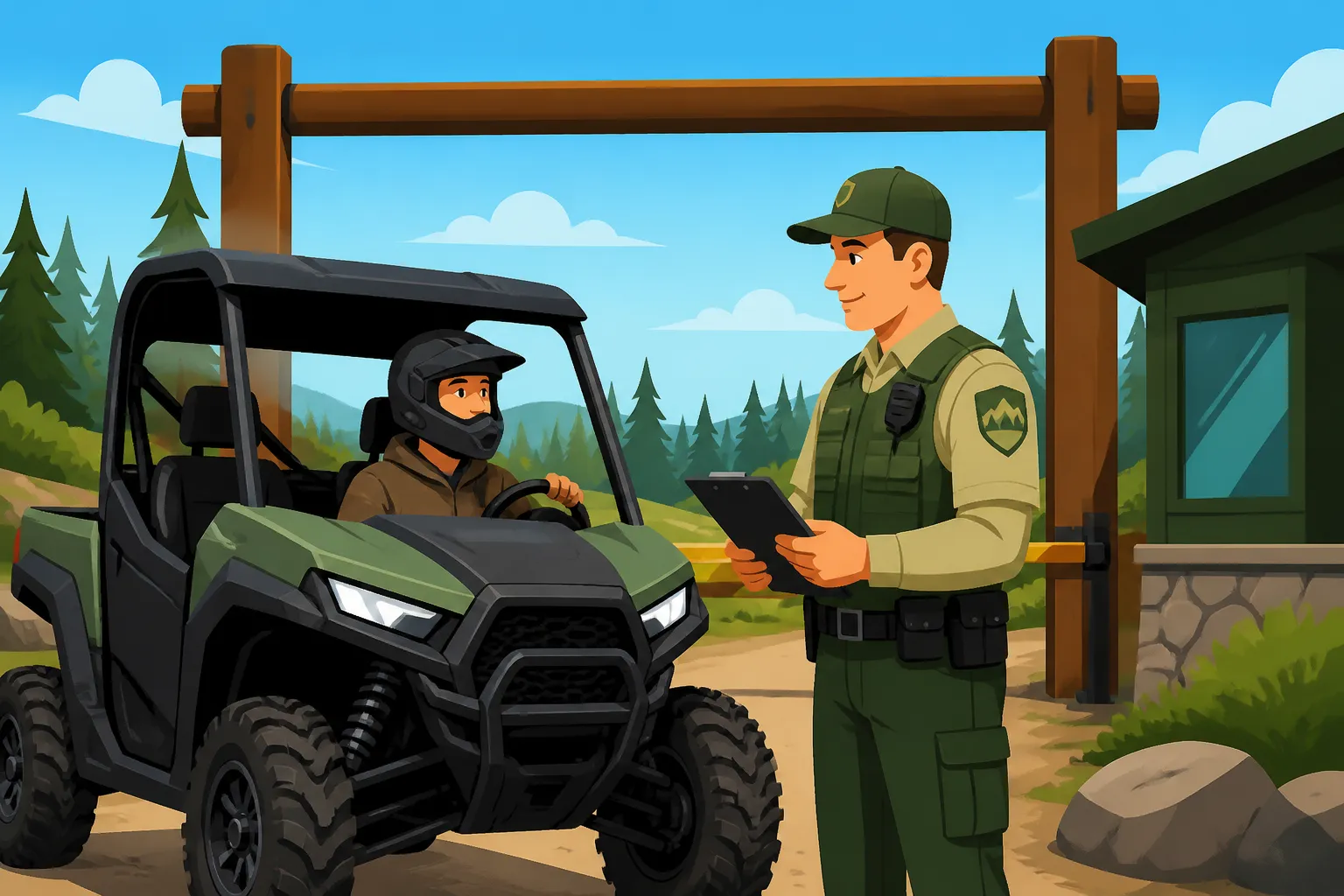
A Park Officer at a Manitoba Gate
A stop at a Manitoba park gate can raise a few different questions: whether your vehicle needs a park permit, whether your ATV or UTV paperwork is in order, and whether your planned route is open to machines. Keep those requirements separate. Having registration does not automatically give you park access or permission to ride every route.
What a Park Officer May Check
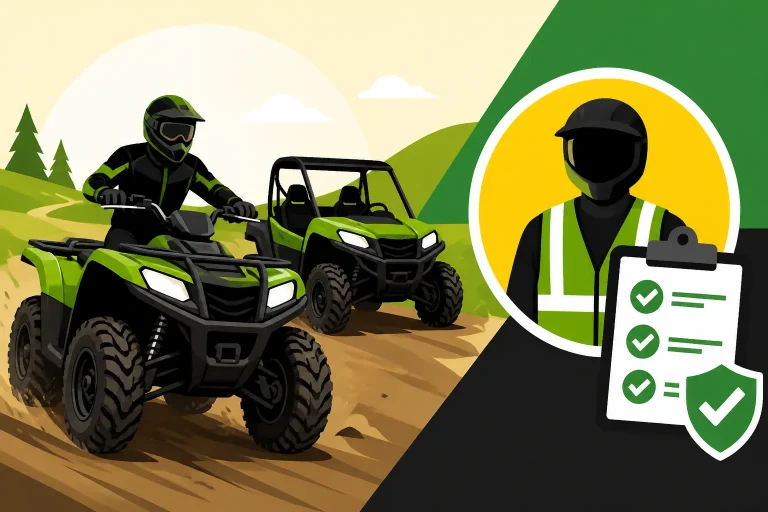
A gate stop is a good time to have documents easy to reach, not buried under camping gear or packed into a wet bag. Depending on the park and your trip, an officer or other park staff member may ask about your park vehicle permit, the machine you are bringing, or where you intend to ride. A check at the entrance does not necessarily replace checks on the trail.
Think of the paperwork as three separate questions:
- Can the vehicle enter the park? Check whether the vehicle you are driving or towing into the park needs a park vehicle permit. Follow the instructions for buying and displaying that permit.
- Is the ATV or UTV properly registered and insured? Be ready to show the machine’s registration and proof of insurance if requested.
- Is the route open to that machine? Confirm that the specific park allows off-road machines on the route you plan to use. Entry to a park is not permission to ride wherever you choose.
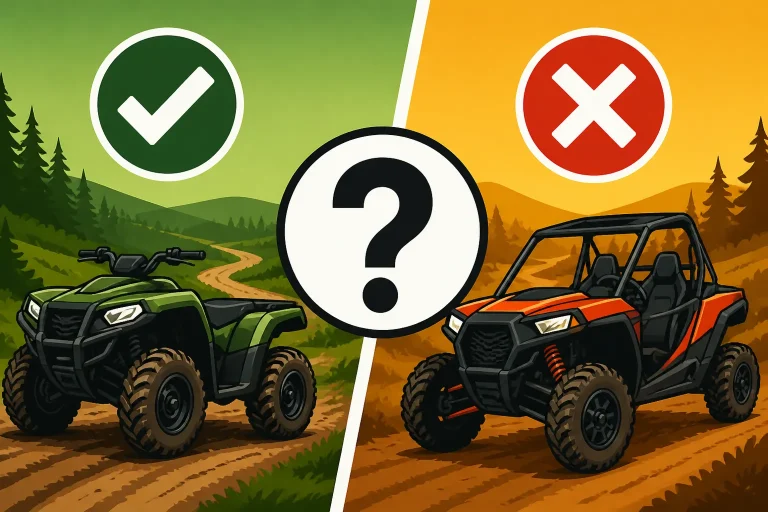
These requirements are not interchangeable. An ATV registration does not stand in for a park vehicle permit, and a park permit does not register the machine or make a closed route legal. The distinction matters especially when arriving with a truck and trailer: the truck may need a park permit even though the ATV is the vehicle you intend to ride. A Park Vehicle Permit Covers the Truck
| What the paperwork relates to | What to have ready | What it does not prove |
|---|---|---|
| Park entry | The applicable park vehicle permit and evidence of purchase or display, as instructed | That every road or trail is open to ATVs or UTVs |
| Machine registration | The registration document for the ATV or UTV | That you have permission to use a particular route |
| Insurance | Proof of coverage that applies to the machine and its use | That the machine is registered or permitted in the park |
| Route access | Current park information, route signs and any required permission | That a park permit or registration allows access to closed areas |
If you have registered your machine in Manitoba, keep its registration certificate with you while riding. The certificate is separate from any permit for entering a provincial park. The Certificate Manitoba Riders Must Carry at All Times explains the registration document requirement, while Carrying Papers on a Manitoba Trail covers practical ways to keep documents available and protected.
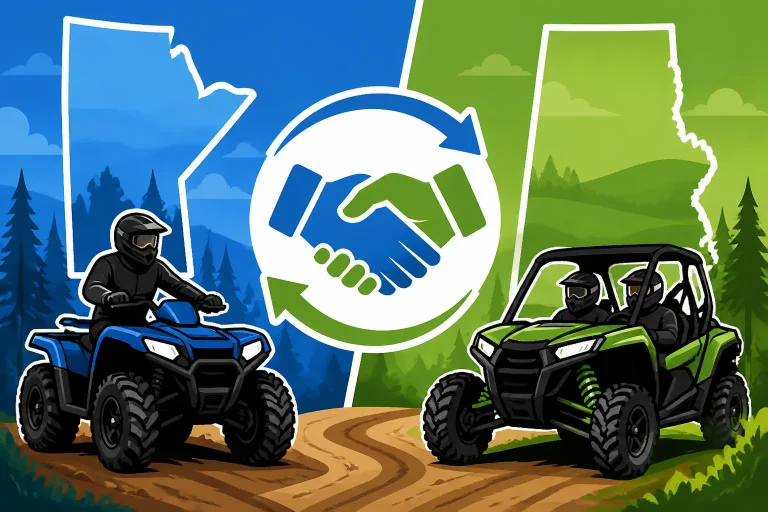
A visitor should also keep their home-registration documents and insurance proof handy. Manitoba generally recognizes a visitor’s valid home registration for the machine, but that does not remove the need to follow Manitoba’s operating rules or the park’s access conditions. Manitoba Visitors Registered at Home and Manitoba Visitors and Operating Rules explain those separate parts of a visit.
Keep Park Permits Separate From ATV Registration
A park vehicle permit is about taking a vehicle into a provincial park. ORV registration is about the machine’s registration status. They serve different purposes, and one should not be treated as proof of the other.
Before leaving home, identify each vehicle in your group: the truck, the trailer, and every ATV or UTV. Check the current park instructions for which vehicles need permits, how a permit must be displayed, and whether your planned visit has any special conditions. Do not assume that a permit attached to one vehicle automatically covers another. A park’s rules and permit arrangements may also differ from the requirements for riding on a club trail or elsewhere in the province.
Manitoba does not have a general ATV trail pass that replaces registration or park requirements. Some Manitoba registrations include a trails fee, but that fee is not a park vehicle permit and does not itself authorize access to a park route. Visitors with machines registered at home generally do not pay Manitoba’s registration trails fee just because they ride here. Manitoba Has No ATV Trail Pass and Why a Visitor Never Pays the Trails Fee explain why those charges should not be confused with park permits.
For an out-of-province visitor, a useful preparation list is:
- The machine’s current registration from its home jurisdiction.
- Proof of insurance that applies to the machine.
- The park vehicle permit required for the vehicle entering the park, if applicable.
- The park’s current route information and any relevant closure notices.
- The landowner or lease-holder permission required for any riding outside an authorized park route.
Use the park’s current instructions rather than relying on an old receipt, a friend’s permit or a general assumption about what a permit covers. If the permit is electronic or has display instructions, follow those instructions and keep the confirmation accessible. If you are unsure which vehicle needs a permit, contact the park before you travel. Resolving the question at home is easier than trying to sort it out at the gate with a loaded trailer.
Registration and Insurance for Manitoba Visitors
A visitor’s machine may remain registered in another province or state, but that does not mean every home-jurisdiction document automatically satisfies every Manitoba requirement. Confirm that the registration is valid for the machine and that your insurance is suitable for riding in Manitoba. Insurance rules for visitors can depend on where the machine is registered and the coverage attached to it. Manitoba Insurance Rules for Visitors provides more detail on that distinction.
Keep the original documents or accessible official copies in a secure, dry place. A phone can be useful for storing a backup, but it is risky to rely on a single device that could lose power, get wet or have no service. If your registration certificate is paper, a waterproof document pouch can help protect it. Keep the documents separate from items you might need to unload or leave at the campsite.
For Manitoba-registered machines, riders should carry the registration certificate while riding. If an officer asks to see it, you want to be able to locate it without emptying the machine. Visitors should take the same practical approach, even if the details of their home registration system differ.
Insurance deserves a separate check. A registration document is not proof that the machine has the coverage you need. Review the policy before travelling, especially if the ATV or UTV is borrowed, rented, financed, or being used by someone other than the named owner. Ask your insurer whether the policy applies in Manitoba and what proof you should carry. Manitoba Proof of Ownership on the Trail is also useful if you are borrowing or transporting a machine and want to understand what ownership records may be relevant.
If you are hauling more than one machine, check every machine individually. A single registration document or insurance slip may not cover the entire group. Make a simple list matching each machine’s make, model and identification number to its paperwork. That makes it easier to spot a missing document before departure and to answer questions clearly if a staff member asks which machine belongs to which rider.
Confirm Route Access Before Unloading
A park gate is not a blanket authorization to ride the entire park. Manitoba provincial parks can limit machines to designated routes, and a route that appears on an older map may be closed, restricted or unsuitable for your type of machine. Confirm the current rules for the park you plan to visit, then pay attention to signs and closure information when you arrive.
Check the exact route rather than asking only whether “ATVs are allowed in the park.” Ask whether the specific route is open to your machine, whether access is seasonal, and whether there are restrictions for side-by-sides or other vehicle types. If the park’s information is unclear, contact the park office before unloading. Manitoba Parks Allow Machines on Designated Routes Only and Manitoba Park Trail Closures explain why route-level checks matter.
A permit or a conversation at the gate cannot override a closure sign or open an undesignated route. Stay on routes that are explicitly permitted for your machine, and do not use a road, trail or shortcut just because another vehicle has travelled it. If you plan to ride beyond park boundaries, check who controls the land and whether separate permission is needed. Access conditions can change when land is privately occupied, under lease, or subject to a temporary restriction. Manitoba Crown Land Riding Permission and Manitoba Crown Lease Access Rules help clarify those different situations.
A quick arrival routine can prevent confusion:
- Stop where directed and keep the truck and trailer positioned safely.
- Have the park permit details ready for the vehicle entering the park.
- Keep each machine’s registration and insurance documents accessible.
- Ask about the current route status if you have not confirmed it already.
- Read posted signs before unloading, and follow any instructions from park staff.
- If access is uncertain, wait to unload until you have a clear answer.
Be straightforward if you are unsure which document applies to which vehicle. Staff can clarify park-entry or route questions, but they may not be able to resolve an insurance issue or replace missing registration paperwork. If a document is missing, contact the appropriate provider or registration office rather than assuming that a photo, bill of sale or permit will substitute for it.
The simplest plan is to treat the gate as one checkpoint in a larger preparation process: confirm park entry requirements, verify registration and insurance, and check route access separately. That way, a valid document does not create false confidence about a different requirement, and your group can avoid unloading only to discover that the route is closed.
Disclaimer
This article is for general informational purposes only and does not constitute professional advice. Laws, prices and regulations vary by location and change over time. Consult a qualified professional for guidance on your specific situation.