Visitors Follow Every Operating Rule Residents Do
A trip into Manitoba can make an ATV or UTV feel unfamiliar even when it is properly registered at home. The key distinction is that registration reciprocity may help you bring the machine, but it does not import your home province’s riding rules. Here’s how to separate paperwork from operating requirements and plan a ride without assuming a trail, road or park is open.
What visitor reciprocity covers
A visitor may be able to operate a machine in Manitoba using valid registration from their home jurisdiction, rather than registering it again in Manitoba. That does not mean every out-of-province machine automatically qualifies. The machine, its registration and the rider’s circumstances can matter, so check the conditions before travelling. Manitoba Visitors Registered at Home explains the registration side of the question.
Reciprocity is best understood as a paperwork issue, not a general exemption from Manitoba law. Even when your home registration is accepted, you still have to follow Manitoba’s rules for where and how to ride, as well as any applicable access conditions. Manitoba Visitors and Operating Rules covers that distinction.
| Question | What a visitor should establish |
|---|---|
| Can I use my home registration? | Confirm that it is current and that your machine and situation qualify for visitor recognition. |
| Do I need a Manitoba trail pass? | Manitoba does not have a general ATV trail-pass system; confirm whether any specific park, event or access permit applies. |
| Which riding rules apply? | Manitoba operating rules apply while you ride in the province. |
| Can I ride a trail or Crown land route? | Check that the specific route is open and that you have the required permission. |
| Does my home insurance work here? | Ask your insurer whether the policy remains valid in Manitoba and meets applicable requirements. |
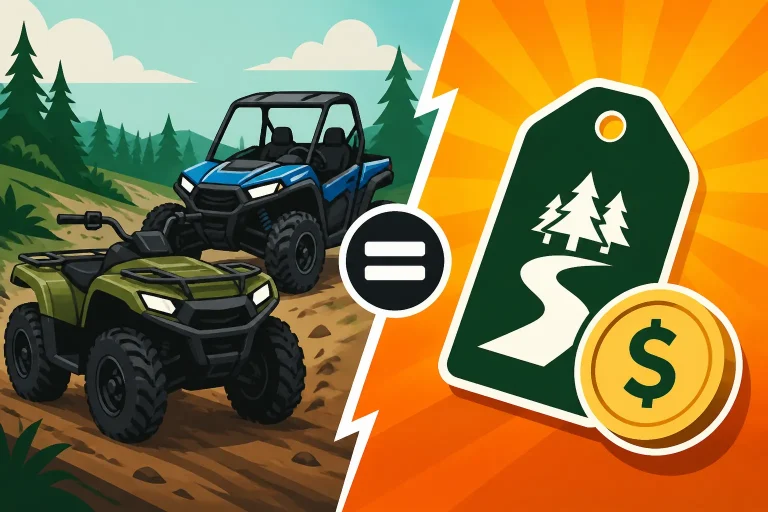
Manitoba registration includes a trails fee for machines registered in the province. That does not make the fee a universal trail pass that every visiting rider must buy. A visitor whose machine is properly registered elsewhere may not pay Manitoba’s registration-related trails fee, but should confirm that the registration qualifies and that the ride does not require a separate permit. The details are covered in Why a Visitor Never Pays the Trails Fee.
Do not treat a lack of a general ATV trail pass as permission to ride anywhere. A club corridor, provincial park, event route, private property and Crown land can each have separate access rules. Registration allows a machine to meet a registration requirement; it does not grant land access.
Before departure, carry proof of the machine’s current registration and ownership, plus insurance information. Keep the documents accessible while riding, not packed somewhere in the tow vehicle. An officer or land manager may need to confirm that the machine and rider meet the relevant requirements. For more on what to carry, see Manitoba Proof of Ownership on the Trail.
If your machine is not registered at home, its registration has expired, or the paperwork does not match the machine, do not assume that visitor status fixes the problem. Ask the appropriate authority or an Autopac agent what is required before you ride. Manitoba Rules for an Out-of-Province Machine is useful when the machine’s home registration or status needs closer attention.
Manitoba operating rules apply on the ride
Once you are riding in Manitoba, follow Manitoba’s operating rules, even if your home jurisdiction allows a different practice. A visitor should pay particular attention to road access, ditches, highway crossings, age and supervision rules, helmets, insurance, passengers and local restrictions.
Roads, ditches and crossings
Do not assume an ordinary public road is open to ATVs or UTVs because your home area permits road riding. Manitoba generally prohibits off-road machines from riding on roadways, subject to specific exceptions. A legal highway crossing is different from travelling along the road: crossing rules set conditions on where and how a machine may cross.
Some rules address distance from intersections and the manner of a crossing. For example, Manitoba’s crossing requirements include limits involving 5 metres from an intersection and 3 kilometres from the nearest intersection. These are not permission to use a highway as a route. Check the exact rule and the location before attempting a crossing. Start with Manitoba Rules for Crossing a Highway.
Ditch riding also has limits. The rules distinguish between a roadway and a ditch, and restrictions can depend on the machine type and which side of the road the ditch is on. A four-wheel-drive vehicle, for example, does not necessarily have the same ditch access as a smaller off-road machine. Follow the provincial requirements and any local restrictions; never assume that a visible ditch is an authorized trail.
Municipalities may also regulate riding on roads and other local areas. A route that seems usable on a map may be closed by a municipal by-law or local order. Check the municipality or local government district for the particular area you plan to visit. Manitoba Municipal By-Law Powers explains why provincial rules alone may not settle every local access question.
Rider age, supervision and helmets
A visitor’s age does not exempt them from Manitoba’s rider requirements. Rules can depend on age, the type of licence held and whether the rider is supervised. If you are travelling with children or teens, check the requirements for each rider rather than relying on the rules where you live.
Helmet rules also apply to visitors, subject to the exemptions set by Manitoba law. A helmet that is acceptable under your home rules may not necessarily meet Manitoba’s requirements. Check that the helmet carries a standard Manitoba accepts and make sure passengers are properly equipped too. Exemptions are limited and tied to specific circumstances; do not assume that a work, hunting or vehicle configuration exemption applies to a recreational trip.
Passenger limits matter as well. Carry passengers only if the machine is designed for them, and follow the manufacturer’s seating and restraint instructions. If a UTV has seat belts, use them as required. Having an extra seat or belt does not make an otherwise unsuitable passenger arrangement legal.
Insurance and safe equipment
Confirm insurance before crossing the provincial boundary. Ask your insurer whether the policy covers the machine while it is operated in Manitoba, what liability protection applies, and whether there are restrictions on the type of terrain or use. A registration document is not a substitute for proof that your insurance is valid. Manitoba Insurance Rules for Visitors can help you identify what to check.
A visitor should also verify that the machine is equipped for the planned ride. Lighting, visibility, passenger restraints and other equipment requirements can apply, particularly when conditions change or a route involves a permitted exception. Avoid assuming that a machine legal for private property at home is automatically ready for every type of Manitoba riding.
A sensible approach is to check your own documents, inspect the machine, and review Manitoba’s rules before the trip. If you are uncertain about an exemption, do not plan your ride around it until you have confirmed that it applies to your situation.
Access permits, trails and local restrictions
Registration and operating legality do not answer the most important route question: are you allowed to ride on this land? Permission depends on the place. A marked club trail, a provincial park route, private land and Crown land are not interchangeable.
For club trails, check the club’s current map and notices before unloading. Routes can be closed, changed or limited by conditions, land agreements or other users. Trail signs at the staging area are important, but do not rely only on a sign or map saved from an earlier trip. Confirm that the route is open for your machine type and the season.
Provincial parks have their own restrictions. Machines may be allowed on designated routes only, and a park permit may be required for the vehicle or visit. A permit to enter or park a tow vehicle does not necessarily authorize an ATV or UTV on every route. Check the park’s current rules and route information; see Manitoba Provincial Park Machine Rules.
Crown land is not automatically open for every kind of motorized travel. Restrictions, closures, leases and sensitive areas can affect access. Where a lease or other occupancy applies, the occupier’s consent may be necessary. Confirm both the land status and the permission needed before riding. Manitoba Crown Land Riding Permission is a useful starting point.
Private land requires the landowner’s permission. A trail that crosses a field or connects two public areas is not an invitation to use it. Respect gates, signs, crops, livestock and requests to stay off the property. Permission to ride one parcel does not automatically extend to neighbouring land.
Organized rides and special events may have additional requirements. Check with the organizer about permits, route approvals, insurance and any conditions that apply to participants. Do not assume that an event’s approval covers informal riding before or after the event.
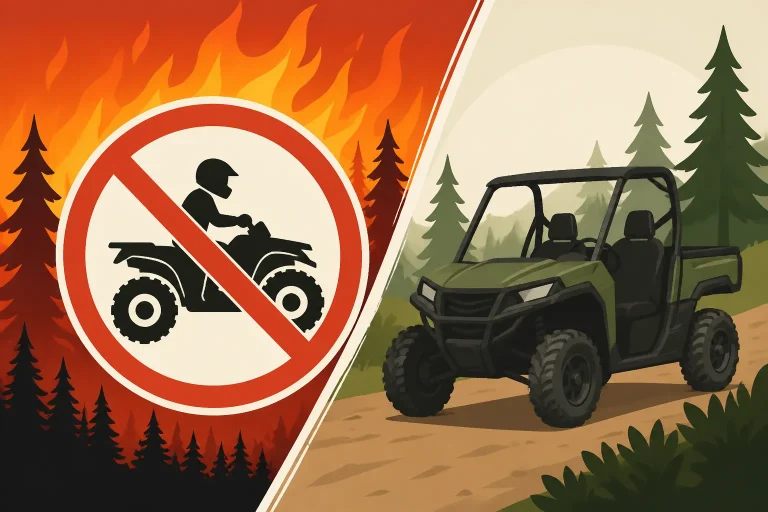
Wildfire restrictions can also affect where and how you travel. Closures or fire-related orders may change access to an area, and equipment that can create sparks may be restricted. Check current restrictions shortly before the ride and again if conditions change. A route that was open when you planned the trip may not remain open. Manitoba Wildfire Season Rules for Riders explains what to verify.
A practical checklist before you cross the border
A little preparation helps prevent a long drive ending with an unusable machine or an inaccessible route. Work through the paperwork and route checks separately; neither one replaces the other.
- Confirm registration status. Make sure the machine’s home registration is current and that it qualifies for visitor use in Manitoba. If ownership or registration documents are incomplete, settle that before travelling.
- Check insurance directly with your insurer. Confirm coverage in Manitoba, the required liability protection and any limits related to off-road use.
- Review the riding rules. Pay attention to road and ditch restrictions, highway crossings, age and supervision requirements, helmets, passengers and equipment.
- Choose a specific destination. Identify the trail, park, private land or Crown land area you intend to use. Do not plan around a broad assumption that the region is open.
- Verify permission and permits. Contact the relevant club, park office, landowner, event organizer or local government as appropriate. Ask whether the route is open to your machine and whether a separate permit is needed.
- Check for current closures. Look for trail notices, park updates, local restrictions and wildfire-related orders close to the day of the ride.
- Carry documents on the machine. Bring proof of registration, ownership and insurance in a form you can produce while riding. Protect paper copies from water and keep digital copies available as a backup.
- Make the machine fit the route. Check lights, tires, restraints, fuel and basic recovery equipment. Tell someone where you plan to ride, especially if the route has limited cell service.
If you are unsure whether a route, exception or document is acceptable, pause and ask the authority responsible for that specific issue. An insurer can confirm coverage; a municipality can clarify a local by-law; a park office can explain park access; and a landowner or lease holder can confirm permission. Getting the answer from the right place is more useful than relying on what was permitted at home.
The core rule is straightforward: your home registration may help establish that your machine is eligible to visit, but Manitoba’s operating rules and the destination’s access conditions govern the ride. Check both before you unload.
Disclaimer
This article is for general informational purposes only and does not constitute professional advice. Laws, prices and regulations vary by location and change over time. Consult a qualified professional for guidance on your specific situation.