Manitoba Area Closure Orders
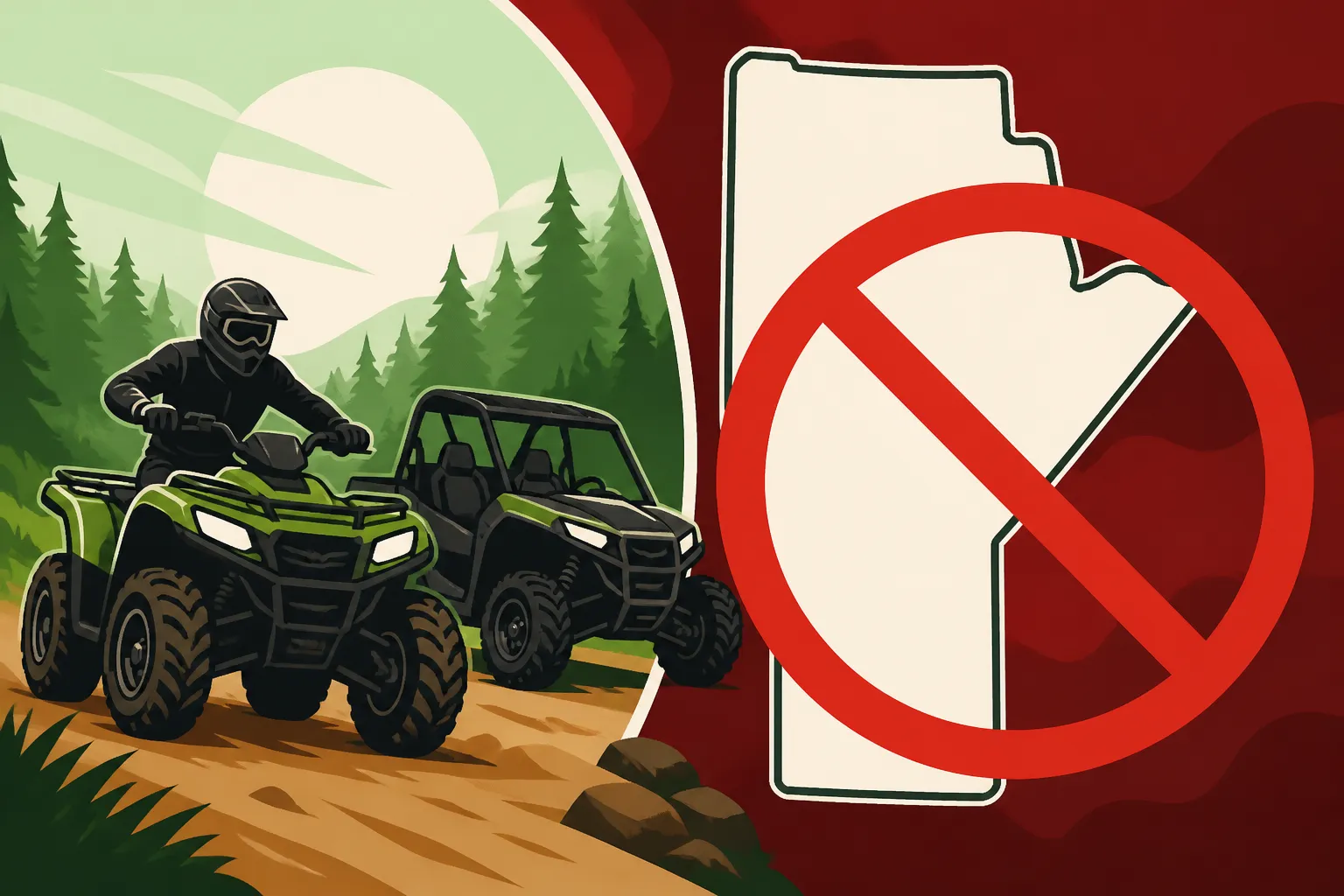
A Manitoba ATV or UTV registration, club membership or out-of-province permit does not give you permission to ride through a closed area. Closure orders can change where travel is allowed, sometimes with little notice. Before unloading, check whether your route falls inside an active closure, what travel is restricted and whether the order names any exceptions.
What a Manitoba area closure order means for riders
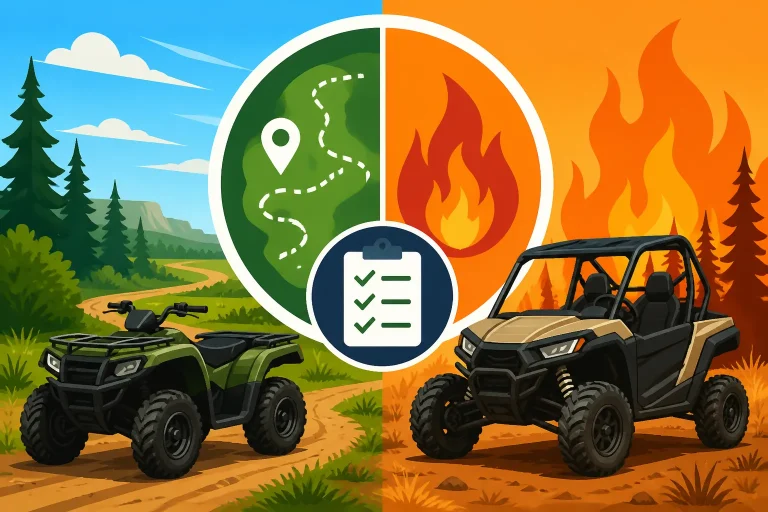
An area closure order restricts travel in a defined place. During wildfire season, a closure may be used to keep people out of an area because of fire danger, active fire, firefighting work or related safety concerns. The exact boundary and restrictions depend on the order in force.
For ATV and UTV riders, the practical point is simple: a trail, forest road or Crown land route that was open yesterday may not be open today. A valid registration or permit does not cancel a closure order. Nor does permission from a landowner automatically allow you to enter an area that has been closed by a public authority.
The order may apply to all travel, or it may set out specific limits and exceptions. Do not assume that a closure means the same thing everywhere, or that it automatically prohibits every activity across a large region. Read the current notice and map to understand what is closed, who is affected and when the restriction applies. Manitoba’s Manitoba Area Closures During Fire Season can help explain the broader seasonal context, but the current order is what matters for a particular ride.
Closures are different from general fire restrictions. A fire restriction may limit activities such as lighting a fire or using equipment that could create sparks, while leaving some travel routes open. An area closure can restrict entry or movement in the designated place itself. Check both the closure information and any fire-related restrictions that apply to your destination. The provincial Manitoba Wildfire Season Rules for Riders provide useful background, but they are not a substitute for checking the latest notice.
Also distinguish a provincial closure from a trail closure set by a club, park or land manager. A route can be closed by more than one authority, and each restriction may have a different boundary or reason. If a club trail is closed, do not use a nearby track as a workaround unless you have confirmed that route is open and you are allowed to ride there.
How closures affect permits, registration and visiting riders
Permits and registration address different questions from an area closure. Registration generally relates to the machine and the requirements for operating it. A park permit or other authorization may be needed for a particular location or activity. Neither one should be treated as permission to travel through a closed area.
The same principle applies to visiting riders. Having a machine registered in another province does not provide special access during a Manitoba closure. Visitors must follow applicable Manitoba operating rules and obey closures that affect the route they want to use. A home-province permit or trail pass does not override a local restriction. For more on visiting machines, see Manitoba Rules for an Out-of-Province Machine and Manitoba Visitors and Operating Rules.
| What you have or see | What it does | What it does not do |
|---|---|---|
| ATV or UTV registration | Helps meet requirements that apply to the machine | Does not authorize travel in a closed area |
| A park or trail permit | May allow access under the permit’s terms | Does not cancel a separate closure order |
| Out-of-province registration or permit | May be relevant to the machine’s status as a visitor | Does not exempt you from Manitoba closures |
| A route shown on an older map | Can help with trip planning | Does not confirm the route is open now |
| A highway that remains open | May allow travel along that highway | Does not necessarily open nearby trails, ditches or access roads |
A closure can affect a ride even if the trailhead sits outside the boundary. Your intended route might cross into the closed area, or a connecting road may be restricted. Map the full ride, including the trailer approach, unloading point, fuel stop and return route. If the route crosses a boundary, confirm that the crossing is permitted rather than relying on the trail’s name or the location of the parking area.
Do not infer that an open road makes nearby off-road travel legal. Some closure notices may preserve access on particular highways or allow limited travel, but that is not a general permission to leave the road and ride a trail. The details matter. Why Trunk Highways Stay Open in a Closure and Residents Allowed the Most Direct Route Home cover examples of exceptions that should not be stretched beyond their stated purpose.
How to check a closure before you ride
A reliable check takes more than looking at an old club map or asking whether a trail is usually open. Conditions and orders can change, so verify the current information close to departure and again if the ride is several days away.
- Check the current provincial closure information. Look for active area closures and any notice describing their boundaries, start time, affected activities or exceptions. A general seasonal page may explain the rules, but confirm that you are looking at the current order.
- Compare the boundary with your full route. Use a current map to see whether the trail, access road, staging location or planned detour enters the closed area. Check the map legend and date rather than relying on a screenshot from a previous trip.
- Read the wording, not just the map shading. A map gives a visual boundary, but the notice explains what is restricted. Pay attention to whether the restriction applies to entry, travel, particular activities or a named group.
- Check for overlapping restrictions. A provincial closure, park rule, club trail closure, local by-law or land-access condition may each affect the same ride. Confirm each one that applies.
- Ask the right local contact if something is unclear. A park office, local government or trail club may help clarify access to its own roads and routes. For the terms of a provincial closure, rely on the responsible official information rather than an informal interpretation.
- Recheck before unloading. Look for updates on the day of the ride, especially when wildfire activity or weather has changed. Check trailhead signs and obey any posted closure notice.
A digital map is useful, but do not make it your only source. Save or print the route and relevant notices where practical, and carry a map that still works if cell service drops. This is particularly important on remote routes, where a closure boundary may be hard to confirm from the trail. Checking the Fire Restrictions Map From Your Phone offers a useful reminder to check current information before setting out; download what you need before leaving reliable coverage.
If a map and sign appear to conflict, do not treat the less restrictive one as permission. Stop, avoid entering the questionable area and verify the current restriction through an official channel. A sign may have been posted after you checked online, while a map may take time to reflect a new change. When you cannot confirm that a route is open, choose another route or postpone the ride.
Exceptions, enforcement and safer trip choices
Some closure notices may include exceptions for particular people, purposes or routes. An exception is not a general invitation to ride. It applies only if the notice actually covers your circumstances, and it may allow only limited travel. For example, a provision allowing a resident to travel home by the most direct route should not be read as permission to tour the area, take a recreational detour or continue along a nearby trail. Check the specific wording in When a Minister Closes an Area to Travel.
The same caution applies to roads that remain open. A through-route may stay available while adjacent recreation areas are closed. Being able to drive or ride along a permitted road does not necessarily allow you to turn off onto a forest road, trail, field access or other route. Treat exceptions as narrow, and do not rely on a friend’s account of what was allowed on a previous closure.
If a closure blocks your planned route:
- Turn around before entering the closed area.
- Do not move, ignore or ride around a closure sign or barrier.
- Do not assume that a faint side trail, fire guard or alternate track is an approved detour.
- Choose a route that stays clearly outside the boundary, then confirm that the land or trail is open to your machine.
- If you are already inside the affected area, follow the directions in the notice or from officials. Do not take a longer recreational route to get out.
Riding into a closed area can create safety risks for you and interfere with emergency or response work. It may also lead to enforcement consequences. The applicable consequences depend on the authority and circumstances, so avoid relying on a rumour about a particular fine. See Manitoba Penalties for Riding a Closed Area for more on why a closure should be taken seriously.
A practical plan includes a backup destination outside the closure area. Before leaving, share your intended route with someone, carry a working communication option and keep enough fuel to turn back or use an approved alternative. On longer trips, check again at the staging area rather than assuming the information you reviewed at home is still current.
Most importantly, treat an area closure as a route-planning stop sign, not a paperwork problem. A different permit, a valid registration or a familiar trail does not make restricted travel permissible. Confirm the current boundary and terms, and ride only where access is clearly allowed.
Disclaimer
This article is for general informational purposes only and does not constitute professional advice. Laws, prices and regulations vary by location and change over time. Consult a qualified professional for guidance on your specific situation.