Manitoba Game Retrieval by Machine
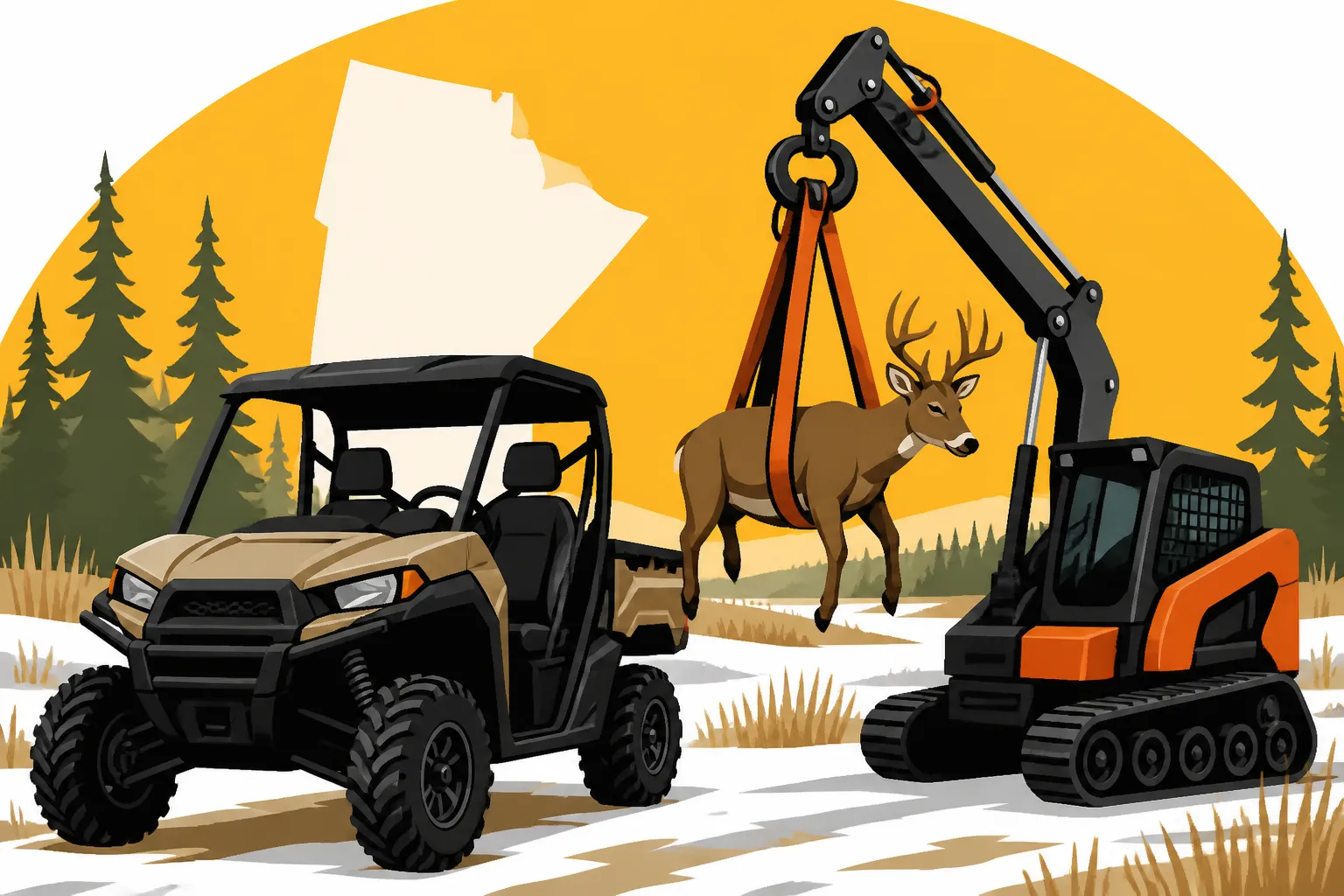
Recovering legally harvested game with an ATV or UTV in Manitoba involves more than getting the animal back to camp. Hunting rules, access permission, machine-use restrictions and local closures can all apply. The safest approach is to confirm that the route and retrieval method are allowed before the hunt, then keep the machine’s use separate from the act of pursuing wildlife.
What “game retrieval by machine” does and does not allow
A machine can make it easier to move a harvested animal, especially when the terrain is wet, the distance is long or the carcass is too heavy to carry. But a legal harvest does not automatically make every kind of machine use legal. Hunting rules and off-road vehicle rules both matter, and they answer different questions.
Hunting rules govern the taking and handling of wildlife. They include species-specific requirements, such as the applicable licence and tag, and any rules for reporting or transporting the animal. Off-road vehicle rules govern where and how an ATV or UTV may travel. You may need to comply with both sets of rules during one retrieval.
Do not use an ATV or UTV to chase, pursue, harass, locate or flush wildlife for a harvest. Nor should you assume it is lawful to shoot from a machine or use a machine as part of the pursuit. Keep the hunt itself distinct from the later task of moving an animal that has already been legally harvested. For details about access connected to hunting, see Manitoba Hunting Access by Machine and Manitoba Rules for Carrying a Firearm.
The key point is that “retrieving game” is not a general exemption from restrictions on motorized travel. A route that looks convenient on a map may cross private property, a Crown lease, a restricted area or land where machines are not permitted. A cutline or road may be physically passable but still closed to ORVs. Before relying on a machine, verify the rules for the exact location, species and circumstances.
| Question | What to confirm before you go |
|---|---|
| Was the animal harvested legally? | Confirm the hunting season, licence, tag and species-specific requirements. |
| Is the planned route open to your machine? | Check land access, trail or road restrictions, closures and local rules. |
| Do you have permission to cross the land? | Confirm access with the landowner or leaseholder where required. |
| Can the carcass be transported as planned? | Check tagging, reporting and transport requirements for the species. |
| Is the machine ready for the route? | Check its condition, fuel, recovery equipment and any required documents. |
Check the land and route before the hunt
The practical question is not only whether you may retrieve an animal. It is also whether you may ride the intended route. Access can differ from one parcel or corridor to the next, and permission to hunt does not necessarily include permission to drive an ATV or UTV across the land.
Crown land and Crown leases
Do not treat all Crown land as open to motorized travel. Access may be affected by restrictions, sensitive areas, road or trail status, seasonal closures and other land-use rules. Find out whether the specific route is open to the type of machine you intend to use. [Manitoba Crown Land Access Rules] explains why access permission and machine use should be checked separately.
A Crown lease is a further reason to verify access. A leaseholder may have rights over the land, and public access or hunting access does not automatically settle whether you may drive across it. Contact the leaseholder when needed and get permission before entering or crossing a leased area. See Manitoba Crown Lease Access Rules for the access distinction.
If your route uses a trail, fire guard or other corridor, confirm that motorized travel is allowed there now. A route shown on an older map may have changed, and a trail used by local riders is not necessarily open to every machine or every activity.
Private land and local restrictions
On private land, get permission from the owner before riding in. A hunting invitation or permission to recover an animal should be specific enough to cover the route and the machine. Ask whether you may cross fields, use a gate, travel after dark or bring another rider. Leave gates as instructed and avoid crops, livestock and areas the owner identifies as sensitive. More detail is available in Manitoba Private Land Permission.
Municipalities and local governments can also affect where an ORV may travel. A road, ditch or trail can have local restrictions even when it appears accessible. Check the rules for the municipality or community where the retrieval will happen, rather than assuming provincial rules answer every access question. Manitoba ORV Road Rules Explained covers the need to distinguish road access from off-road access.
Parks and other managed areas may have their own route restrictions. Do not assume that a hunting licence, a park visit or permission from one landholder lets you ride wherever you need to go. If a proposed route enters a managed area, ask the responsible office which routes are open to your machine and whether any additional permit or condition applies.
Closures can change the plan
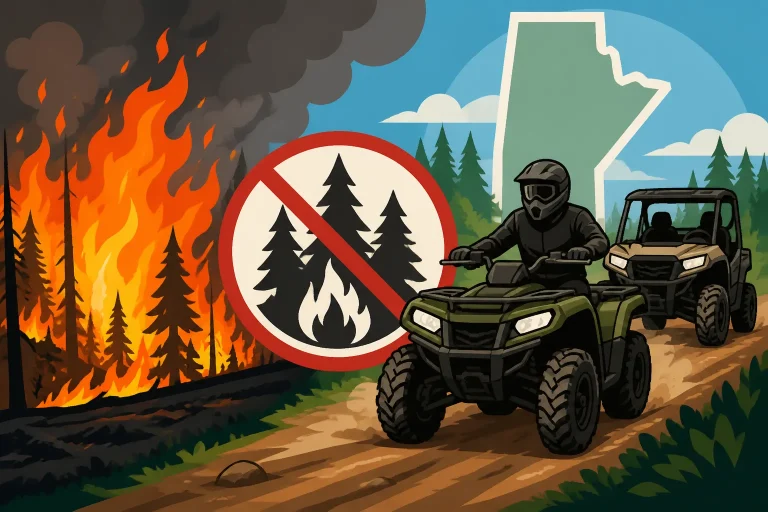
Fire restrictions, temporary area closures and other notices may affect access after you have planned a hunt. Check current notices for the area before you leave and again if conditions change. A route that was open when you made the plan may not remain available.
For wildfire-related closures and restrictions, consult Manitoba Wildfire Season Rules for Riders. If the planned route becomes closed, do not improvise a detour across unapproved land. Arrange another lawful way to recover the animal, or contact the relevant authority or landholder for direction.
Plan the retrieval without turning it into a pursuit
A good retrieval plan starts before the hunt, not after an animal has been harvested. Think through where the machine can legally travel, how the animal will be moved and what you will do if the machine cannot reach the harvest site.
Choose a route and backup method
Map the route from a lawful staging point to the permitted travel area. Confirm access with the people responsible for the land, and identify where the machine must stop. A short carry or hand-drag may be necessary between the harvest site and a legal route. Do not extend the route just because a different path looks easier.
Plan for a backup that does not depend on entering restricted land. Depending on the terrain and distance, that could mean carrying gear to move the carcass, using a sled or arranging help from another person. Make sure any equipment you bring is suited to the animal and the ground; a steep, muddy or muskeg route can turn an easy-looking trip into a recovery problem.
If you expect to travel in a group, agree on the route and stopping points beforehand. More machines can increase ground damage, noise and the chance that someone takes an unauthorized shortcut. Keep the group together and do not send a rider ahead to scout by crossing land you have not been authorized to enter.
Keep the harvest and transport steps clear
After a harvest, follow the species-specific requirements for the tag and carcass. Requirements can differ, so do not rely on what applied to another species or another season. Check the current official hunting information before the trip, and keep required documents with you.
When transporting a carcass, make sure it remains identifiable and handled as required. Do not remove tags, divide or process the animal in a way that conflicts with applicable rules. If you are unsure whether a particular transport method, route or stop is permitted, ask the relevant wildlife authority before hunting rather than trying to resolve it in the field.
Firearm handling needs separate attention during transport. Follow the rules that apply to the firearm and the machine, and do not assume a hunting licence allows a loaded firearm to be carried or used in any way you choose. Review Manitoba Rules for Carrying a Firearm and confirm current requirements for your situation.
Protect the ground and other users
A machine can damage wet ground quickly, particularly in muskeg, beside water or on soft shoulders. Stay on the permitted route, avoid creating new tracks and turn back if conditions make travel destructive or unsafe. Do not push through a bog or wet area simply because the carcass is close.
Respect other users, including landholders, hikers, riders and wildlife managers. Reduce speed near people, buildings and livestock, and keep noise down where possible. If you encounter a gate, barrier or closure sign, do not treat it as an obstacle to work around. It may mark a legal boundary or a safety restriction.
Carry the machine’s registration certificate and other required documents. If you are riding where registration applies, do not assume that a hunting trip changes the requirement. Carrying Your Registration Card on Every Ride covers the practical reason to keep the certificate available.
A pre-trip checklist for retrieving game
Use this checklist before the hunt, then review it again if the harvest location or route changes. A plan that was lawful for one spot may not work for another.
- Confirm the hunting requirements. Check the current season and species rules, licence and tag conditions, and any applicable reporting or transport requirements.
- Separate retrieval from pursuit. Do not use the machine to chase, locate, flush or harass wildlife. Plan to use it only for a lawful purpose after the animal has been harvested.
- Confirm route access. Identify the land and corridor you will cross. Check for Crown land restrictions, leaseholder rights, private property, park rules, municipal restrictions and temporary closures.
- Get permission where required. Ask the landowner or leaseholder before riding across their land. Be clear about the machine, route and intended activity.
- Set a stopping point. Decide where the machine must remain and how the final distance will be covered if motorized travel is not allowed to the harvest site.
- Prepare a backup plan. Bring suitable recovery equipment, enough fuel and a non-motorized option if the route is blocked, too wet or unsafe.
- Carry required paperwork. Keep registration and hunting documents accessible, and follow the rules for firearm transport.
- Check conditions again. Look for fire restrictions, closures and route updates before leaving and if the plan changes.
- Leave the land as you found it. Avoid new tracks, close gates as instructed and pack out waste or equipment.
If there is uncertainty about whether a machine may enter a particular area or retrieve a particular animal, pause and confirm with the responsible authority or landholder. A phone call before the hunt is easier than dealing with an access complaint, damaged land or a wildlife-rule issue afterward.
Disclaimer
This article is for general informational purposes only and does not constitute professional advice. Laws, prices and regulations vary by location and change over time. Consult a qualified professional for guidance on your specific situation.