Manitoba Wildlife on the Trail
A wildlife encounter can turn an ordinary Manitoba ATV or UTV ride into a stressful moment, especially when a moose steps onto the trail or you spot a bear near the bush. This guide explains how to prepare, what to do when animals appear, and how to ride in ways that reduce disturbance and keep people, pets, and wildlife safer.
Prepare for wildlife before you leave
Expect animals to be close to the trail
Manitoba’s forests, wetlands, fields, and lakeshores are home to wildlife that may cross a trail or use the same corridor as riders. Depending on where you ride, you might see deer, moose, black bears, foxes, beavers, or birds. An animal appearing suddenly around a bend is not unusual, so ride as though the trail could be shared even when it looks empty.
Wildlife activity can change with season, weather, food availability, and time of day. Animals may be more noticeable near water, marshy ground, berry patches, or forest edges, but there is no reliable schedule that guarantees a trail will be clear. Early or late rides can mean reduced visibility, and a headlight does not give you the same warning distance as daylight.
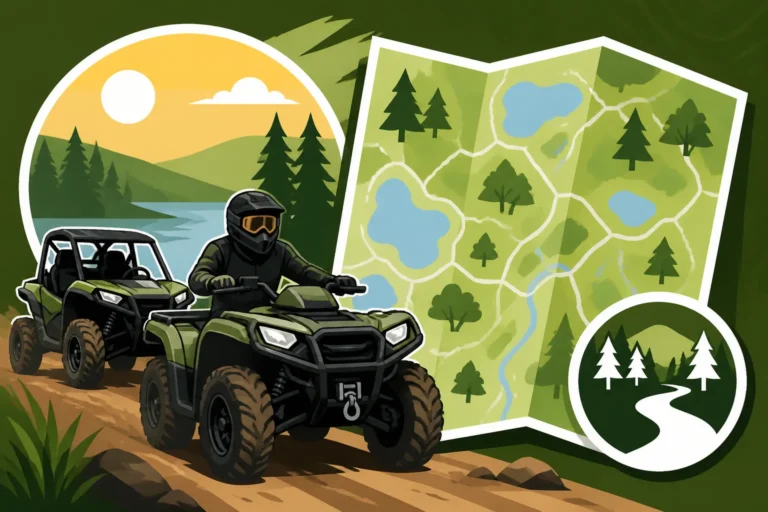
Before setting out, check the route and any current closures or advisories that apply to the area. A trail map can help you understand where you are going, but it cannot tell you whether an animal is around the next corner. For route planning, some riders use apps such as onX Offroad alongside local trail information; still carry a practical backup plan for areas with weak or no cell service. See [Manitoba Trail Conditions Before You Haul] and [Manitoba Trail Apps and Maps] when preparing a route.
Pack for a slower, more flexible ride
Leave enough time to stop, wait, or turn around if wildlife is on the trail. A schedule that depends on making fast progress can push riders to crowd an animal or continue when visibility is poor. If the group is running late, changing the plan is safer than trying to make up time by riding faster.
Let someone outside the group know your intended route and when you expect to check in. This matters especially on remote rides, where cell coverage may be unreliable and help may take time to reach you. Carry water, basic first aid supplies, a charged phone, and any communication or navigation equipment appropriate to the area. A paper map can be useful if your phone battery dies or you lose signal. For remote routes, review [Cell Dead Zones in Northern Manitoba] and [First Aid on a Long Manitoba Loop].
| Before the ride | Why it helps |
|---|---|
| Check trail access and closure information | Wildlife or other conditions may affect where you can ride |
| Plan a route with time to spare | Gives your group room to stop or turn back without pressure |
| Tell someone your route and check-in plan | Helps others respond if you do not return as expected |
| Carry navigation and communication backups | Phone coverage and battery life can be unreliable in remote areas |
| Secure food and rubbish | Reduces the chance of attracting animals to a stop or campsite |
| Agree on group signals and stopping rules | Helps everyone react calmly when an animal appears |
Keep food, rubbish, and pets under control
A stop for lunch can leave smells that attract animals, even when the group is only away from the machines for a few minutes. Keep food sealed, pack out every wrapper and scrap, and do not leave coolers, bags, or rubbish behind. Never feed wildlife. Feeding can draw animals toward people and machines, and an animal that learns to associate people with food may become a greater risk to everyone.
If you bring a dog, keep it under close control and follow the rules for the area. A dog that chases or barks at wildlife can provoke an animal and may run back toward its owner with the animal following. A leash is not a substitute for distance or good judgment: if wildlife is nearby, give the encounter space and move away when it is safe.
What to do when wildlife is on the trail
Stop at a safe distance and give animals room
When you see an animal ahead, ease off the throttle and stop well before reaching it. Avoid revving the engine, honking, or driving toward it to encourage it to move. Turn off the engine if doing so is safe and practical. Keep the group together, speak calmly, and let the animal decide whether to leave.
Do not surround an animal or block its route into the bush. A machine can feel intimidating, particularly when several riders approach at once. If the animal does not move, do not treat that as permission to get closer for a better look or photograph. Back away along the route if you have room, or wait quietly from a safe position. If the trail remains blocked, turn around rather than forcing a passage.
On a narrow trail, tell riders behind you to stop before they reach the animal. A line of machines closing in can leave the animal feeling trapped. Good group habits matter here; [Manitoba Trail Etiquette Locals Expect] and [Yielding on a Narrow Manitoba Trail] offer useful reminders for sharing limited trail space.
Respond carefully to a bear encounter
If you see a bear, do not approach it, follow it, or try to drive it away. Give it an open route to leave. Keep people together, keep pets controlled, and avoid sudden movements or loud attempts to startle it. If the bear is far enough away and moving off, remain stopped until it has left the area, then continue cautiously when the trail is clear.
If a bear is close, do not try to squeeze past it or use the ATV to chase it away. Stay calm and create distance when you can do so without moving toward the animal. The right response can depend on how the bear is behaving and how close it is, so follow current local wildlife guidance for the area. If the animal is acting aggressively or your group cannot get away safely, prioritize getting people to a safer location and contacting local authorities when it is possible.
Never leave food or rubbish at a stop to distract a bear. That can create a dangerous association between people and food. For more focused preparation, read [Manitoba Bear Encounters While Riding].
Give moose and other large animals extra space
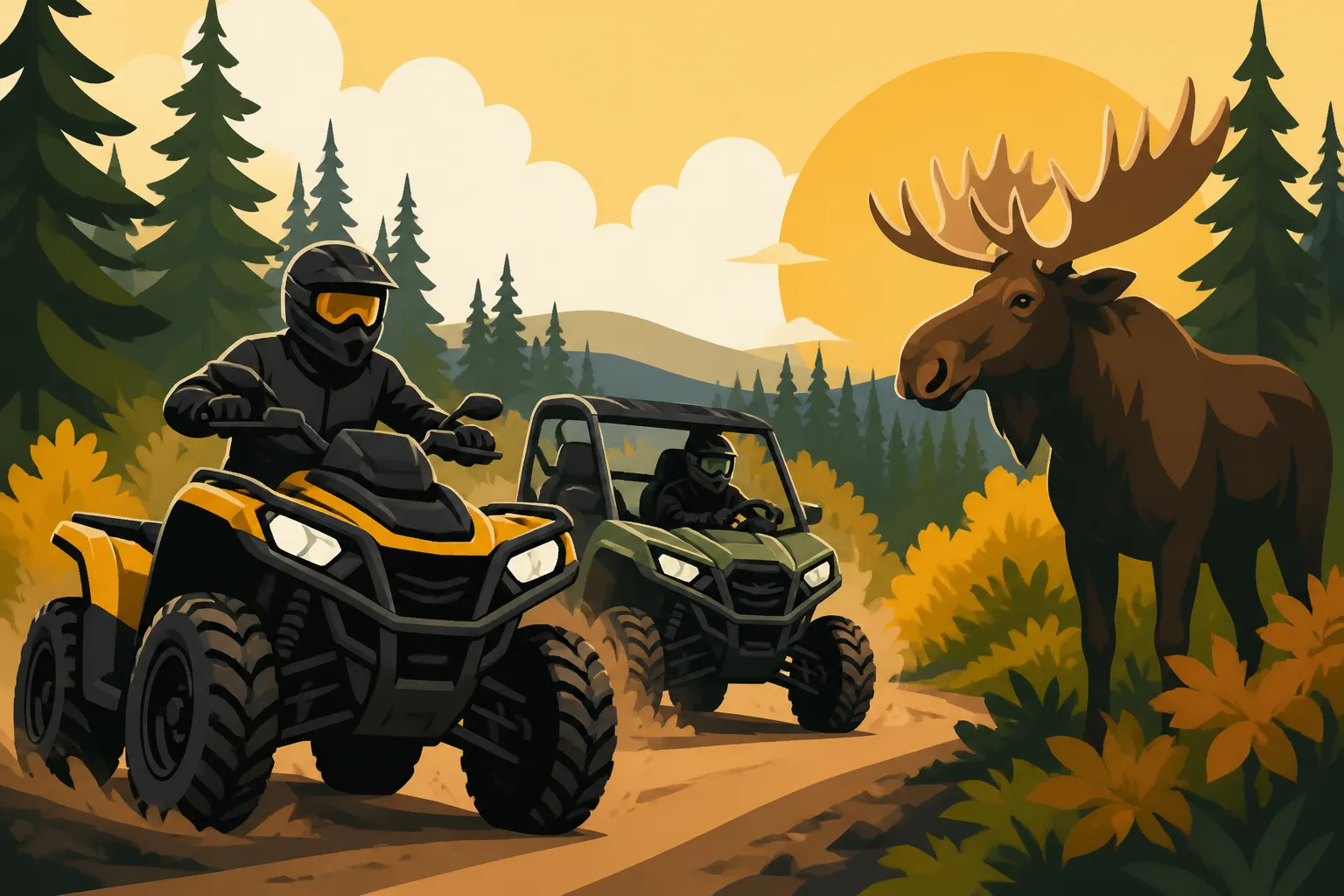
A moose can look calm while still being unpredictable, and its size leaves little margin for error if it suddenly moves. Stop well back, do not approach for a photograph, and leave it an unobstructed route away from the machines. Be particularly cautious if a calf is nearby: never position yourself or your vehicle between a parent and its young.
If a moose does not move, do not crowd it or try to pass close by. Back away slowly if the route behind you is clear. The same basic principle applies to deer, elk, and other large animals: give them room, keep the group quiet, and do not turn a sighting into a pursuit. See [Manitoba Moose Encounters While Riding] for more guidance on handling a moose sighting.
Ride in ways that reduce disturbance
Slow down where sightlines are short
The most useful response to wildlife is often to prevent a close encounter in the first place. Reduce speed around blind corners, hill crests, dense brush, water crossings, and trail sections where you cannot see far ahead. Keep enough space between machines that each rider can stop without being pushed from behind. Dust, mud, and vegetation can further reduce visibility, so adjust your pace to what you can actually see.
A machine’s engine noise may not make an animal move away in the direction you expect. Do not assume that a loud approach will clear the trail. Stay alert for tracks, fresh droppings, disturbed brush, or other signs that animals may be nearby, but do not leave the trail to follow them. If conditions make it hard to see or hear what is ahead, slow down or stop.
Stay on permitted routes and avoid sensitive ground
Riding off established routes can damage vegetation and wet ground, and it can take riders into places where wildlife is feeding, sheltering, or moving between habitats. Do not use an animal sighting as a reason to leave the trail. If a route is closed or access is uncertain, choose another permitted route rather than making your own path around a barrier.
Be cautious around wetlands, shorelines, nesting areas, and other sensitive places. A trail shown on a map is not a blanket permission to ride everywhere nearby. Follow signs, local restrictions, and land-access requirements, including where a route crosses private land or a Crown lease. [Manitoba Sensitive Areas to Avoid] and [Manitoba Crown Land Access Rules] can help you think through those access questions.
Keep a group ride calm and coordinated
Before the ride, agree on a simple way to alert the group to wildlife or an unexpected stop. Riders should know to slow down, keep their distance, and wait for instructions rather than passing the person in front. If one rider spots an animal, the group should avoid crowding forward to get a look.
Ask the lead rider to set a pace that works for the least experienced person in the group and for the terrain. A new rider who is focused on keeping up may miss an animal or brake too late. Keep the group compact enough to communicate, but leave room between machines for safe stopping. If someone is shaken after an encounter, take a break and check that everyone is ready before continuing.
After a sighting or close encounter
Leave the area without drawing attention
Once the animal has moved away and the route is clear, continue slowly and keep watching the trail. Do not follow the animal to see where it went. Avoid stopping nearby to take pictures or inviting other riders to approach. The goal is to leave the area as undisturbed as practical.
If the animal remains near the route, blocks passage, or appears injured or unusually aggressive, turn back if you can do so safely. Report the concern through the appropriate local or provincial channel when practical, especially if the animal poses a continuing hazard to other trail users. Do not try to handle or move an injured animal yourself.
Talk through what happened with the group
A short debrief can help everyone make better decisions on the rest of the ride. Ask whether the group stopped in time, whether riders behind had enough warning, and whether the route or pace should change. This is not about blaming the person who spotted the animal; it is about identifying a safer response for next time.
If the encounter exposed a planning problem, adjust the routine before the next trip. That might mean leaving earlier, choosing a route with clearer sightlines, carrying better navigation backup, or setting a firmer rule that the group will turn around when an animal blocks the trail. A small change can prevent riders from feeling pressured into a risky close pass.
Disclaimer
This article is for general informational purposes only and does not constitute professional advice. Laws, prices and regulations vary by location and change over time. Consult a qualified professional for guidance on your specific situation.