Crossing a Parking Lot to Reach a Trail
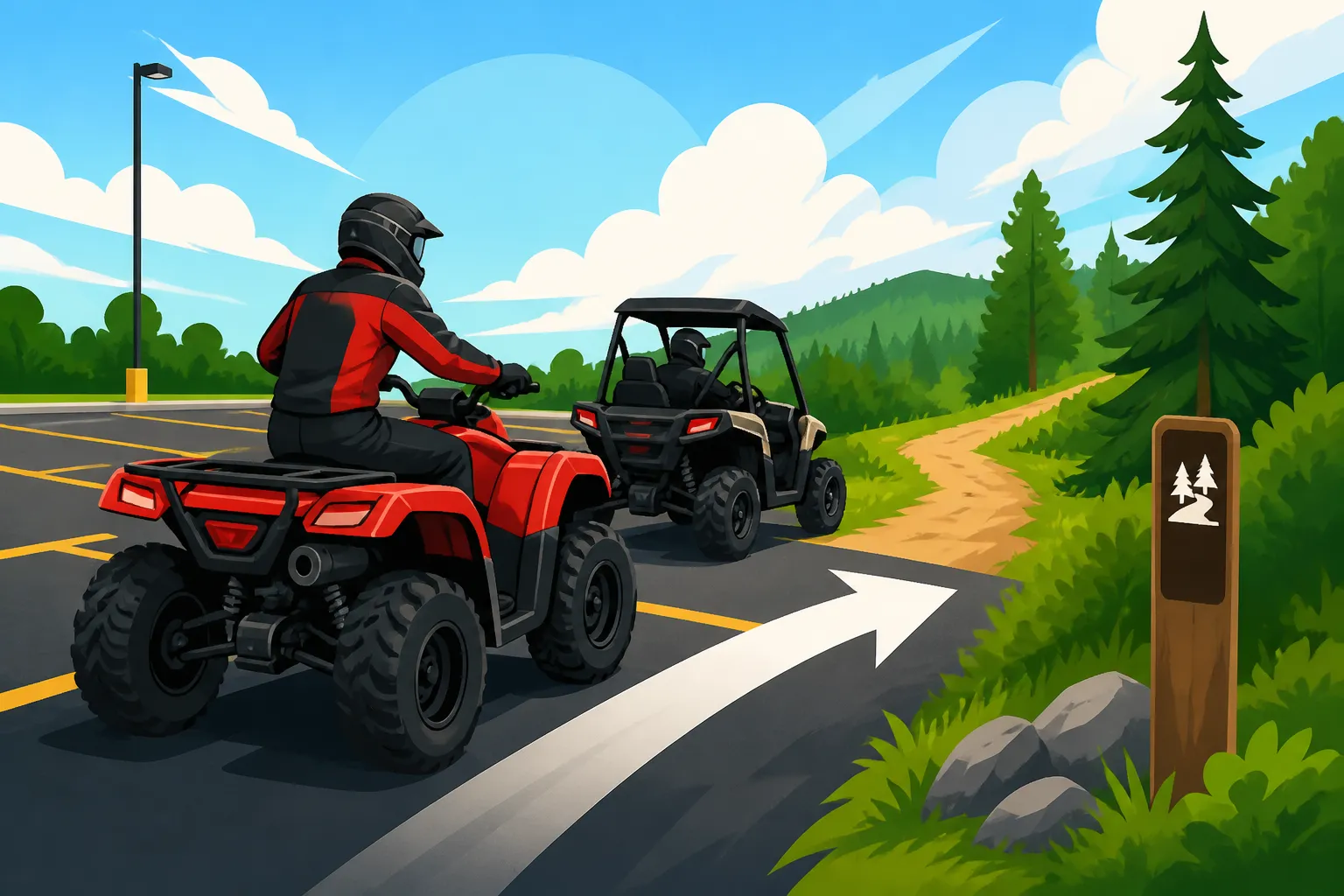
It's a common scenario for many of us who love hitting the trails with our ATVs and UTVs: you've loaded up, driven to your favourite staging area or perhaps you're just heading out from a friend's place, and there's a parking lot standing between you and the open trail. The big question looms: can you actually cross that parking lot legally without risking a fine or, worse, an accident? It's a source of real frustration and confusion for riders. This guide is here to clear up the rules surrounding off-road vehicle use in parking lots in Manitoba, so you can ride with confidence and stay on the right side of the law.
The Fine Line: Parking Lots vs. Roadways
One of the biggest sources of confusion for off-road vehicle (ORV) riders in Manitoba is understanding where exactly you can and cannot ride. The general rule is pretty clear: [Manitoba Bans Riding on Roadways]. This means no cruising down Main Street on your quad, no matter how tempting. But where do parking lots fit into this picture? They're clearly not the same as a bustling highway, but they're also not quite the wild, unkempt bush trail we all love.
The distinction is crucial. When the law talks about "roadways," it generally refers to the travelled portion of a street or highway that is open for public vehicle traffic. Parking lots, while often adjacent to roadways and used by road vehicles, exist in a bit of a grey area. They are primarily designed for parking, not for through-traffic or high-speed transit. This subtle difference is what often gives riders a glimmer of hope that a quick cross might be acceptable.
However, it's not a free-for-all. Many parking lots are private property, like those belonging to gas stations, restaurants, or shopping centres. Others might be public, such as municipal lots near parks or trailheads. Regardless, the expectation of safe and responsible operation remains. Just because it's not a "roadway" doesn't mean you can operate your machine without due care and attention, especially around pedestrians or other vehicles. Local municipalities also have a lot of power in this area, so what's okay in one town might not fly in the next.
What the Law Says About Parking Lots and ORVs
Manitoba's Off-Road Vehicles Act (ORVA) lays out the framework for where and how you can operate your ATV or UTV. While it’s very specific about prohibiting ORVs on things like roadways, medians, interchanges, and sidewalks, it doesn't use the term "parking lot" quite as explicitly. This lack of direct mention can be both a blessing and a curse for riders trying to navigate the rules.
The Absence of Explicit Prohibition
You won't find a direct line in the ORVA that says, "Thou shalt not ride an ORV in a parking lot." Instead, the Act focuses on the type of land and its primary use. Since a parking lot isn't typically classified as a "roadway" for the purpose of through-traffic, many riders interpret this as a green light for short crossings. The intent of the Act is generally to keep ORVs off high-speed public thoroughfares where they pose a danger to themselves and other traffic. A parking lot, usually characterized by lower speeds and intermittent vehicle movement, doesn't always fit that high-risk profile.
That being said, the spirit of the law, and certainly the letter of other laws, still applies. Even if an ORV isn't explicitly banned, you can't just tear through a busy store parking lot. General rules of safe operation, yielding to pedestrians, and respecting private property still hold immense weight. It's about being a considerate user of the space, not just clinging to a technicality in the legislation. We all want to enjoy our machines, but not at the expense of public safety or by annoying business owners.
Municipal By-Laws: The Local Factor
Here's where things get a bit more complicated. While the provincial ORVA gives us the broad strokes, [Manitoba Municipal By-Law Powers] allow local governments to create their own rules regarding ORV use within their boundaries. This means a town or rural municipality might have a specific by-law that addresses ORV use in parking lots, or even prohibits it entirely, even if the provincial Act doesn't.
For example, a busy urban centre might have strict rules against any ORV activity off a designated trail, including in all public and private parking areas. Conversely, a smaller, more remote community might be more lenient, recognizing that ORVs are often a primary mode of transportation and necessary for accessing local amenities or trails. Always, and I mean always, check with the local municipal office or their website if you plan on riding in an unfamiliar area, especially if it involves crossing a parking lot to get to [Manitoba ATV Trails: Club Ground and Crown Land]. It's better to make one quick phone call than to face a hefty fine or have your machine impounded.
Private Property and Owner Consent
Even if provincial and municipal laws are silent on ORV use in a particular parking lot, you can't forget about private property rights. Many parking lots are owned by businesses or individuals. Riding your ORV on private property without permission is trespassing, plain and simple. This applies whether it's a farmer's field, a construction site, or a gas station parking lot.
If you need to cross a private parking lot to access a trail or road, try to get explicit permission from the property owner or manager first. A quick chat with the gas station attendant or the store manager can save you a lot of grief. Many businesses understand that riders need to get around and might be perfectly fine with a quick, respectful crossing, especially if you're also patronizing their business. However, if they say no, you absolutely have to respect that. Pushing your luck is a surefire way to get a [Manitoba Ticket Costs for Riders] or, at the very least, create bad blood that makes it harder for other riders in the future. Remember, it’s about being a good neighbour and preserving access for everyone.
Practical Steps for Safe and Legal Parking Lot Crossings
Okay, so you've done your homework, checked the local by-laws, and perhaps even secured permission if it's private property. Now it's time to actually cross that parking lot. This isn't the time to channel your inner stunt rider. Safety, visibility, and respect are paramount. Think of it as a low-speed, high-awareness maneuver.
Speed and Awareness: The Golden Rules
When you're traversing a parking lot, your speed should be akin to a crawl. Parking lots are unpredictable places, full of reversing cars, distracted drivers, shopping carts, and pedestrians—especially children—who might not be expecting an ORV. It’s critical to maintain a speed that allows you to stop instantly if something unexpected happens. This isn't just good practice; it's a legal requirement to operate your machine with due care and attention.
Always assume you are not seen. That little old lady backing out of her parking spot might be checking her mirrors, but she's probably not looking for a UTV. Be extra vigilant. Look twice, then look again. Make eye contact with drivers and pedestrians if you can. Your peripheral vision should be working overtime, scanning for any potential hazards. Remember, even a minor fender bender in a parking lot could lead to significant issues, and because basic [Manitoba Insurance Included With Registration] often has limits, you don't want to find yourself in that position.
Visibility is Key
Your off-road machine, while impressive on the trail, can sometimes blend in or be unexpected in a parking lot environment. Maximizing your visibility is a non-negotiable step.
- Lights: Ensure all your lights are on—headlights, taillights, and any auxiliary lighting you might have. Even during the day, extra lights can make a huge difference in being seen.
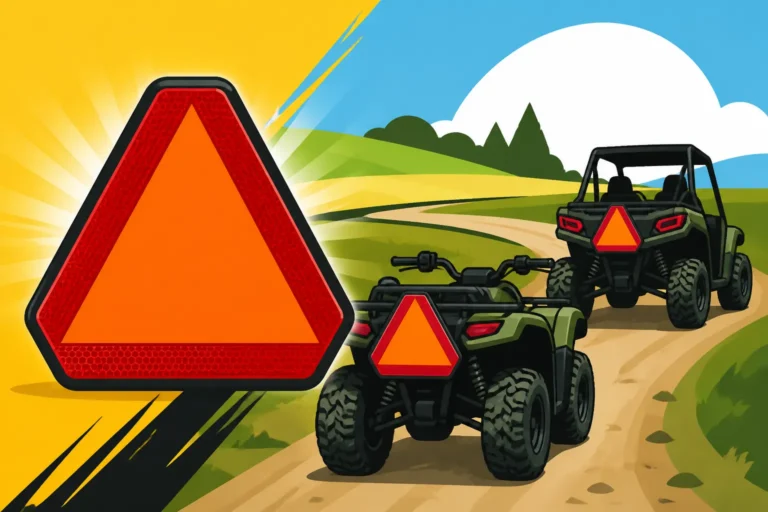
- Flags: A brightly coloured safety flag, especially on the back of your machine, adds vertical presence and makes you easier to spot over parked cars.
- Bright Clothing: Wear highly visible clothing, like fluorescent vests or jackets. Anything that contrasts with the environment helps you stand out.
- Mirrors: Consider adding extra mirrors to your ATV or UTV if you don't have them, or ensure your existing ones offer a wide field of view. Some aftermarket companies, like SuperATV, offer robust mirror kits designed for tough conditions but equally useful for increasing situational awareness in congested areas.
Making yourself as obvious as possible is not about showing off; it's about self-preservation and preventing accidents. The brighter and more noticeable you are, the safer you and everyone else in the parking lot will be.
Direct Route and Minimal Disruption
If you absolutely must cross a parking lot, do so in the most direct and efficient manner possible. This isn't the place for weaving through aisles, circling around for fun, or testing your machine's turning radius. Get from point A (where you entered the lot) to point B (where you exit to the trail or designated riding area) with minimal deviation.
The goal is to create as little disruption as possible. Parking lots are for parking, not for extended ORV activity. The quicker and more discretely you move through, the less likely you are to draw negative attention from other drivers, pedestrians, or property owners. This respectful approach helps maintain a positive image for the entire ORV community. We want people to see us as responsible users, not as nuisances.
Required Documents
No matter how short your parking lot crossing is, you still need to have your proper documentation with you. [Carrying Your Registration Card on Every Ride] is a provincial requirement, and that doesn't stop just because you're off the main road. If an officer happens to be in the area and questions your presence, having your registration and proof of insurance readily available will make the interaction much smoother. It demonstrates that you're a responsible operator who understands and respects the rules.
Avoiding Fines and Keeping Everyone Safe
Let's face it, nobody wants a ticket, especially not for a short, seemingly harmless transit through a parking lot. Understanding the potential pitfalls and consequences can help you make better decisions and keep your wallet (and your record) clean.
What an Officer Can Ask and What You Could Face
If you're stopped by an enforcement officer while operating your ORV in a parking lot, they have the authority to ask for your registration, proof of age, and proof of insurance. They will also assess your operation for safety and adherence to any applicable laws or by-laws.
If you're found to be operating unsafely, trespassing, or violating a local by-law, you could face consequences. [Manitoba Careless Operation Penalties] are no joke and can result in significant fines. Even if the parking lot itself isn't a "roadway" according to the ORVA, actions like reckless driving, excessive speed, or causing a disturbance can lead to citations under other acts or by-laws. Remember, every time you operate your machine, you're expected to do so responsibly and safely, regardless of the terrain.
The Role of Common Sense and Courtesy
Beyond all the specific laws and by-laws, there's an overarching principle that guides responsible ORV operation: common sense and courtesy. This is especially true in areas like parking lots where you're interacting with a diverse group of people who may not be familiar with ORVs or share your passion for them.
- Yield to Pedestrians: Always give way to people on foot. They are the most vulnerable users of a parking lot.
- Yield to Other Vehicles: Even if you feel you have the right of way, it's safer to yield to cars and trucks. Avoid confrontations and potential accidents.
- Keep Noise Down: Be mindful of your machine's noise level. While you might love the roar of your engine, others in a parking lot probably won't. Keep your RPMs low and avoid unnecessary revving.
- No Donuts or Stunts: This should go without saying, but a parking lot is absolutely not the place for showing off. These actions are not only dangerous but also contribute to a negative image of ORV riders.
By exercising common sense and showing courtesy, you not only keep yourself and others safe but also foster a more positive relationship between the ORV community and the general public. It's about preserving our access and ensuring we can continue to enjoy our sport for years to come. Think about what a [Manitoba Trail Etiquette Locals Expect] on the trail, and bring that same respect to the parking lot.
Navigating the Grey Areas with Confidence
Crossing a parking lot to reach your favourite trail might seem like a small hurdle, but it's one that can trip up even experienced riders if not handled correctly. The key takeaway is that while Manitoba's provincial ORV Act might not explicitly prohibit riding in a parking lot, local by-laws and general principles of safety, respect for private property, and responsible operation always apply.
Remember to always:
- Check local by-laws: What's okay in one area might be illegal in another.
- Seek permission: Especially for private parking lots. A simple "can I quickly cross your lot to get to the trail?" goes a long way.
- Prioritize safety and visibility: Go slow, be hyper-aware, and make sure you're seen. Consider adding visibility accessories from trusted brands like SuperATV if your machine is lacking.
- Take the most direct route: Don't linger or deviate unnecessarily.
- Carry your documents: Have your registration and insurance proof handy.
- Practice common sense and courtesy: This builds goodwill for all riders.
By following these guidelines, you can navigate those parking lot crossings with confidence, knowing you're operating your ATV or UTV safely and legally, and ultimately enjoying more time on the trails you love.
Disclaimer
This article is for general informational purposes only and does not constitute professional advice. Laws, prices and regulations vary by location and change over time. Consult a qualified professional for guidance on your specific situation.