Manitoba Rules for a 16-Year-Old Rider
Turning 16 often feels like a massive leap towards freedom and independence, especially when you're looking forward to getting out on the trails or exploring the backcountry on your ATV or UTV. But before you rev up that engine and head out, it's crucial to understand that Manitoba has specific rules for young adult riders, and they're quite different from what's expected of younger kids or fully-fledged adults. This guide is going to walk you through everything a 16-year-old needs to know to ride legally and safely, helping you avoid headaches and fines.
The Legal Landscape for 16-Year-Old Riders in Manitoba
When you hit 16 in Manitoba, the world of off-road vehicle (ORV) riding opens up significantly. You’re no longer under the same strict supervision rules as a 12 or 14-year-old, but you're not quite a fully experienced adult in the eyes of the law either. This age brings with it new responsibilities and freedoms, particularly regarding your licensing and where you can operate your machine. It’s all about knowing your rights and obligations to ensure every ride is a good one.
Getting Your Feet Wet: Age Requirements and Licensing
For a 16-year-old rider in Manitoba, the biggest change is often the impact of your driver's license status. While younger riders have specific age tiers and supervision requirements, reaching 16 means you can now hold a full-stage driver's license. This is a game-changer because many of the restrictions that apply to those with a learner's permit or no license at all no longer apply to you when it comes to ORV operation.
Let's break it down: if you have a full-stage driver's license, you're generally treated as an adult rider under the Off-Road Vehicles Act, which is a fantastic milestone. This means you don't need adult supervision when operating your ORV, even when crossing roads or riding in ditches. This isn't just about showing off; it's about demonstrating competence and understanding the rules of the road – or in this case, the trail and the ditch. However, if you only have a learner's permit for a Class 5 vehicle (a regular passenger car or light truck), or if you haven't obtained any form of driver's license yet, some restrictions might still apply, particularly regarding crossings. So, getting that full-stage license is a major key to unlocking full ORV freedom. Remember, you still need to prove your age, so having your driver's license or another form of ID like a birth certificate is a good idea, especially if you're ever asked. [Manitoba Proof of Age at Registration] covers what documents are accepted.
Where Can a 16-Year-Old Actually Ride?
This is where the rubber meets the trail – or the ditch, or the private property. For 16-year-olds with a full-stage driver's license, your options expand considerably compared to younger riders. You're no longer confined to private land or needing constant adult supervision to even touch a public trail.
- Trails and Crown Land: You can legally ride on designated ORV trails, Crown land where ORVs are permitted, and private land with the owner's permission. Manitoba boasts some incredible riding areas, from the [Mossberry Trail's 30 Kilometres in Manitoba] to various club trails maintained by local associations like the Eastman ATV Association. Always make sure to check local regulations and trail conditions before you head out, as some areas might have seasonal closures or specific rules.
- Ditches and Roadways (with strict conditions): This is often the most confusing part for riders of all ages. For a 16-year-old with a full-stage driver's license, you can ride in the ditch of a provincial road or highway, provided it’s to the right of the roadway and you're travelling in the same direction as traffic. This isn't a free-for-all on the shoulder or the road itself; it's specifically about the ditch. You cannot ride on the roadway, median, sidewalk, or interchange. There are strict rules about [Manitoba Ditch Riding Rules] and [Manitoba Crossing Rules at 5 Metres and 3 Kilometres] that apply, even to licensed 16-year-olds. The agricultural shoulder exception, for instance, typically requires a multi-wheeled vehicle and a slow-moving vehicle sign, which is usually more relevant for farm operations than casual riding.
- Crossing Roadways: With a full-stage driver's license, a 16-year-old can cross a provincial highway, but only under very specific conditions. You must come to a complete stop, yield to all traffic, cross at a right angle, and proceed one machine at a time. This is critical for safety and avoiding fines. Keep in mind, you generally cannot cross within 5 metres of an intersection, and if you’re crossing to continue along the ditch, you should try to cross at least 3 kilometres from any other crossing point. It sounds complicated, but these rules are designed to keep you safe. [Manitoba Crossings Need a Driver's Licence] is a key point to remember.
Essential Gear and Safety for Young Adult Riders
Safety is paramount, no matter your age or experience level. While the thrill of riding can be exhilarating, it's your responsibility, and that of your parents if you're under 18, to ensure you're always properly equipped and operating your machine safely. The rules around helmets, seat belts, and machine design are not just suggestions; they are legal requirements designed to protect you.
Helmets, Seat Belts, and Protective Equipment
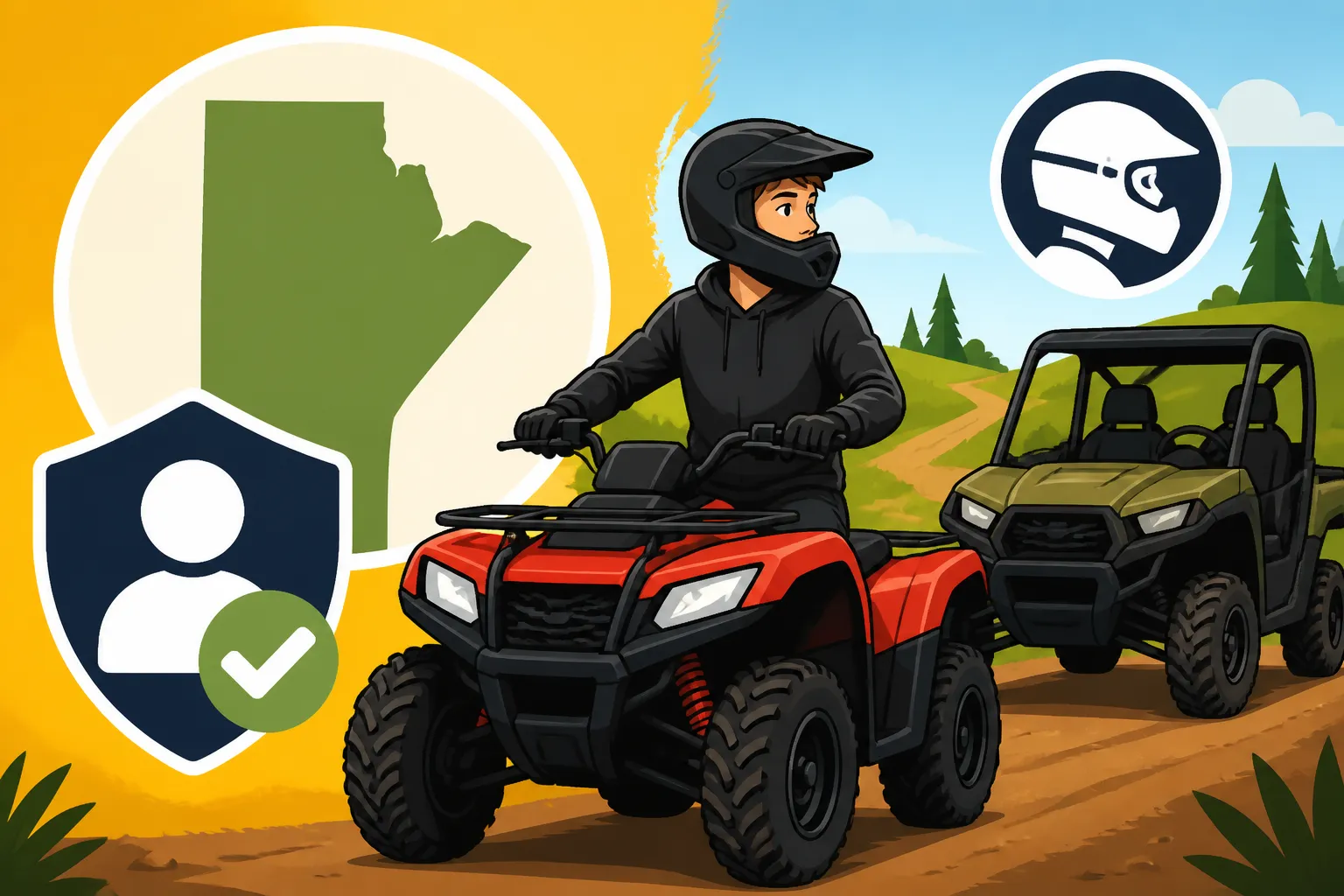
Manitoba's helmet law is pretty straightforward: if you're operating or riding as a passenger on an ORV, you must wear an approved helmet. For 16-year-olds, this rule applies just as it does to everyone else. The helmet must meet specific safety standards, such as Snell or FMVSS (Federal Motor Vehicle Safety Standard). A good helmet can literally be a lifesaver, so never skimp on this essential piece of gear.
- Helmet Standards: Look for helmets with a Snell or FMVSS certification label. These standards ensure the helmet has been rigorously tested for impact protection. There are very few exemptions to the helmet law in Manitoba, mainly for specific agricultural or trapping purposes, or if your machine has a roll-over protection structure (ROPS) and you're wearing a seat belt. For recreational riding, a helmet is almost always mandatory.
- Seat Belts: If your UTV or side-by-side is equipped with seat belts from the manufacturer, you must wear them. This isn't optional. This is especially important as many UTVs, like those modified with SuperATV accessories for enhanced performance and safety, are designed with these features in mind. The combination of a strong roll cage and a securely fastened seat belt is crucial for protecting you in the event of a rollover or collision.
- Other Protective Gear: While not always legally mandated, common sense dictates wearing other protective gear. This includes eye protection (goggles or a helmet visor), sturdy gloves, long pants, a long-sleeved shirt or jacket, and over-the-ankle boots. This gear can prevent scrapes, bruises, and more serious injuries from flying debris or falls. It's an investment in your safety and comfort on the trail. [Manitoba Helmet Law and Its Exemptions] covers these details extensively.
Machine Requirements and Passenger Rules
The type of machine you ride, and whether you carry passengers, also falls under specific regulations for 16-year-olds. Understanding these limits is critical.
- Machine Design: Your ORV must be designed by the manufacturer to carry the number of passengers you have on board. This means if your ATV is a single-rider machine, you cannot carry a passenger. For UTVs or side-by-sides, only carry as many people as there are designated seats and seat belts. Overloading a machine can severely compromise its handling and stability, making it dangerous for everyone.
- Youth Machines: While 16-year-olds can ride full-sized machines, it’s worth noting that manufacturers often have age recommendations for specific models. Even if the law allows it, riding a machine that's too powerful or too large for your skill level can be risky. Always match the machine to the rider’s capabilities.
- Passenger Age: If you are operating a machine that is designed to carry a passenger, and that passenger is under 18, they must also wear an approved helmet, just like you. There are no special exemptions for passengers based on age in this regard. Ensuring your passenger is properly equipped and understands the rules is part of your responsibility as the operator. [Seat Belts and Passenger Limits on a Manitoba UTV] provides more context here.
- Machine Registration and Plate: Every ORV operated on public land in Manitoba, including trails and ditches, needs to be registered with Manitoba Public Insurance (MPI) and display a valid license plate. For 16-year-olds, this means the machine you are riding must have current registration. Your own vehicle may be a family machine, but it must be registered. You'll also need to carry the registration card with you. [Manitoba ORV Registration Through MPI] outlines the process.
Navigating Common Scenarios for 16-Year-Olds
Beyond the general rules, there are specific situations where knowing the precise regulations can make all the difference, especially for a 16-year-old just gaining independence as a rider. These scenarios often involve interacting with public infrastructure or authorities, and preparation is key.
Crossing Roadways and Intersections Safely
As we touched on earlier, crossing a roadway is one of the most common and potentially hazardous manoeuvres for an ORV rider. For a 16-year-old with a full-stage driver's license, the ability to cross independently is a significant step, but it comes with stringent requirements.
- Before You Cross: Always approach a crossing with caution. Slow down, scan the area for traffic, and come to a complete stop at the edge of the roadway. This isn't just a suggestion; it's a legal requirement. You need to have a clear view of approaching traffic in both directions. If your view is obstructed, you must find a safer place to cross. Think about how many times you've seen a driver make a quick, unsafe turn; you don't want to be that rider on an ORV.
- The Act of Crossing: Once you've stopped and yielded to all traffic, cross the roadway as directly as possible, at a right angle. This minimizes the time you spend exposed to traffic. Only one ORV can cross at a time, so if you're riding with friends, ensure everyone understands this rule. It’s also illegal to cross within 5 metres of an intersection or railway crossing, and if you’re simply continuing along a ditch, you should aim for a spot at least 3 kilometres from the nearest intersection. These rules are in place because intersections are busy, complex areas that are not designed for ORV crossings. [Manitoba Crossings Need a Clear View] emphasizes the importance of visibility.
- After the Crossing: Once you've safely crossed and are in the ditch on the other side, continue in the same direction as traffic. Don't linger on the roadway or obstruct the flow of vehicles. The goal is to cross efficiently and safely, then return to the legal riding area. It's a quick manoeuvre, but it requires your full attention and adherence to the rules.
Dealing with Law Enforcement and Carrying Documentation
As a 16-year-old rider, you're expected to carry certain documents whenever you're operating an ORV on public land. This includes trails, ditches, and any area where the Off-Road Vehicles Act applies. Being prepared makes any interaction with law enforcement smooth and stress-free.
- Required Documents: You must carry your valid driver's license (if you have one and are relying on it for crossing privileges), the ORV's registration card, and proof of liability insurance. Even though basic third-party liability is included with MPI registration, having the card handy is essential. [Manitoba Registration Cards Carried at All Times] is a non-negotiable rule.
- What to Do During a Stop: If a conservation officer or RCMP officer signals you to stop, do so safely and promptly. Keep your hands visible, and don't make any sudden movements. Be polite, answer their questions truthfully, and provide the requested documents. Officers are primarily concerned with safety and compliance with the law. They're looking out for everyone's well-being on the trails and public access points.
- Understanding Penalties: While we hope you never encounter this, it's important to know that non-compliance can lead to fines. Riding without registration, without a helmet, or in prohibited areas can result in penalties. Ignorance of the law is not a defence. Understanding the rules, especially those around age and licensing, helps you avoid these situations. For instance, if your machine is equipped with aftermarket accessories from a company like SuperATV, ensure they are installed correctly and don't inadvertently violate any equipment regulations.
The Importance of a Good Machine for Young Riders
Choosing the right machine, and maintaining it properly, is just as crucial as knowing the rules. For a 16-year-old, having a reliable and well-suited ORV can significantly impact safety and enjoyment.
- Matching Machine to Rider: While 16-year-olds are generally allowed to ride adult-sized machines, consider the rider’s experience and physical capabilities. A smaller, less powerful machine might be more appropriate for a newer rider, allowing them to build skills and confidence before moving to something larger.
- Regular Maintenance: Keeping your ORV in top condition is vital. This means regular checks of tires, brakes, fluid levels, and lights. A well-maintained machine is safer and less likely to break down, leaving you stranded far from home. If you're running any performance parts or specialized components, like a custom winch or heavy-duty axles from SuperATV, ensure they are properly installed and maintained according to manufacturer specifications.
- Lights and Visibility: If you plan to ride half an hour before sunset or after dark, your ORV must have working headlights and taillights that provide visibility for at least 60 metres. This is not just a courtesy; it's a safety and legal requirement. Good lighting ensures you can see where you're going and, more importantly, that others can see you.
Here’s a quick overview of key rules for 16-year-olds compared to younger riders:
| Feature | Riders Under 14 | Riders Aged 14-15.5 (Learner Stage) | Riders Aged 16+ (Full-Stage Driver's Licence) |
|---|---|---|---|
| Supervision | Must be supervised by an adult (18+) | Can ride unsupervised in ditches & trails | Can ride unsupervised in ditches & trails |
| Ditch Riding | Allowed with adult supervision | Allowed, adhering to rules | Allowed, adhering to rules |
| Road Crossing | Not allowed to cross roadways | Limited crossings with adult supervision | Allowed to cross with full licence, strict rules |
| Licensing | No driver's license required | No driver's license required (can have Learner's) | Full-stage Class 5 driver's licence advised/req. for crossings |
| Helmet | Mandatory | Mandatory | Mandatory |
| Registration | Machine must be registered | Machine must be registered | Machine must be registered |
| Passengers | Only if machine designed for it, with adult supervision | Only if machine designed for it, with adult supervision | Only if machine designed for it |
| Roadways | Never allowed | Never allowed | Never allowed |
Reaching 16 and having the freedom to ride your ORV is a fantastic experience, but it’s crucial to match that freedom with responsibility. By understanding and following Manitoba's specific rules for your age group, you can ensure that every ride is not just fun, but also safe and legal. Always plan your route, check trail conditions, and make sure your machine and gear are in top shape. Happy riding!
Disclaimer
This article is for general informational purposes only and does not constitute professional advice. Laws, prices and regulations vary by location and change over time. Consult a qualified professional for guidance on your specific situation.