Manitoba Registration for a Second Machine
So, you've already got an off-road vehicle (ORV) that you love, and now you're eyeing a second one – maybe a different type of machine, or perhaps a second quad for a family member. It's exciting to expand your fleet, but a common question I hear from riders is whether registering a second machine is the exact same song and dance as the first, or if there are any shortcuts or different rules because you're already in the system. Let me tell you, it's not quite a simple copy-paste, and understanding the nuances will save you a headache. This guide will walk you through everything you need to know about registering a second ATV or UTV in Manitoba, ensuring you hit the trails legally and without a hitch.
The Basics of Registering Your Second Machine
When you already own one off-road machine in Manitoba and decide to add another, it’s natural to wonder if the process will be simpler. While some of your personal information is likely already on file with Autopac, it's crucial to understand that each machine is treated as its own entity for registration, taxation, and insurance purposes. Think of it like buying a second car – you don't just add it to your existing plate, right? The same principle applies here.
Why Each Machine Needs Its Own Registration
The core principle behind ORV registration in Manitoba is that the registration is tied to the machine itself, not solely to the owner. This means that every single ATV, UTV, dirt bike, or snowmobile you own needs its own unique registration certificate and plate. It's a system designed for clear identification and traceability for every vehicle operating in the province. Without it, law enforcement and park officials wouldn't be able to properly identify machines, enforce regulations, or track ownership.
Even if you're the proud owner of a whole collection of ORVs, each one will require its own distinct Manitoba registration. This includes obtaining a specific license plate for that particular machine, which you’ll need to mount according to the rules for your machine type. This ensures that when you're out on the trails or crossing a roadway, your machine is clearly identifiable as compliant with provincial regulations. Remember, [Manitoba Requires Registration in Any Location], not just on designated trails, so proper registration for each machine is non-negotiable from the moment you take possession. You'll find that [One Plate Per Machine, Front or Rear] is the standard, and it's issued specifically for that ORV.
What Stays the Same, What Changes
While each machine is registered individually, your personal journey through the process might feel a little smoother the second time around. Your personal details, such as your driver's license information and current address, are already on file with Manitoba Public Insurance (MPI) from your previous registration or even your regular vehicle insurance. This can streamline the administrative side slightly, as the agent won't have to input all that data from scratch.
However, the critical steps of proving ownership for the new machine and valuing it for Retail Sales Tax (RST) purposes remain exactly the same as they were for your first ORV. You'll still need the correct paperwork to show you legally own the second machine, and it will be assessed for tax. Furthermore, the mandatory trails fee [The $25 Trails Fee Added to Every Registration] applies to every registration, regardless of how many machines you own. This fee is a provincial initiative to support the development and maintenance of recreational trails, and it's collected for each individual ORV registered. Finally, and perhaps most importantly, your existing Autopac policy for your first ORV (or your car) does not automatically extend to cover your second machine. You will need to arrange new insurance coverage for the additional ORV as part of its registration process, ensuring it meets Manitoba's basic liability requirements.
Gathering Your Documents and Information
The key to a smooth registration process for any machine, including your second, lies in being prepared. Walking into an Autopac agent's office with all your ducks in a row can save you a significant amount of time and frustration. The necessary documents are largely the same as when you registered your first machine, focusing on proving you're the rightful owner and confirming your identity.
Proof of Ownership for a New or Used Machine
Whether your new acquisition is fresh off the showroom floor or a pre-loved gem from a private seller, proving you own it is the absolute first step. This is where your bill of sale comes into play.
If you’re buying a brand-new machine from a Manitoba dealer, they will provide you with a detailed bill of sale. This document is your primary proof of purchase and will clearly list the machine's make, model, year, and crucially, its Vehicle Identification Number (VIN). The dealer will often handle much of the paperwork for you, making the process fairly straightforward.
For a used machine purchased from a private seller, the process requires a bit more vigilance on your part. You'll need a properly filled out and signed transfer of ownership section from the machine's existing registration certificate, along with a separate bill of sale. It's vital to ensure that the VIN on the bill of sale and the transfer document matches the VIN physically located on the machine itself [Matching the VIN to the Bill of Sale]. This step is critical to prevent headaches down the line, especially if you're buying from someone you don't know well. For private sales, creating a clear, comprehensive bill of sale is essential. Many riders find tools like LawDepot incredibly helpful for generating a legally sound bill of sale that protects both the buyer and the seller. This ensures all the important details, like the purchase price, date, and condition of the machine, are formally documented. If the original bill of sale for a used machine is lost, it can complicate things, but there are steps you can take, as outlined in [Manitoba Registration Without a Bill of Sale]. Always ask for all available paperwork when buying used, and if something seems off, it's worth taking the time to investigate. When [Buying From a Private Seller in Manitoba], these documents are your best friends.
Your Personal Identification and Information
Even though you’re a familiar face to Autopac, you'll still need to confirm your identity and ensure your personal information is up-to-date. This means bringing your valid Manitoba identification, typically your driver's license or an Enhanced Identification Card. This allows the agent to quickly access your existing profile in the system.
It's also a good opportunity to confirm that your current address is accurate in their records. If you’ve moved since registering your first machine, you'll need to update your address, as [Manitoba Address Changes Within 15 Days] are required by law. This ensures all official correspondence regarding your ORV registrations and insurance goes to the correct place. If you're planning to register the machine with more than one owner, perhaps with a spouse or a family member, then all listed owners will need to be present at the Autopac office or provide proper written authorization, as covered in [Manitoba Registration With Two Owners]. For younger riders, especially those aged 16 to 18 who are getting their first (or second) machine, specific rules regarding parental consent and proof of age still apply, echoing the process detailed in [Manitoba Registration for a Youth Quad].
The Registration Process at an Autopac Agent
Once you've gathered all your documents and verified your personal information, the next step is to head to a Manitoba Autopac agent. These agents are your go-to resource for all things related to ORV registration, and they are equipped to handle the entire process for your second machine, just as they did for your first.
Walking Through the Steps with Your Agent
When you arrive at an Autopac agent's office [Manitoba Autopac Agents and ORV Registration], you'll present the documents you’ve prepared for your new machine. The agent will carefully review your proof of ownership, whether it's a dealer's bill of sale or the signed transfer of ownership and bill of sale from a private seller. They will pay close attention to the Vehicle Identification Number (VIN) to ensure it's legitimate and correctly recorded. This is a critical step in verifying the machine's identity and ensuring it's not reported stolen.
After verifying ownership, the agent will input all the machine's details into the MPI system. This includes the make, model, year, and specific features of your ORV. During this step, the Retail Sales Tax (RST) will be calculated and collected. As you might remember from your first registration, Manitoba collects RST on the purchase price of the machine [Manitoba RST Collected at Registration]. For new machines, it’s typically based on the dealer’s invoice. For used machines bought privately, the tax is usually based on the higher of either the declared selling price on your bill of sale or the machine’s "Blue Book" value [Manitoba Blue Book Values for ORVs]. Be prepared for this, as it can sometimes be a surprise if you bought a used machine at a very low price. Your agent can explain the specifics of [Manitoba ATV Sales Tax Rate] and how it applies to your situation. The agent will also guide you through the process of [Manitoba Transfer of Ownership Rules] to make sure everything is legal and properly recorded in your name.
Understanding the Costs Involved
Registering a second machine comes with a few distinct costs, much like your first. It's helpful to be aware of these so you can budget accordingly and avoid any surprises.
Here’s a breakdown of the typical costs you'll encounter:
| Cost Item | Description | Applicability |
|---|
What These Costs Mean for Your Riding
The breakdown above shows you're not just buying a machine; you're also buying into the legal framework of responsible ORV operation in Manitoba. The costs ensure your machine is identifiable, that you have a basic level of financial protection in case of an accident (though more coverage is often a good idea!), and that you're contributing to the riding infrastructure you enjoy.
The [Manitoba ORV Registration Cost] is the sum of all these parts. While the overall expense might seem like a lot, it's a small price to pay for the peace of mind and the continued enjoyment of Manitoba's vast wilderness on your machine. Remember, tools like LawDepot can assist not just with bills of sale, but also with other related legal documents if you ever decide to sell or transfer your machine, simplifying complex processes down the road.
After Your Second Machine is Registered
Congratulations, your second machine is now officially registered and ready for adventure! But the journey doesn't quite end when you walk out of the Autopac office. There are a couple of crucial steps and responsibilities that kick in immediately to ensure you remain compliant and ready for the trails.
Receiving and Displaying Your New Plate
When you complete the registration for your second ORV, you will receive a brand-new license plate specifically issued for that machine. Manitoba maintains a clear rule: [Manitoba Issues One Plate, Not Two] per machine. This single plate is unique to your new ATV or UTV and must be affixed to it.
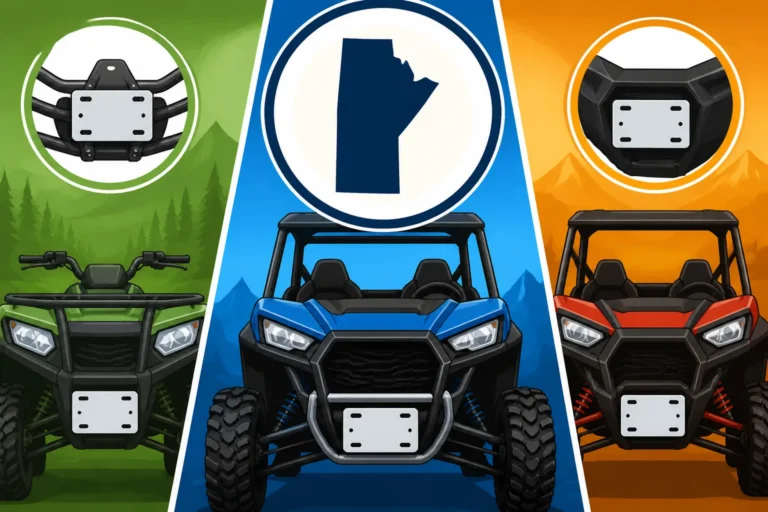
Proper plate mounting is not just about aesthetics; it's a legal requirement. The rules vary slightly depending on the type of machine you're registering, so it’s important to understand the specifics for your new ORV. For example, if your new machine is a quad, the plate typically goes on the rear [Manitoba Plates on the Rear of a Quad]. If it's a dirt bike, it often mounts on the front [Manitoba Plates on the Front of a Two-Wheeler], and for snowmobiles, you'll generally find it on the left side [Manitoba Plates on the Left of a Snowmobile]. Regardless of placement, the plate must be clearly visible and kept free of mud, snow, or any other obstruction that could obscure its numbers and letters. Take the time to mount it securely where it won't easily get damaged or fall off during your adventures.
Carrying Your Registration Certificate and Understanding Renewals
Along with your physical plate, you will receive a new registration certificate for your second machine. This document is just as important as the plate itself, if not more so. Whenever you operate your registered ORV, you are legally required to carry the registration card with you [Manitoba Registration Cards Carried at All Times]. This means having it on your person, or in a secure, waterproof compartment on the machine itself. An officer may ask to see it, and not having it can lead to unnecessary delays or fines. Many riders laminate their cards or keep them in a sturdy, waterproof bag to protect them from the elements and the rigors of trail riding.
Regarding renewals, your second machine's registration will expire annually. Typically, [Manitoba Registration Renews With Your Autopac Policy]. While your existing Autopac policy for your first ORV or car might renew at a specific time of year, your second machine's renewal date will likely be set for one year from its initial registration date. This means you might have different renewal schedules for your various vehicles. MPI will send you a renewal notice in advance, so keep an eye on your mail. Staying on top of these dates ensures continuous coverage and legal operation. Missing a renewal can result in operating an unregistered and uninsured machine, which carries significant penalties and risks. [Manitoba ATV Registration Renewal] is something you'll want to mark on your calendar to avoid any lapses.
Disclaimer
This article is for general informational purposes only and does not constitute professional advice. Laws, prices and regulations vary by location and change over time. Consult a qualified professional for guidance on your specific situation.