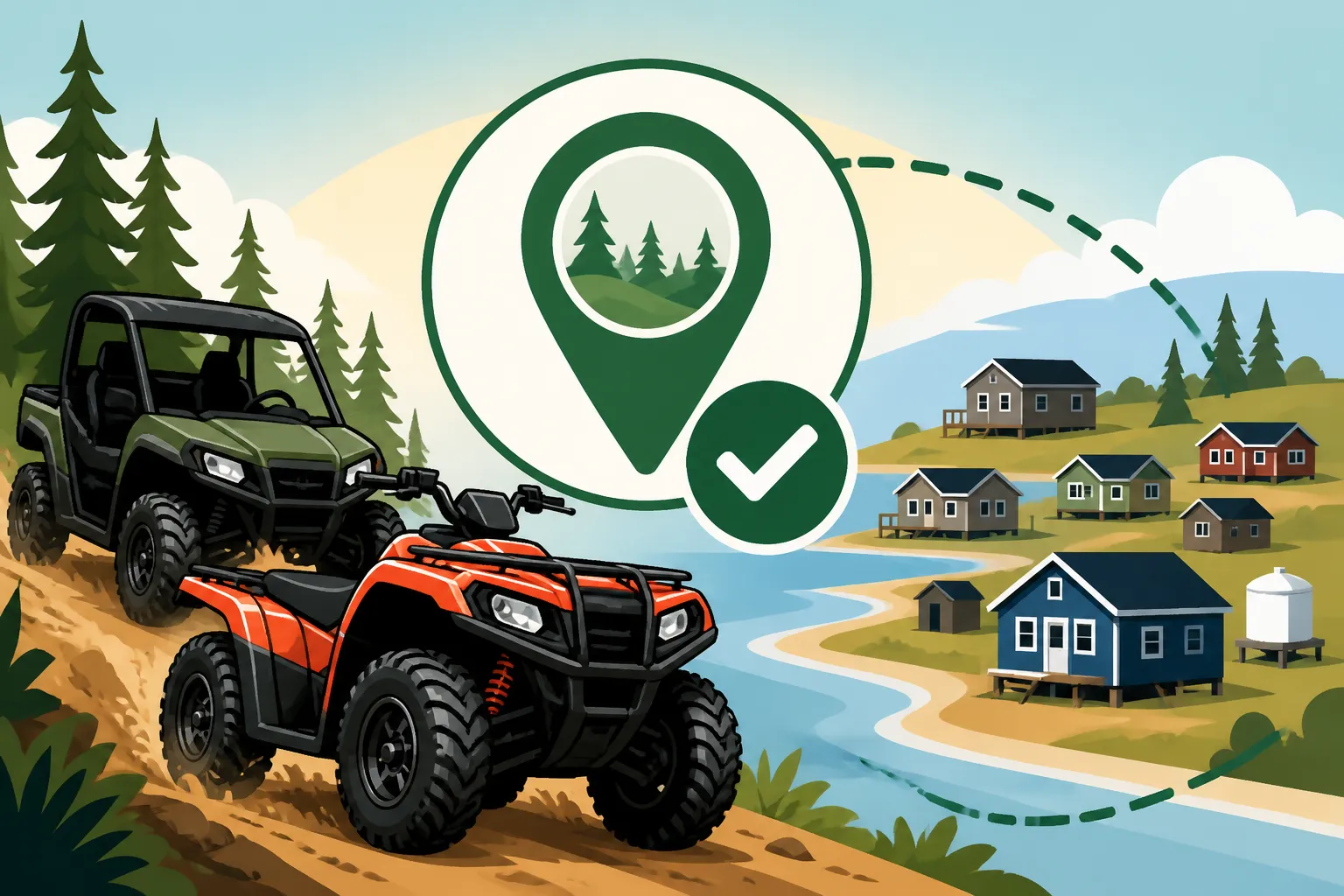
What Counts as a Remote Community for Registration
It's a common dream for many of us who love hitting the trails or using our machines for work: finding a way to simplify the rules, especially when it comes to registration. There's a particular exemption in Manitoba for off-road vehicles (ORVs) used in "remote communities" that often sparks a lot of interest and, let's be honest, a good deal of confusion. Many riders hope their cabin country or isolated farm qualifies, but the reality is much stricter. This guide is here to clear up exactly what Manitoba considers a "remote community" for ORV registration purposes, helping you understand if you genuinely fit the criteria or if you're better off with standard registration.
Understanding Manitoba's Remote Community Exemption for ORVs
The idea of not having to register your ATV or UTV is certainly appealing, especially if you feel like you're way out in the sticks. However, Manitoba's definition of a "remote community" for the purpose of an ORV registration exemption is much more specific and narrow than most people imagine. It's not just about being far from a city or having spotty cell service; there's a very clear, hard-line criterion that must be met.
The Strict Definition: "No All-Weather Road Access"
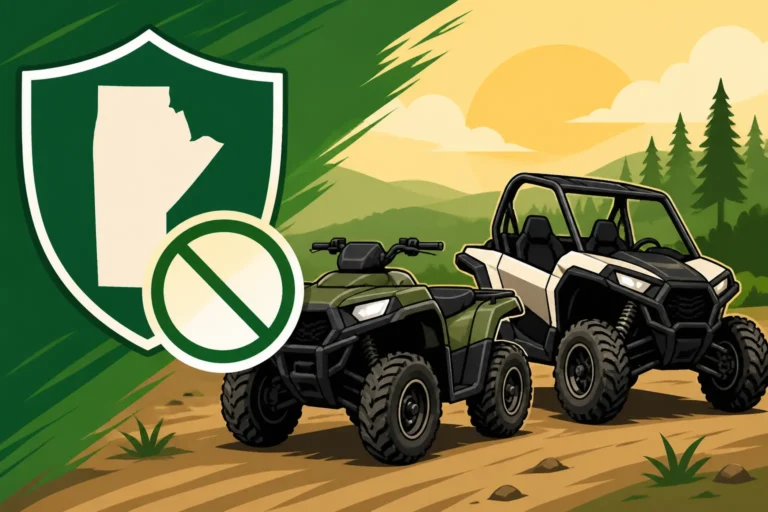
This is the absolute core of the exemption, and it's where most misconceptions are shattered. For a community to be considered "remote" under the Off-Road Vehicles Act for this particular exemption, it must be a community that is not accessible by an all-weather road. Think about that for a moment. This isn't just a gravel road that gets muddy in spring; it means a community that, for a significant part of the year, relies on something other than a conventional road for essential access.
We're talking about places where flying in, or using ice roads in winter, are the primary means of reaching the community for supplies and travel. A community connected by a gravel highway that might be dusty in summer and challenging in a blizzard still counts as having "all-weather road access" in the eyes of the law. The intent here is to provide relief to residents of truly isolated communities where ORVs are not just recreational vehicles but vital transportation tools. For most folks living in even quite rural parts of Manitoba, if you can drive to your home year-round, your community likely doesn't meet this very specific legal bar. It’s a classic case where the everyday meaning of "remote" diverges sharply from the legal definition. This exemption is really about supporting [Riding in a Community No All-Weather Road Reaches].
Who Qualifies for This Specific Exemption?
If your community truly does lack all-weather road access, then the exemption applies to permanent residents of that community. This means individuals who genuinely live there, using their ORVs as a primary mode of transport within and around their home area because conventional vehicles simply aren't practical or possible year-round. It's not for someone who owns a recreational cabin in a remote-feeling area but whose primary residence is in Winnipeg, Brandon, or Dauphin.
The exemption is designed for the individual who relies on their quad or side-by-side to get groceries from the community store, to visit neighbours, or to reach work sites within the vicinity of their un-road-accessible home. It's an acknowledgment that for these specific communities, ORVs are fundamental to daily life and often the only reliable way to get around. This particular rule also ensures that the ORV stays within the bounds of that remote community for it to remain exempt. Stepping outside that specific geographic bubble usually means the exemption no longer applies. Understanding [Manitoba Remote Community Exemption] is crucial for anyone considering this path.
Why This Exemption Exists and Common Misconceptions
The legislative intent behind the remote community exemption is rooted in practical necessity rather than recreational convenience. It's about recognizing unique living situations and ensuring that essential services and mobility aren't hindered by regulations designed for more accessible areas. However, this noble intention often gets blurred by common misunderstandings from riders.
The Spirit of the Law: Essential Transportation, Not Recreation
Imagine living in a community accessible only by air or by a winter ice road. For residents in such places, an ORV isn't a weekend toy; it's a vital piece of equipment for daily survival and transportation. It gets you to the fishing grounds, carries supplies from the community airstrip, or connects you to a trapline. In these scenarios, the ORV replaces what a car or truck would do in a connected community. The government understood that imposing registration requirements on these essential workhorses in communities that have little-to-no conventional road infrastructure would be an unnecessary burden.
The spirit of this exemption is therefore fundamentally about facilitating essential transportation in a truly isolated context. It’s not meant to create a loophole for recreational riders who simply prefer to ride in less populated areas. If your ORV is primarily for leisure, trail riding, or even getting around a large property that's still connected by roads, then this exemption likely isn't for you. It's a very practical, needs-based provision. For more on specific situations, you might find [Manitoba Registration for a Northern Rider] helpful in understanding the realities.
Busting Myths: "Remote" Does Not Mean "Rural" or "Off-Grid"
This is probably the biggest source of confusion and frustration for riders. Many people define "remote" as simply being far from a city, living on a large rural property, or perhaps being off the main power grid. You might have a cabin two hours from Winnipeg down a winding gravel road and feel incredibly "remote" – and you are, in a general sense! But legally, for this exemption, you are not. If that gravel road is maintained year-round, allowing a conventional vehicle to reach you, then your community has "all-weather road access."
Consider the difference between a farmstead deep in the Pembina Valley, which is definitely rural, and a community like Churchill, which, despite being a major tourist destination, fits the legal definition because it lacks year-round road access to the provincial highway network. The exemption doesn't care about your solitude, your reliance on solar power, or how long it takes you to get to the nearest Tim Hortons. It cares purely about that single criterion: "no all-weather road access." This strict interpretation means that the vast majority of Manitoba's rural residents, even those in very quiet and unpopulated areas, will not qualify for this exemption. It’s a hard pill to swallow for some, but it’s the reality of What Counts as a Remote Community for Registration.
| Feature | Commonly Perceived "Remote" (Often Non-Exempt) | Legally Defined "Remote Community" (Exempt) |
|---|---|---|
| Road Access | Gravel roads, seasonal roads, long drives, rural roads | No all-weather road access (e.g., fly-in, ice road) |
| Location | Far from major cities, rural, wilderness adjacent | Truly isolated, geographically cut off year-round |
| Primary Use of ORV | Recreation, hunting, property maintenance, local transport | Essential daily transportation, replaces car/truck |
| Residency Requirement | May live elsewhere, cabin owner | Permanent, primary resident of the community |
| Examples | Rural farm, lake cabin accessible by road, small village | Communities like Churchill (no road access to highway network) |
| Cell Service | Spotty or non-existent | Often non-existent, but not the defining factor |
Navigating the Practicalities of the Remote Community Exemption
So, you believe you might actually live in a community that genuinely lacks all-weather road access. That's a rare but real situation in Manitoba. However, even if you meet the primary criterion, there are still practical considerations to understand about how this exemption works and, more importantly, how easily it can be lost.
Proving Residency in an Exempt Community
While the process for claiming this exemption isn't a formal application with specific forms, you would still need to be able to prove to an enforcement officer that you are a bona fide resident of such a community. This isn't just a matter of saying you live there; it's about providing evidence. What might that look like?
It could involve official government identification with an address from that community, utility bills (if available), or even a letter from a community leader confirming your residency. For those who might have complex living situations or who rely on less formal arrangements, having clear documentation is paramount. This is where resources for general legal documents could come in handy. While LawDepot might not have a specific "Remote Community Exemption Form," they offer templates for things like statutory declarations or residential lease agreements, which could indirectly support your claim of permanent residency if needed, particularly if you're renting in such a community. The burden of proof would ultimately fall on you if questioned. It's a bit like [Manitoba Proof of Address at Registration], where official documents are key, even if you're arguing for an exemption from the registration itself.
Riding Outside the Exempt Community's Boundaries
This is a critical point that many riders overlook or misinterpret. The remote community exemption is specifically tied to the geographic confines of that community. It's not a blanket exemption that allows you to ride your unregistered ORV anywhere in Manitoba simply because your home base is remote.
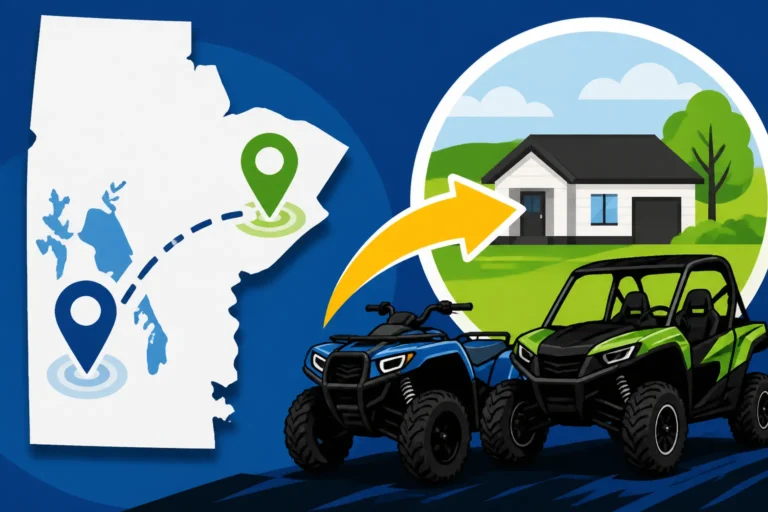
If you transport your ORV by truck or trailer to an area outside your defined remote community – perhaps to visit family in a town with road access, to access a different trail system, or for any other reason – then that exemption immediately ceases to apply. The moment your ORV is on public land or a trail system that is part of the broader, road-accessible provincial network, it must be registered and plated according to standard Manitoba laws. This means if you haul your machine to the Agassiz Trail for a weekend ride, or even just drive it through a nearby road-accessible village, you'd be operating an unregistered machine, which carries significant penalties. This highlights the crucial distinction that [Registration Applies Everywhere, Not Just on a Trail]. The exemption is incredibly specific in its scope, tying the legality of your unregistered machine directly to its physical location within the designated remote community.
Consequences of Misinterpreting the Remote Community Exemption
It's easy to wish a rule applied to your situation, especially if it means fewer hurdles. However, misunderstanding or misapplying the remote community exemption can lead to significant headaches and financial penalties. The peace of mind that comes with proper registration usually far outweighs the potential risks of trying to navigate a narrow exemption.
Penalties for Unregistered Machines
If you are stopped by law enforcement—be it an RCMP officer, a Conservation Officer, or a local by-law officer—and your ORV is found to be unregistered, and you do not legitimately qualify for an exemption, you will face penalties. Operating an unregistered ORV is a clear violation of the Off-Road Vehicles Act. These penalties can include substantial fines, which can quickly add up and turn what you thought was a cost-saving measure into a costly mistake. Enforcement officers are well-versed in the specifics of these exemptions and understand the exact criteria for a "remote community." They aren't likely to accept a general feeling of remoteness as a valid excuse.
Beyond the immediate financial penalty, there can be other consequences, such as having your machine impounded, which means additional fees for towing and storage on top of the original fine. It's a situation no rider wants to find themselves in, and it’s always best to err on the side of caution. Familiarize yourself with potential [Manitoba Ticket Costs for Riders] to truly grasp the financial risk.
Implications for Insurance and Liability
This is arguably the most critical consequence of operating an unregistered ORV without a valid exemption: the impact on your insurance and liability. In Manitoba, basic third-party liability insurance is included with your ORV registration through Manitoba Public Insurance (MPI). This coverage is crucial because it protects you financially if you're found responsible for an accident that causes injury or damage to someone else or their property.
If your ORV is unregistered and you're involved in an accident, your basic MPI coverage is likely void. This means you could be personally liable for tens of thousands, or even hundreds of thousands, of dollars in damages and injury claims. Imagine an accident where you injure another person, or damage their expensive side-by-side or even a vehicle. Without that registration-linked insurance, you would be on the hook for all those costs out of your own pocket. This financial exposure is a massive risk that simply isn't worth taking. While the remote community exemption might waive the registration requirement, it doesn't waive the need for insurance if you're operating outside of what MPI might recognize as valid coverage. When you consider [Manitoba Insurance Included With Registration], the value of proper registration becomes incredibly clear.
Broader Registration Exemptions and What They Mean for Riders
While the "remote community" exemption is quite specific and applies to very few people, it's worth knowing that there are other, more commonly encountered exemptions under Manitoba's ORV Act. Understanding these can help you determine if your machine genuinely qualifies for a pass on registration, or if you should head to your nearest Autopac agent.
Other Specific Exemptions You Might Qualify For
Beyond the remote community criteria, Manitoba's ORV Act does carve out a few other specific situations where registration might not be required. These include:
- Own Property Use: If you only ever operate your ORV on land that you own or lease (and not on public trails, roads, or other Crown land), it generally doesn't need to be registered. This is a common exemption for farmers, acreage owners, or those with very large private properties.
- Farm Machines: ORVs used principally for farming purposes on farmland may also have specific exemptions, though these often come with conditions, such as displaying a slow-moving vehicle sign when crossing a road.
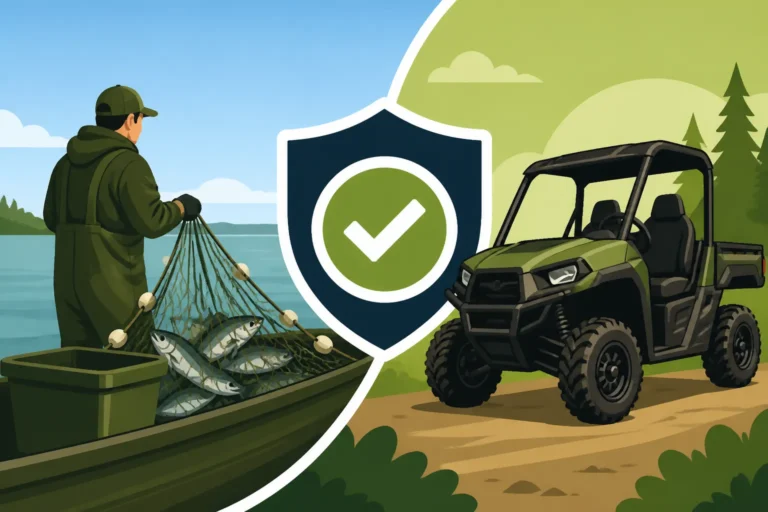
- Licensed Trappers & Commercial Fishers: Individuals who are licensed trappers and are operating their ORV within their registered trapline district, or commercial fishers using their machine directly for their fishing operations, may also be exempt.
Each of these exemptions has its own strict set of conditions and limitations. They are not blanket passes for convenience but are narrowly defined to address specific operational needs. For example, a "farm machine" used for leisure on a Sunday afternoon off the farm property would immediately lose its exemption and require registration. It's essential to research and understand [Manitoba Registration Exemptions Explained] thoroughly to confirm if your situation truly fits.
The Overriding Rule: Most ORVs Need Registration
Despite these specific exemptions, the overarching rule in Manitoba is that most ORVs need to be registered with Manitoba Public Insurance (MPI). If you're planning to ride on any public land, designated trails, Crown land, or cross roadways, your machine will almost certainly need valid registration and a plate. This includes everything from recreational ATVs and UTVs to dirt bikes and snowmobiles.
The registration process is designed to ensure that machines are identifiable, that basic liability insurance is in place, and that funds are collected (including the mandatory trails fee) to support trail maintenance and safety initiatives across the province. Trying to skirt registration for any reason other than a clear, legally defined exemption is simply not worth the risk. When in doubt, always assume your machine needs to be registered. It provides peace of mind, ensures you're legally covered, and contributes to the health of the riding community. If you're still on the fence, asking yourself [Do You Need to Register an ATV in Manitoba?] is the first step, and the answer for most riders will be a resounding yes.
Disclaimer
This article is for general informational purposes only and does not constitute professional advice. Laws, prices and regulations vary by location and change over time. Consult a qualified professional for guidance on your specific situation.